Visual discrimination skills Normal Worksheets for Ages 6-7
5 filtered results
-
From - To
Enhance your child's visual discrimination skills with our expertly designed normal worksheets for ages 6-7. At Kids Academy, we understand the importance of developing keen visual perception abilities to support reading, writing, and everyday learning tasks. Our engaging activities focus on spotting differences, matching objects, identifying patterns, and more, helping young learners sharpen their attention to detail and critical thinking. Whether used in the classroom or at home, these worksheets provide a fun and effective way for children to improve their observational skills, ensuring a strong foundation as they continue their educational journey. Download now and watch your child's skills flourish!
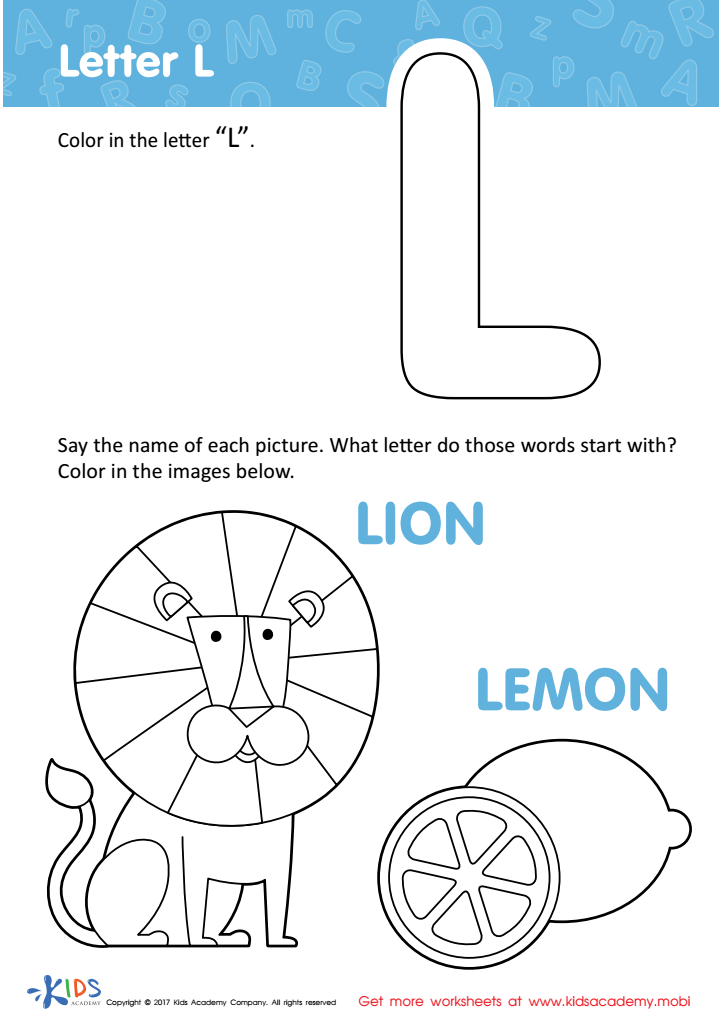
Letter L Coloring Sheet
 Assign to My Students
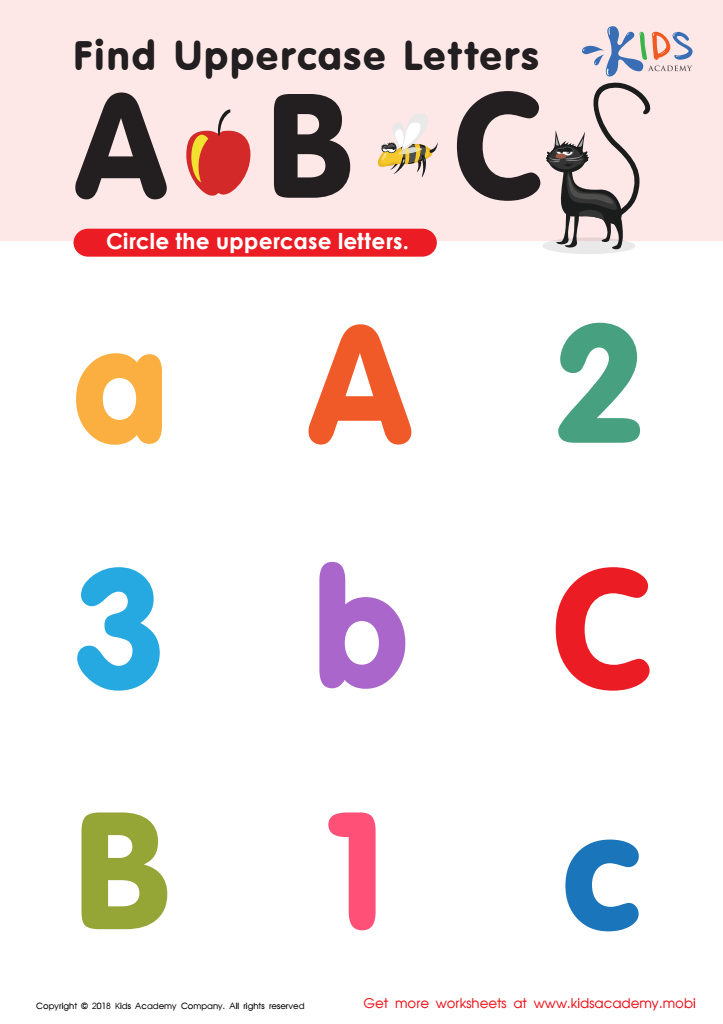
Find Uppercase Letters A, B, and C Worksheet
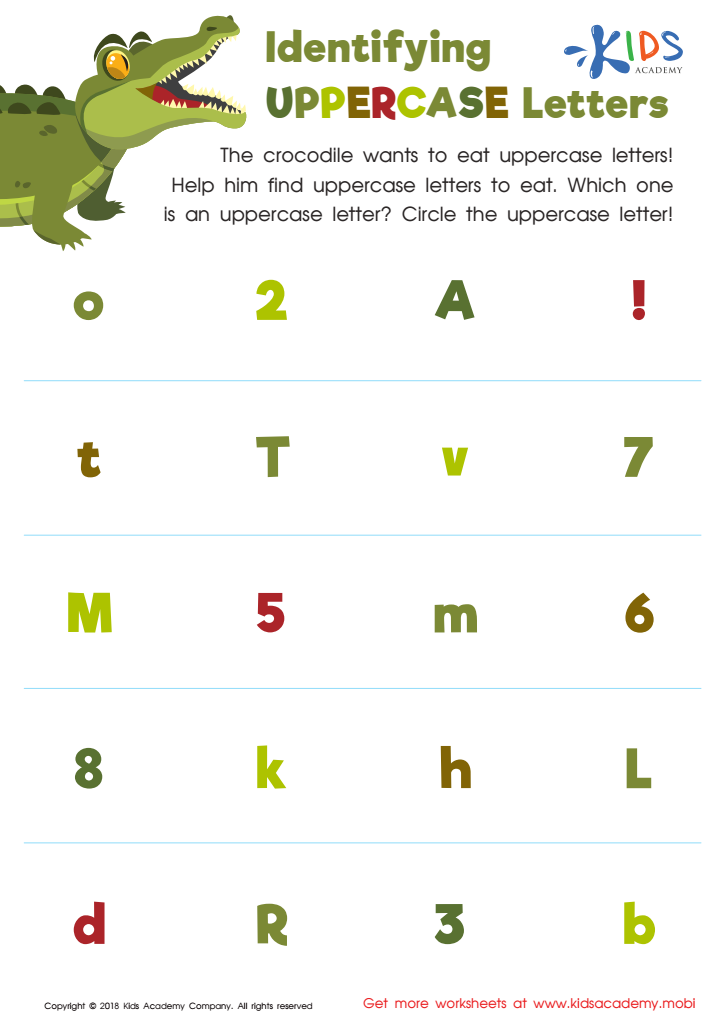
Identifying Uppercase Letters Worksheet
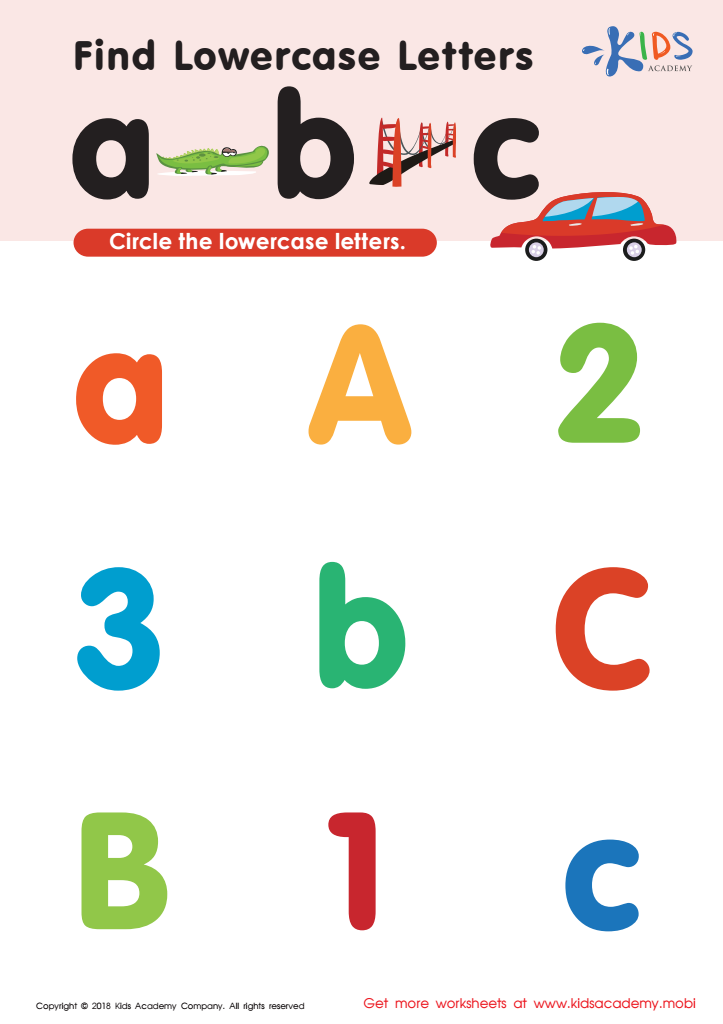
Find lowercase letters a b c Worksheet
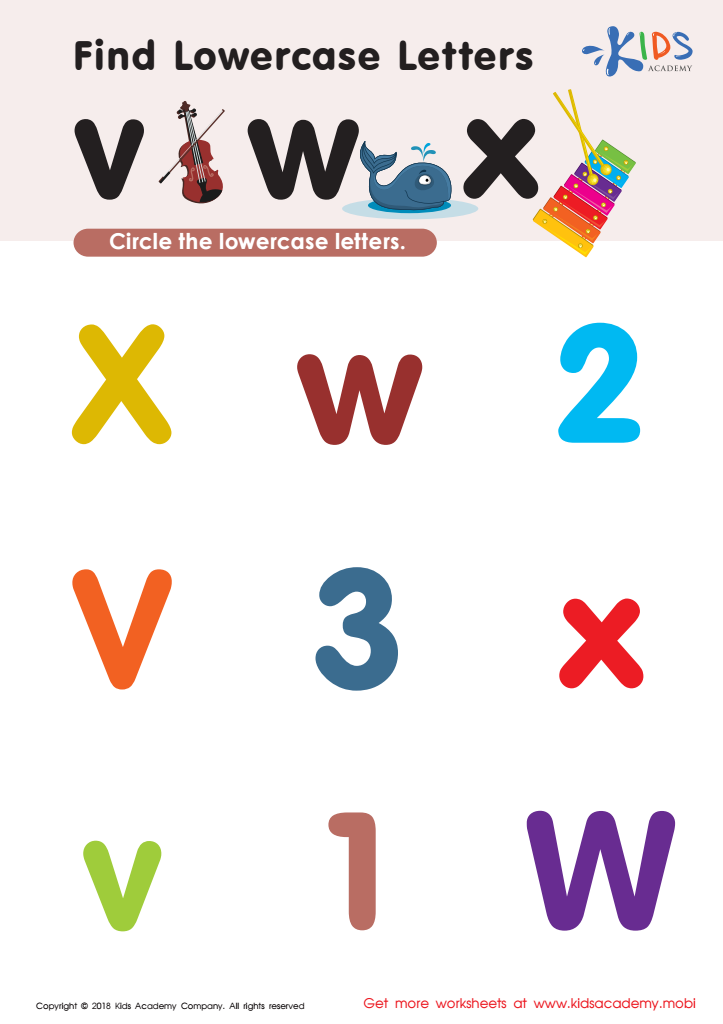
Find Lowercase Letters v w x Worksheet







.jpg)
Visual discrimination skills are essential for children aged 6-7 as they play a crucial role in their academic and daily life success. At this stage, kids are rapidly developing their reading, writing, and motor abilities, making visual discrimination skills fundamental for learning. Visual discrimination involves the capacity to identify differences and similarities in shapes, patterns, and symbols—a vital attribute for recognizing letters, words, and numbers.
When children have strong visual discrimination skills, they can better distinguish between, for example, the letters 'b' and 'd' or the numbers '6' and '9', reducing the common reversals and confusions that can impair reading development. This ability facilitates quicker and more accurate reading, leading to better comprehension and academic confidence.
Furthermore, visual discrimination extends beyond academics. It aids in developing organizational skills and the ability to follow instructions, such as differentiating between right and left shoes or recognizing important visual cues in the environment, like traffic lights and signs.
Parents and teachers should care about strengthening these skills through activities like matching games, puzzles, and reading exercises. Ignoring the development of visual discrimination can lead to challenges in more complex learning areas, impeding overall educational progress and growth. Active engagement in enhancing these skills will support a child's holistic development, promoting improved learning outcomes and life skills.








