Cognitive Development Normal 2D Shapes Worksheets for Ages 6-7
4 filtered results
Difficulty Level
Grade
Age
-
From - To
Subject
Activity
Standards
"Cognitive Development Normal 2D Shapes Worksheets for Ages 6-7" offer engaging activities designed to boost young learners' understanding of fundamental geometric concepts. These expertly crafted worksheets focus on identifying, tracing, and drawing various 2D shapes, while enhancing critical thinking and spatial awareness. Perfect for at-home practice or classroom use, these materials support children's cognitive development through fun and interactive exercises tailored to their developmental stage. Help your child grasp essential math skills and gain confidence in recognizing shapes like circles, squares, and triangles with our well-organized worksheets. Promote a strong foundation in math through targeted practice that makes learning enjoyable!
Favorites
With answer key
Interactive
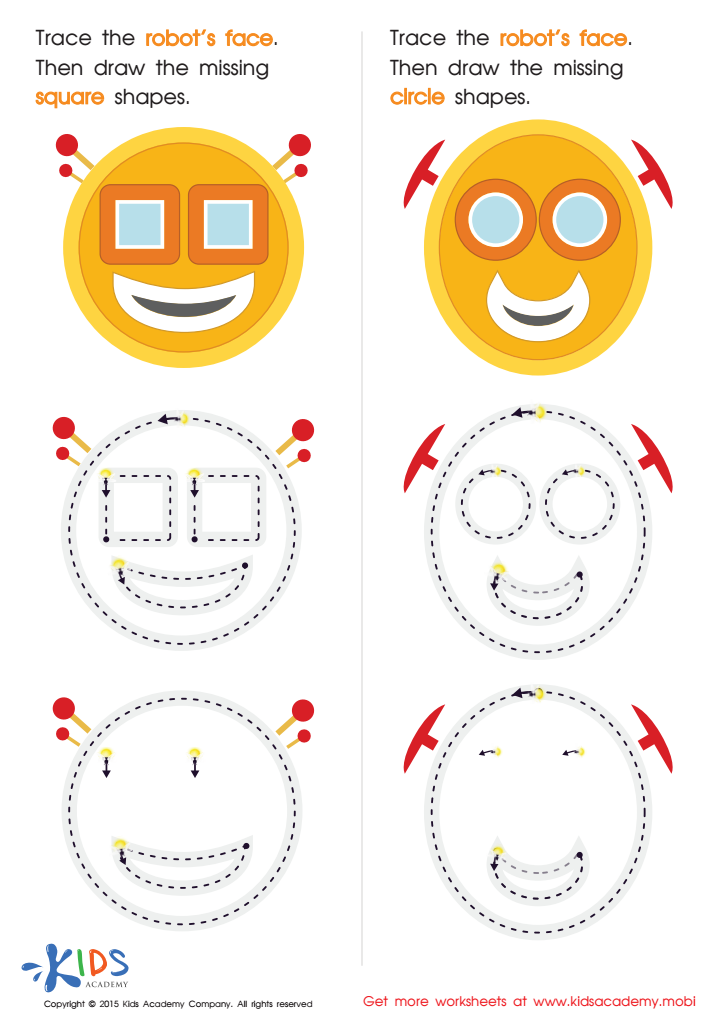
Practicing to Draw Circles And Squares Printable
Download our free printable geometry worksheets to learn shapes with your preschoolers. Trace Robot's face, draw the square parts and round shapes, remember the names for each one. Get more materials for kids at Kids Academy and make learning fun with our free printable geometry worksheets.
 Assign to My Students
Practicing to Draw Circles And Squares Printable
Worksheet

Preschool Geometry Match Up Worksheet
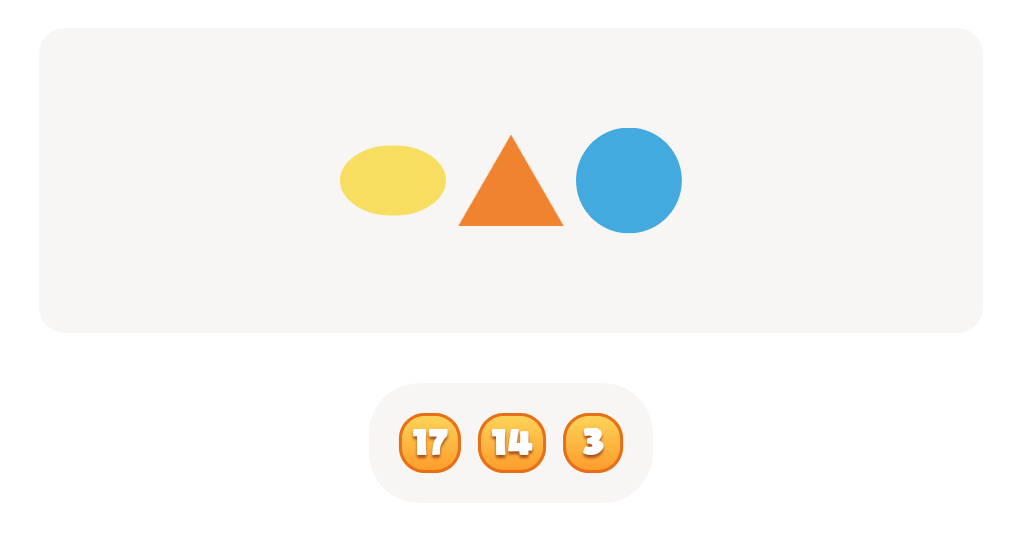
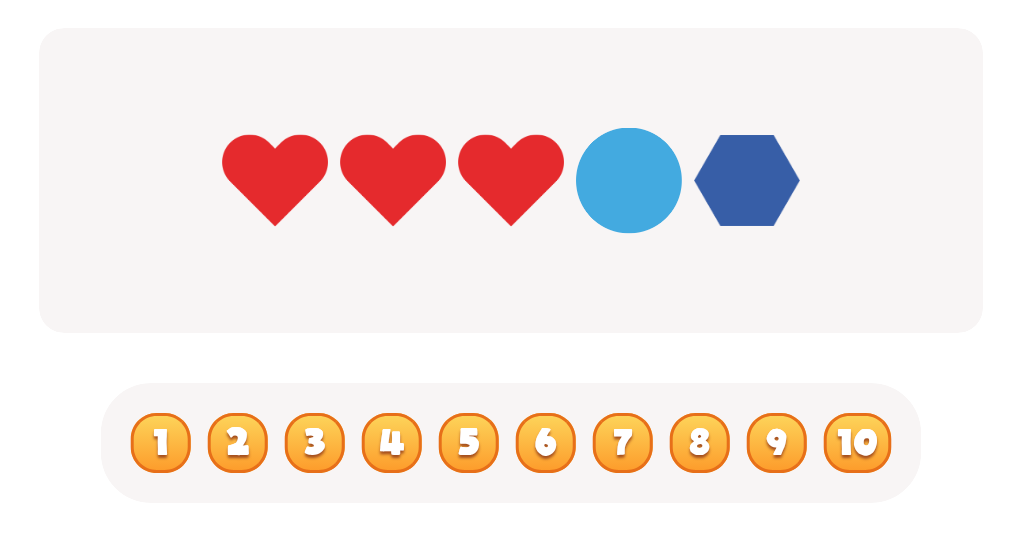
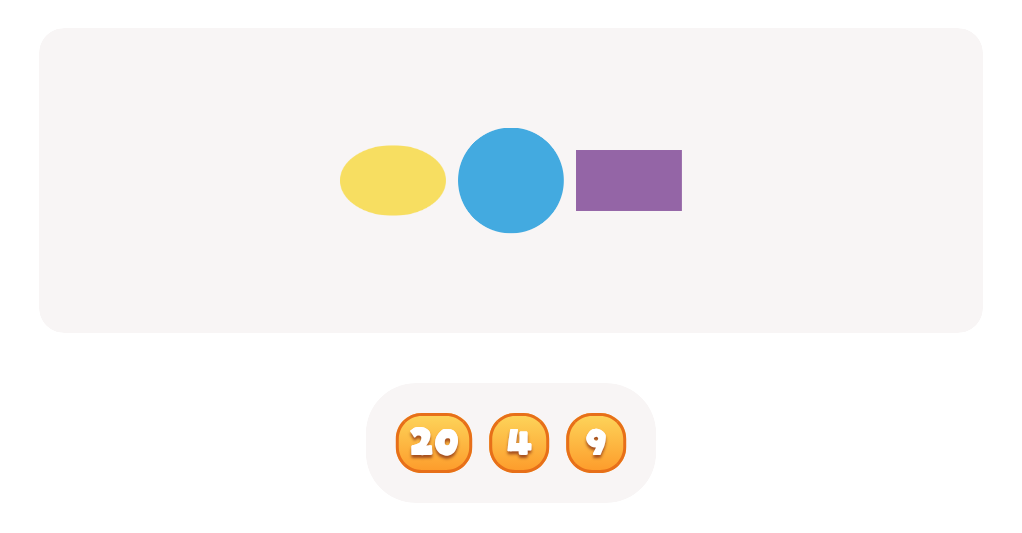
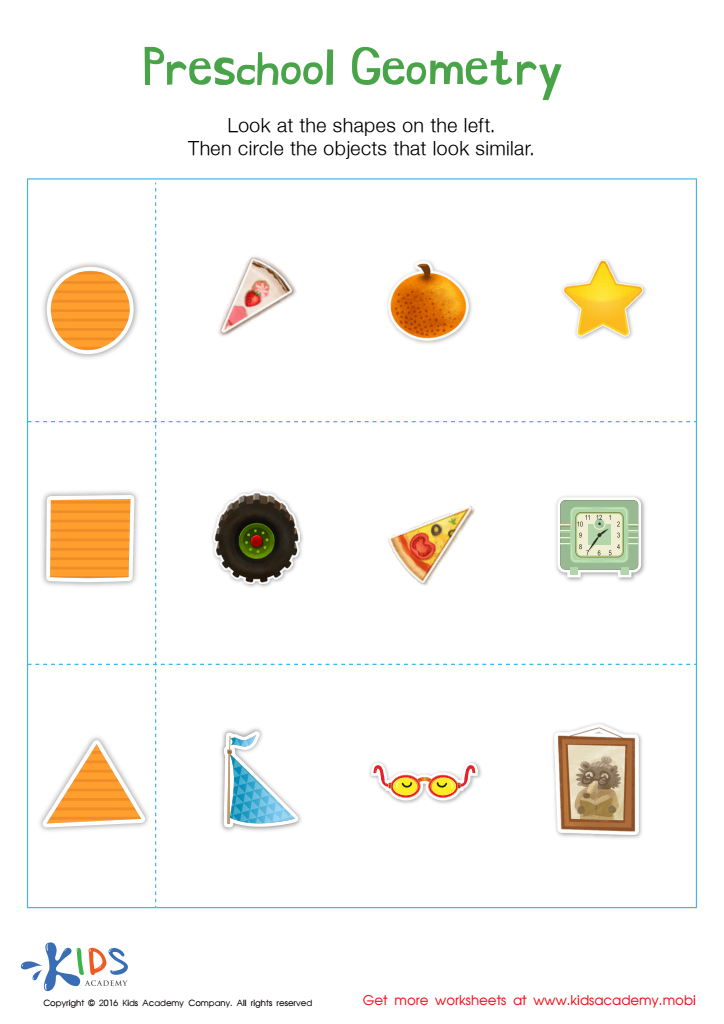
Teach your preschooler geometry using everyday objects. This printable worksheet helps them recognize, match, and follow directions like left and right. Start a conversation to extend their learning and they'll see how shapes appear in the world around them.
Preschool Geometry Match Up Worksheet
Worksheet
Learning to Draw Crescents And Triangles Worksheet
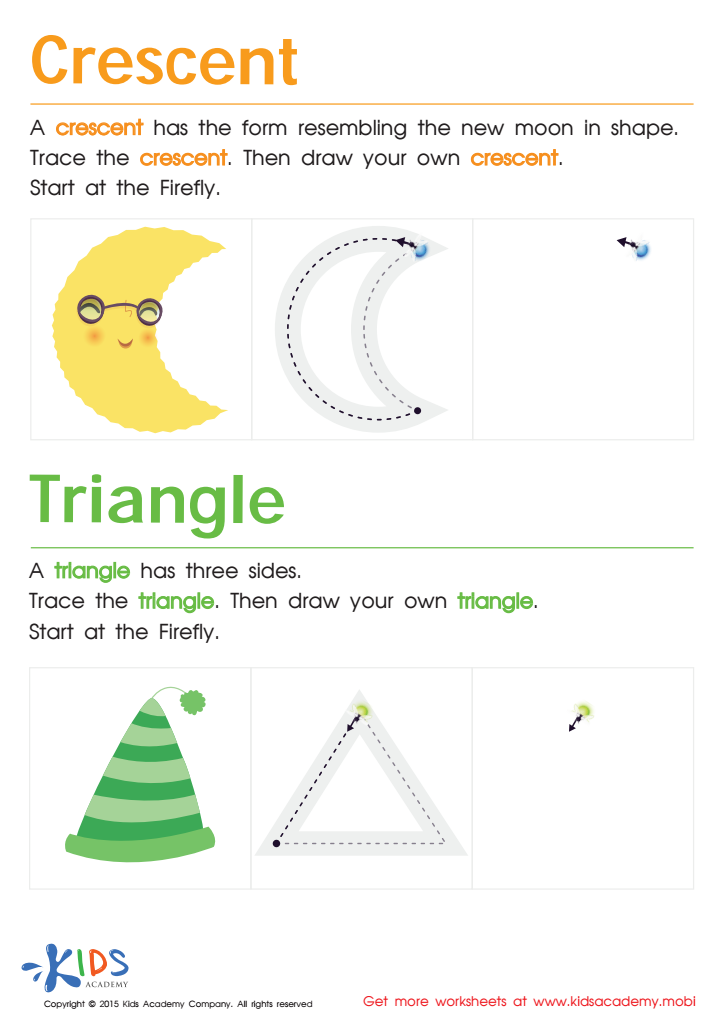
Help your kids draw a crescent and triangle with this free printable worksheet! Start by tracing a crescent in the form of the new moon, and then teach them that a triangle has three sides and looks like a hat. Find more geometry practice worksheets at Kids Academy!
Learning to Draw Crescents And Triangles Worksheet
Worksheet
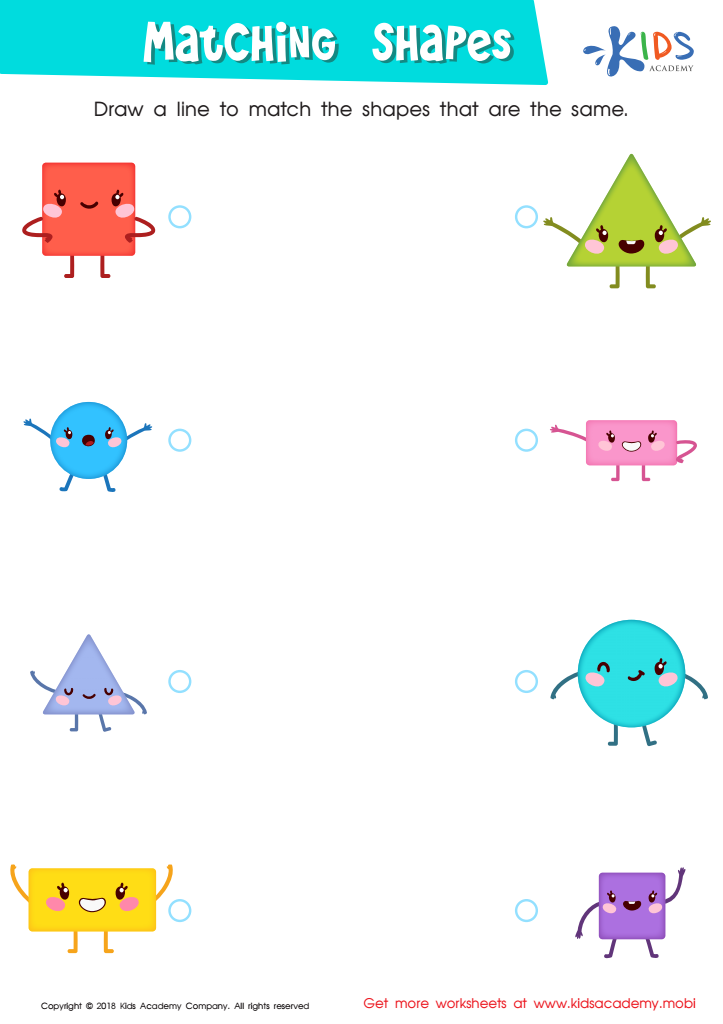
Matching Shapes Worksheet
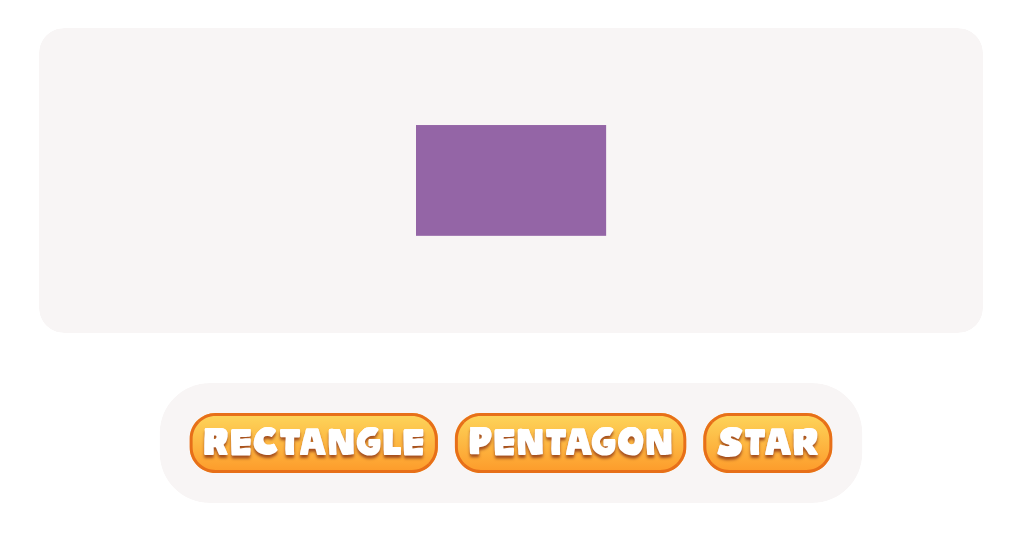
Introduce your students to the 4 most common shapes: squares, triangles, rectangles and circles. When they progress, show them other shapes like rhombuses and parallelograms. Use this matching shapes worksheet to help them match two identical shapes. Print out the worksheet and instruct them to draw lines connecting them.
Matching Shapes Worksheet
Worksheet
Join Kids Academy for Free
Who is primarily going to use this learning content?








Caring about cognitive development and understanding of basic 2D shapes for children aged 6-7 is crucial because it sets the foundation for future learning and problem-solving skills. At this developmental stage, children transition from concrete to more abstract thinking. Recognizing and manipulating shapes enhances their spatial awareness, a critical aspect of cognitive growth. This awareness assists in activities such as reading and writing, where identifying shapes and patterns in letters is essential.
Furthermore, early familiarity with 2D shapes increments mathematic skills. Children learn to classify, differentiate, and understand the properties of shapes such as squares, circles, and triangles. These skills are essential for more advanced math concepts like geometry, symmetry, and fractions as they progress academically.
Additionally, cognitive benefits extend beyond math. Engaging with 2D shapes enhances fine motor skills through drawing and cutting, fostering coordination and focus. These activities also nurture creativity and the ability to visualize and mentally manipulate objects, critical for problem-solving and reasoning in everyday life.
Therefore, parents and teachers should encourage activities involving 2D shapes to promote robust cognitive development, ensuring that children are well-equipped with essential knowledge and skills for their future educational endeavors and everyday life.