Problem-Solving Skills Normal 2D Shapes Worksheets for Ages 6-7
3 filtered results
-
From - To
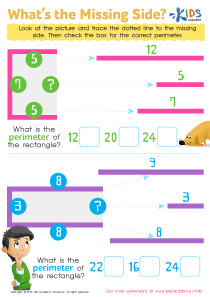
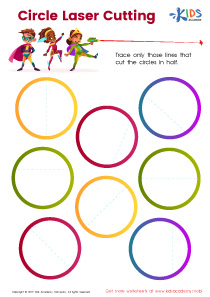
Unlock your child's potential with our "Problem-Solving Skills Normal 2D Shapes Worksheets for Ages 6-7". These engaging printables are designed to enhance young learners' mathematical abilities by focusing on 2D shapes. Through a variety of fun activities, children explore patterns, symmetry, and geometric relationships. Each worksheet challenges their problem-solving skills, encouraging critical thinking and analytical reasoning. Perfect for both classroom and at-home learning, these resources make mastering math concepts enjoyable and effective. Give your 6 to 7-year-old the tools they need to succeed in math with these expertly crafted worksheets. Download now for endless learning adventures!
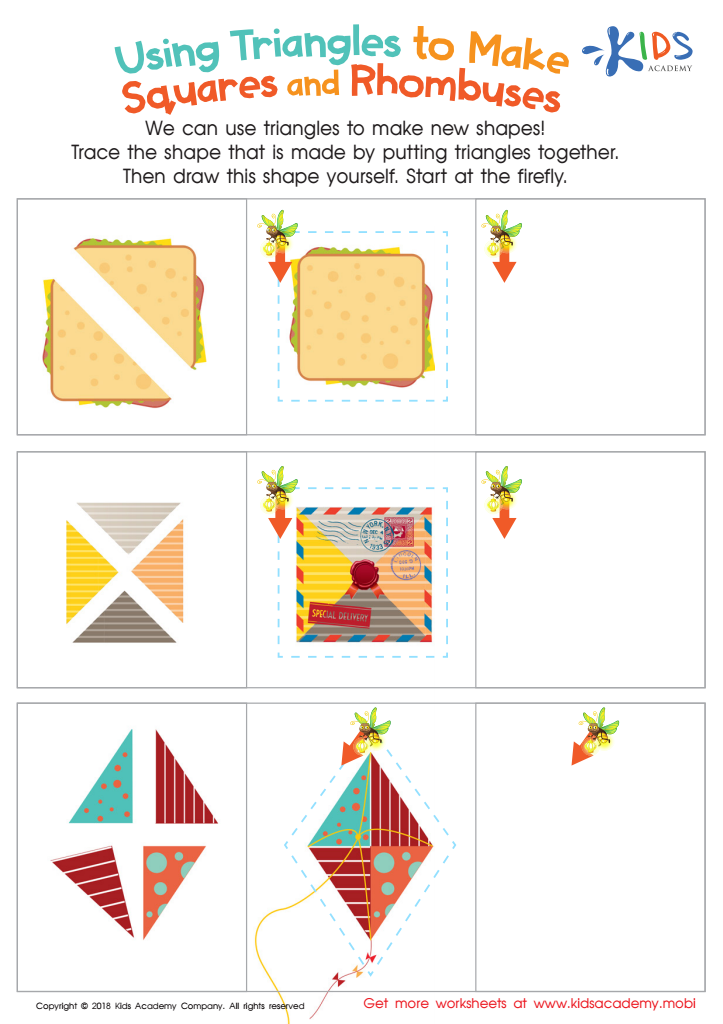
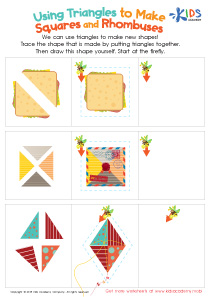
Using Triangles to Make Squares and Rhombuses Worksheet
 Assign to My Students


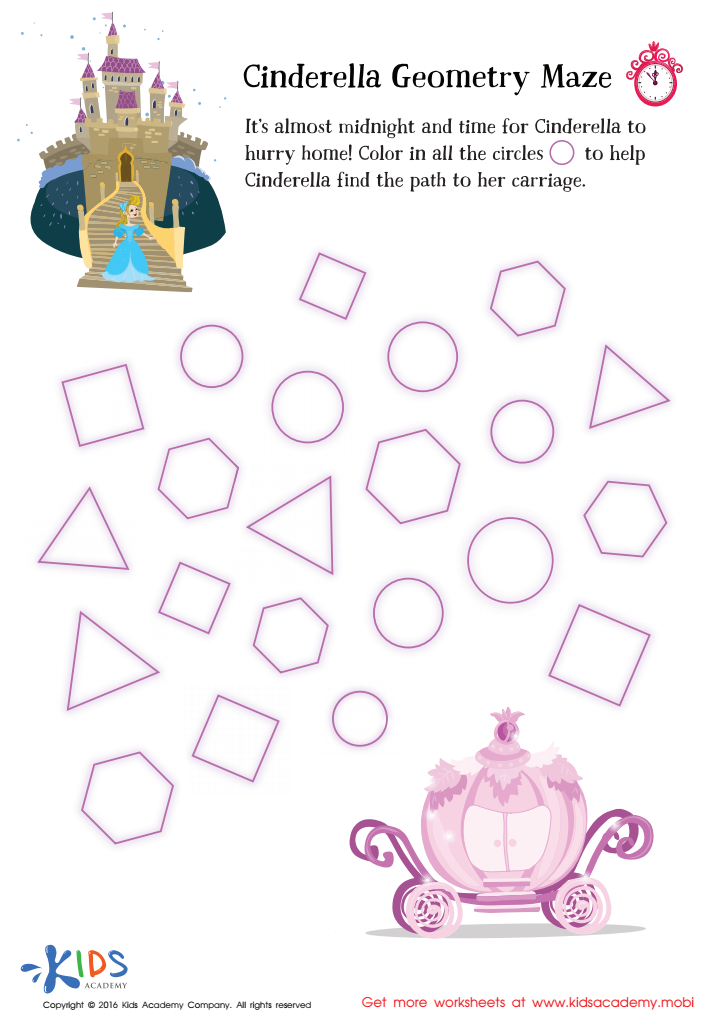
Cinderella Geometry Maze Worksheet
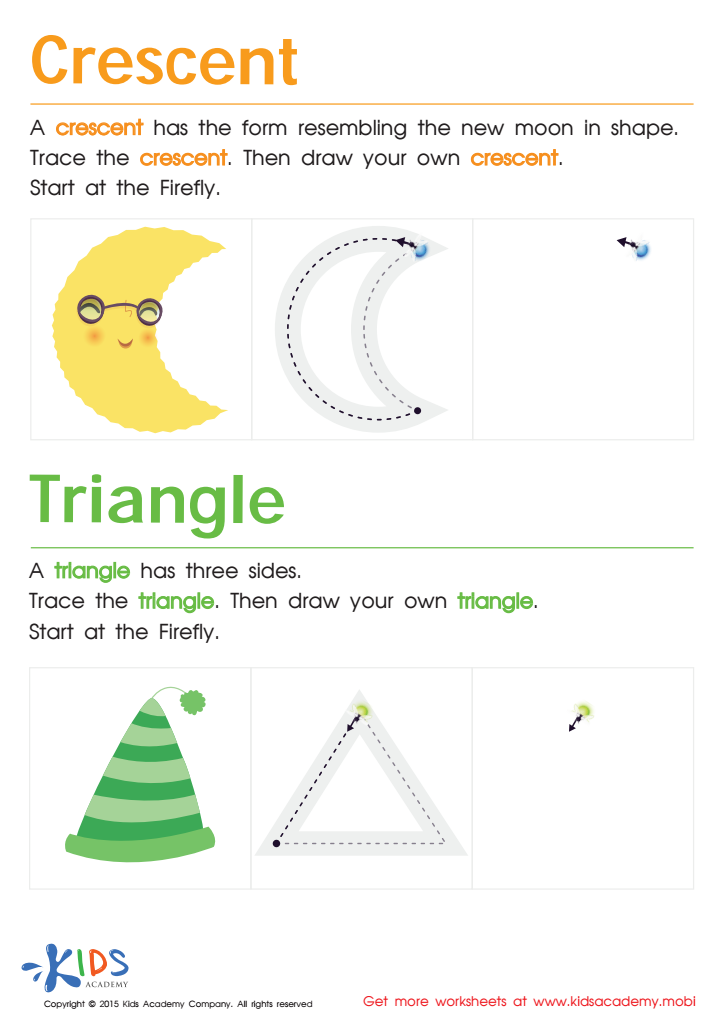
Learning to Draw Crescents And Triangles Worksheet








Cultivating problem-solving skills in children aged 6-7 through activities involving normal 2D shapes is imperative for their cognitive and intellectual development. At this age, children are sharpening their basic math and spatial reasoning abilities, essential for more complex problem-solving tasks they will encounter in the future. When interacting with 2D shapes, children are not just learning to identify squares, triangles, and circles; they are enhancing their logical thinking, critical analysis, and spatial awareness.
Encounters with 2D shapes and the associated problem-solving tasks promote creativity and perseverance. For instance, when asked to create a picture using only triangles and squares, children must think creatively and handle minor setbacks by rethinking their approach, which builds resilience.
Furthermore, understanding 2D shapes serves as the foundation for geometry, a crucial component of the mathematics curriculum. It facilitates the development of precise vocabulary and concepts that will support their academic success in later years. Problem-solving with shapes encourages concentration, patience, and a systematic approach to challenges—skills that are transferable to all areas of learning and daily life.
Ultimately, by integrating problem-solving activities with normal 2D shapes into learning, parents and teachers provide children with vital tools for academic achievement and personal growth, fostering a lifelong appreciation for learning and inquiry.