Problem-Solving Skills Normal Addition and Subtraction Word Problems Worksheets for Ages 6-7
14 filtered results
-
From - To
Enhance your child's mathematics skills with our "Problem-Solving Skills Normal Addition and Subtraction Word Problems Worksheets for Ages 6-7". Perfectly tailored for young learners, these engaging worksheets offer a variety of addition and subtraction scenarios, helping kids grasp fundamental math concepts through real-life problems. Each worksheet encourages critical thinking, aiding in the development of strong problem-solving skills. With captivating illustrations and relatable examples, these activities not only make learning fun but also effective. Ideal for both classroom and home use, give your child the tools they need to excel in mathematics today!
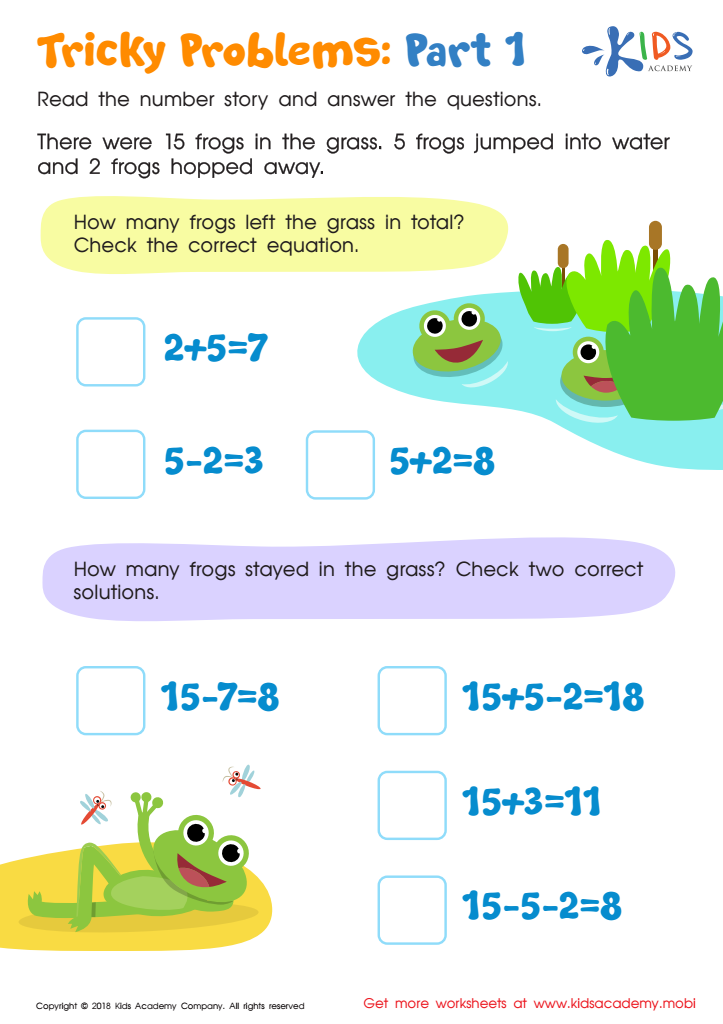
Tricky Problems Worksheet: Part 1
 Assign to My Students
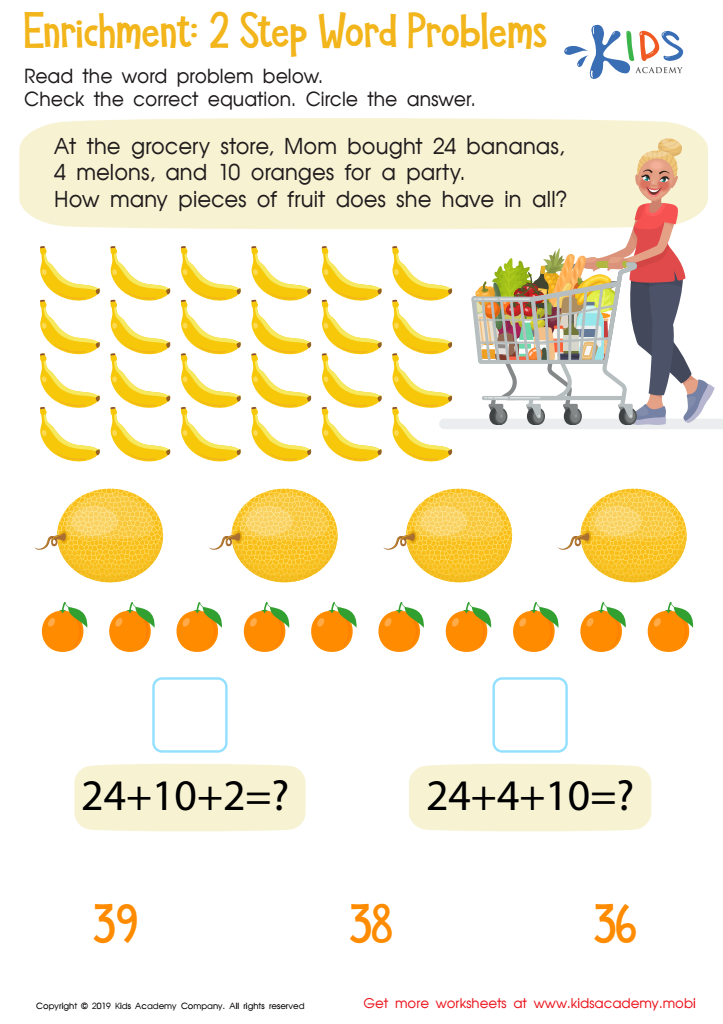
Enrichment -2 Step Word Problems Worksheet
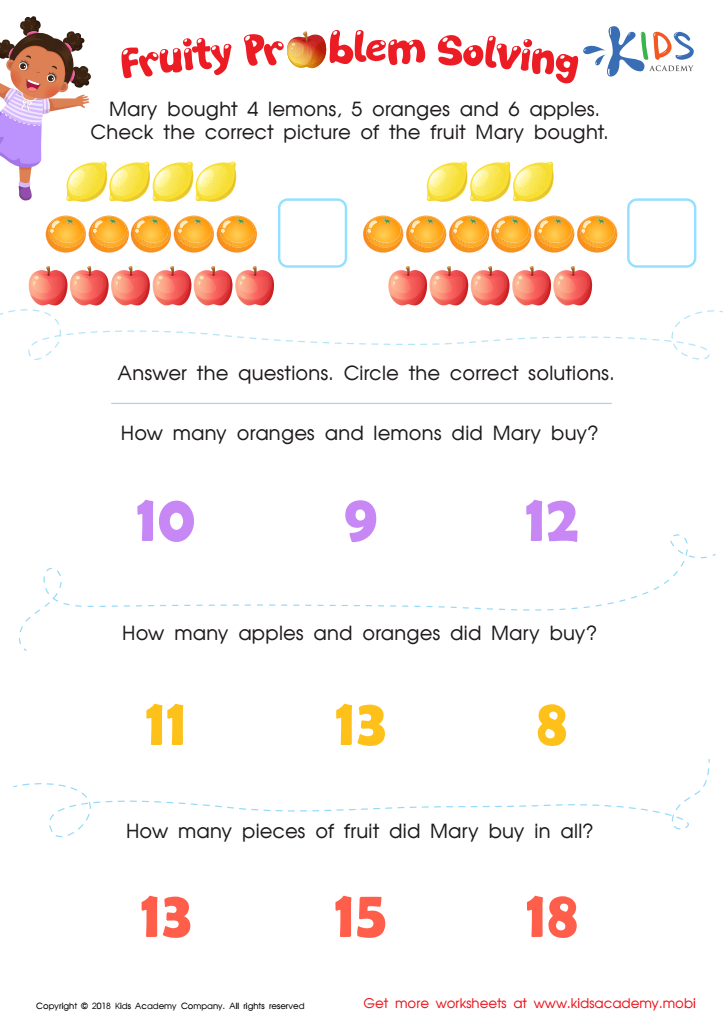
Fruity Problem Solving Worksheet
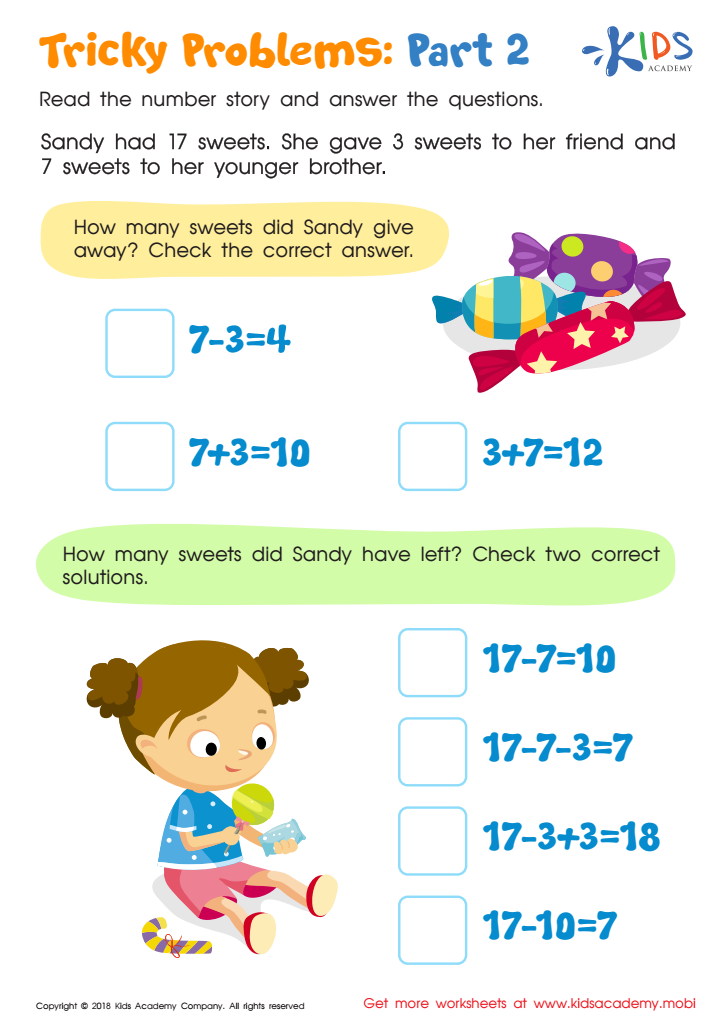
Tricky Problems Worksheet: Part 2
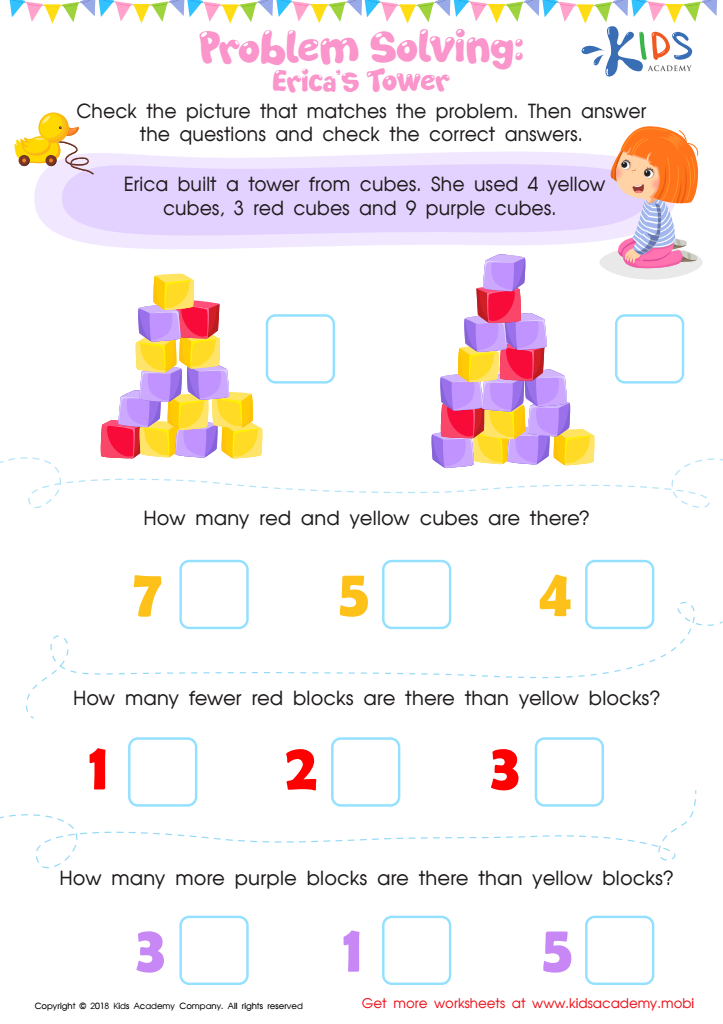
Problem Solving: Erica's Tower Worksheet
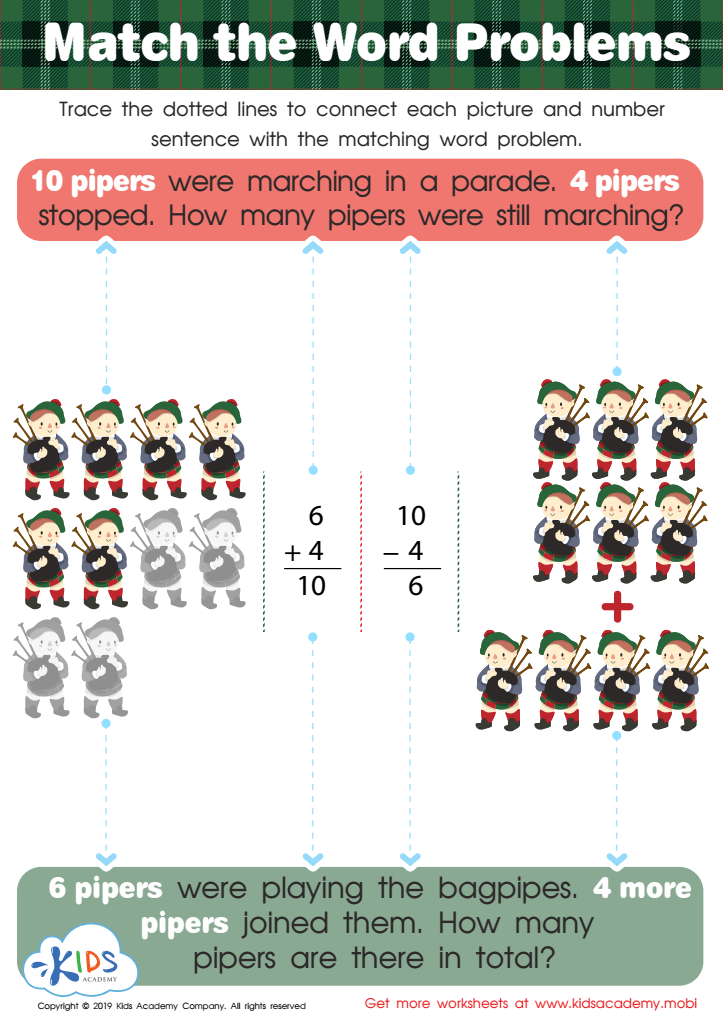
Match the Word Problems Worksheet
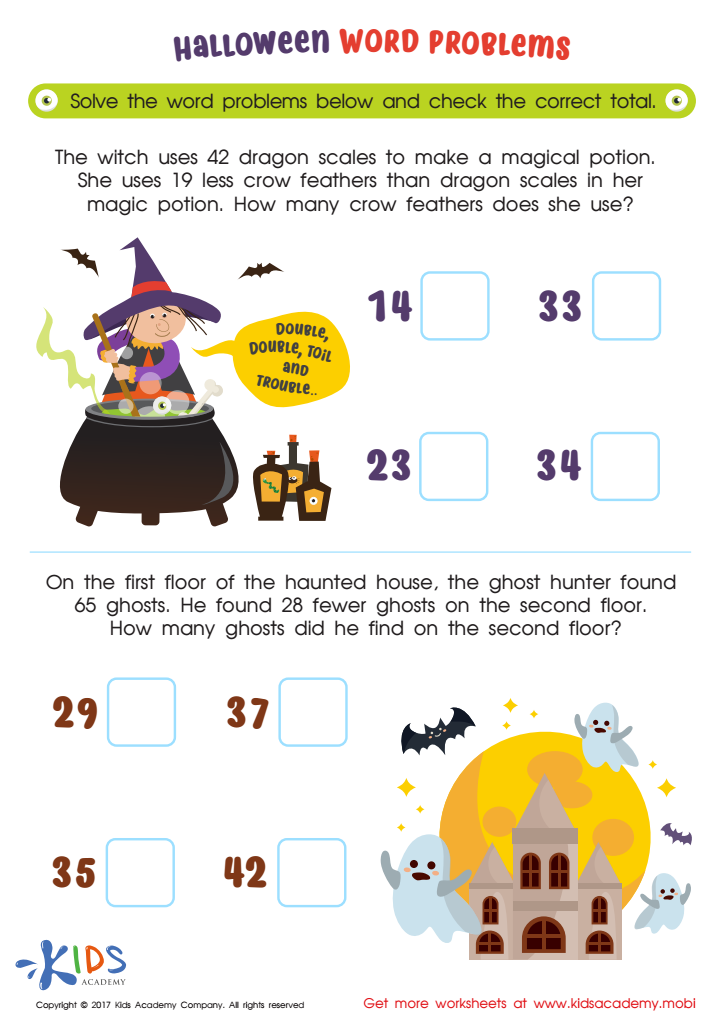
Halloween Word Problems Printable
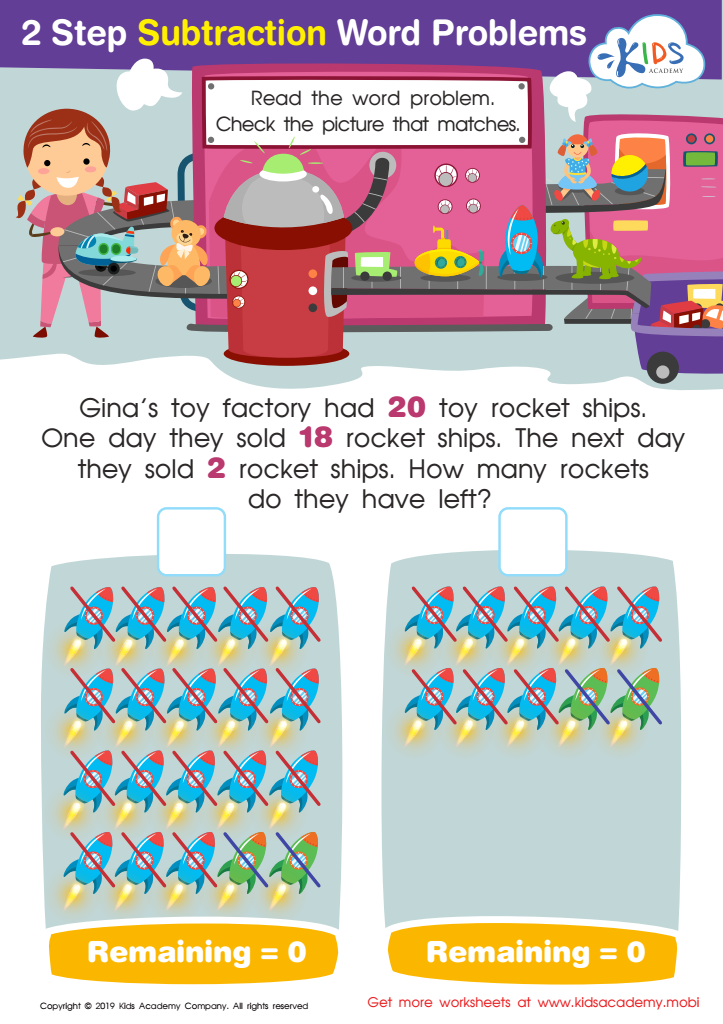
Step Subtraction Word Problems Worksheet
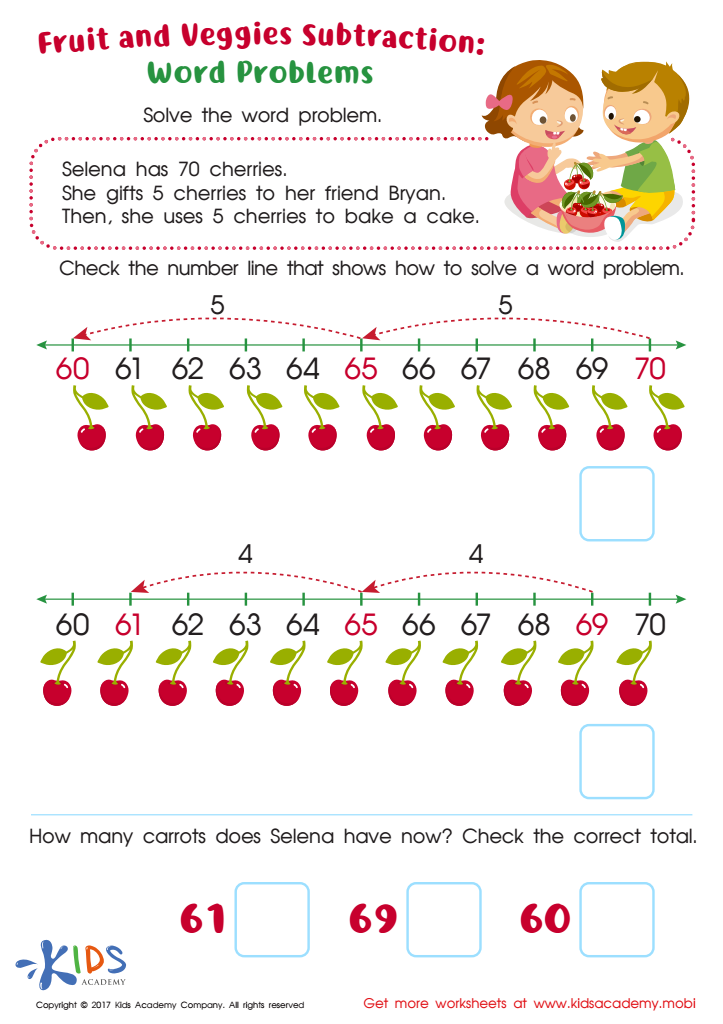
Subtraction Word Problems Free Printable
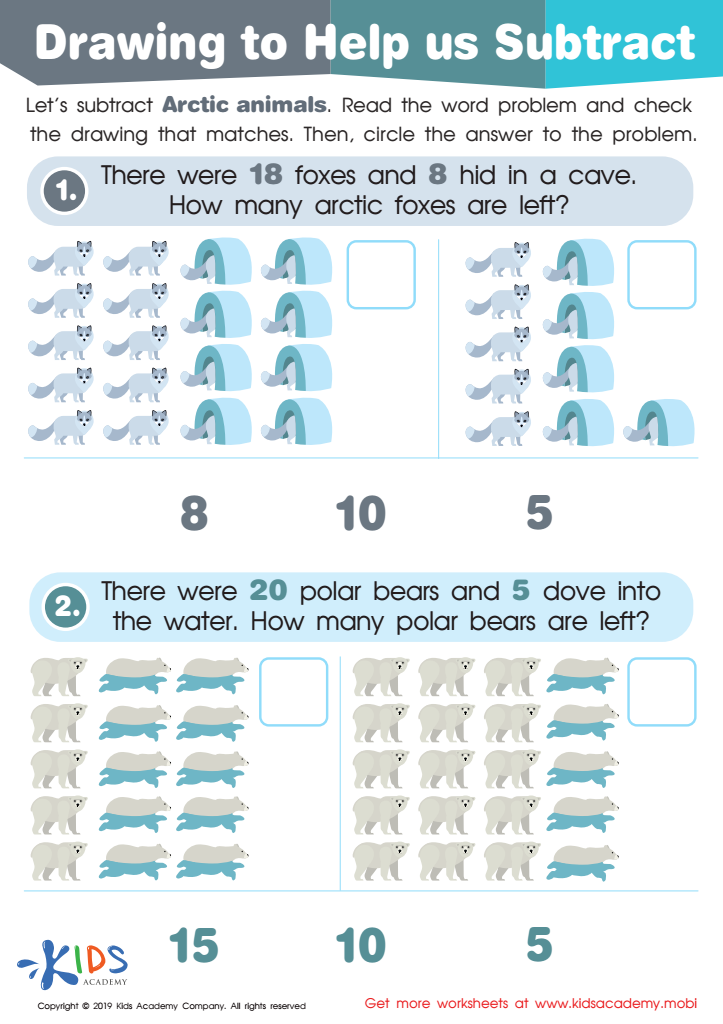
Drawing to Help Us Subtract Worksheet
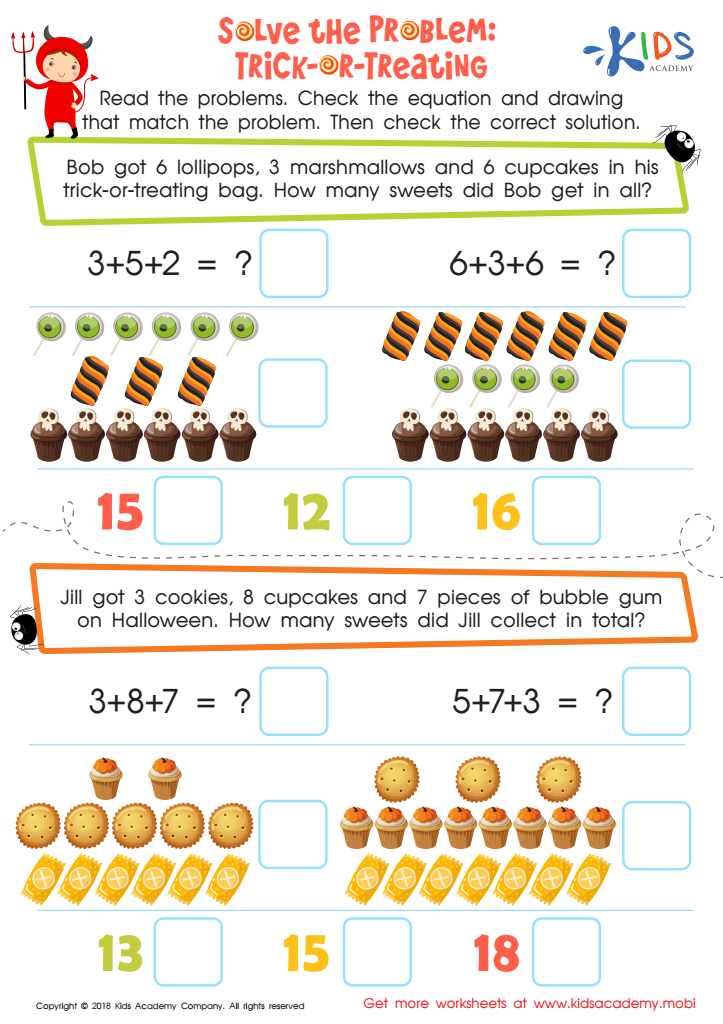
Solve the Problem: Trick–or–treating Worksheet
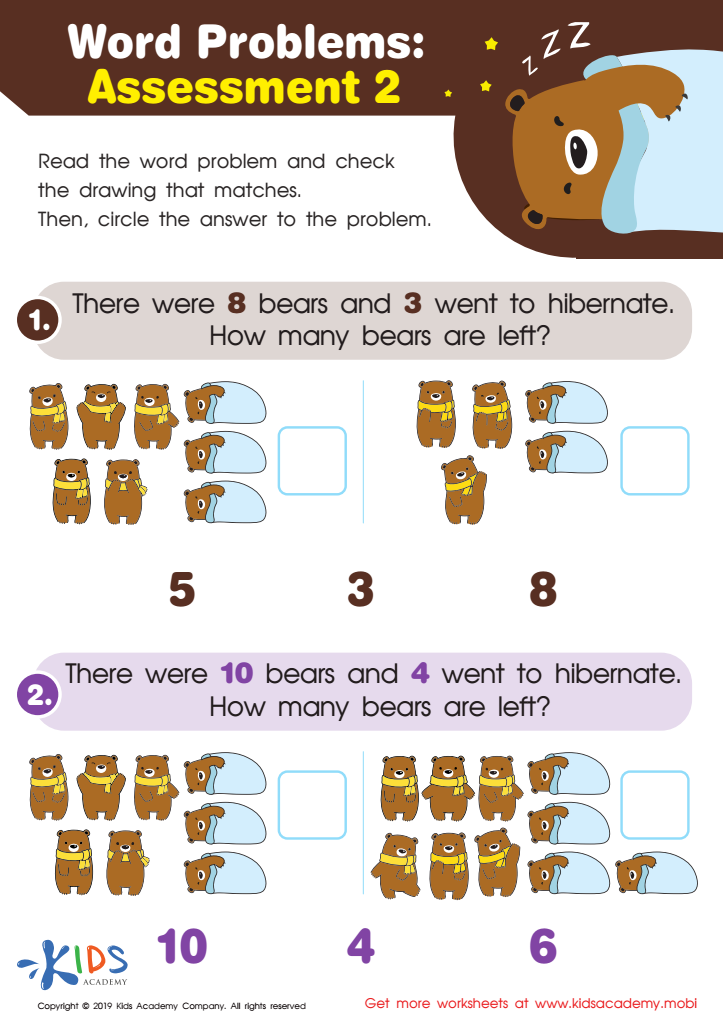
Word Problems: Assessment 2 Worksheet
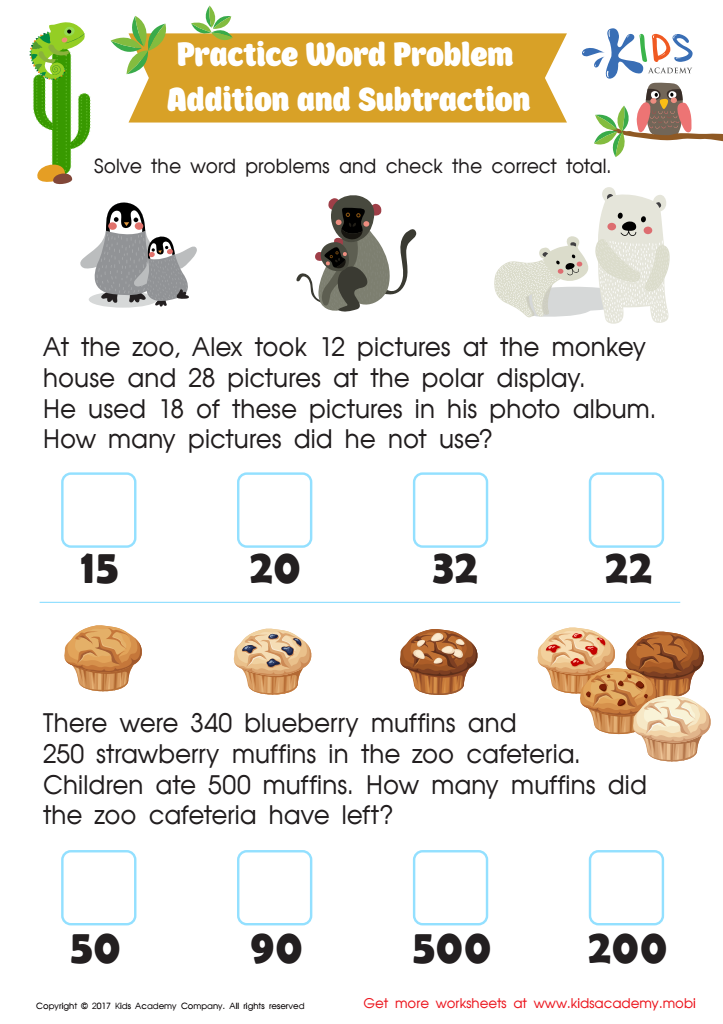
Addition and Subtraction: Word Problems Worksheet
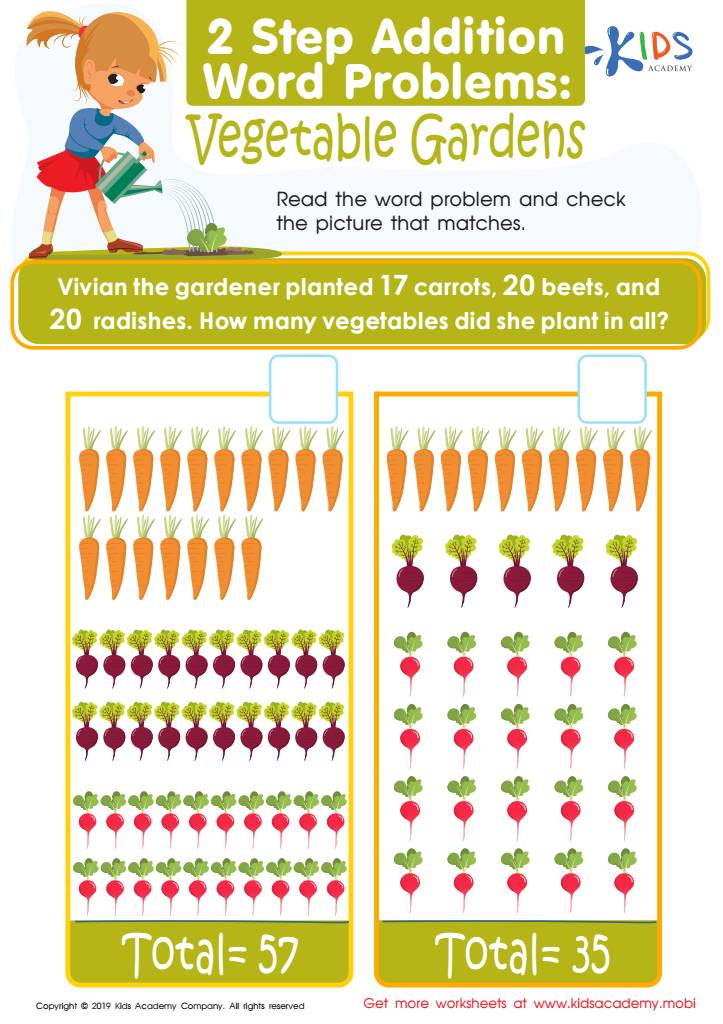
Vegetable Gardens Worksheet








Parents and teachers should prioritize problem-solving skills in normal addition and subtraction word problems for children aged 6-7 because these foundational abilities are crucial for cognitive development. At this age, kids are developing their mathematical understanding and reasoning, which is fundamental to their academic growth. By working on these word problems, children learn to translate real-world scenarios into mathematical questions, thus enhancing their capability to think critically and analytically.
Problem-solving in the context of addition and subtraction also boosts children's ability to understand and manage numbers—key skills in achieving numeracy fluency. It fosters perseverance and adaptability, teaching them that solutions come through thoughtful consideration and sometimes multiple tries. These competencies not only apply to mathematics but also general life challenges, aiding their overall problem-solving toolkit.
Moreover, these activities encourage reading comprehension and logical reasoning. As students read the problem, they must identify relevant information and disregard distracting details. This helps in overall literacy, as understanding word problems involves the application of reading skills in new contexts.
Engagement in problem-solving tasks builds self-esteem and confidence when children see their efforts lead to correct solutions. Thus, supporting children in mastering these skills at an early age lays the groundwork for future academic achievement and confident, competent participation in everyday tasks.