Problem-Solving Skills Normal Addition & Subtraction Worksheets for Ages 6-7 - Page 2
28 filtered results
-
From - To
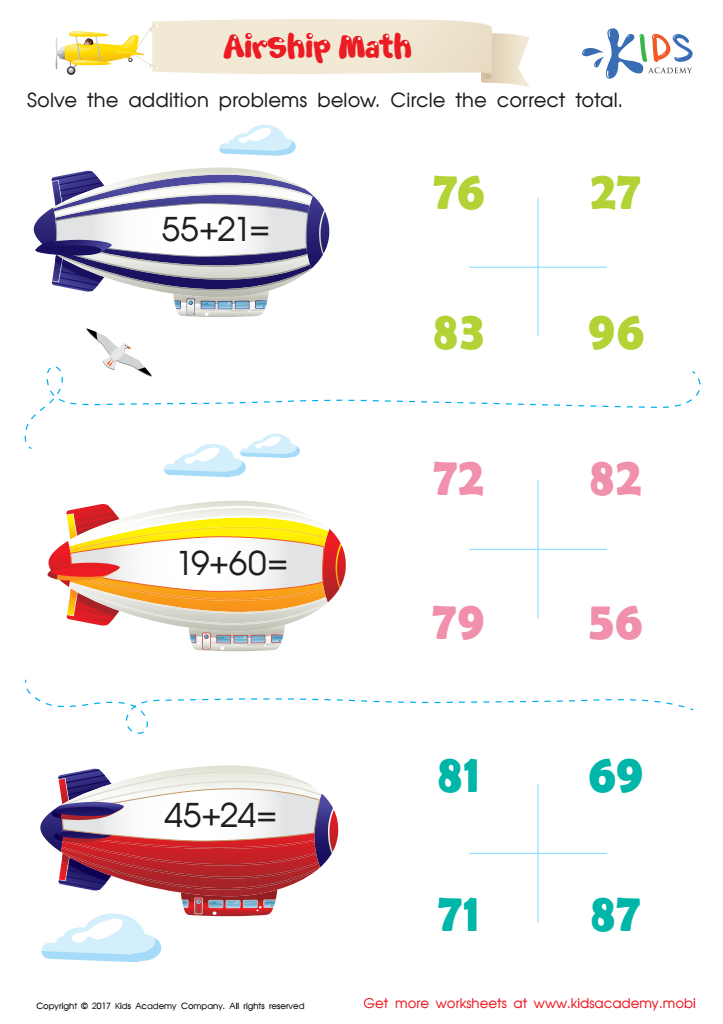
Airship Math Addition Printable
 Assign to My Students
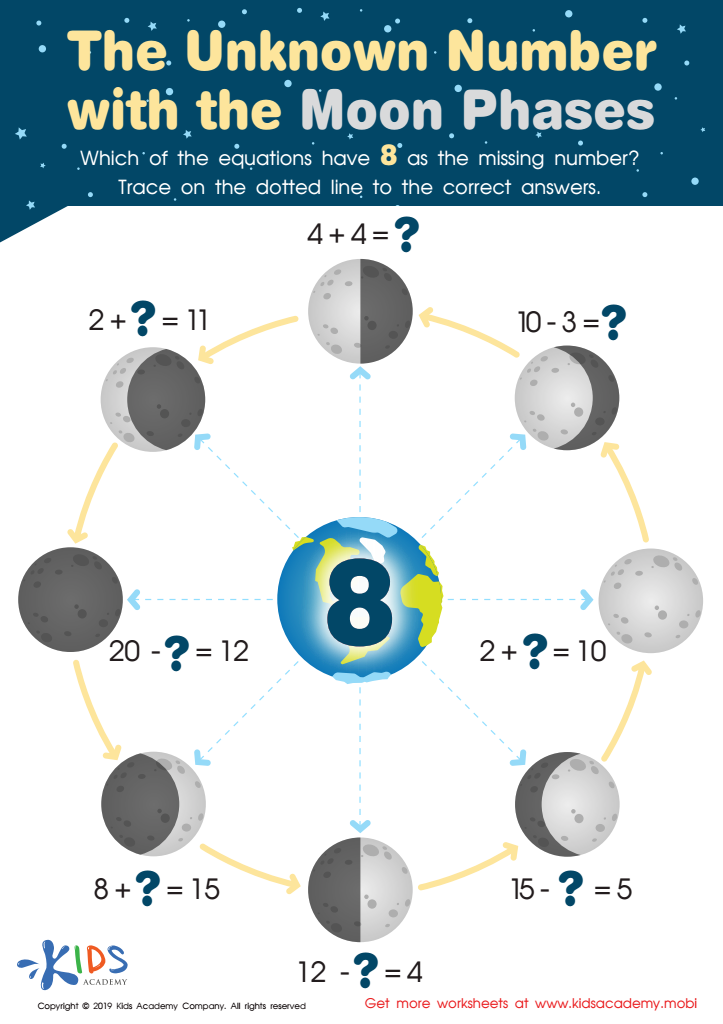
The Unknown Number with the Moon Phases Worksheet
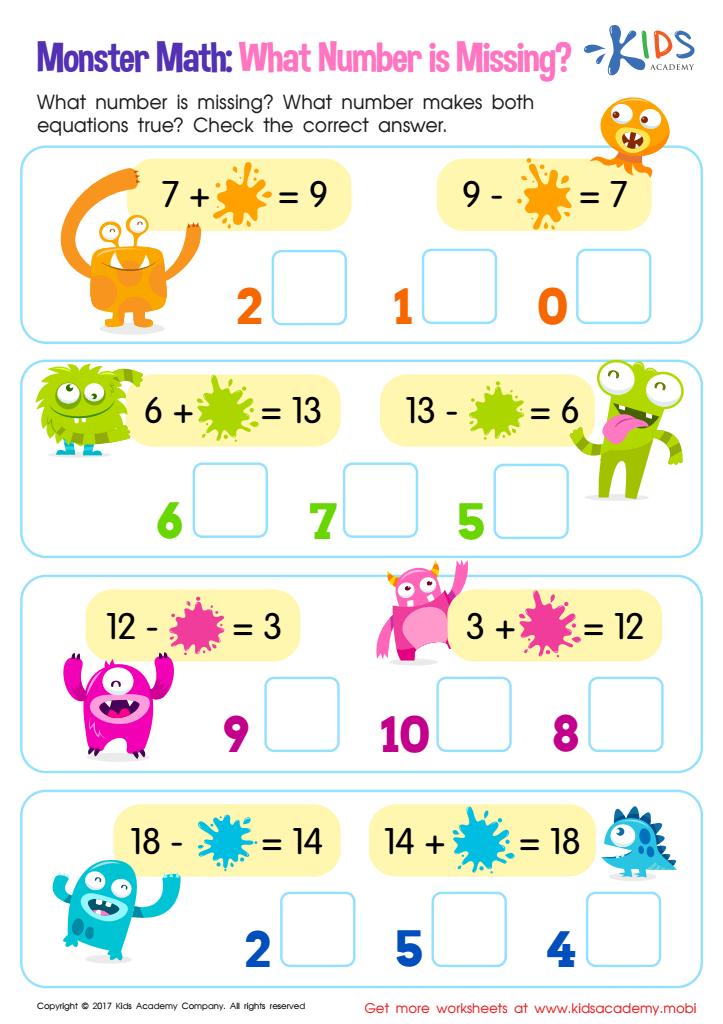
Missing Number: Monster Math Worksheet
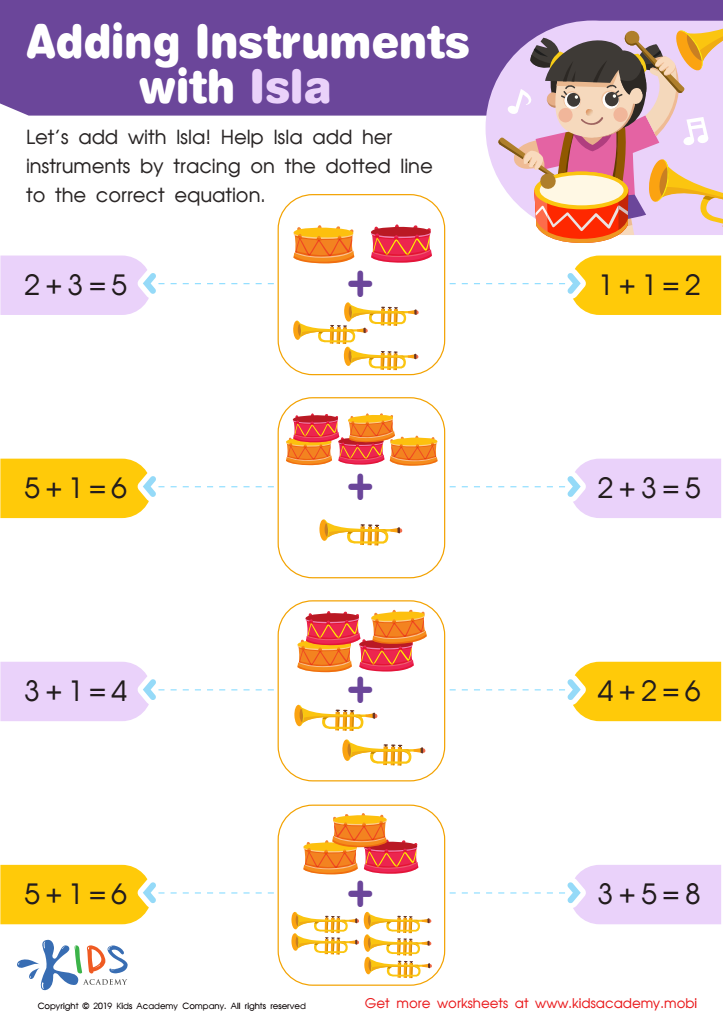
Adding Instruments with Isla Worksheet








Problem-solving skills in normal addition and subtraction for children aged 6-7 are foundational to both their cognitive and academic development. At this age, children are beginning to understand numerical concepts and how numbers interact, which are crucial for their future success in more complex mathematics. Enhancing problem-solving skills helps foster critical thinking, allowing children to apply logic and find practical solutions to everyday problems.
Moreover, learning to add and subtract through problem-solving encourages a deep understanding of mathematical principles, rather than simple memorization of facts. It nurtures a sense of curiosity and perseverance as children explore various methods to arrive at the correct answer. This early practice in problem-solving also promotes confidence in their abilities, making them more comfortable tackling new and unfamiliar challenges both academically and in real life.
Parents and teachers play a key role in cultivating these skills by providing opportunities for hands-on learning and practical application. By using engaging activities and supportive approaches, they can help children develop a positive attitude toward mathematics. This foundation not only supports future academic achievements but also equips children with essential life skills like analytical thinking, patience, and resilience. Prioritizing problem-solving in addition and subtraction thus has long-lasting benefits for a child's overall growth and success.








