Addition skills Normal Numbers Worksheets for Ages 6-7
5 filtered results
-
From - To
Boost your child’s math skills with our engaging Addition Skills Normal Numbers Worksheets designed specifically for ages 6-7! These worksheets provide a fun and interactive way for young learners to grasp the fundamentals of addition. Kids will practice adding normal numbers through various exercises that promote number recognition and arithmetic proficiency. Our carefully crafted activities encourage problem-solving and critical thinking while keeping students motivated. Perfect for home or classroom use, these worksheets are tailored to meet early learning standards and help build a solid foundation in math. Download now and watch your child's confidence and skills soar in addition!
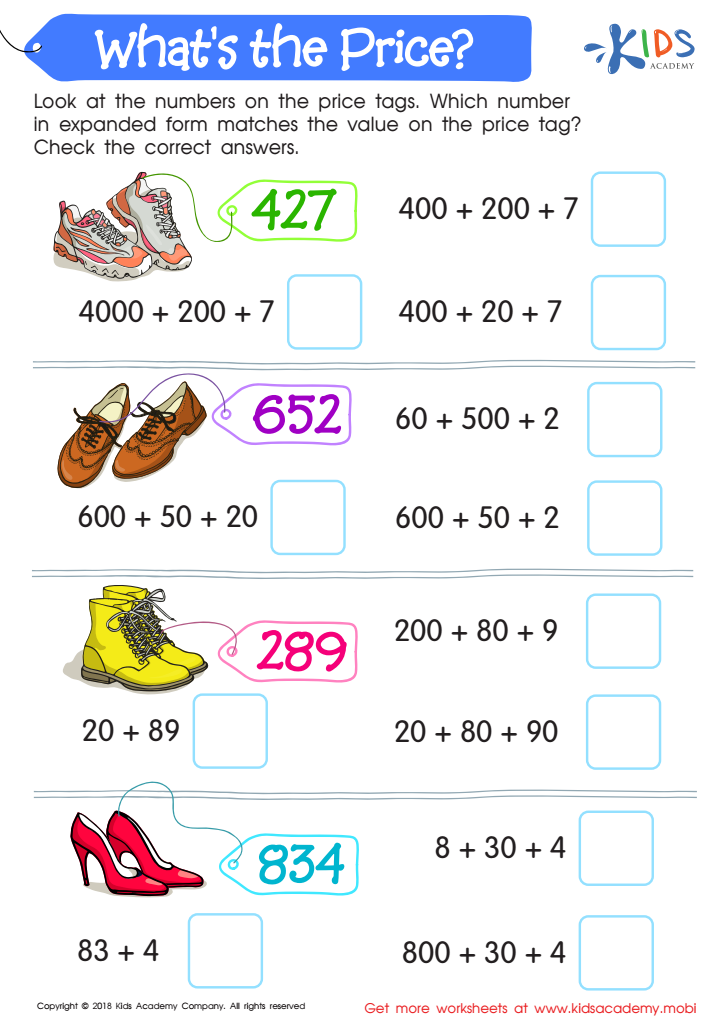
What's the Price? Worksheet
 Assign to My Students
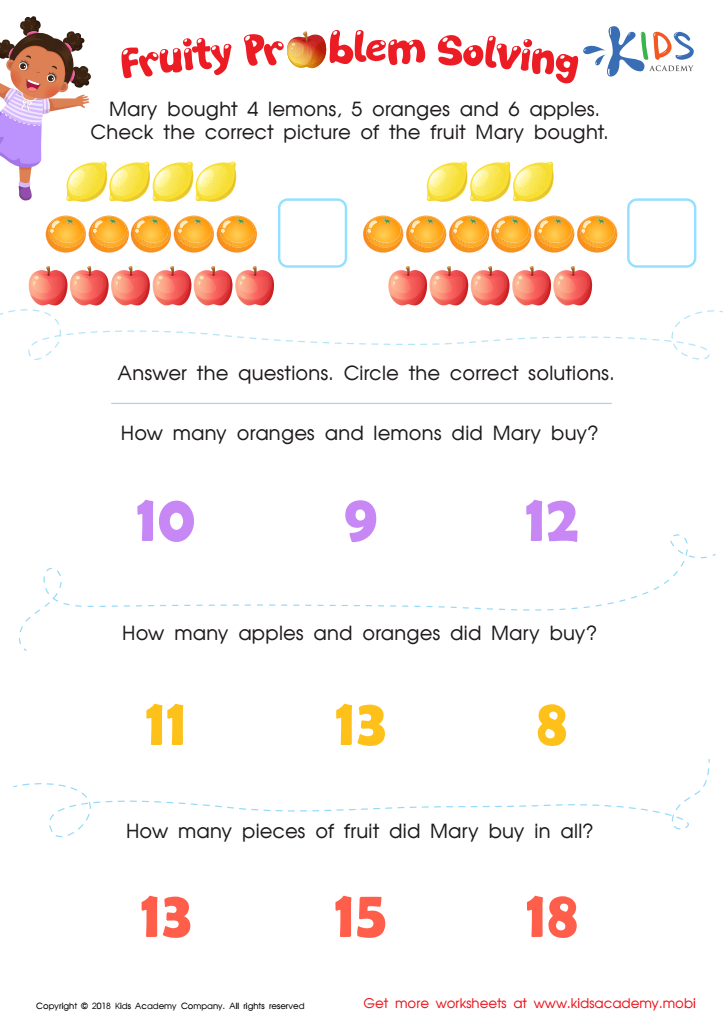
Fruity Problem Solving Worksheet
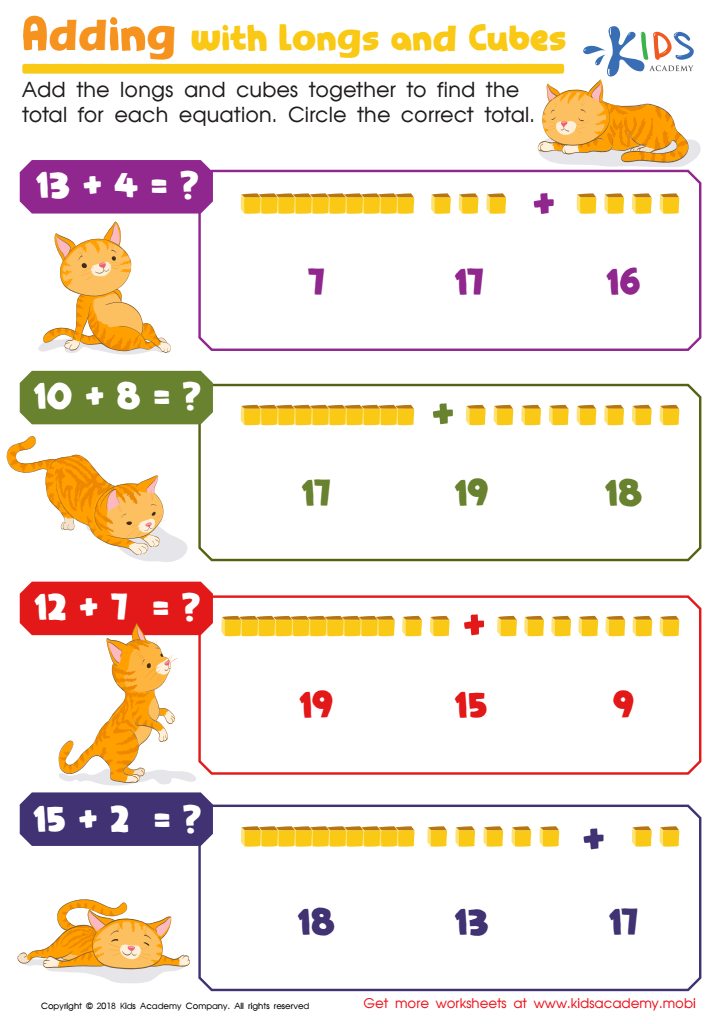
Adding With Longs and Cubes Worksheet
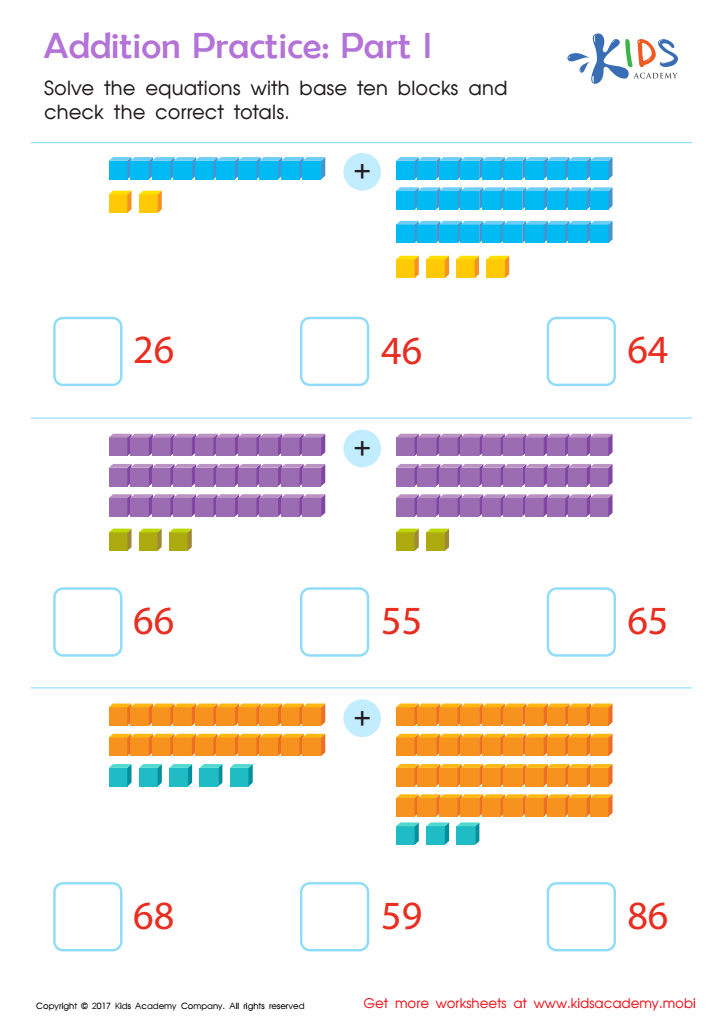
Addition Practice Sheet: Part 1
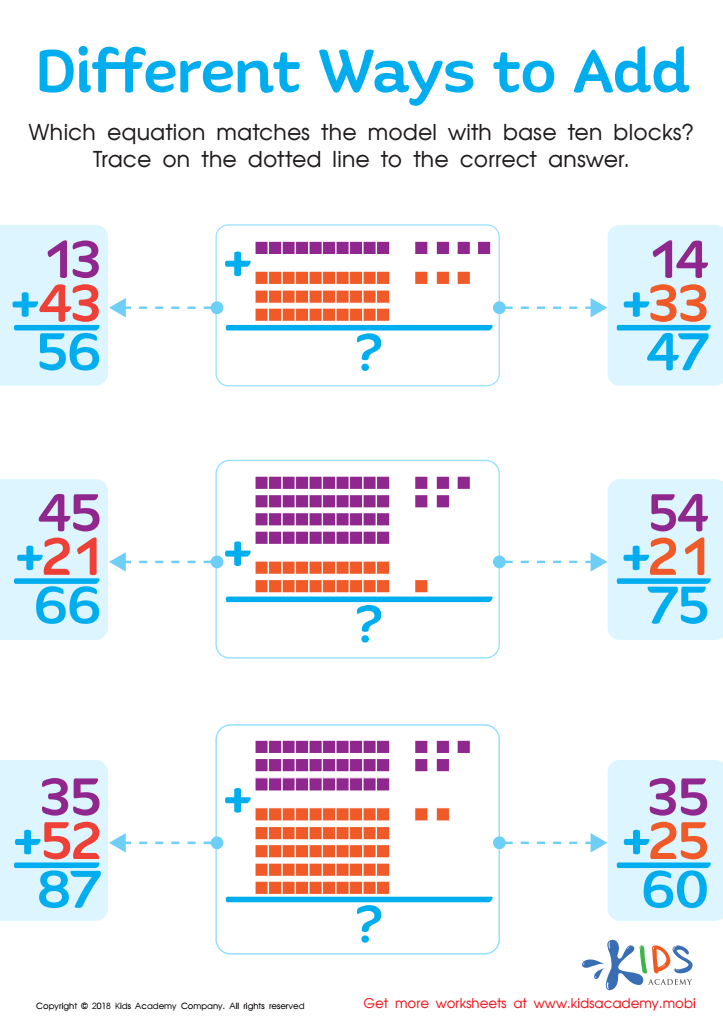
Different Ways to Add Worksheet








Parents and teachers should prioritize addition skills for ages 6-7 because this foundational math concept is crucial for overall academic success and cognitive development. During this stage, children transition from concrete operational thinking to more abstract reasoning, and mastering addition helps them build confidence in their mathematical abilities.
Strong addition skills enhance problem-solving capabilities, making it easier for children to grasp more complex mathematical concepts, such as subtraction, multiplication, and division, as they progress in school. Additionally, everyday scenarios—like sharing snacks or calculating time—demonstrate the practical application of these skills, thus fostering a positive attitude towards math.
Moreover, engaging with addition allows children to improve their critical thinking and analytical skills. It corresponds with other key competencies like language and communication, as children learn to articulate their thought processes and reasoning.
Establishing a solid grasp of addition in early years not only prepares children for advanced math but also nurtures a lifelong appreciation of learning. When parents and teachers prioritize this essential skill, they contribute to a child's resilience, self-esteem, and readiness to tackle more significant challenges in the future, ultimately laying the groundwork for educational achievement and personal growth.








