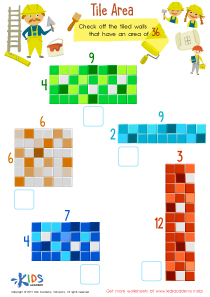
Basic Math Skills Normal Numbers Worksheets for Ages 6-7
17 filtered results
Difficulty Level
Grade
Age
-
From - To
Subject
Activity
Standards
Enhance your child's foundational math skills with our 'Basic Math Skills Normal Numbers Worksheets' designed specifically for ages 6-7. These engaging worksheets offer fun activities that focus on essential concepts such as number recognition, counting, simple addition, and subtraction. Crafted to support young learners, these exercises stimulate cognitive development while building confidence in mathematical abilities. Each worksheet features colorful illustrations and interactive tasks that captivate children's attention, making learning enjoyable. Parents and teachers can seamlessly integrate these resources into lesson plans, encouraging collaborative learning at home or in the classroom. Foster your child's love for math with our thoughtfully-designed worksheets today!
Favorites
With answer key
Interactive
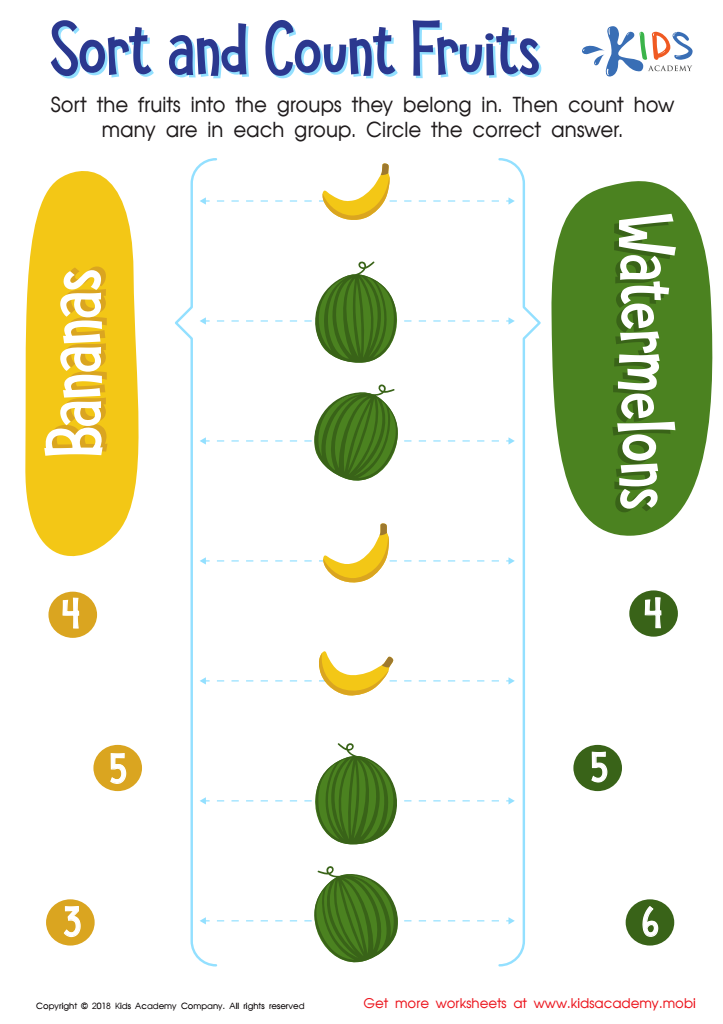
Sort and Count Fruits Worksheet
Allow your children to hone their critical thinking and number reasoning skills with this free worksheet. They'll sort, count, and trace fruits while learning basic number sense. A fun, delicious learning experience with familiar pictures they'll love.
 Assign to My Students
Sort and Count Fruits Worksheet
Worksheet
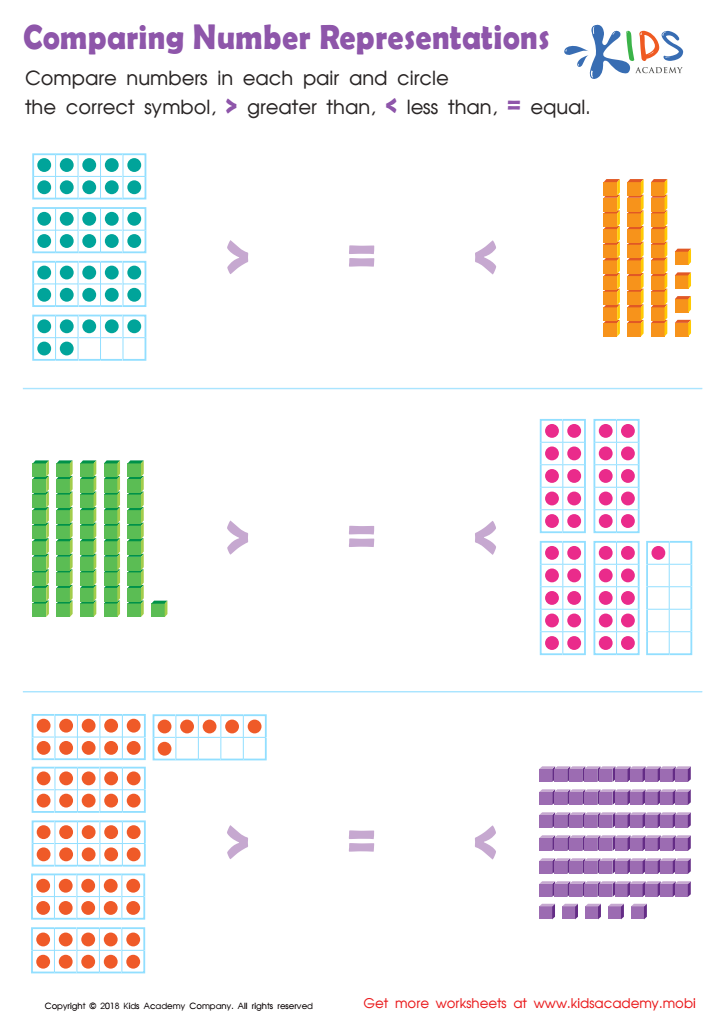
Comparing Number Representations Worksheet
Children need number representation skills to develop efficient computation and number sense. This free worksheet gives them practice with ten frames and place value blocks. They compare numbers and select the right comparative symbol: <, > or =. This helps them build a solid foundation for math.
Comparing Number Representations Worksheet
Worksheet
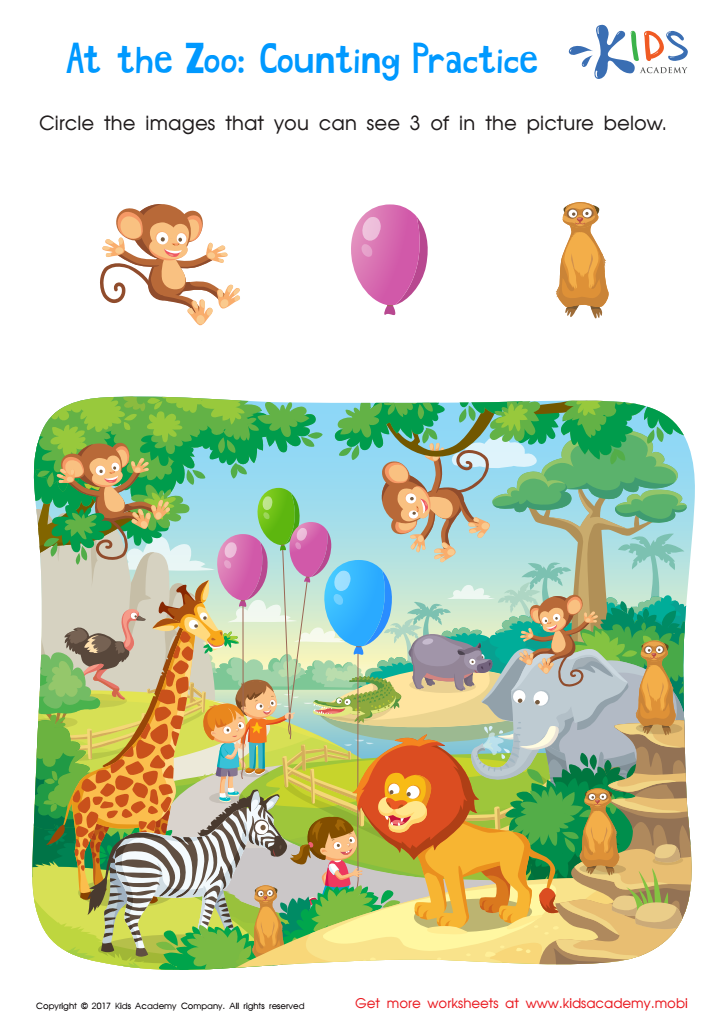
At the Zoo: Counting Practice Worksheet
This zoo-themed worksheet is perfect for practicing early counting skills and following directions. Your child will rule out incorrect answers and use problem solving to find images with duplicates. Fun and educational, this worksheet will get your preschooler ready for early math!
At the Zoo: Counting Practice Worksheet
Worksheet
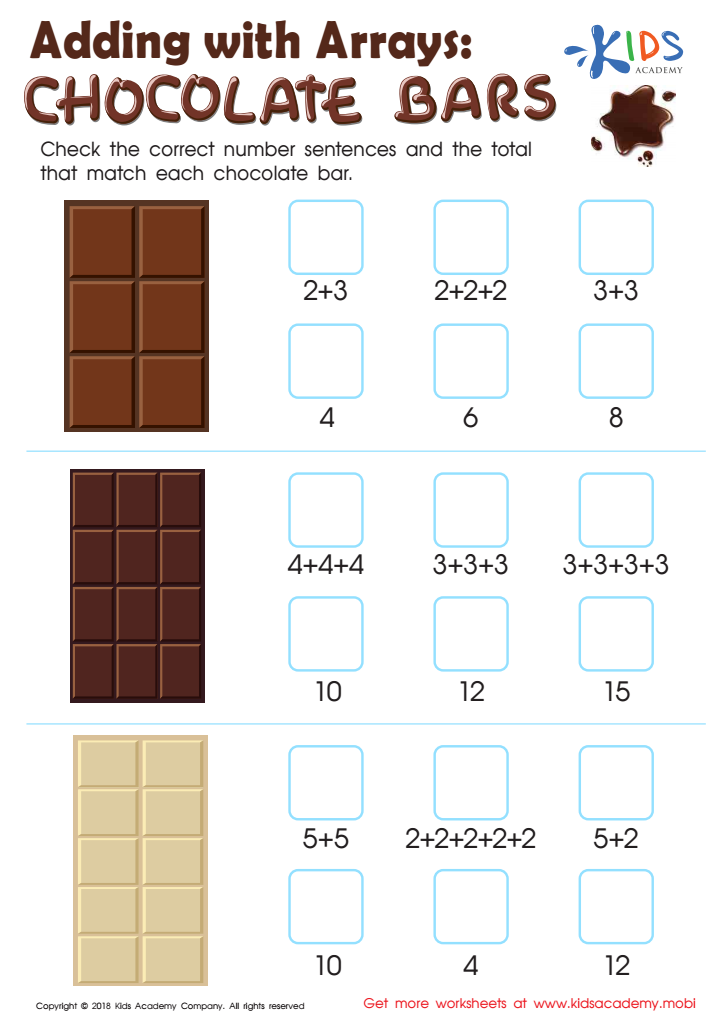
Adding with Arrays: Chocolate Bars Worksheet
Kids love chocolates! Gauge how enthused your kids get when you mention them. This worksheet is a fun exercise about chocolates - get your kids to check the correct number sentences and totals for each chocolate bar. Reward their hard work with some chocolates - extra incentive for a job well done!
Adding with Arrays: Chocolate Bars Worksheet
Worksheet
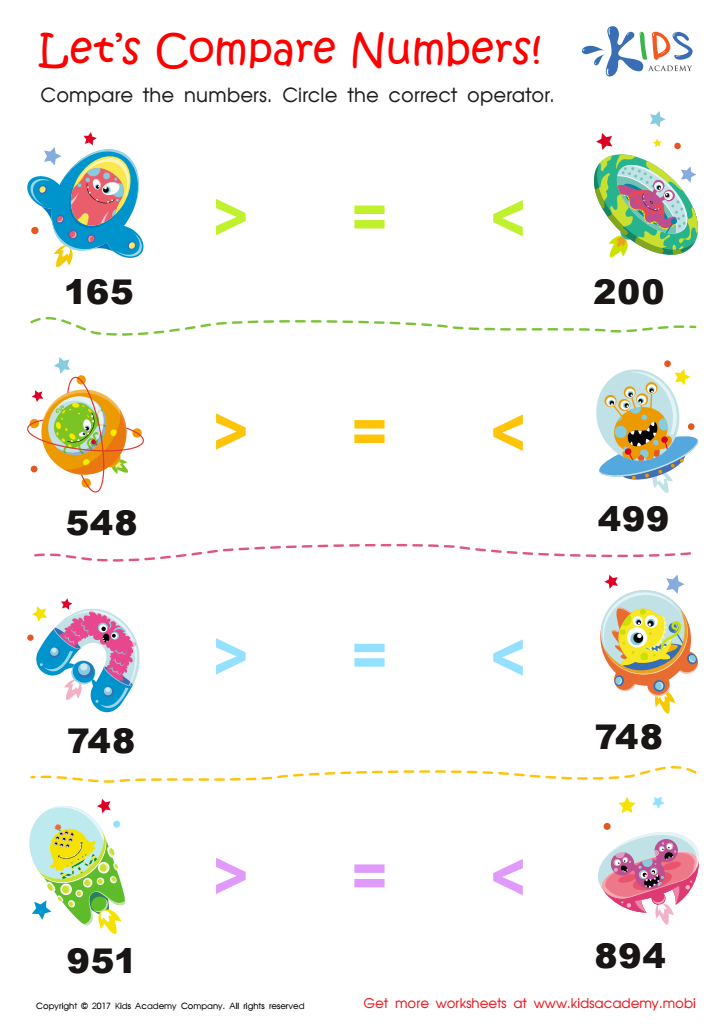
Comparing Numbers Worksheet for 2nd Grade
Alien friends are back to help your child learn to compare numbers using >, < and = symbols. This 2nd grade worksheet will challenge them with larger numbers!
Comparing Numbers Worksheet for 2nd Grade
Worksheet
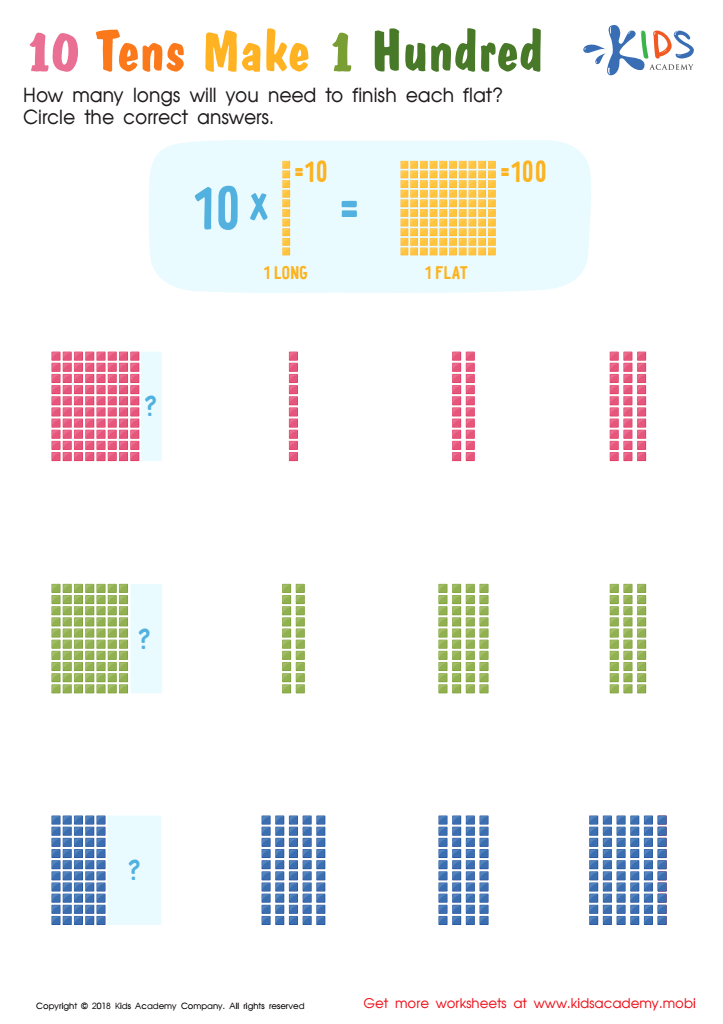
10 Tens Make 1 Hundred Worksheet
Help your child understand multiplication with this worksheet. Ask them how many 'longs' will be needed to complete each flat, then have them circle the correct answer from the options. With this exercise, your child will learn that 10 'tens' make 1 'hundred'!
10 Tens Make 1 Hundred Worksheet
Worksheet
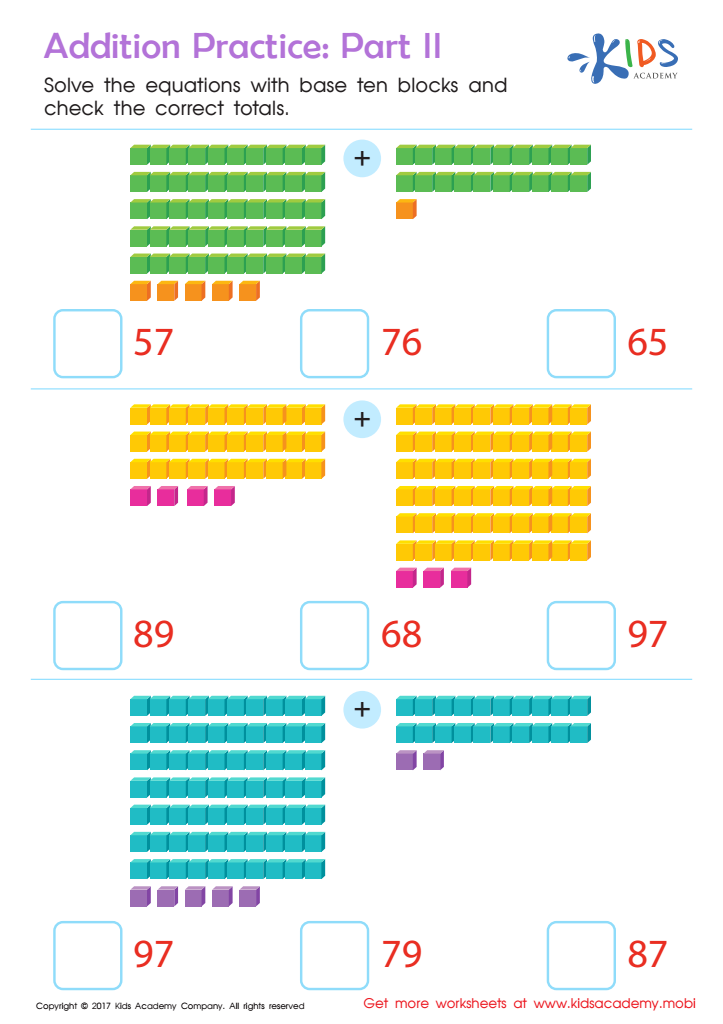
Addition Practice Sheet: Part 2
Make sure your kids understand place value before introducing two/three-digit addition. To help, use Kids Academy's colorful cube worksheet. It provides all the manipulatives needed to solve the problem and find totals. A great way to explain the concept behind the addition!
Addition Practice Sheet: Part 2
Worksheet
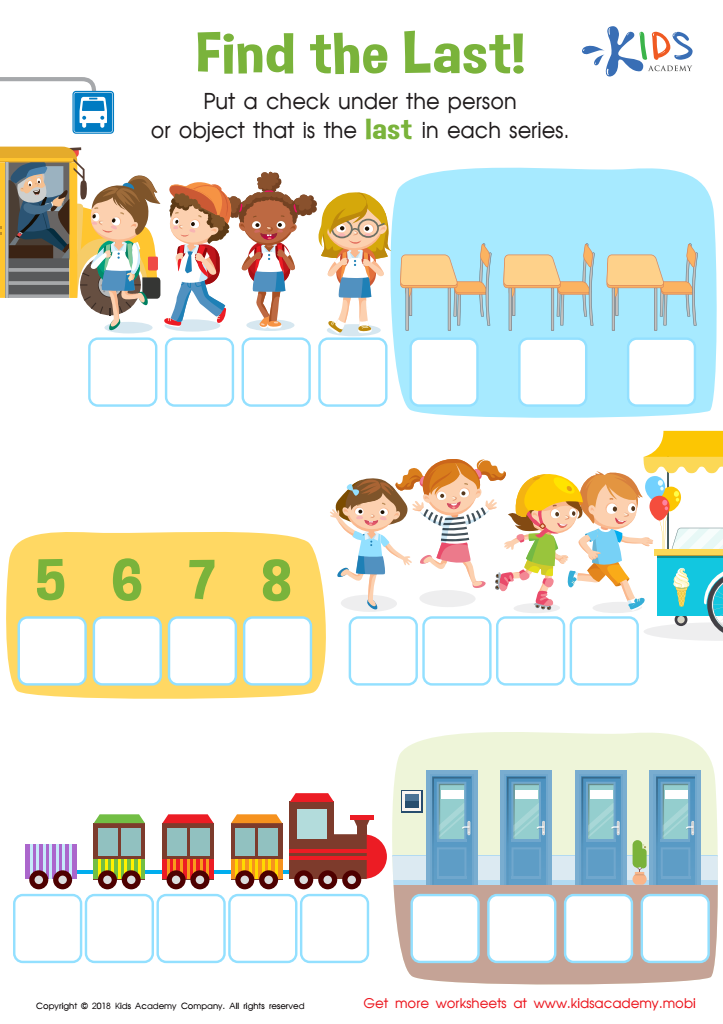
Find the Last! Worksheet
Teach young students about sequence words with this free worksheet. Have them look at sets of people or objects and choose the one that is last. Engage them further by having them describe or act out their day, and what happens last? Enjoy this printout and have fun!
Find the Last! Worksheet
Worksheet
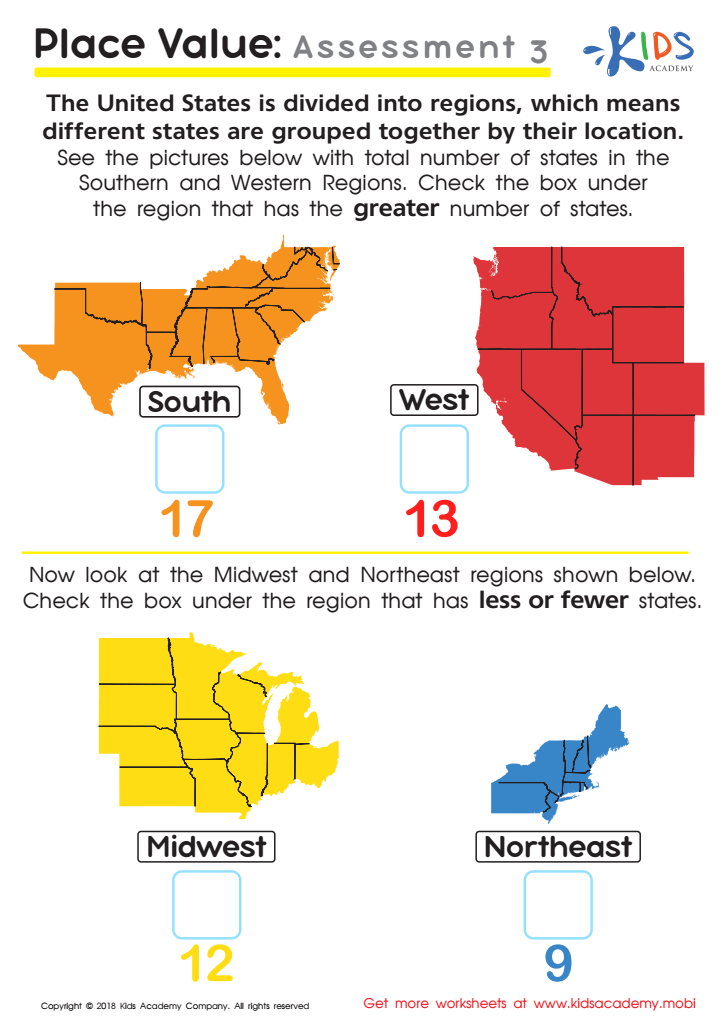
Place Value: Assessment 3 Worksheet
Test your child's math skills without them realizing it! This fun worksheet looks at the states and regions of the U.S. and your child can compare numbers greater or lesser than the other. It's the perfect way to assess your child's number sense without them knowing.
Place Value: Assessment 3 Worksheet
Worksheet
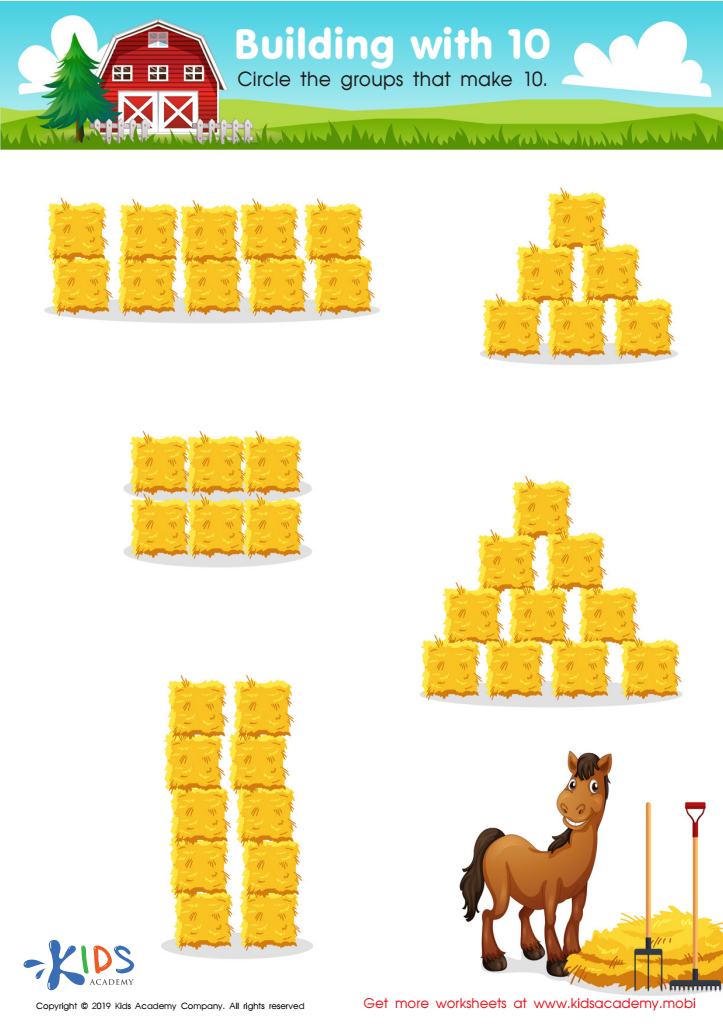
Building with 10 Worksheet
Counting numbers can be simple with this worksheet: Ask your kids to count the stacks of objects, ensure accuracy with your help, then circle the ones of ten. With practice and guidance, your children will soon become counting pros!
Building with 10 Worksheet
Worksheet
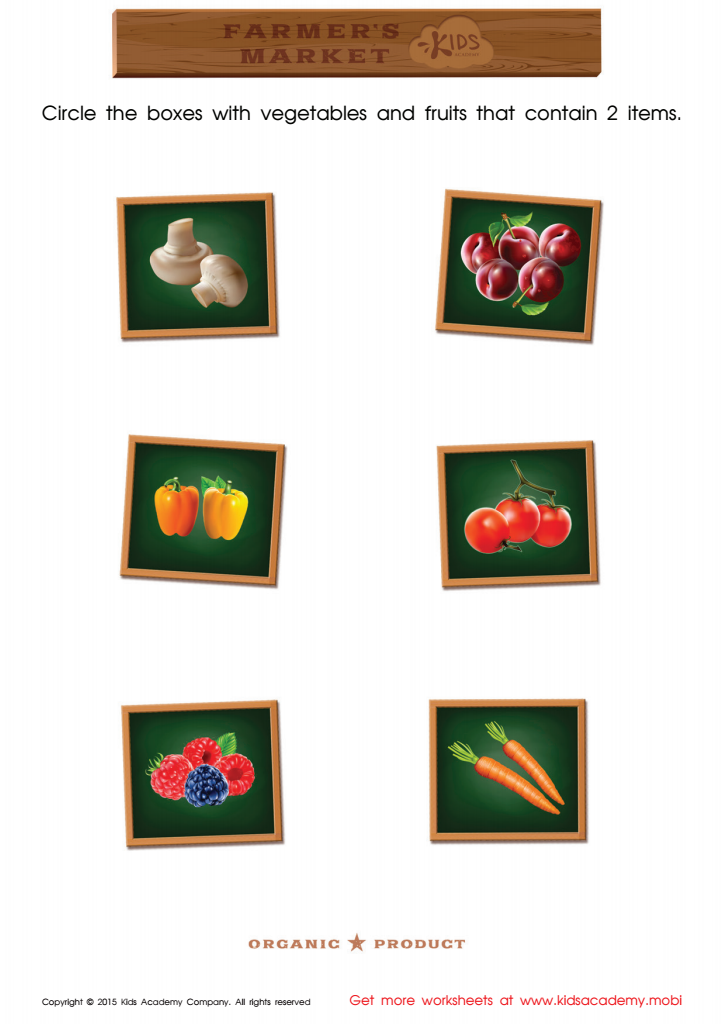
Count and Match Vegetables and Points Math Worksheet
Make your kids excited about math with this free printable kindergarten worksheet! Kids will count up to seven and match boxes with the same number of vegetables. Visualizing the task with this worksheet layout will entertain them while they practice math. Download additional worksheets by topic on Kids Academy.
Count and Match Vegetables and Points Math Worksheet
Worksheet
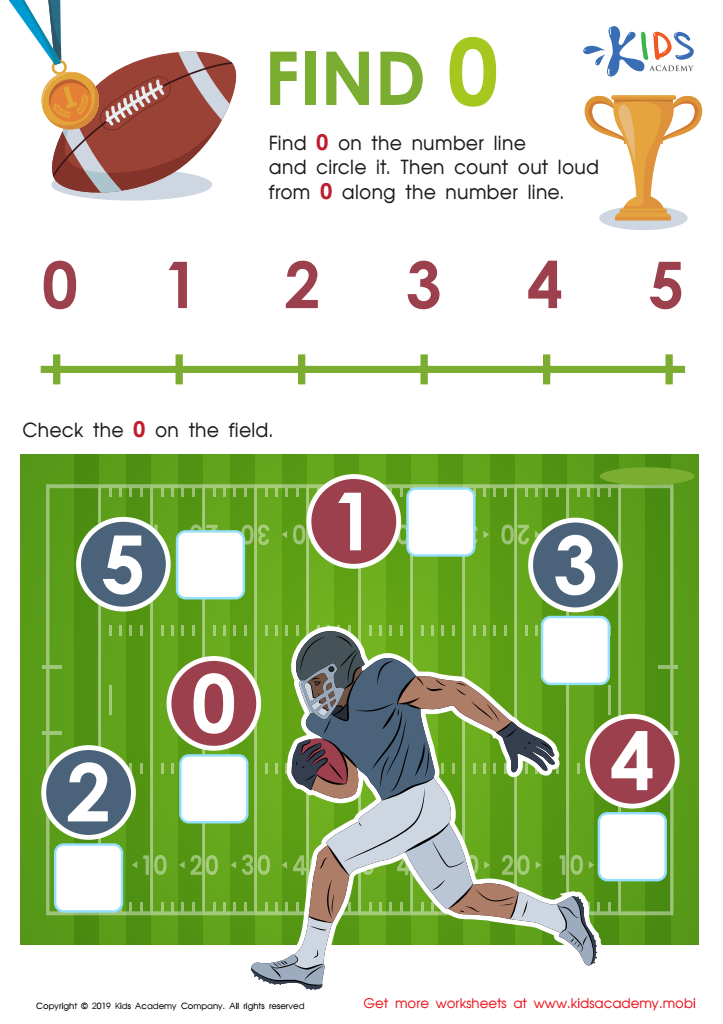
Find 0 Worksheet
Help make number learning easier with this worksheet! Ask your students to find and circle 0 on the number line, then count aloud from 0 to the last number. It might not be their favorite subject, but it's unavoidable - and with this worksheet, they'll be counting like pros!
Find 0 Worksheet
Worksheet
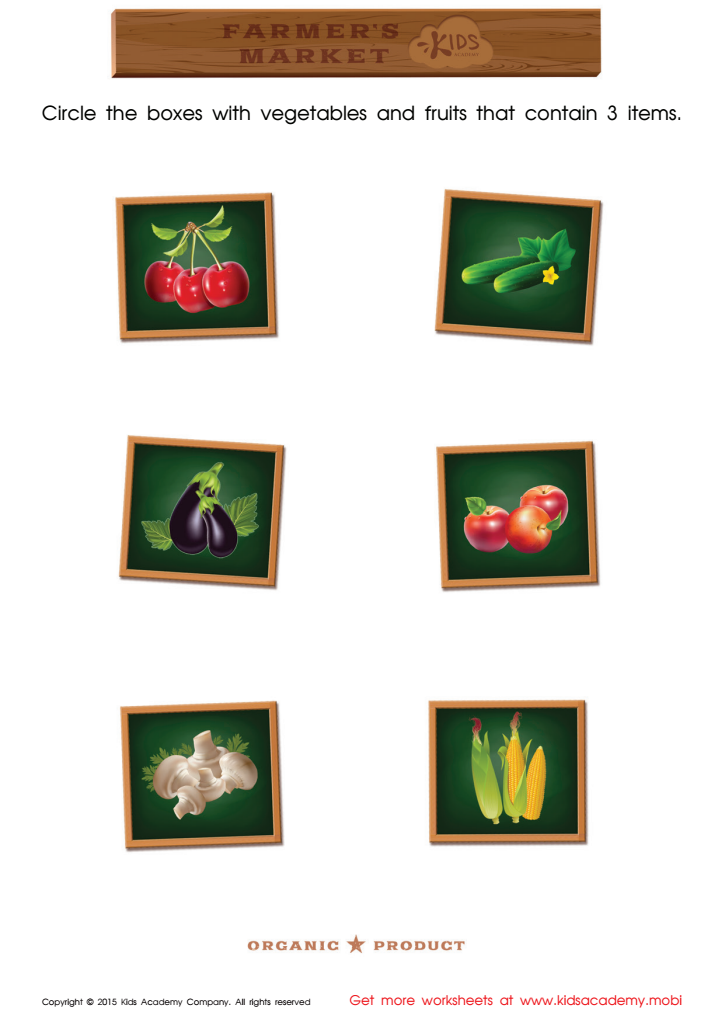
Count and Match Vegetables 1 – 5 Math Worksheet
Get your kindergartener to match the same number of vegetables with the boxes using this fantastic math worksheet. Using the Singapore approach, this printable worksheet makes math problems easy and fun for kids. Want more free worksheets? Click here for Kids Academy's selection!
Count and Match Vegetables 1 – 5 Math Worksheet
Worksheet
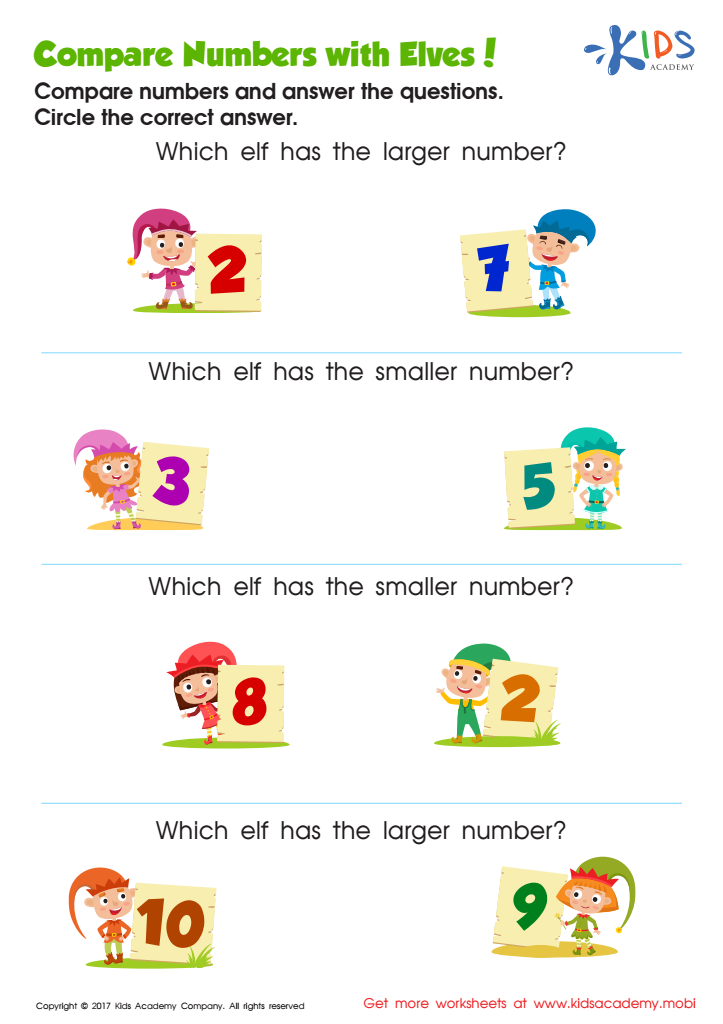
Comparing Numbers Worksheet for Kindergarten
Your child will love helping Santa's elves compare numbers with this fun worksheet for kindergarten! They must determine which number is bigger or smaller then circle the answer. It's a great activity for Christmas or any time!
Comparing Numbers Worksheet for Kindergarten
Worksheet
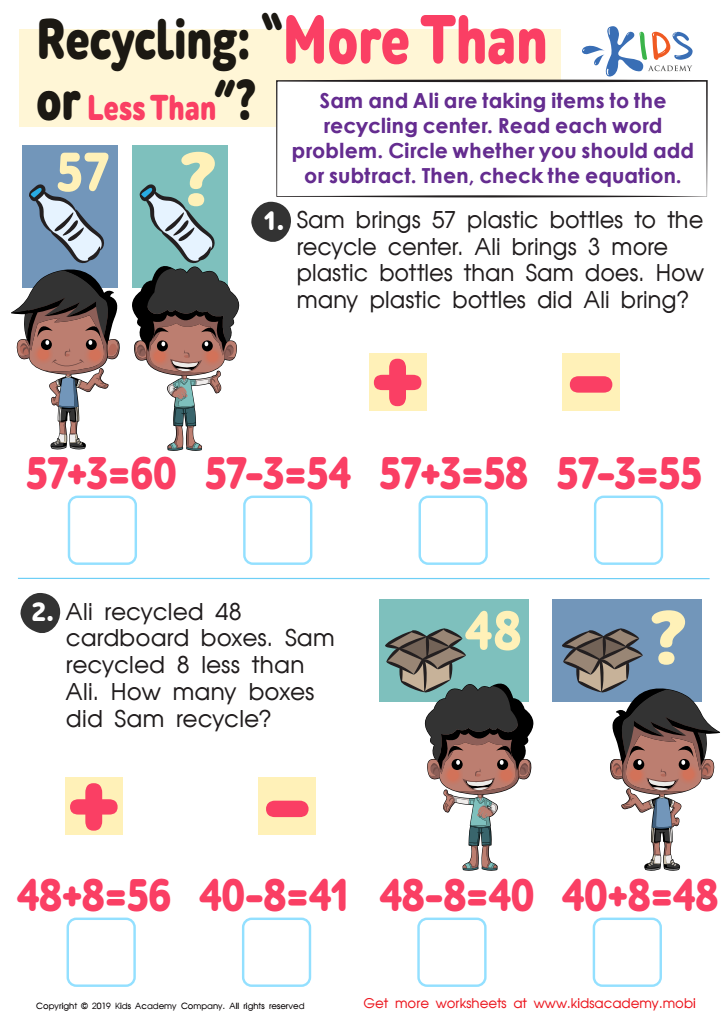
Recycling - More or Less Worksheet
Your child can compare numbers and solve word problems with this free worksheet. Help them understand what's being asked as Sam and Ali take items to the recycling center. They can choose the correct equation to match the word problem and apply their skills in reading and pulling out the appropriate information.
Recycling - More or Less Worksheet
Worksheet
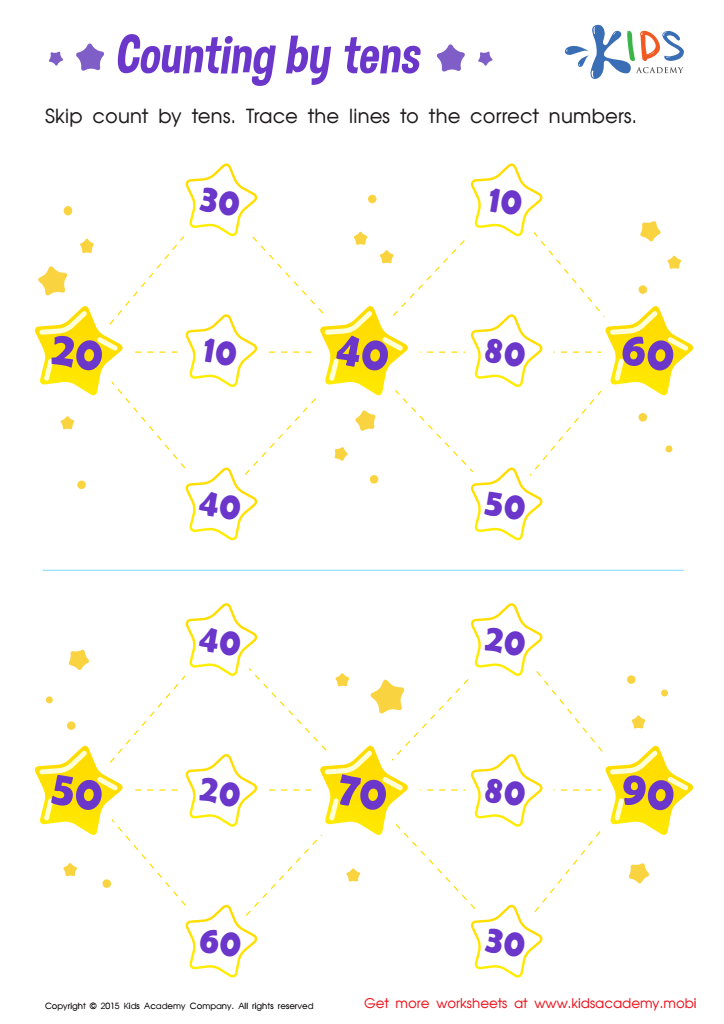
Learn Dozens: Counting by Tens Printable
Kindergartners need to learn skip counting - counting in number groups - to increase number sense and be ready for more advanced math. Our kindergarten worksheet featuring a starry trip to outer space will help your child practice this valuable skill. Your child will choose correct answers to trace the lines to the stars, building fluency in skip counting. They'll also strengthen problem solving and see the pattern it creates. Get your little learner to the next level with this skip counting worksheet!
Learn Dozens: Counting by Tens Printable
Worksheet
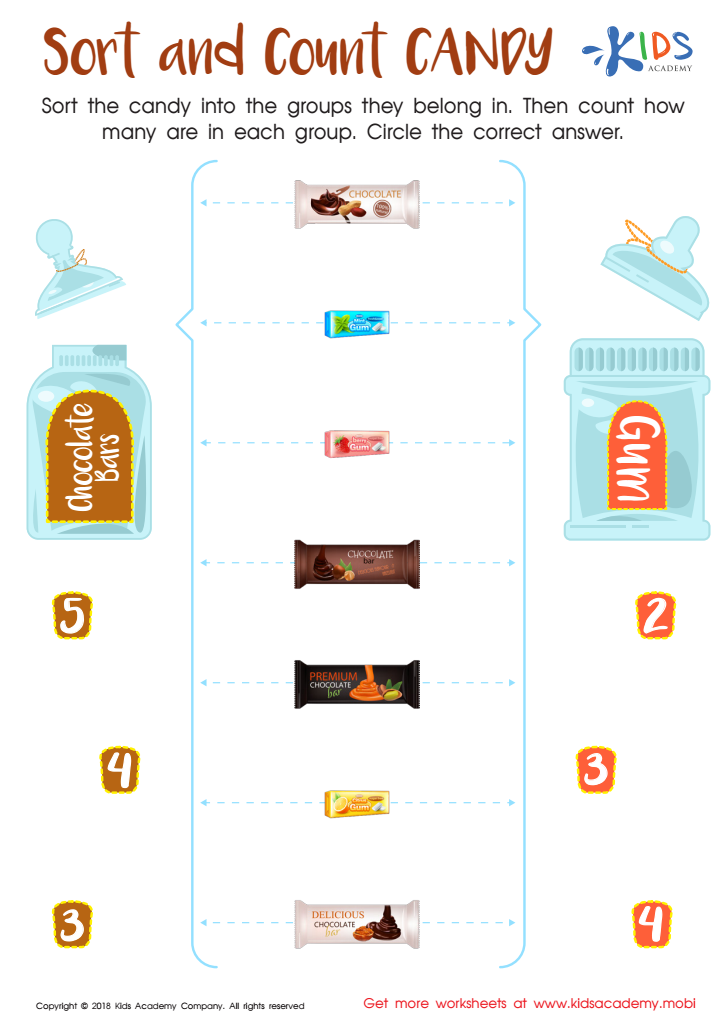
Sort and Count Candy Worksheet
Sort chocolate and candy with your kids! Help them use recognizable items and pictures to sort, practice counting with one-to-one representation, and develop their fine motor skills with the traceable lines. Download this free worksheet to get started. Yum!
Sort and Count Candy Worksheet
Worksheet
Join Kids Academy for Free
Who is primarily going to use this learning content?








Parents and teachers should prioritize basic math skills, particularly normal numbers, for children aged 6-7 because this foundational knowledge supports lifelong learning and cognitive development. At this age, children are rapidly developing critical thinking and problem-solving abilities, and mastering basic math concepts sets the stage for future academic success.
Understanding normal numbers enables kids to count, add, subtract, and grasp larger concepts such as grouping and patterns. These skills enhance their ability to comprehend everyday situations, from managing money to measuring ingredients in recipes. Additionally, engaging children in mathematical conversations fosters language and communication skills.
Moreover, early mastery of basic math boosts confidence and develops a positive attitude towards mathematics. When children feel competent in their abilities, they are more likely to fully engage in math-related activities and problem-solving tasks in the future.
Ultimately, fostering basic math skills is an investment in a child's educational journey, helping them navigate a world increasingly driven by technology and quantitative reasoning. By encouraging and supporting these skills, parents and teachers can empower children to become proficient, confident learners, ensuring that they are well-prepared for more complex mathematical concepts down the road.