Improving number sense Normal Numbers Worksheets for Ages 6-7
3 filtered results
-
From - To
Our "Improving Number Sense" worksheets for ages 6-7 are designed to enhance young learners' understanding of numbers effectively. These engaging and interactive worksheets are perfect for building a strong numerical foundation, crucial for future math success. Children practice counting, number recognition, and basic arithmetic through fun activities that make learning enjoyable. Tailored to the developmental stages of early learners, these resources help kids build confidence and fluency in their math skills. Ideal for parents and teachers aiming to foster number sense in engaging ways, these worksheets support both in-class learning and at-home practice. Equip your child with the tools they need to excel in math!
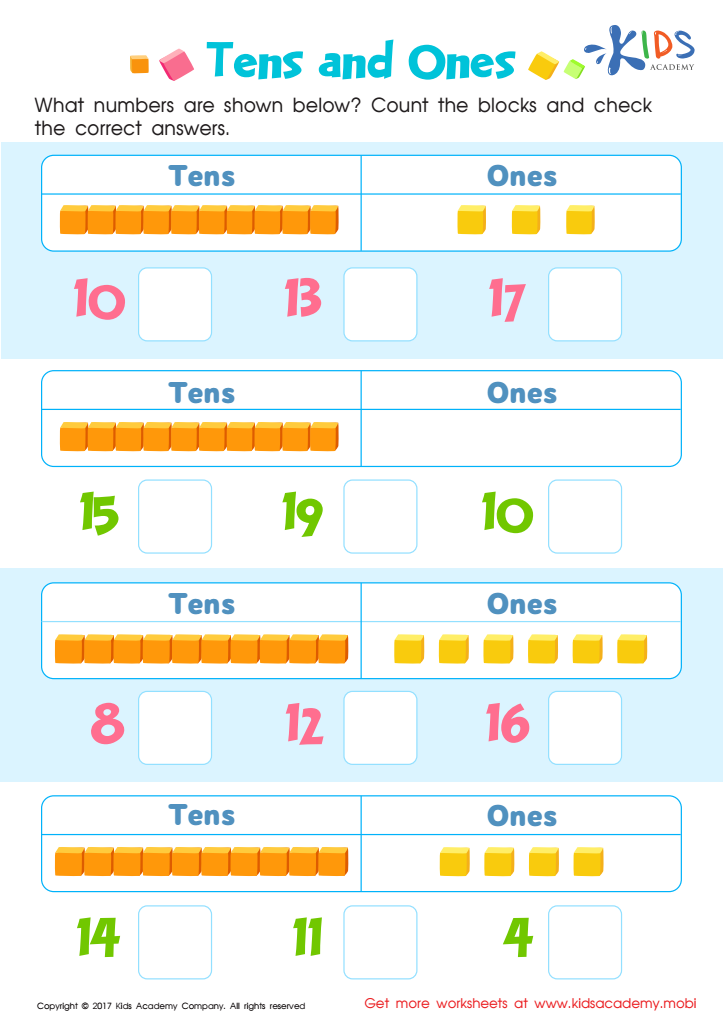
Tens and Ones Worksheet
 Assign to My Students
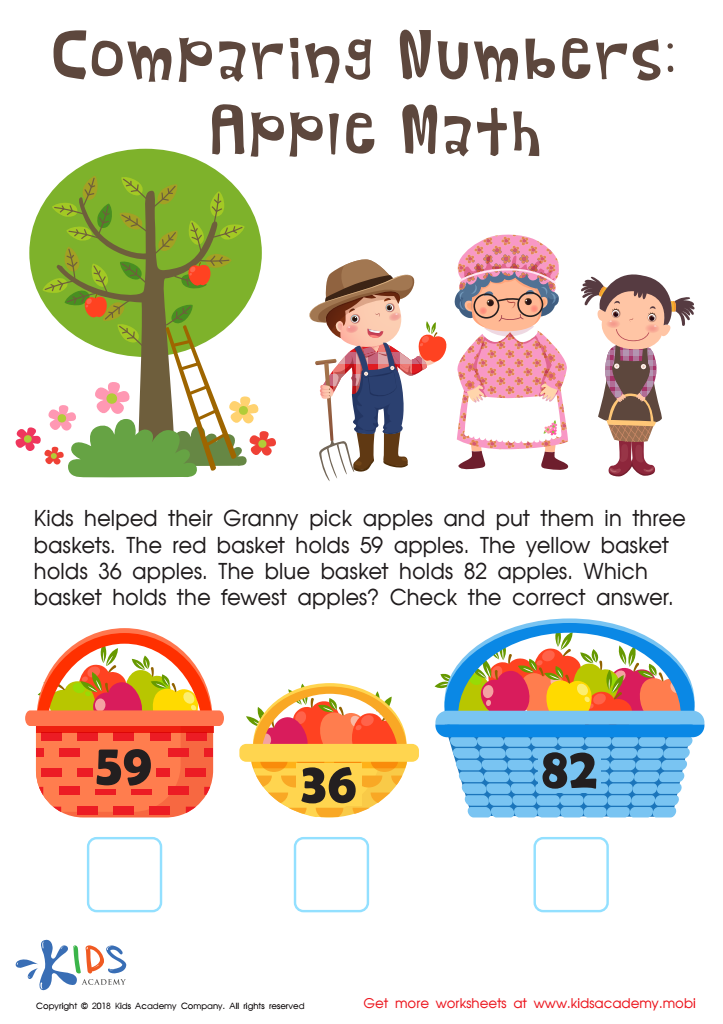
Apple Math Worksheet
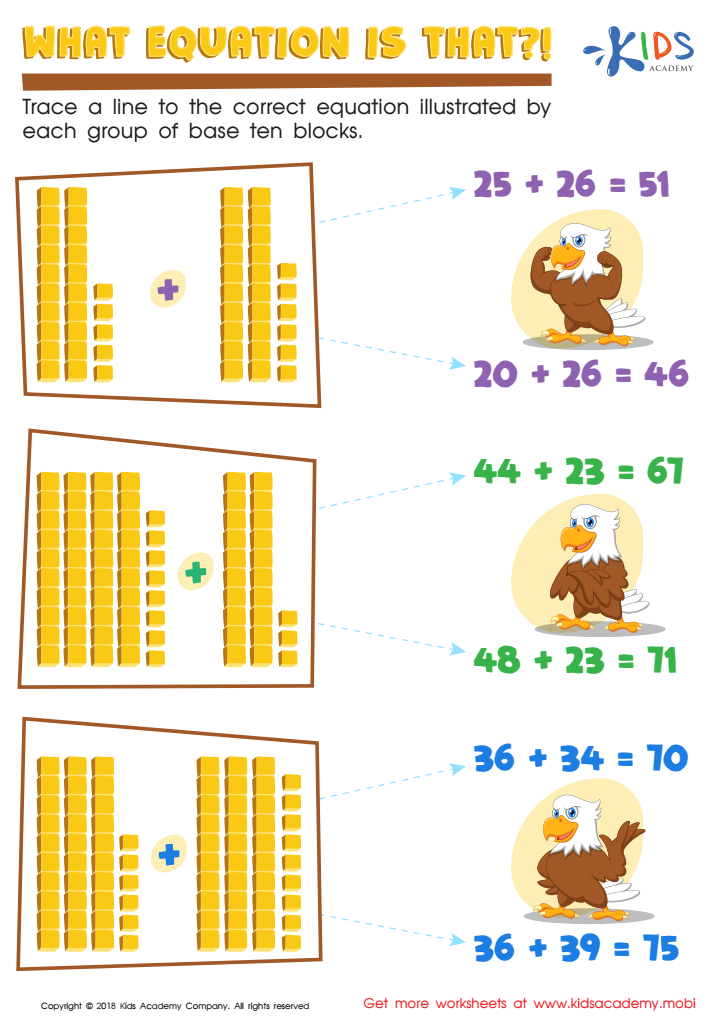
What Equation Is That? Worksheet



%20(1).jpg)



Parents and teachers should prioritize improving number sense in children ages 6-7 because it forms the foundation of all future mathematical learning and real-life problem-solving skills. Number sense refers to an intuitive understanding of numbers, their relationships, and how they are affected by operations. It includes skills such as counting, recognizing number patterns, and comparing quantities. For young learners, developing strong number sense is crucial because it helps them grasp more complex mathematical concepts with ease.
Research has shown that a solid number sense in early years predicts better performance not just in math but across other academic areas. When children aged 6-7 develop good number sense, they are more likely to enjoy and take interest in math, creating a positive feedback loop that enhances their learning. In practical terms, a child with a strong number sense can more easily grasp everyday activities that require math, like telling time, handling money, or measuring ingredients for a recipe.
Moreover, deficiencies in number sense can lead to math anxiety, a barrier that can significantly impede academic progress and self-esteem. By actively working to improve number sense in these early years, parents and teachers set the stage for a child's long-term academic success and practical life skills, enabling them to navigate a world that increasingly relies on quantitative information.








