Problem Solving Normal Numbers Worksheets for Ages 6-7
5 filtered results
-
From - To
Discover our Problem Solving Normal Numbers Worksheets designed specifically for children ages 6-7. These engaging worksheets focus on enhancing mathematical skills through fun and interactive problem-solving activities. Each worksheet encourages young learners to think critically and apply their knowledge of normal numbers in real-life scenarios. With colorful graphics and age-appropriate challenges, your child will develop essential math competencies while building confidence in their abilities. Ideal for classroom use or home practice, these worksheets ensure that learning is enjoyable and rewarding. Introduce your child to the exciting world of mathematics today with our curated collection of problem-solving materials!
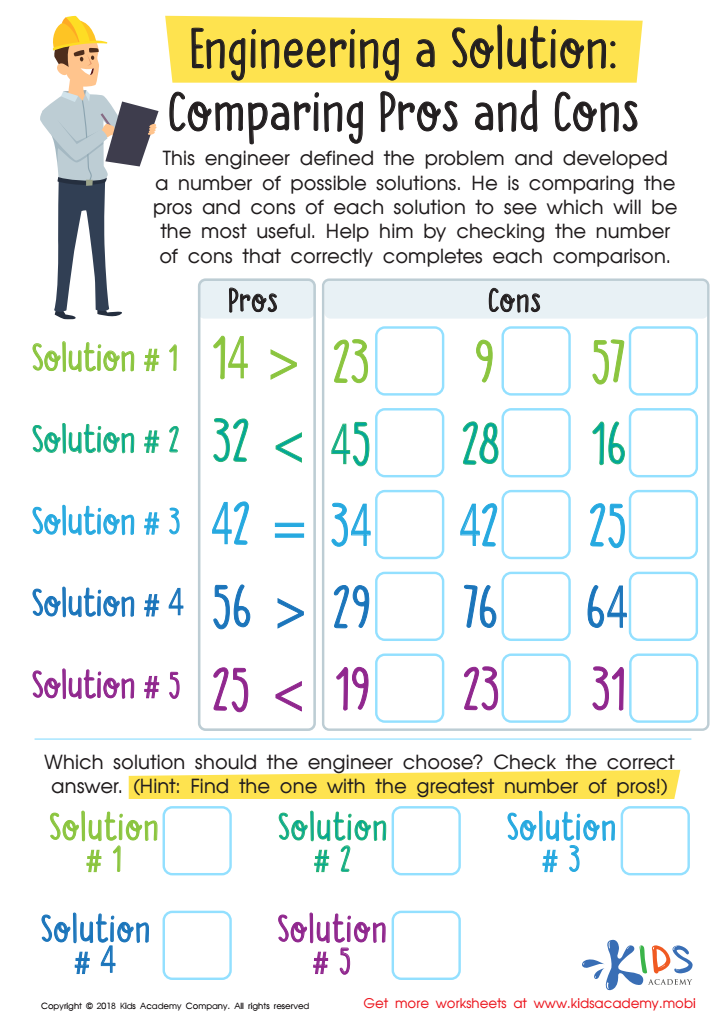
Engineering a Solution: Comparing Pros and Cons Worksheet
 Assign to My Students
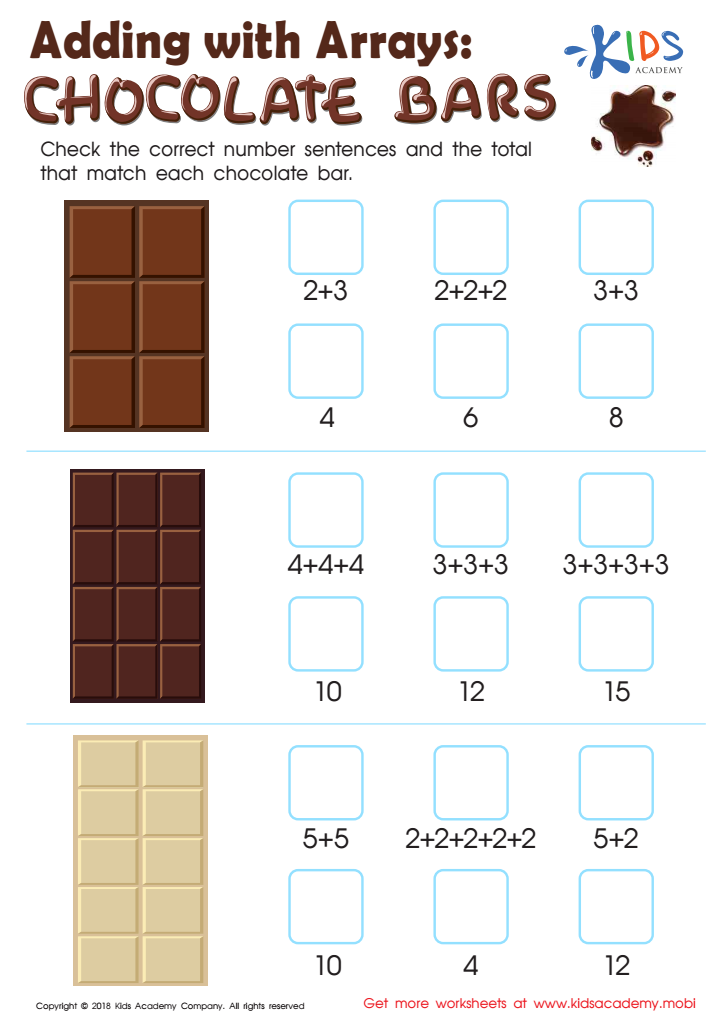
Adding with Arrays: Chocolate Bars Worksheet
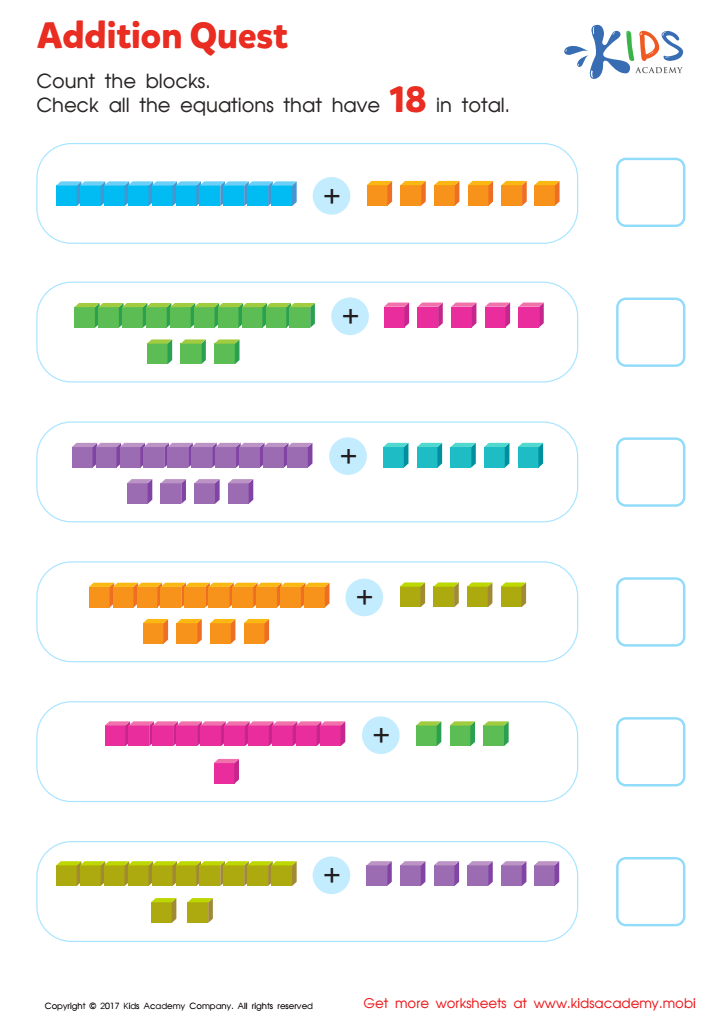
Addition Quest Worksheet: Part 2
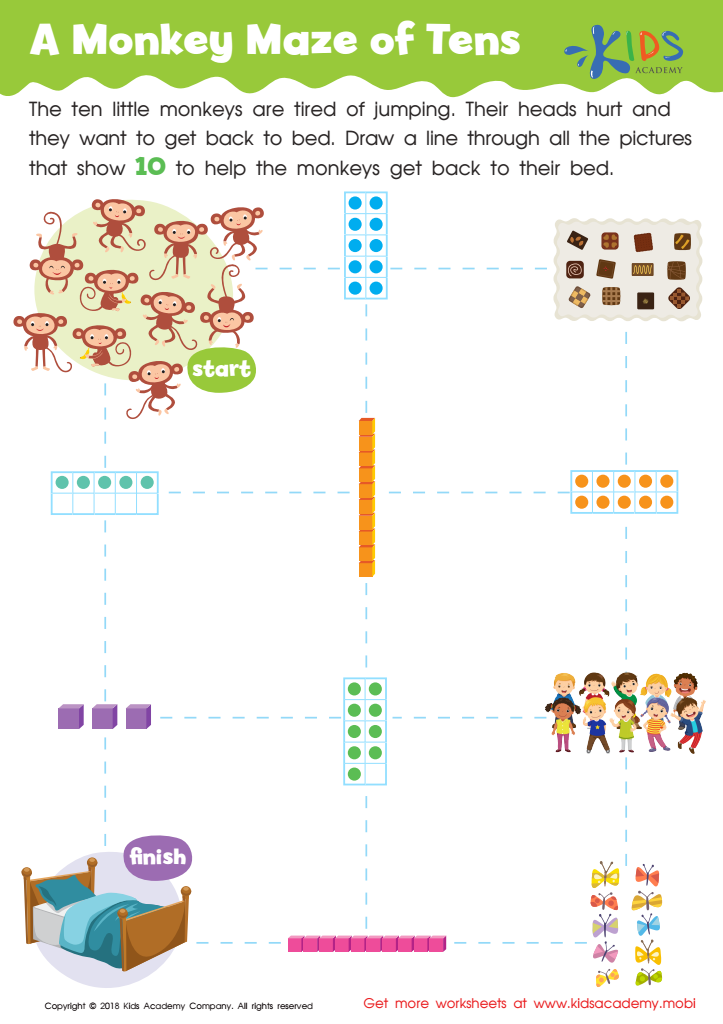
A Monkey Maze of Tens Worksheet
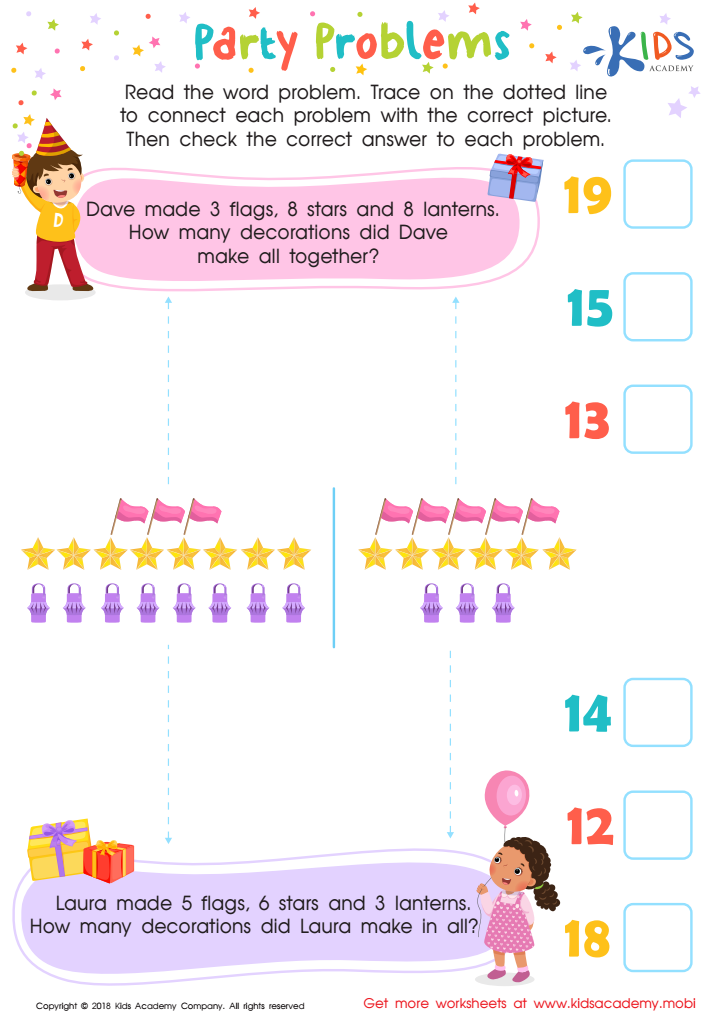
Party Problems Worksheet


%20(1).jpg)





Problem solving using normal numbers is crucial for children aged 6-7 as it forms the foundation of their mathematical understanding. At this age, children typically begin to grasp basic concepts of addition, subtraction, and the significance of numbers. Engaging in problem-solving helps them develop critical thinking skills and enables them to approach challenges methodically.
When parents and teachers introduce problem-solving activities that involve normal numbers, they encourage children to explore various strategies and solutions, fostering creativity and flexibility in thinking. This exploration not only solidifies their arithmetic skills but also enhances their ability to comprehend real-world situations.
Moreover, solid problem-solving skills boost confidence. As children learn to navigate through numerical challenges, they gain resilience and persistence—essential traits that will benefit them throughout their educational journey and beyond. Furthermore, mastering these skills early on paves the way for more advanced mathematical concepts later, making transitions to higher grades smoother.
Incorporating problem-solving with normal numbers in everyday activities and classroom settings demonstrates the relevance of math in daily life, reinforcing its importance and sparking a lifelong appreciation for learning. Ultimately, a focus on these skills at a young age can lead to a more mathematically literate society.








