
Basic measurement concepts Normal Math Worksheets for Ages 6-7
3 filtered results
Difficulty Level
Grade
Age
-
From - To
Subject
Activity
Standards
Introduce your child to the fascinating world of basic measurement with our engaging Normal Math Worksheets for ages 6-7. These carefully designed worksheets help young learners master essential concepts like length, weight, volume, and time through fun and interactive activities. Perfect for reinforcing classroom lessons or extra practice at home, our printable sheets feature kid-friendly illustrations and practical scenarios that make learning enjoyable and effective. Ideal for children progressing in their math journey, these exercises build confidence and foundational skills, ensuring a strong start in mathematics. Unlock your child's potential with our measurement mastery worksheets today!
Favorites
With answer key
Interactive
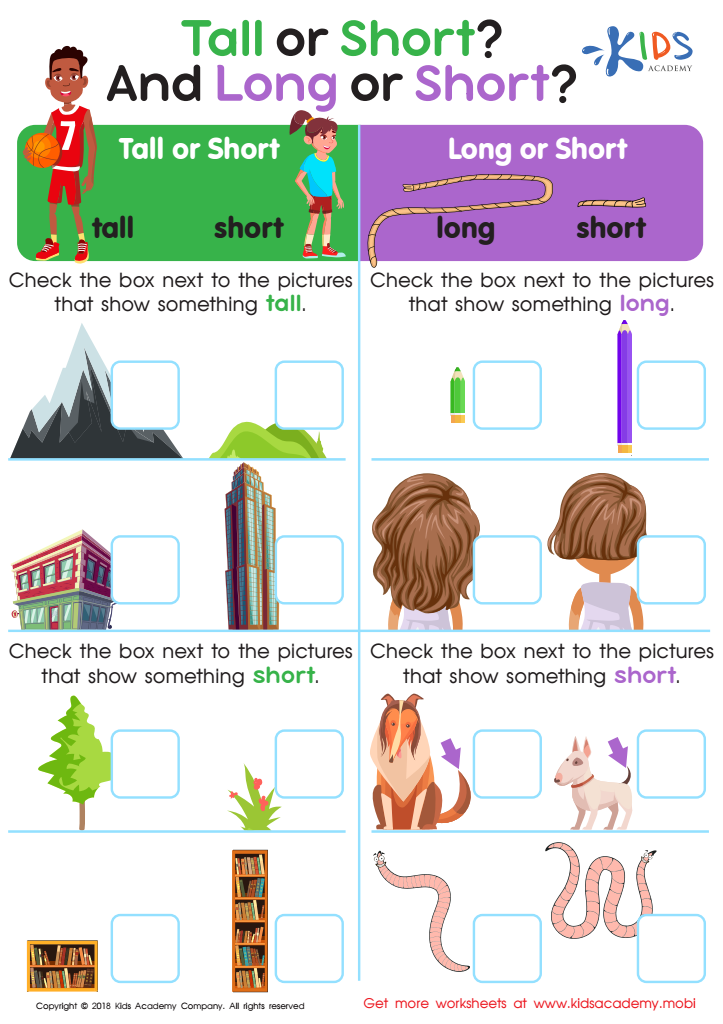
Tall or Short and Long or Short? Worksheet
This worksheet is fun and helpful for kids to understand the difference between height and length. With pictures of familiar objects, they can compare and choose the box with the right answer. This helps them gain skills and a better foundation for future measuring.
 Assign to My Students
Tall or Short and Long or Short? Worksheet
Worksheet
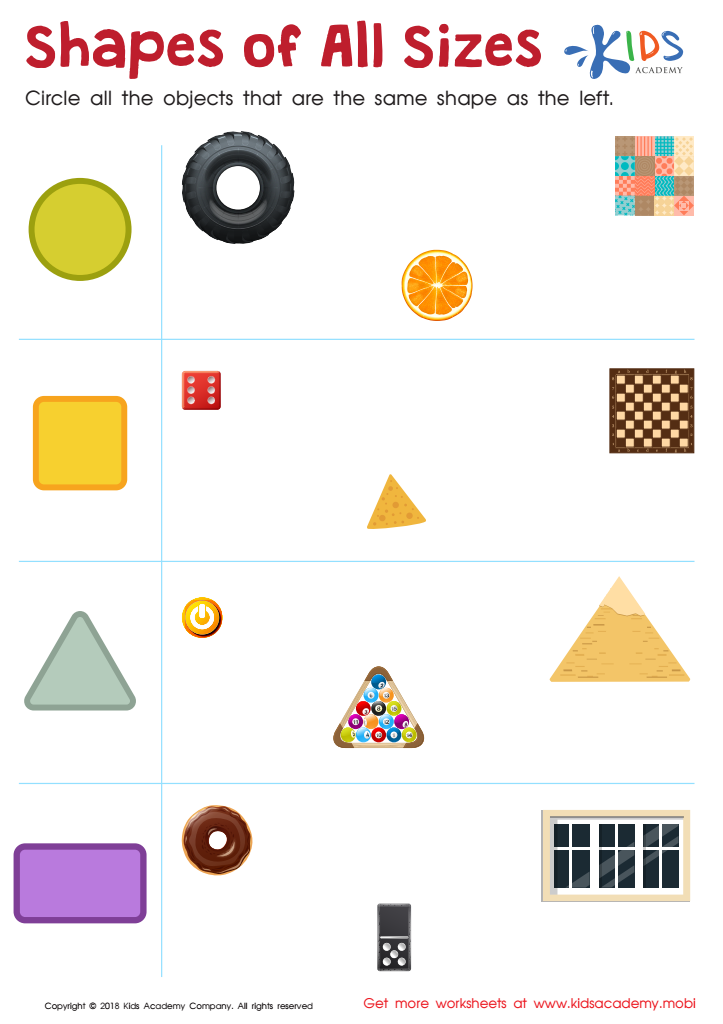
Shapes of All Sizes Worksheet
Students will have fun comparing basic shapes to familiar objects with this worksheet. It's an excellent way to help them recognize similarities in geometric shapes, building strong foundations for understanding congruence and similarity.
Shapes of All Sizes Worksheet
Worksheet
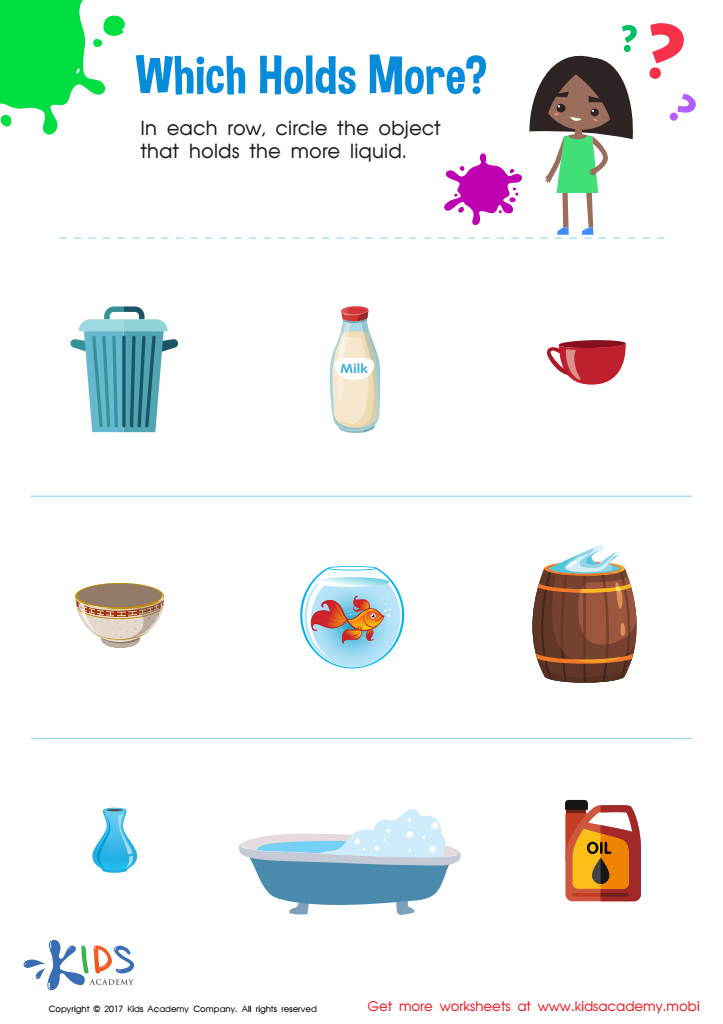
Which Holds More: Capacity Worksheet
Kids learn volume with containers of different capacities, such as mugs and barrels, and understand which can hold more liquid. A fun and interactive way to teach essential math concepts.
Which Holds More: Capacity Worksheet
Worksheet
Join Kids Academy for Free
Who is primarily going to use this learning content?








Parents and teachers should care about basic measurement concepts for children aged 6-7 because these foundational skills are critical for their overall cognitive development and future learning. At this age, children are naturally curious and start to observe and compare their surroundings. Introducing measurement concepts—such as length, weight, and volume—helps them make sense of the world and enhances their ability to quantify objects and spaces in a meaningful way.
Learning measurement supports cognitive development by bolstering problem-solving skills and logical reasoning. When children grasp concepts like "longer," "shorter," "heavier," and "lighter," they begin to apply critical thinking to everyday situations, which is essential for math and science proficiency later on. In addition, measurement activities often involve hands-on learning, which can improve fine motor skills and spatial awareness.
Early familiarity with measurement lays the groundwork for more complex mathematical concepts that students will encounter as they progress in their education, such as geometry and algebra. Mastery of these basics can also boost a child's confidence in math, making them more likely to engage with and succeed in more advanced topics as they grow older. Overall, emphasizing measurement concepts at this developmental stage provides children with essential tools for both academic success and everyday life.








