
Color Identification Normal Math Worksheets for Ages 6-7
8 filtered results
Difficulty Level
Grade
Age
-
From - To
Subject
Activity
Standards
Discover engaging Color Identification Normal Math Worksheets designed specifically for children aged 6-7. These worksheets aim to enhance color recognition while seamlessly integrating foundational math skills. Young learners will explore various colorful activities that make learning fun and interactive. From counting colorful objects to solving addition and subtraction problems with a vibrant twist, our resources promote both cognitive skills and creativity. Perfect for at-home learning or classroom use, these worksheets encourage children to identify and differentiate colors while strengthening their math abilities. Foster your child’s love for learning with our exciting and educational color identification worksheets today!
Favorites
With answer key
Interactive
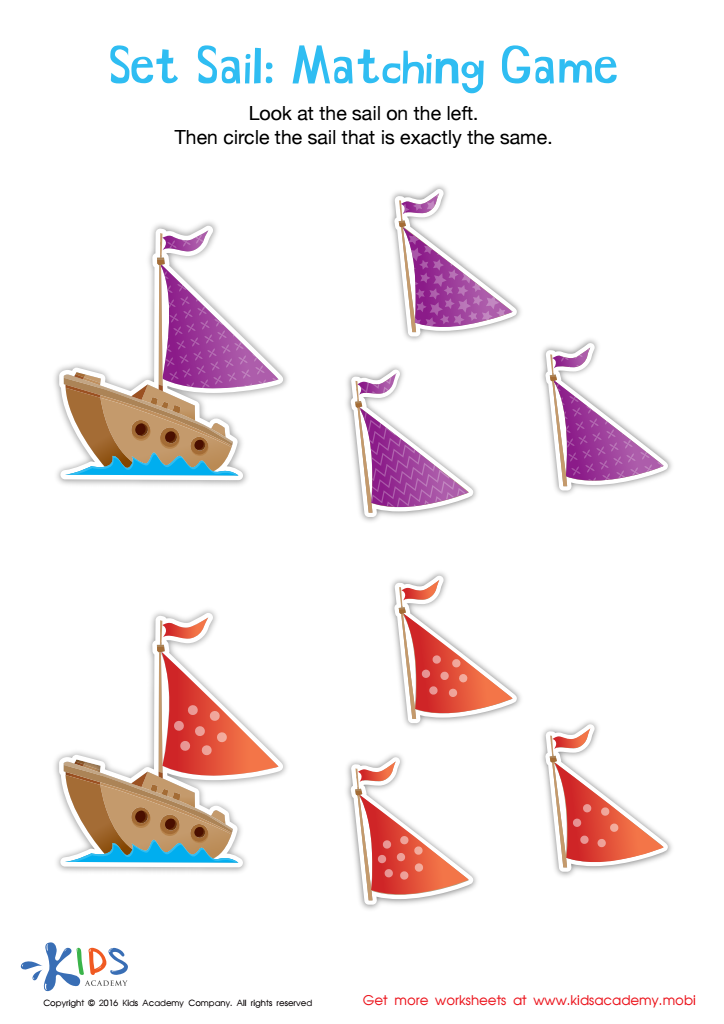
Set Sail Worksheet
Set sail with this fun matching game for toddlers! Kids will love finding the same pattern on the sails, improving their problem-solving and counting skills. Enjoy this bright and engaging worksheet!
 Assign to My Students
Set Sail Worksheet
Worksheet
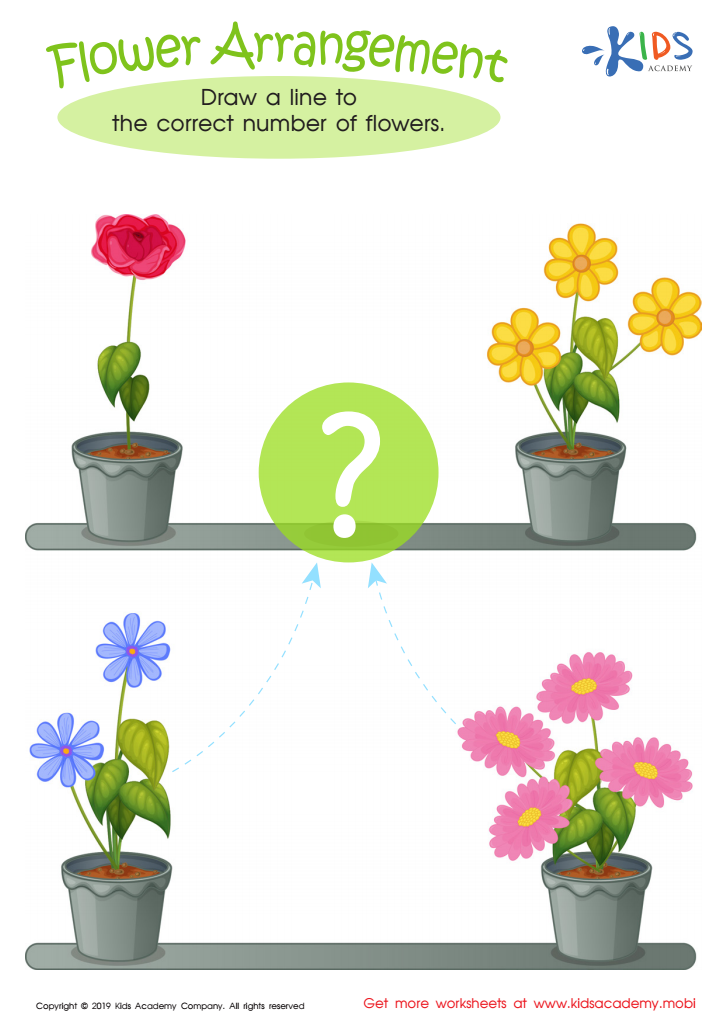
Flower Arrangement Worksheet
Your math whizzes can use flower power to showcase their counting skills with this bright PDF! One-to-one representation in pictures helps children build number sense, which leads to better math and computation efficiencies. This PDF features traceable lines for kids to draw to the correct number of flowers, all while practicing their counting with pretty pictures.
Flower Arrangement Worksheet
Worksheet
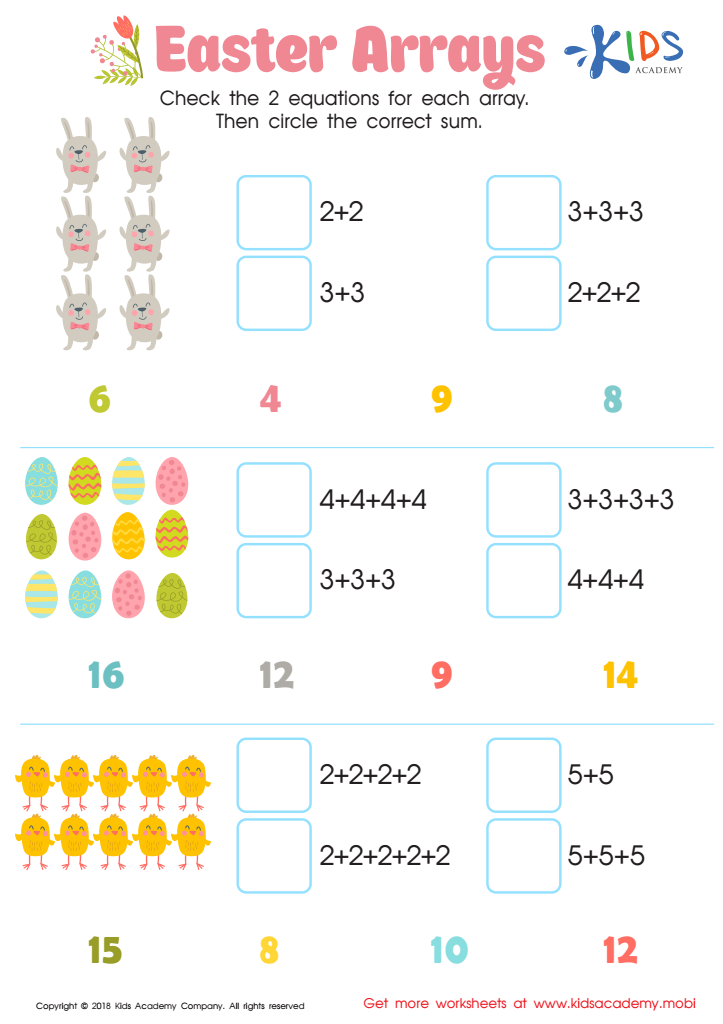
Easter Arrays Worksheet
Does your child love Easter? Do they adore the Easter bunny and egg hunts? Help them have fun with this worksheet! Go through it with them and check the equations for each array. Then, have them circle the correct sum. It's a great way to make the holiday extra exciting!
Easter Arrays Worksheet
Worksheet
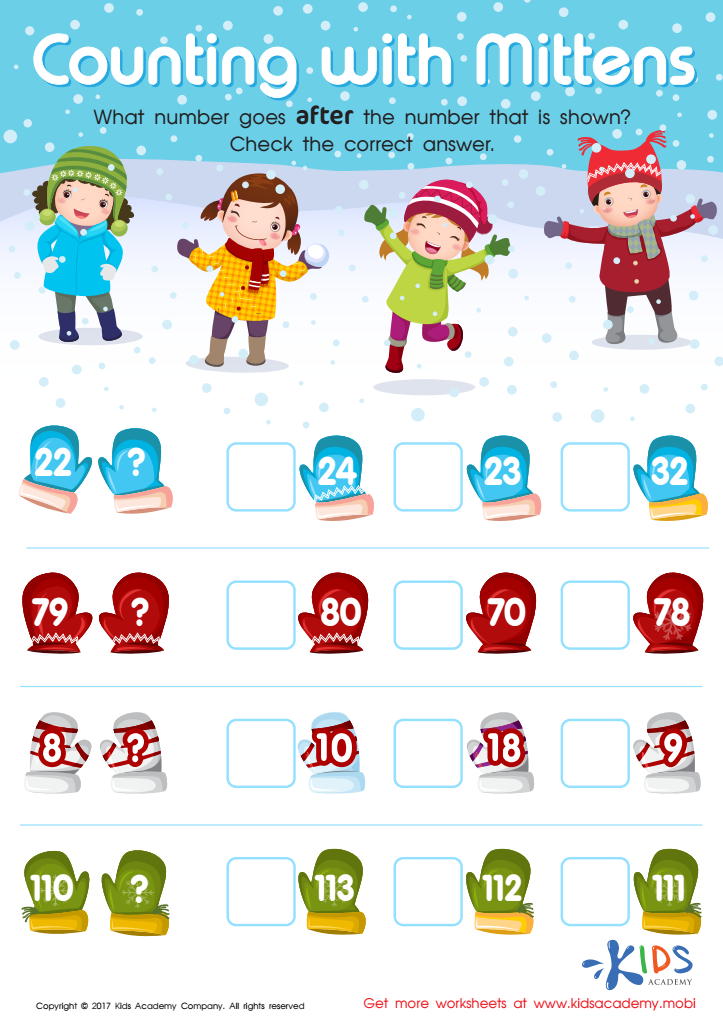
Counting with Mittens Worksheet
Let your kid have fun with this counting worksheet! It encourages them to count numbers and figure out which come next in the picture. Check the box with the correct answer - it's already provided. No more groaning and tears - this is a great way to learn!
Counting with Mittens Worksheet
Worksheet
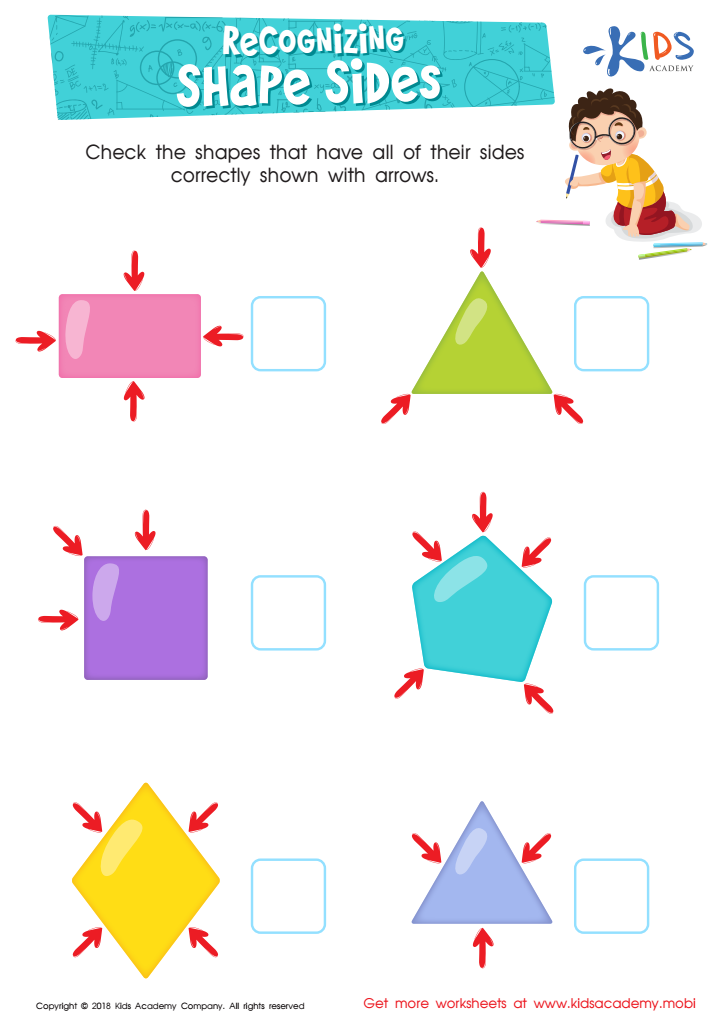
Recognizing Shape Sides Worksheet
This exercise will help your child recognize shape sides. Go over the difference between sides and angles first, then have them check the shapes with arrows to show the sides. They'll quickly get the hang of it and find it much easier after completing the colorful worksheet.
Recognizing Shape Sides Worksheet
Worksheet
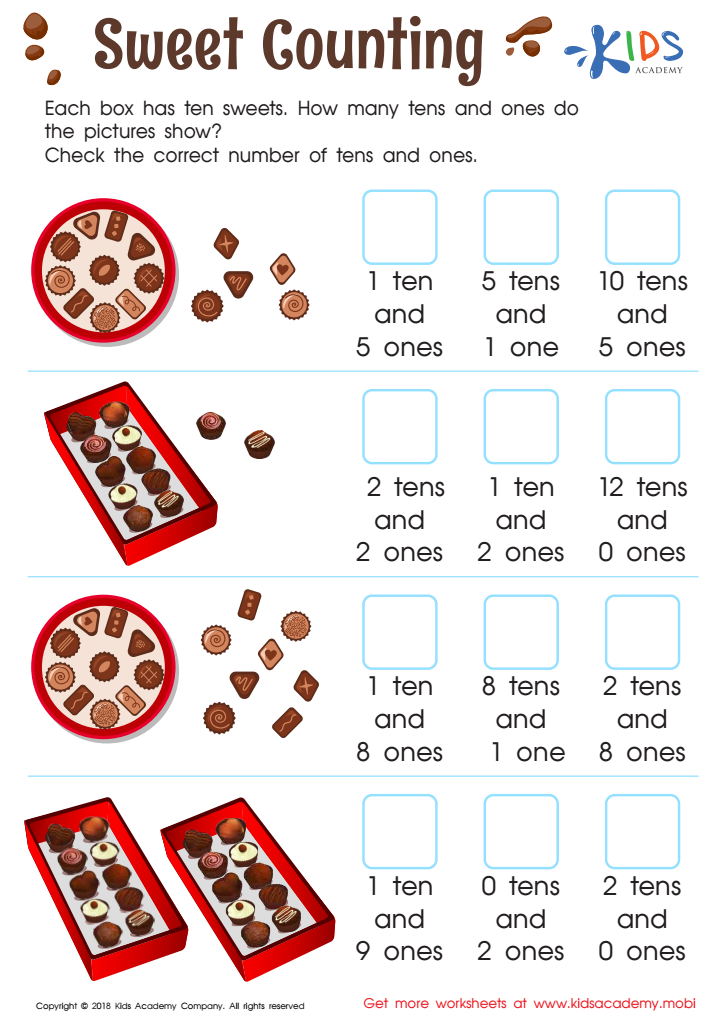
Sweet Counting - Part 2 Worksheet
Kids adore sweets! Make counting fun with this sweet-themed worksheet. Guide your child to count chocolates in boxes of 10, plus individual candies. Group them into tens and ones. Ask: "How many ones and tens are in each row?" Check the answer and complete the practice sheet.
Sweet Counting - Part 2 Worksheet
Worksheet
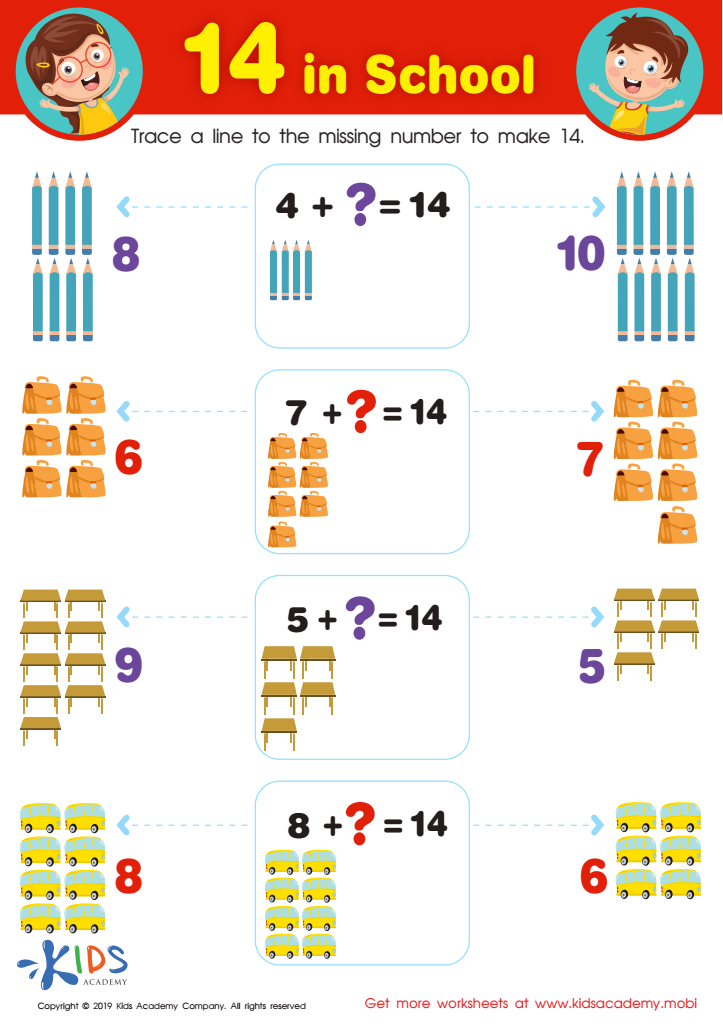
14 in School Worksheet
Remind your kids that adding different sets of numbers can give the same total (e.g. 2+3=5, 4+1=5). Ask them for more examples. Afterwards, work through the exercise. Help them count the objects and trace a line to the missing number that makes the total 14.
14 in School Worksheet
Worksheet
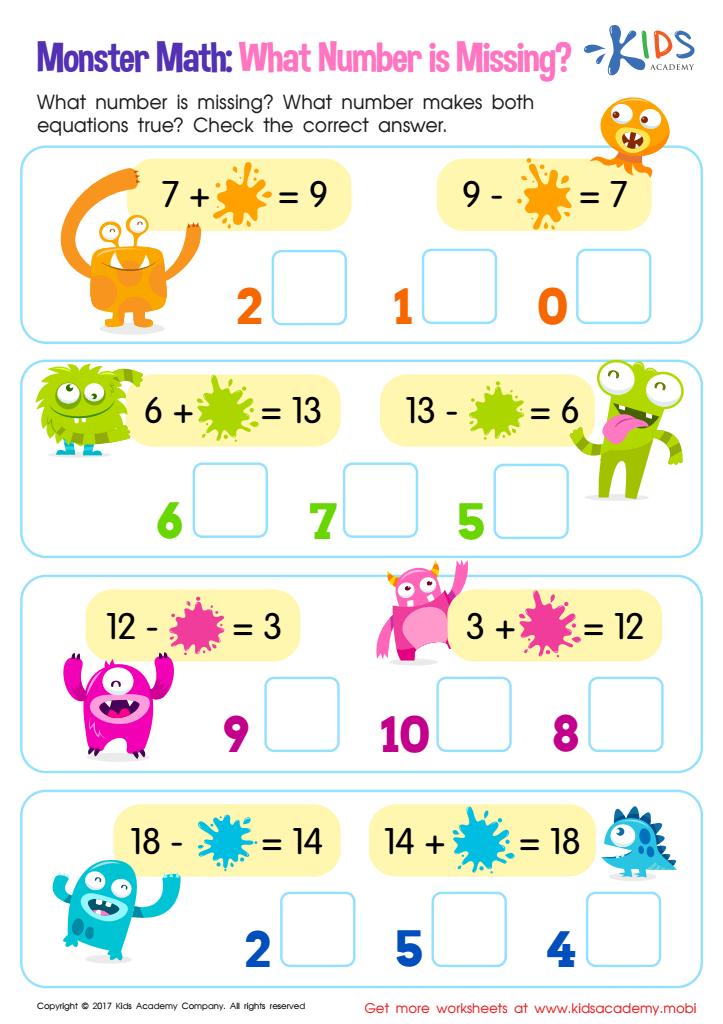
Missing Number: Monster Math Worksheet
Engage your child in monster math fun with a worksheet! They'll need to use their counting, addition and subtraction skills to solve equations on both sides. On the left side, they must complete an addition problem and on the right, the equation is in subtraction form. Assist them in selecting the right number out of the given options to make both equations true.
Missing Number: Monster Math Worksheet
Worksheet
Join Kids Academy for Free
Who is primarily going to use this learning content?





.jpg)
Color identification is a crucial foundational skill that contributes significantly to children's overall cognitive development, especially in early math learning for ages 6-7. At this age, children are not just learning to recognize colors; they are also beginning to understand concepts such as sorting, categorization, and comparison, all of which are vital in mathematical thinking.
When children can accurately identify and name colors, they are better equipped to engage in activities that enhance their spatial awareness and pattern recognition—skills directly tied to mathematical reasoning. For instance, using colored objects during sorting games can help reinforce counting, addition, and subtraction skills as children learn to group items by color while applying mathematical operations.
Moreover, color plays a role in communication. Understanding color can enhance a child's ability to comprehend and follow instructions given in educational settings or while participating in games that require color recognition.
Encouraging color identification cultivates curiosity and observation skills, promoting greater engagement with the world around them. Both parents and teachers should actively incorporate color-related activities into learning experiences, thereby supporting children's cognitive growth and a positive attitude toward math. Fostering these skills early on can facilitate a smoother transition into more complex mathematical concepts later in their education.








