Comparing sizes Normal Math Worksheets for Ages 6-7
3 filtered results
-
From - To
Boost your child's visual and cognitive skills with our "Comparing Sizes: Normal Math Worksheets for Ages 6-7". These engaging and interactive worksheets are specially designed to help young learners differentiate between various sizes. Perfect for developing early math skills, children will practice comparing lengths, weights, and volumes in a fun, educational manner. Bright illustrations and easy-to-follow instructions ensure kids remain enthusiastic and confident as they navigate through each activity. Ideal for home practice or classroom learning, these worksheets are excellent tools to prepare your child for more advanced mathematical concepts. Download today and watch them flourish!
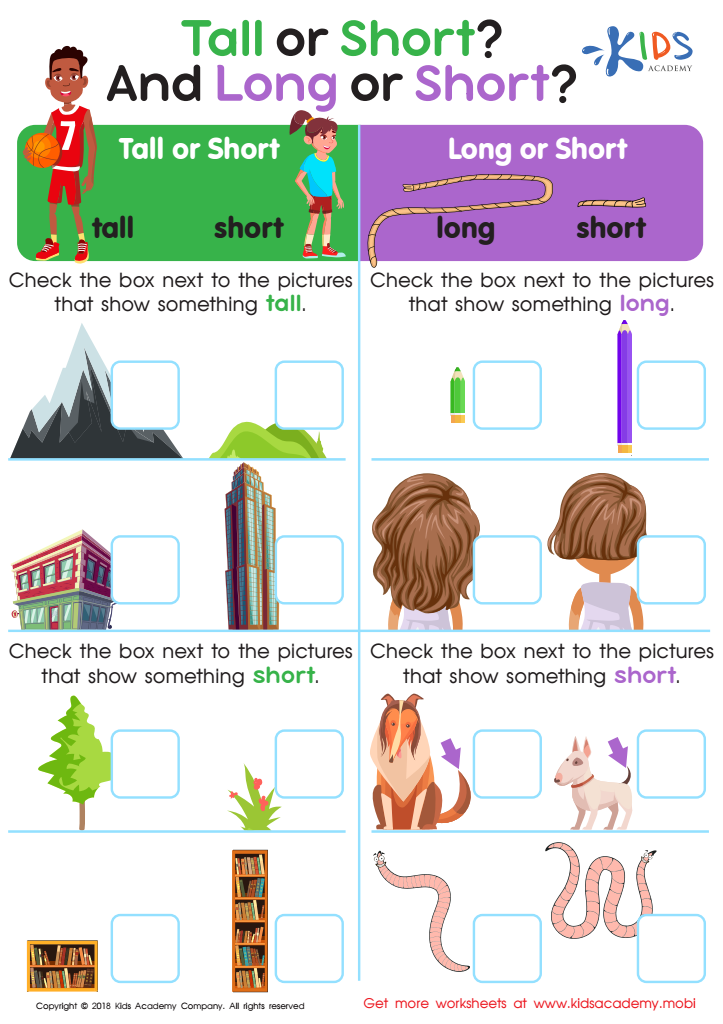
Tall or Short and Long or Short? Worksheet
 Assign to My Students
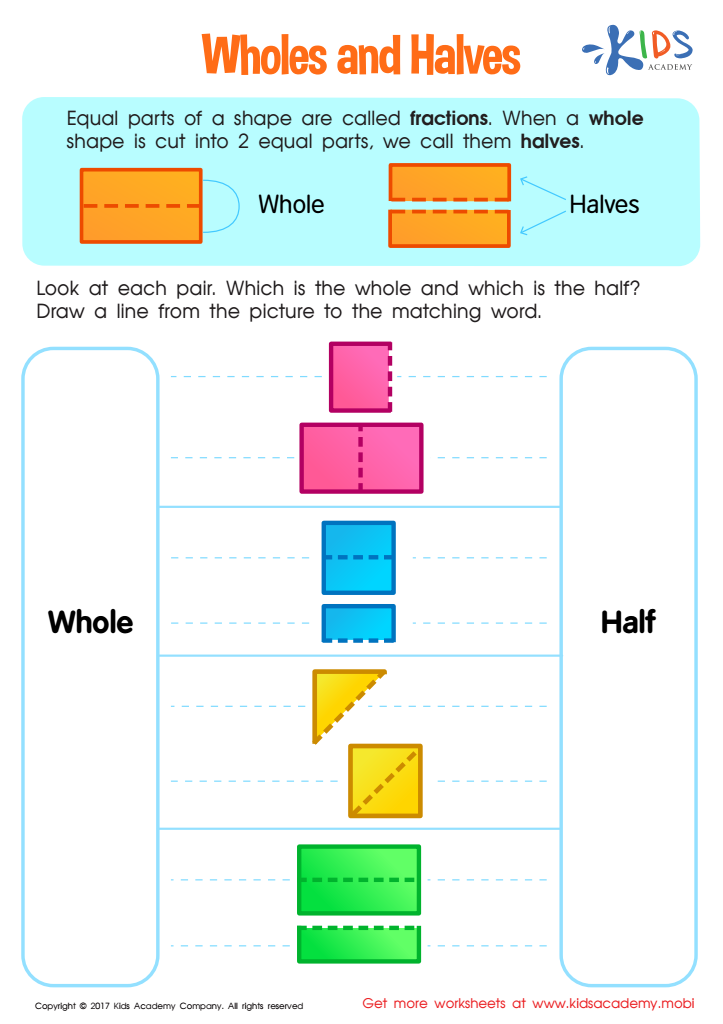
Wholes and Halves Worksheet
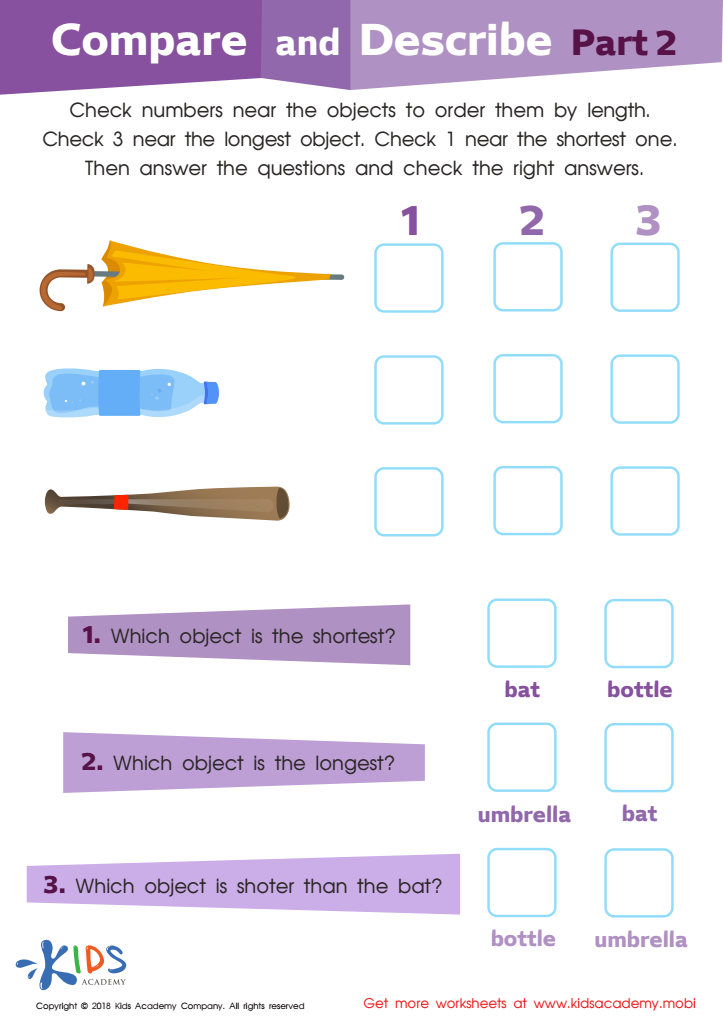
Compare and Describe: Part 2 Worksheet







Comparing sizes in normal math for ages 6-7 is more than just understanding big or small. It forms the basis for critical thinking and problem-solving skills that are crucial in a child's cognitive development. When children learn to compare sizes, they not only grasp mathematical concepts like measurement and quantity but also develop their language and communication skills.
For example, understanding that 'bigger' and 'smaller' are relative terms helps kids articulate observations more precisely and encourages the use of comparative language, enriching their vocabulary. This fundamental skill translates into real-world applications, making them more observant and analytical. They learn to organize and classify objects based on their attributes, fostering logical reasoning.
Comparing sizes also lays the groundwork for more complex mathematical skills they will encounter later, such as understanding graphing, geometry, and even algebra. Moreover, early success with these concepts builds confidence and ignites a natural curiosity for learning.
Parents and teachers should prioritize this because it directly influences a child's overall development. It makes learning more interactive and fun, keeping children engaged and keen to explore more. Supporting children in mastering these foundational principles ensures they are better prepared for future academic challenges, creating a strong, positive impact on their educational journey.








