Conversion skills Normal Math Worksheets for Ages 6-7
3 filtered results
-
From - To
Boost your child's math proficiency with our engaging "Conversion Skills Normal Math Worksheets" designed specifically for ages 6-7. These worksheets cover essential conversion concepts, including simple unit changes and measurement comparisons, helping young learners build a strong foundation in math. Fun and interactive, our activities encourage critical thinking and problem-solving, making learning enjoyable. Suitable for both classroom use and at-home practice, these worksheets enable parents and teachers to effectively support students in mastering conversion skills. With colorful visuals and relatable examples, your child will gain confidence and succeed in their math journey. Download our printable worksheets today and spark their love for learning!
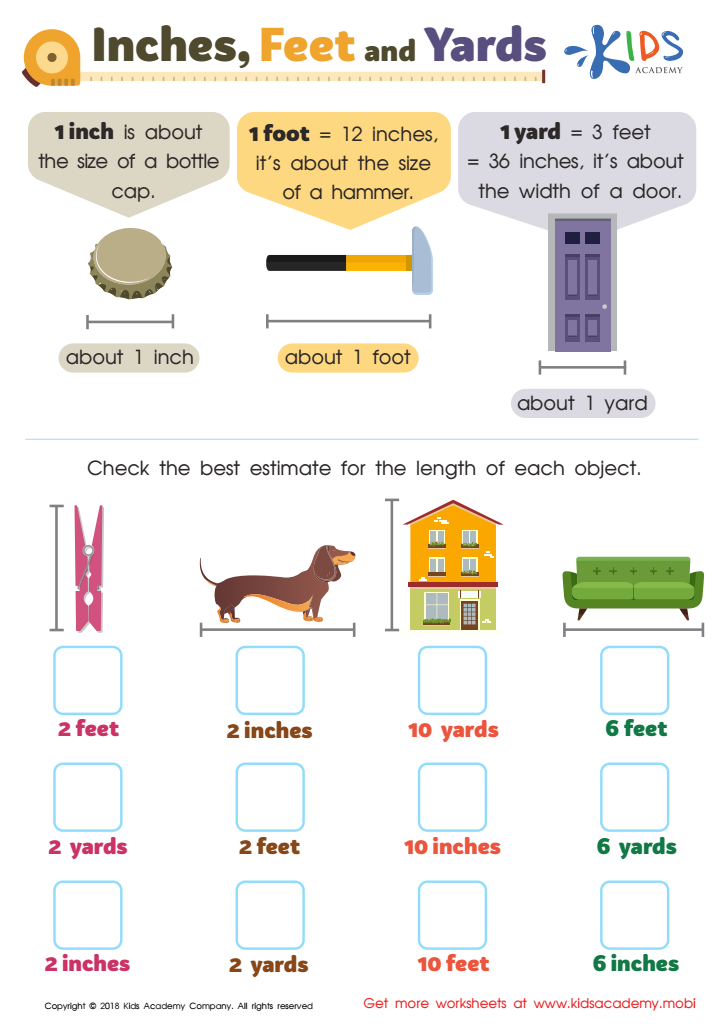
Inches, Feet and Yards Worksheet
 Assign to My Students
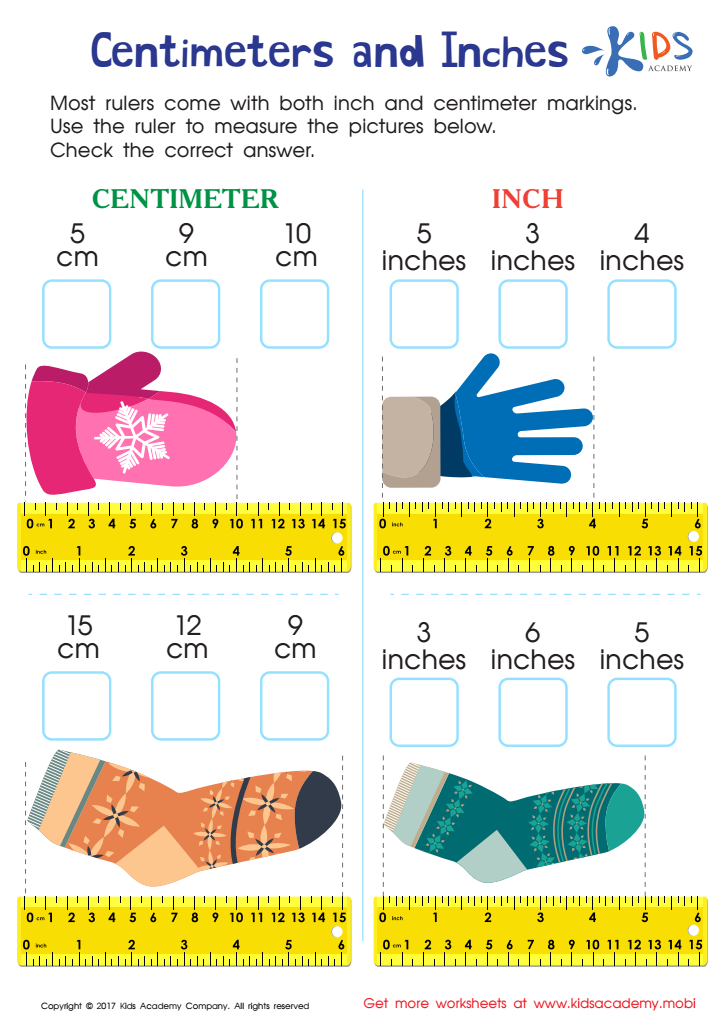
Centimeters and Inches Worksheet
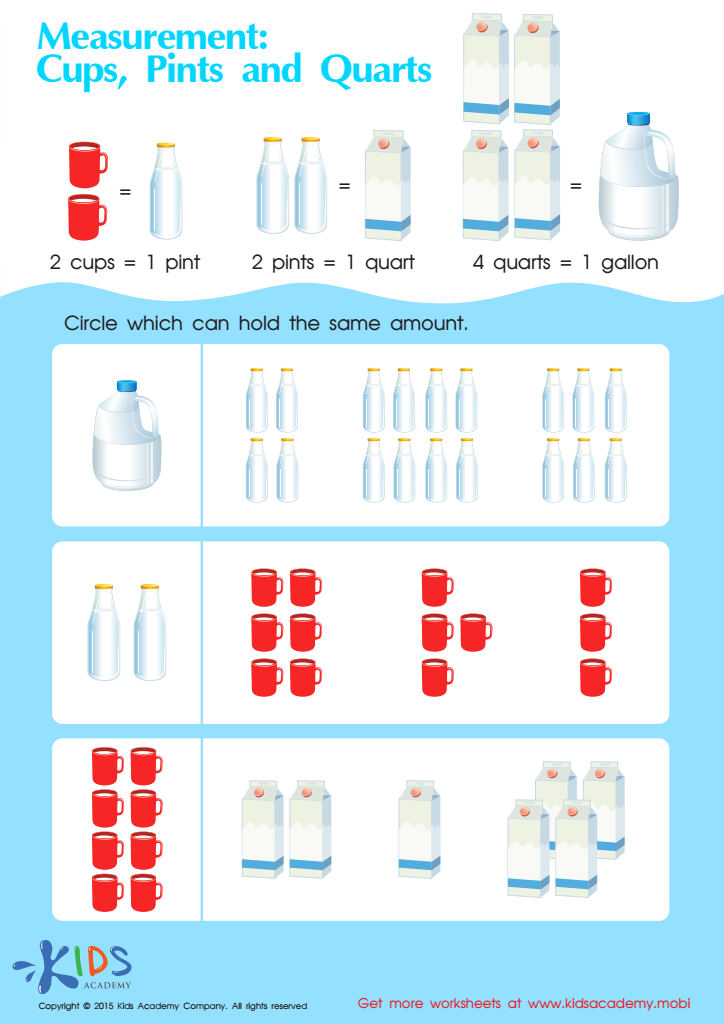
Cups, Pints and Quarts 2 Worksheet





.jpg)
Parents and teachers should prioritize conversion skills in normal math for ages 6-7 because these foundational skills are critical for children’s cognitive development and everyday problem-solving. At this age, children are becoming more adept at understanding and manipulating numbers, and mastering conversions—such as understanding fractions, measurements, and time—allows them to connect mathematical concepts to real-life situations.
These skills foster a sense of numerical fluency, enabling children to easily switch between different units, such as centimeters to meters or minutes to hours. By learning how to convert measurements or time, children build confidence in their mathematical abilities, setting the stage for more complex topics in the future. Moreover, strong conversion skills play a significant role in developing logical reasoning and critical thinking, as children learn to analyze how different units relate to one another.
Additionally, engaging parents in this learning process helps create a supportive environment, reinforcing concepts taught in the classroom. This collaboration can lead to improved student outcomes and a deeper appreciation for math as a vital life skill. Ultimately, developing conversion skills ensures that children are well-prepared for future mathematical challenges, fostering both academic success and practical life skills.








