Filters

8 filtered results

Clear all filters
Favorites
With answer key
Interactive

8 filtered results

Difficulty Level

Grade


Our Hand-eye Coordination Normal Math Worksheets for Ages 6-7 are expertly designed to blend fun and learning, helping children develop crucial skills. Perfect for first graders, these worksheets feature engaging activities that challenges kids to focus, improve their hand-eye coordination, and enhance their mathematical abilities simultaneously. From tracing numbers to solving simple problems, each worksheet is crafted to make learning an exciting adventure. Ideal for both classroom and home use, these worksheets not only aid in mastering basic math but also lay a solid foundation for more advanced concepts. Give your child a head start with our comprehensive, kid-friendly math resources!

Check out this FREE Trial Lesson on Math for age 6-7!

Count Forward Starting From Any Number

Favorites
With answer key
Interactive
  • 6-7
  • Hand-eye Coordination
  • Math
  • Normal
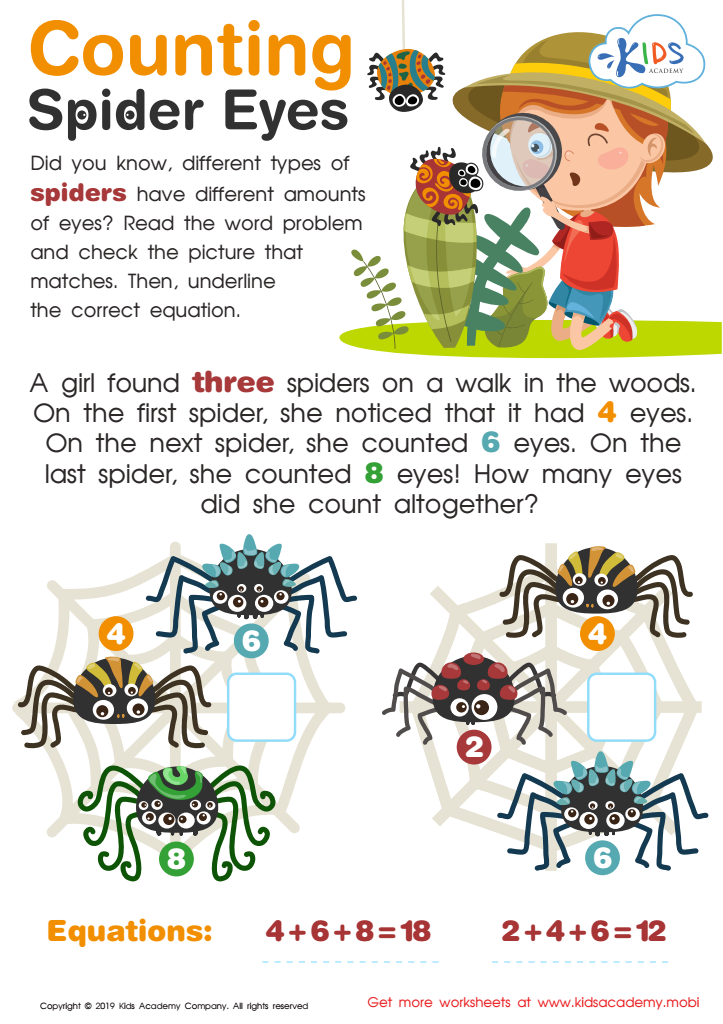
Counting Spider Eyes Worksheet

Counting Spider Eyes Worksheet

Did you know different spiders have different eye numbers? Kids will love learning this fact and solving the spider word problems on this free worksheet! Word problems promote a deeper understanding of the concept, plus they get to add up the spiders’ eyes while solving addition problems with more than one addend. Fun and math all in one!
Counting Spider Eyes Worksheet
Worksheet
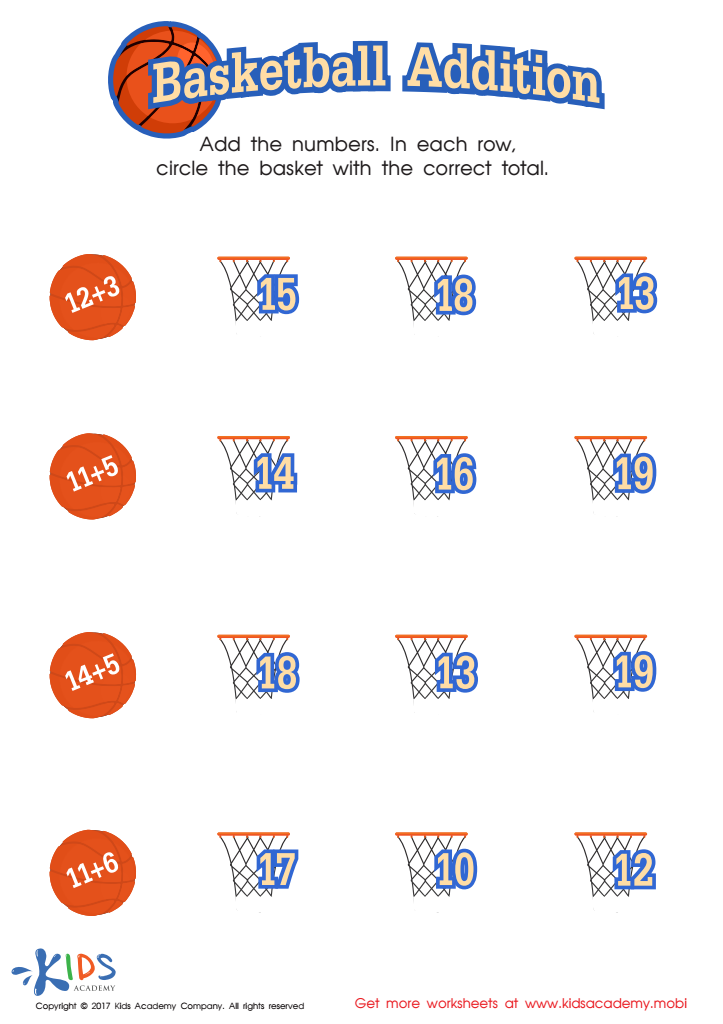
Basketball Addition Worksheet

Basketball Addition Worksheet

Basketball Addition Worksheet
Worksheet
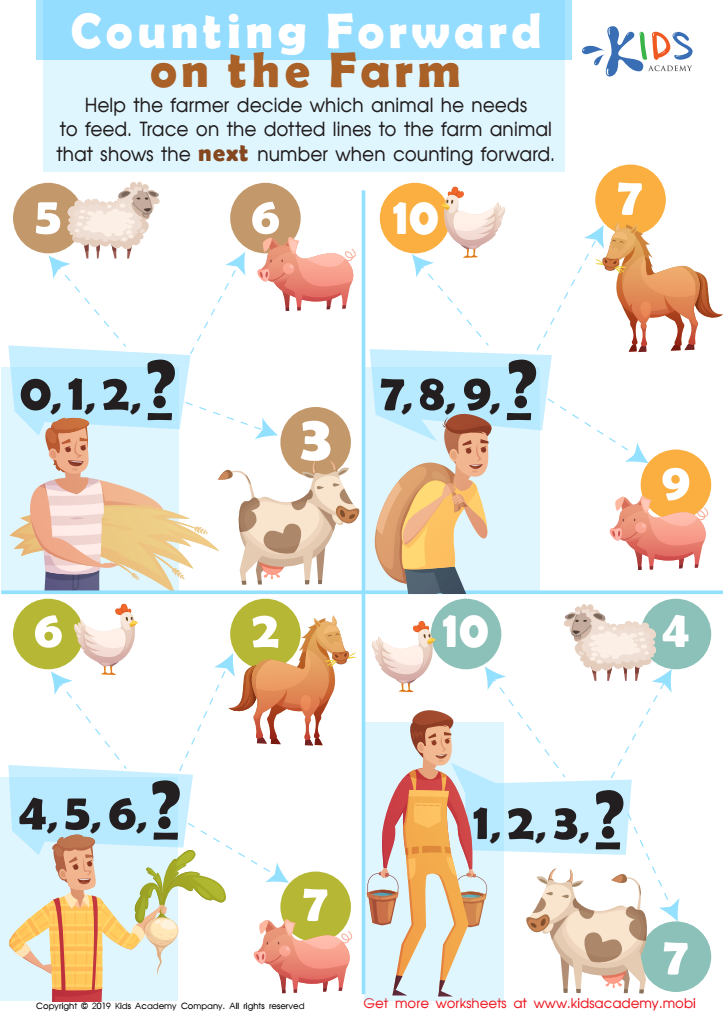
Counting Forward On the Farm Worksheet
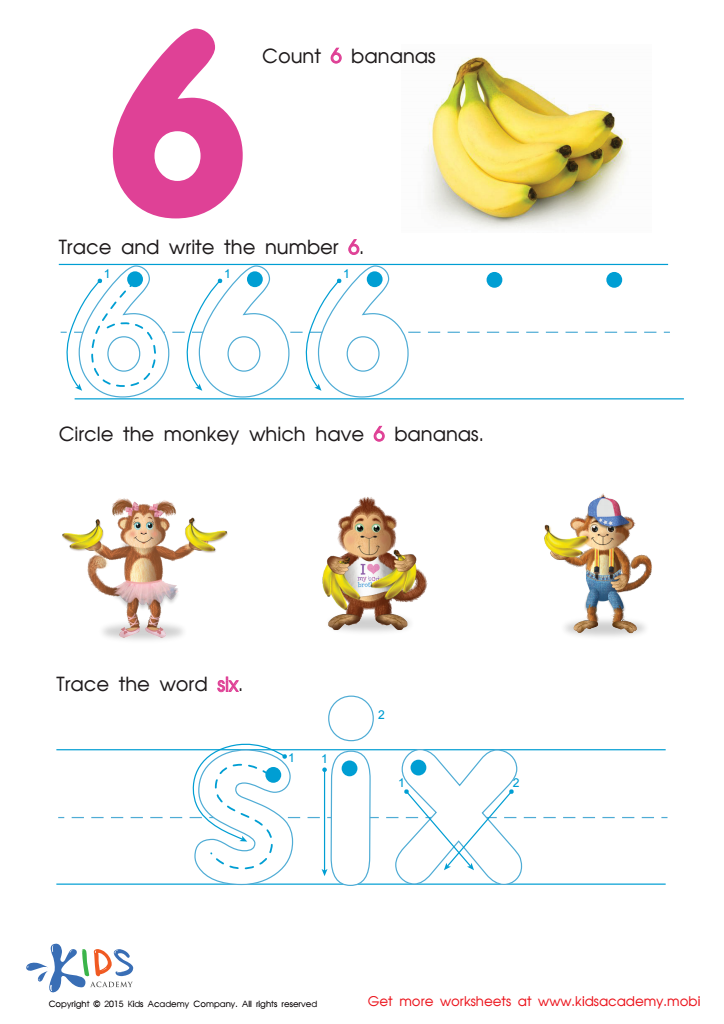

Counting Forward On the Farm Worksheet

Help your child practice counting with this fun worksheet. Have them help a farmer feed the right animal by counting on from a starting point. This activity will help them build number line thinking and refine fine motor skills.
Counting Forward On the Farm Worksheet
Worksheet
Learning Numbers Worksheets: Tracing And Writing Number 6 PDF

Tracing And Writing Number 6 Worksheet
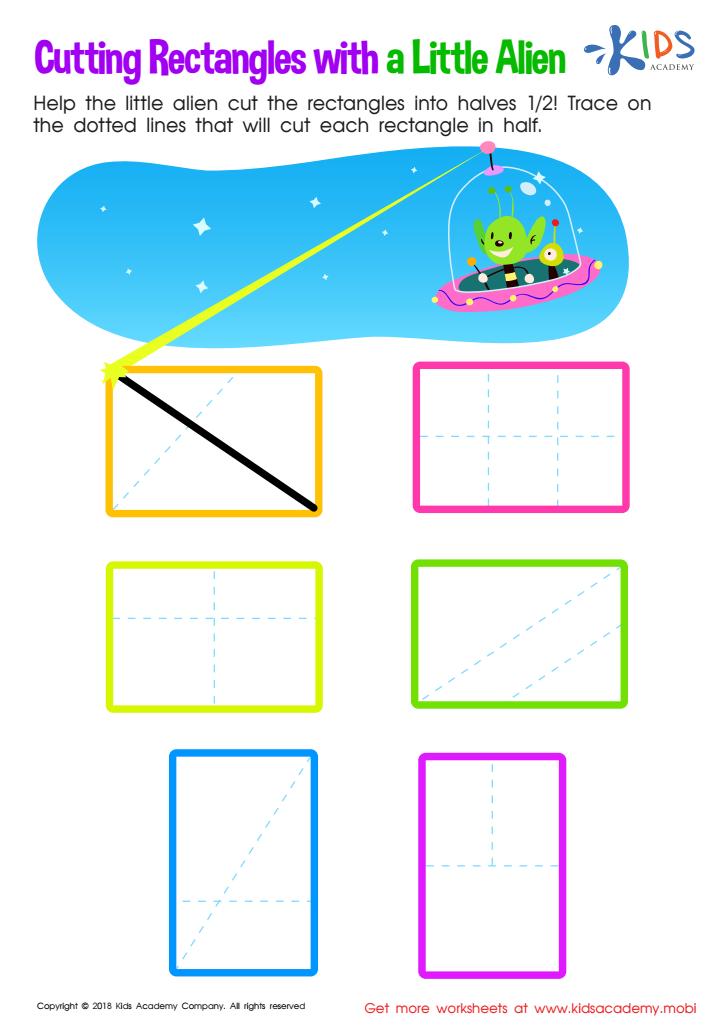
Learn numbers in a fun way with our preschool number worksheets. Count six bananas, trace and write the number, find the monkey with six bananas, and trace the word "six." Explore more activities at Kids Academy.
Tracing And Writing Number 6 Worksheet
Worksheet
Cutting Rectangles with Alien Worksheet
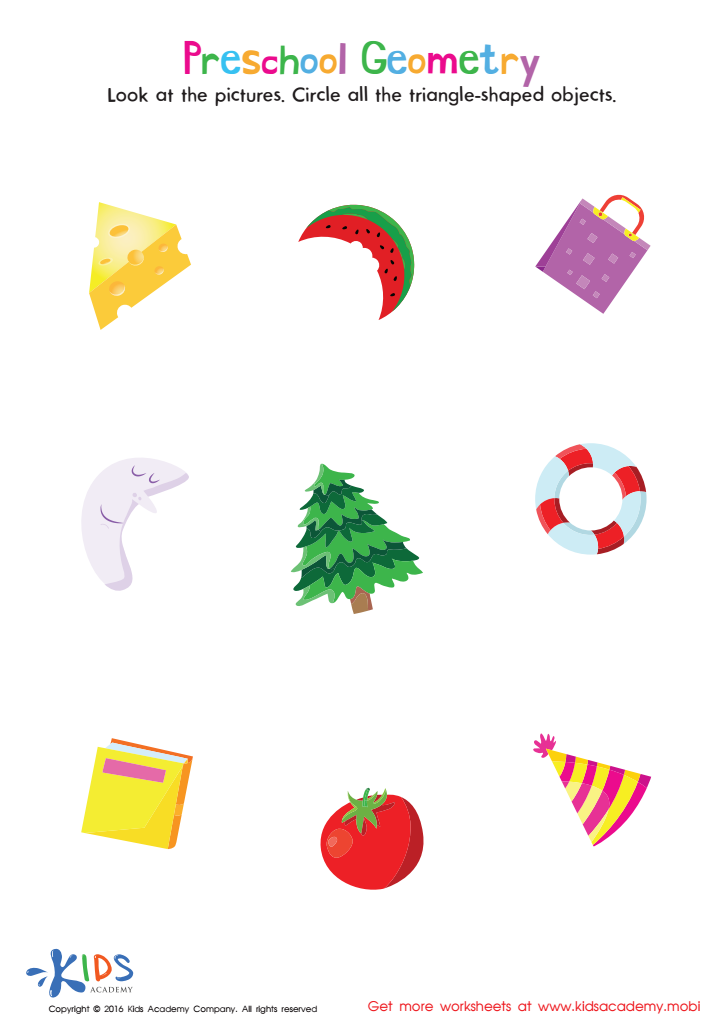
Cutting Rectangles with Alien Worksheet

If your students are interested in aliens and otherworldly events, they'll love this exercise! It requires them to help a small alien cut rectangles into halves (½). They must trace the dotted lines to accurately cut each rectangle.
Cutting Rectangles with Alien Worksheet
Worksheet
Sorting Shapes Worksheets

Preschool Geometry Sorting Worksheet

Preschool Geometry Sorting Worksheet
Worksheet
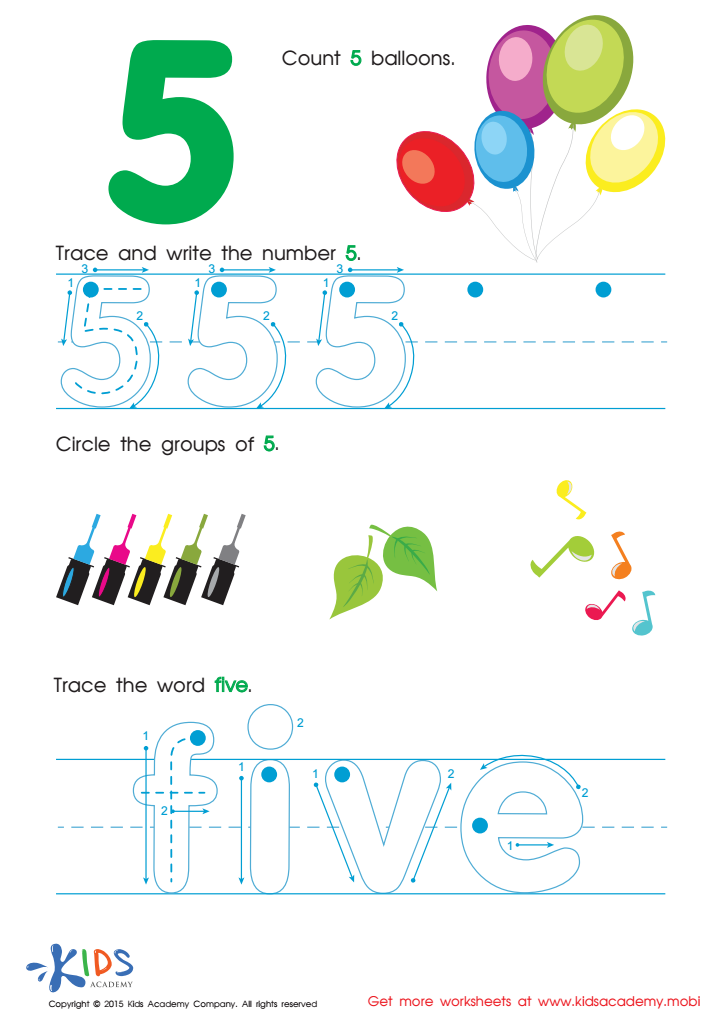
Learning Numbers Worksheets: Practice Writing Number 5 PDF

Practice Writing Number 5 Worksheet

Make learning numbers fun! Let your kids count the balloons, trace numbers, and circle the groups with five items. Also, have them trace the word "five" for letter revision. Get the full collection of preschool number worksheets from Kids Academy for a fun and interactive learning experience.
Practice Writing Number 5 Worksheet
Worksheet
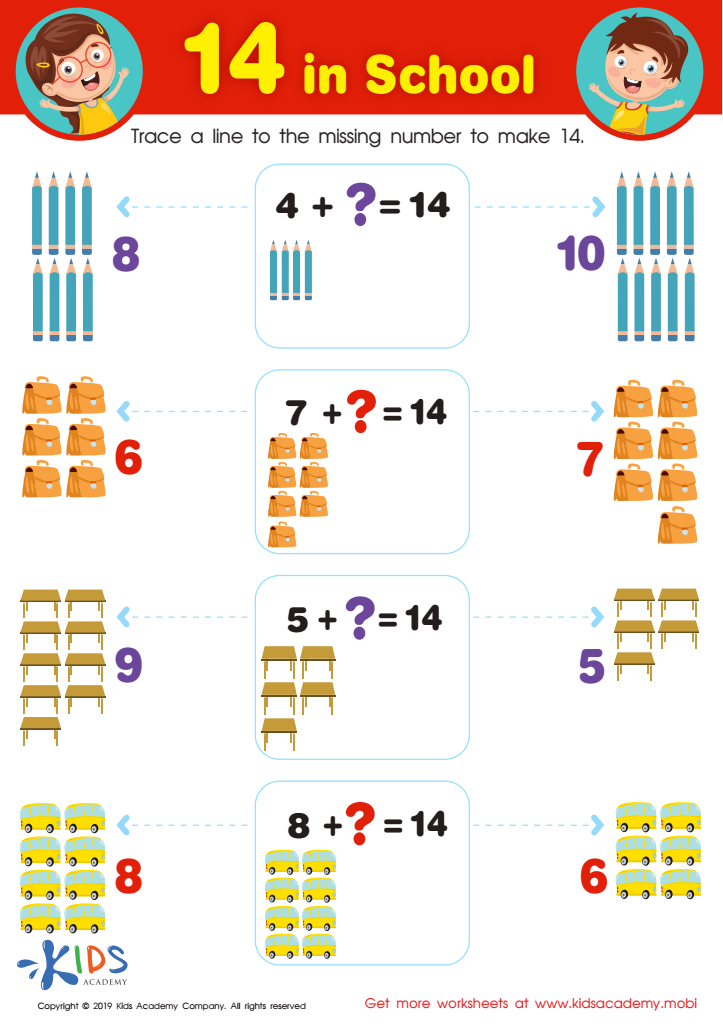
14 in School Worksheet


14 in School Worksheet

Remind your kids that adding different sets of numbers can give the same total (e.g. 2+3=5, 4+1=5). Ask them for more examples. Afterwards, work through the exercise. Help them count the objects and trace a line to the missing number that makes the total 14.
14 in School Worksheet
Worksheet


Hand-eye coordination and normal math abilities are crucial aspects of a child's development, particularly for ages 6-7. This period is foundational for gaining essential skills that affect various facets of their lives. Improved hand-eye coordination, for instance, aids children in performing everyday tasks such as writing, tying shoes, and playing sports, which build confidence and independence. It also supports fine motor skills, essential for academic tasks such as holding a pencil correctly and navigating paper, thus influencing their handwriting quality and learning pace.

Math, on the other hand, is integral in developing critical thinking and problem-solving skills. Mastery of basic math at ages 6-7 lays the groundwork for more complex mathematical concepts encountered in later years. Understanding concepts like addition and subtraction help children manage classroom activities involving arithmetic, sequence, and spatial recognition, which are directly linked to successful hand-eye coordination.

Therefore, fostering these capabilities not only boosts academic performance but also supports overall cognitive and physical development. Focusing on hand-eye coordination and math during these early years equips children with fundamental skills that benefit their future endeavors, making life easier and learning more enjoyable. This foundation nurtures well-rounded growth, preparing them aptly for subsequent educational challenges and day-to-day activities.