Shape identification Normal Math Worksheets for Ages 6-7
6 filtered results
-
From - To
Explore our engaging Shape Identification Normal Math Worksheets designed for children aged 6-7! These worksheets provide a fun and interactive way for young learners to recognize and differentiate various shapes, enhancing their visual and spatial skills. Perfect for classroom use or at-home learning, these resources include a variety of activities tailored to support early mathematical concepts. From identifying circles and squares to exploring more complex shapes, each worksheet is crafted to foster confidence and curiosity in young mathematicians. Download now to enrich your child's learning experience and help them build a strong foundation in shape recognition with our colorful and stimulating worksheets!
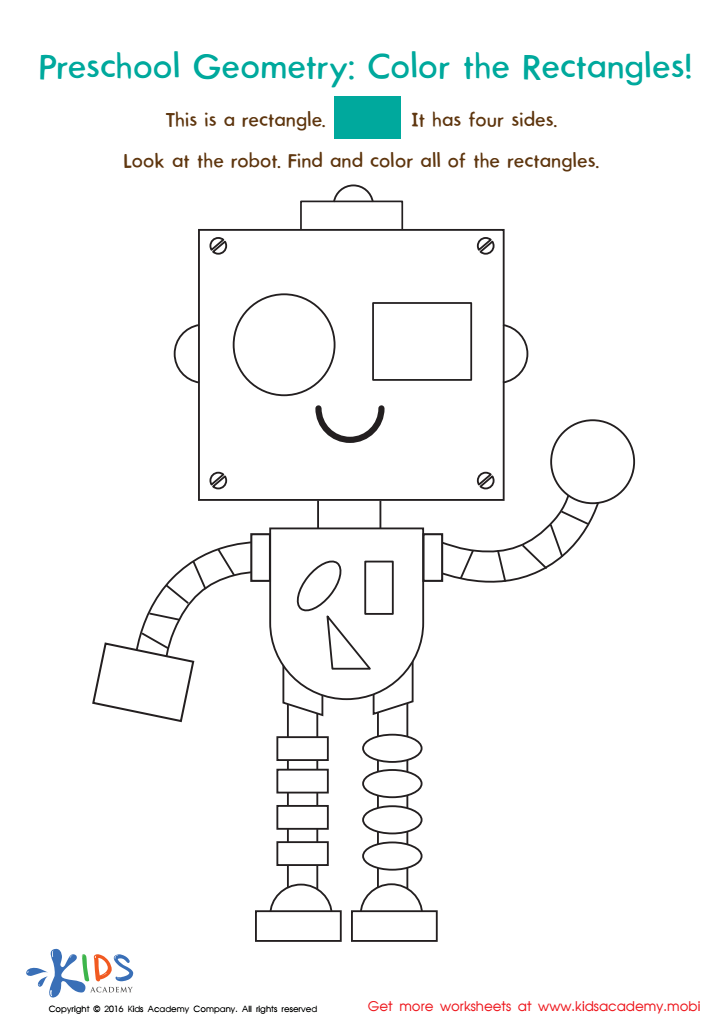
Geometry Worksheet
 Assign to My Students
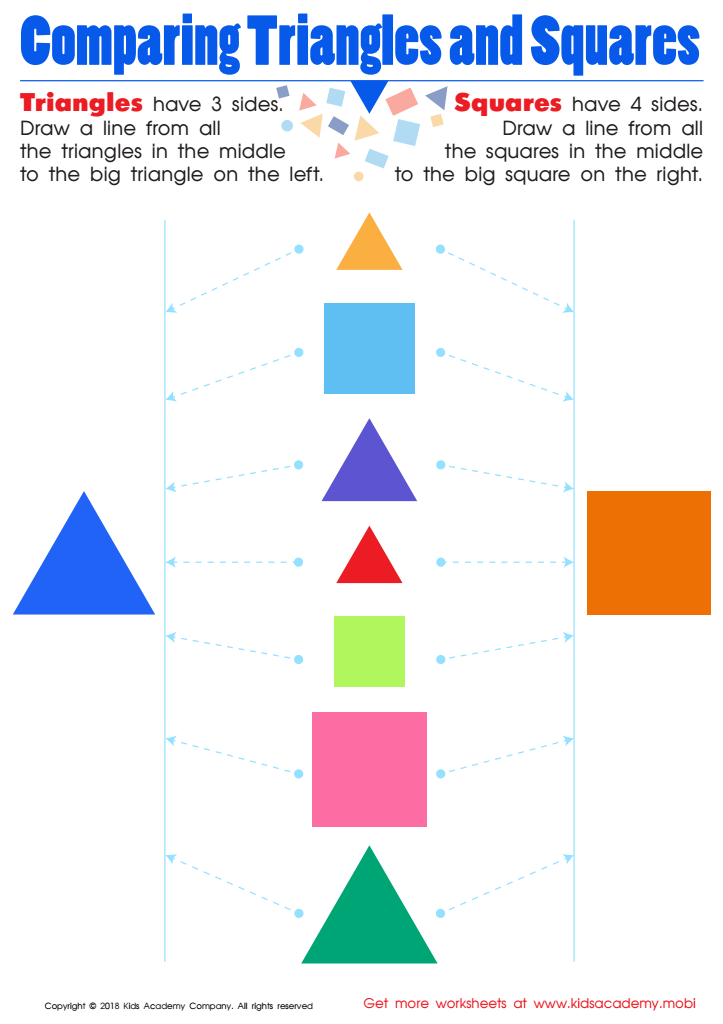
Comparing Triangles Squares Worksheet
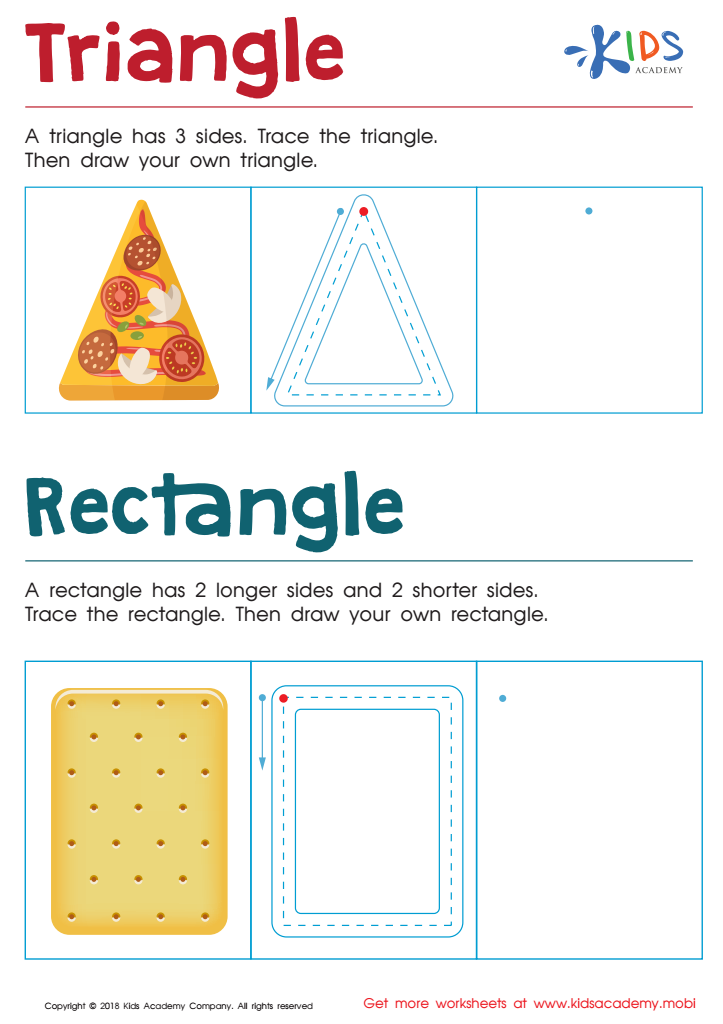
Triangle Rectangle Worksheet
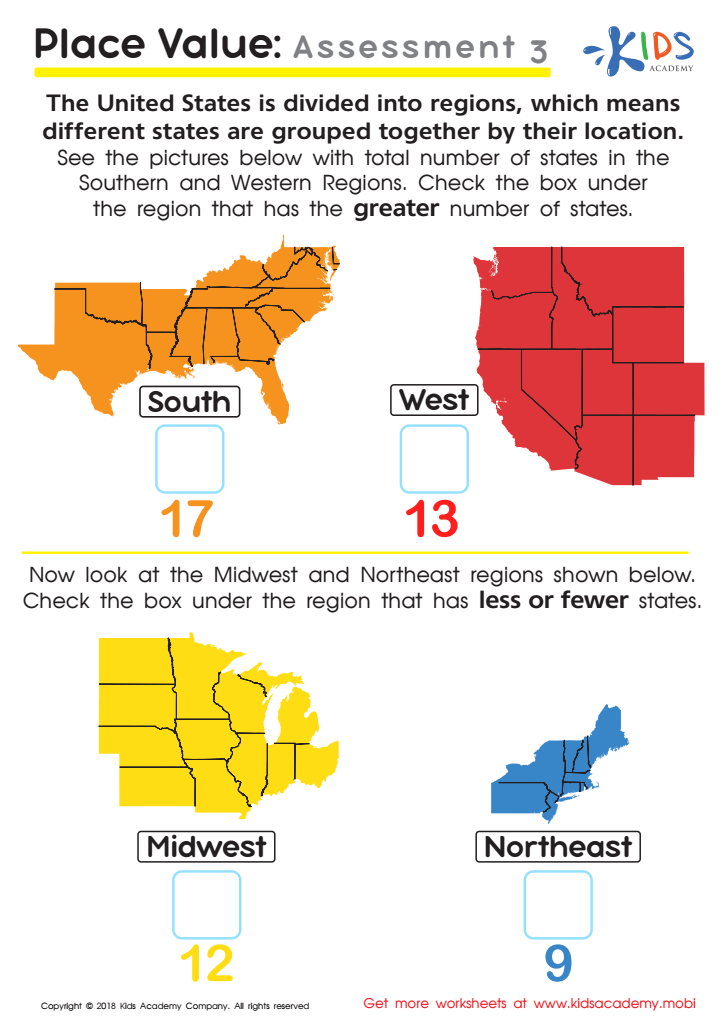
Place Value: Assessment 3 Worksheet
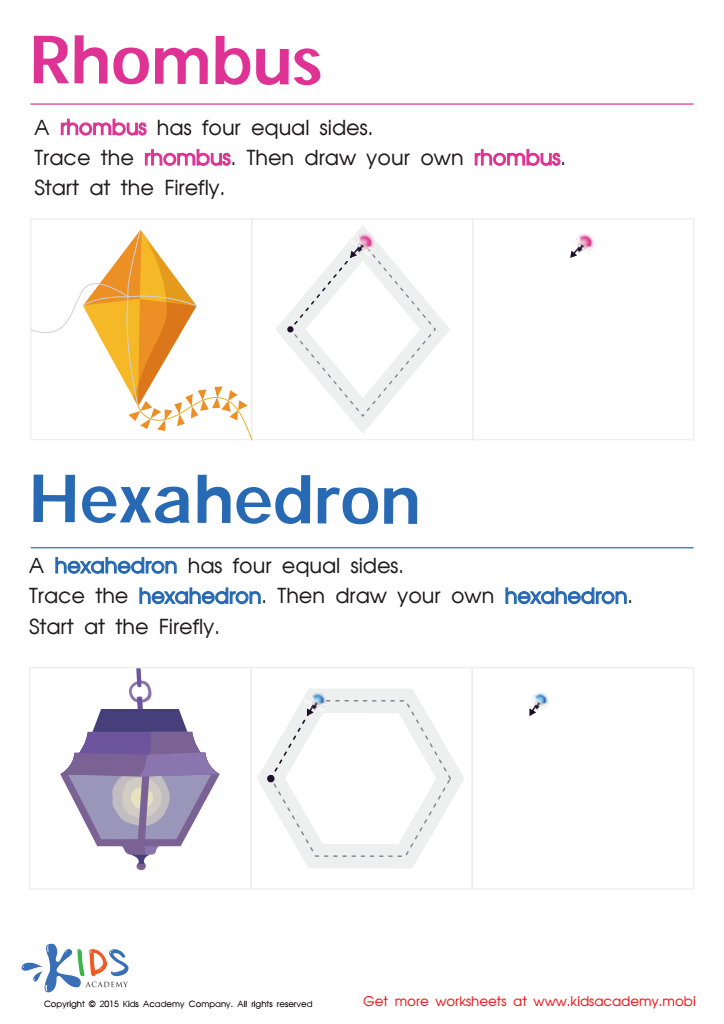
Draw a Rhombus And a Hexahedron Printable
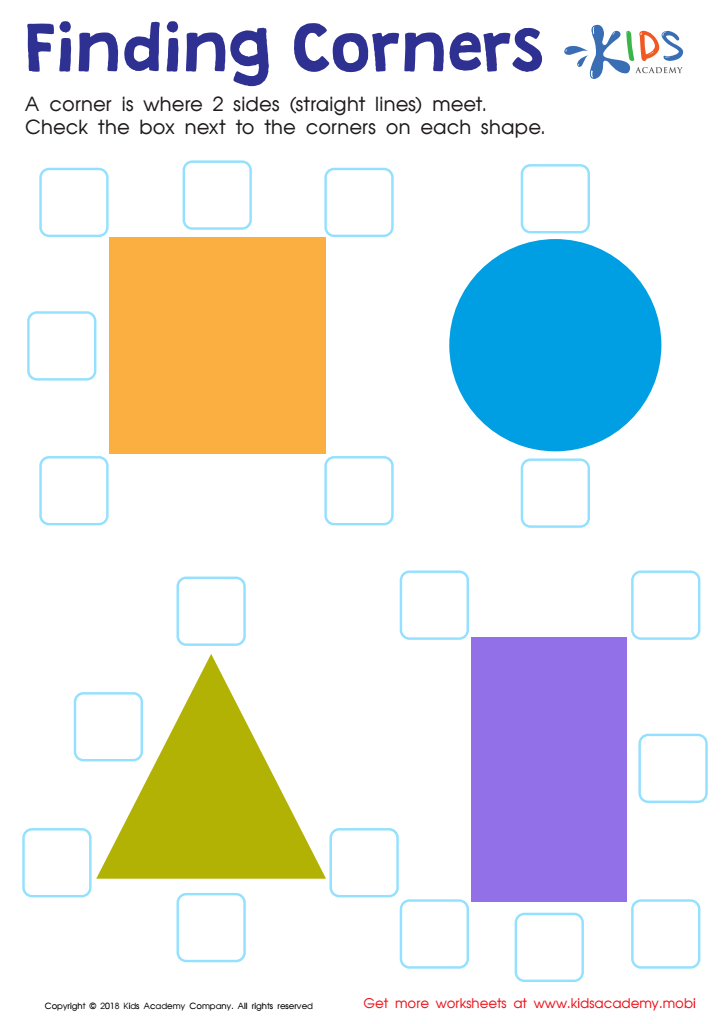
Finding Corners Worksheet


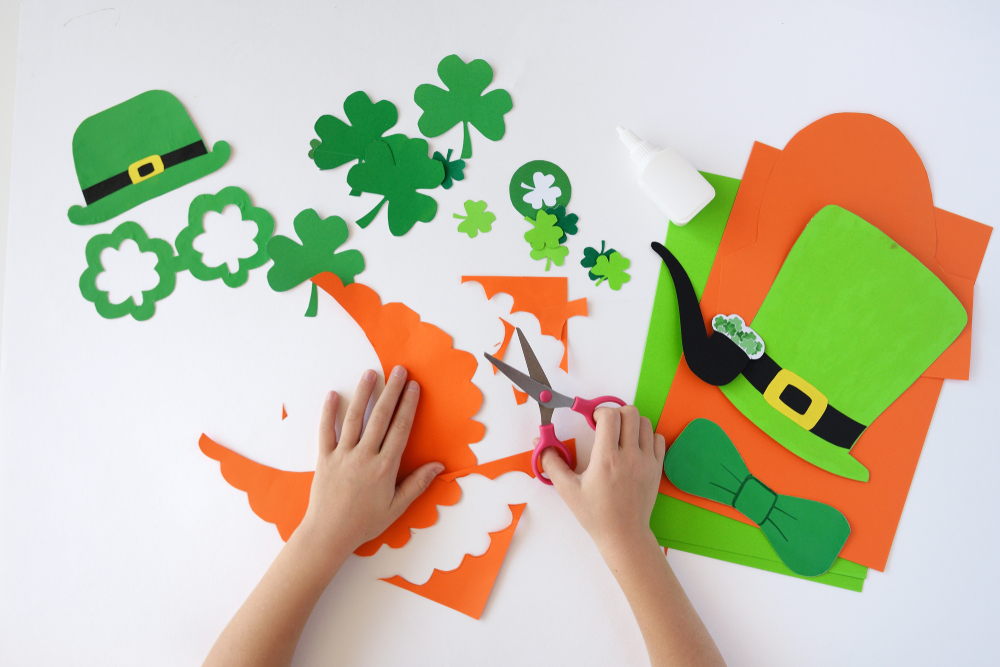




Shape identification is a fundamental aspect of early math education, especially for children aged 6-7. At this age, children are developing spatial awareness and cognitive skills that form the basis for more complex mathematical concepts. Understanding shapes not only lays the groundwork for geometry but also enhances problem-solving skills and critical thinking.
Parents and teachers should care about shape identification because it supports children's ability to recognize patterns, categorize objects, and make connections between the physical world and mathematical concepts. This foundational skill also promotes reasoning and analytical thinking, critical components of a child’s intellectual development.
Moreover, learning about shapes can be integrated into daily activities—like cooking, building with blocks, or art projects—making it a versatile and engaging aspect of learning.
By emphasizing shape identification, parents and teachers can create a rich environment for exploratory learning, allowing children to build confidence in their mathematical abilities. The skills obtained through shape identification also extend into various subjects, such as science and art, providing a multidisciplinary approach to early education. Ultimately, fostering an early interest in shapes can lead to a greater enthusiasm for learning overall, encouraging lifelong mathematical exploration and curiosity.








