Spatial awareness Normal Math Worksheets for Ages 6-7
5 filtered results
-
From - To
Elevate your child's spatial awareness skills with our specially designed math worksheets for ages 6-7. These engaging activities help youngsters understand shapes, positions, and dimensions, laying a strong foundation for complex math concepts. Simple yet effective, our worksheets improve problem-solving abilities while making learning fun. Foster growth in cognitive development and visual-spatial intelligence through our expertly crafted exercises, created to match the curiosity and developmental needs of your child. Ideal for both classroom and home use, these resources ensure that learning math is an enjoyable and enriching experience for young learners. Unlock the potential of spatial learning today!
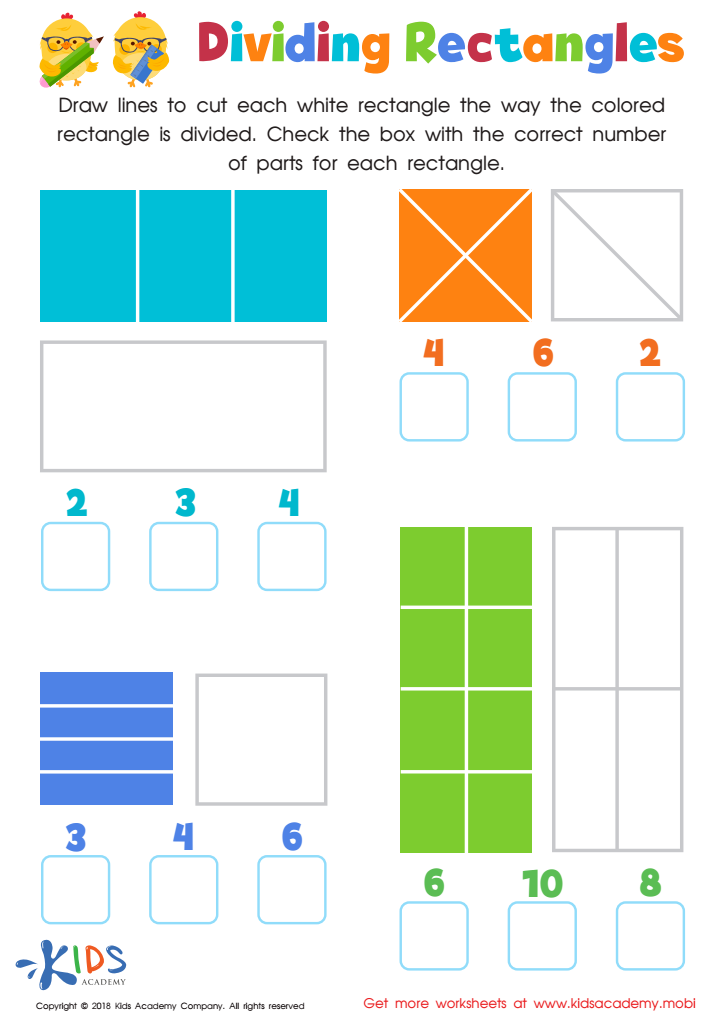
Dividing Rectangles Worksheet
 Assign to My Students
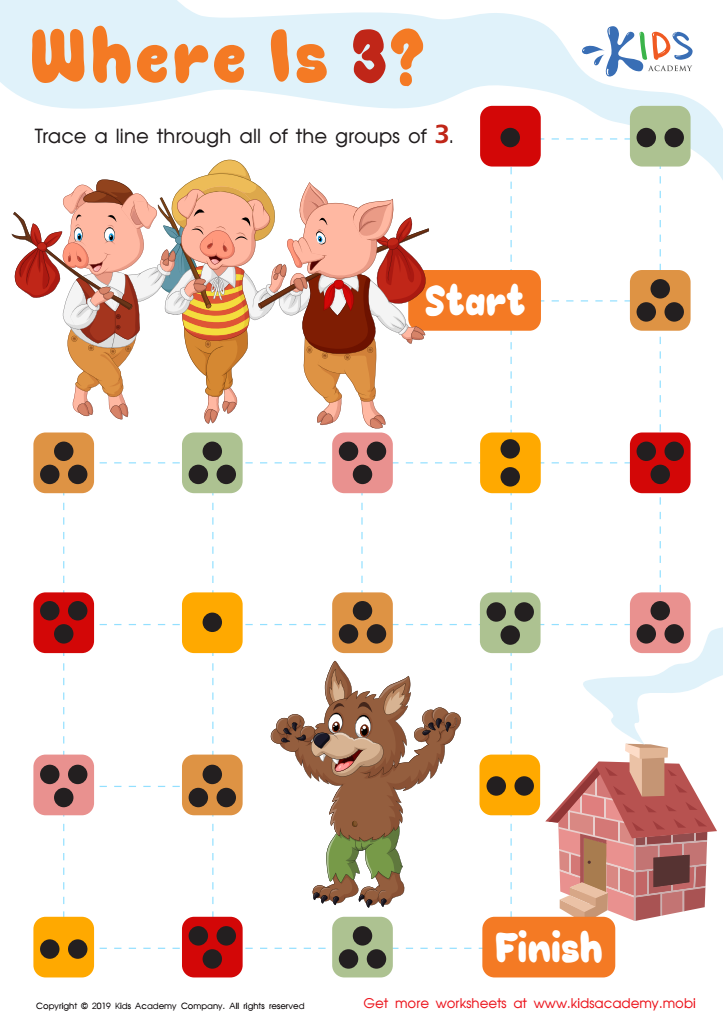
Where Is 3? Worksheet
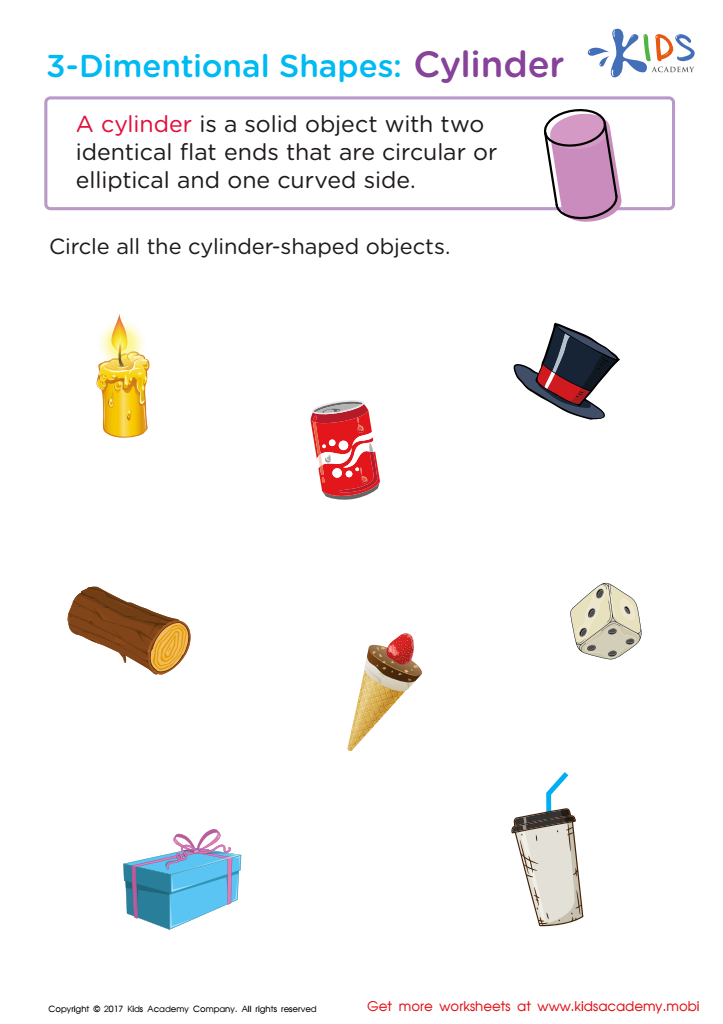
Three–Dimensional Shapes: Cylinder Worksheet
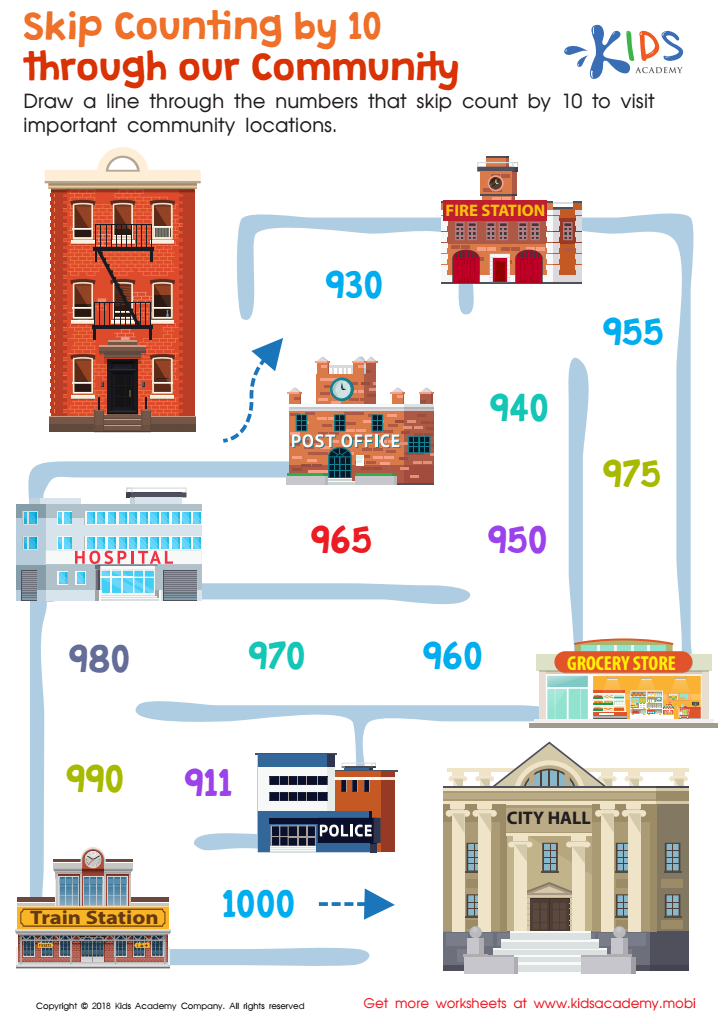
Skip Counting by 10 Through Our Community Worksheet
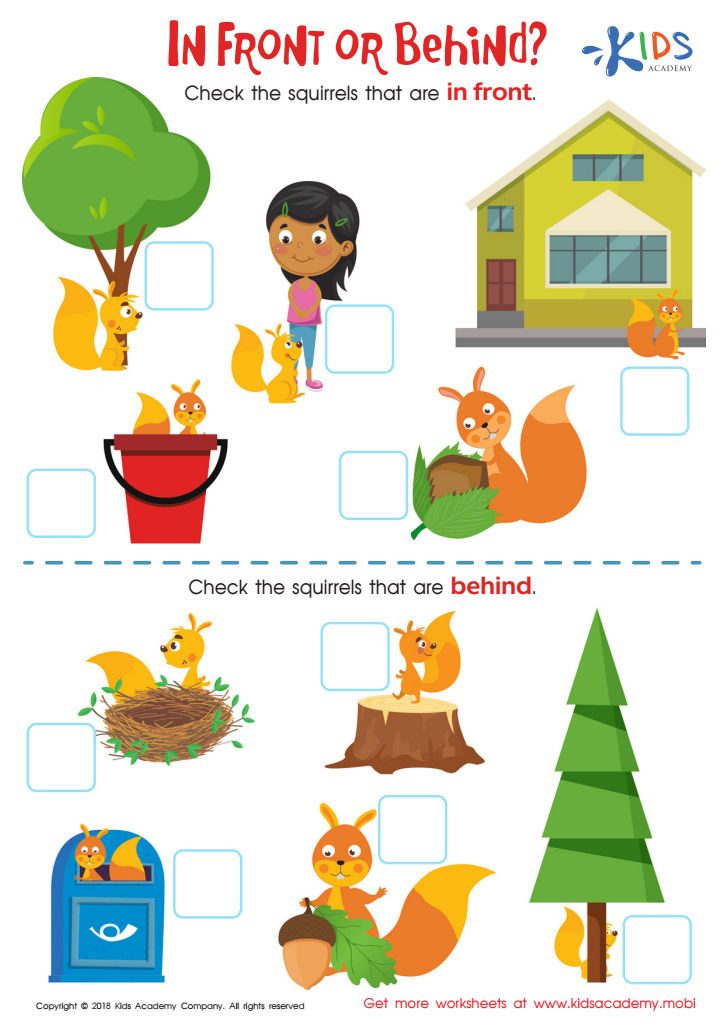
In Front or Behind: Part 2 Worksheet






Spatial awareness refers to an understanding of where objects and oneself are located in space, both in relation to each other and the environment. For children ages 6-7, developing spatial awareness is crucial not just for mathematical ability but for overall cognitive development. Early primary students at this stage are beginning to grasp foundational math concepts, and spatial awareness is intertwined with skills like geometry, measurement, and even number sense.
Parents and teachers should prioritize spatial awareness because it directly impacts learning across various subjects. For instance, understanding shapes and their properties is essential for geometry, and interpreting graphs requires a sound sense of space. Additionally, puzzles, building blocks, and navigating maps foster spatial reasoning, which's associated with problem-solving skills. Proficiency in these areas also supports learning in science, technology, engineering, and mathematics (STEM) fields.
Moreover, being spatially aware helps children perform daily activities more efficiently and safely. For example, knowing how to organize personal space, assessing distances, and playing sports or games become more intuitive. Cultivating these skills at an early age leads to better physical coordination and prepares children for more complex tasks that require precise spatial understanding. Therefore, engaging children with activities that enhance spatial skills helps build a robust foundation for both academic and life skills.








