
Understanding Sequences Normal Math Worksheets for Ages 6-7
3 filtered results
Difficulty Level
Grade
Age
-
From - To
Subject
Activity
Standards
Unlock your child's potential with our engaging Understanding Sequences Normal Math Worksheets designed for ages 6-7. These fun and interactive worksheets help young learners grasp the concept of sequences by identifying patterns and predicting the next elements. Perfectly tailored to build fundamental math skills, our activities make complex ideas simple and enjoyable. Each worksheet fosters critical thinking and problem-solving abilities, providing a solid foundation for future math success. With colorful illustrations and relatable scenarios, Kids Academy ensures your child stays motivated and confident. Explore our collection and see how enjoyable learning can be when mastering sequences today!
Favorites
With answer key
Interactive
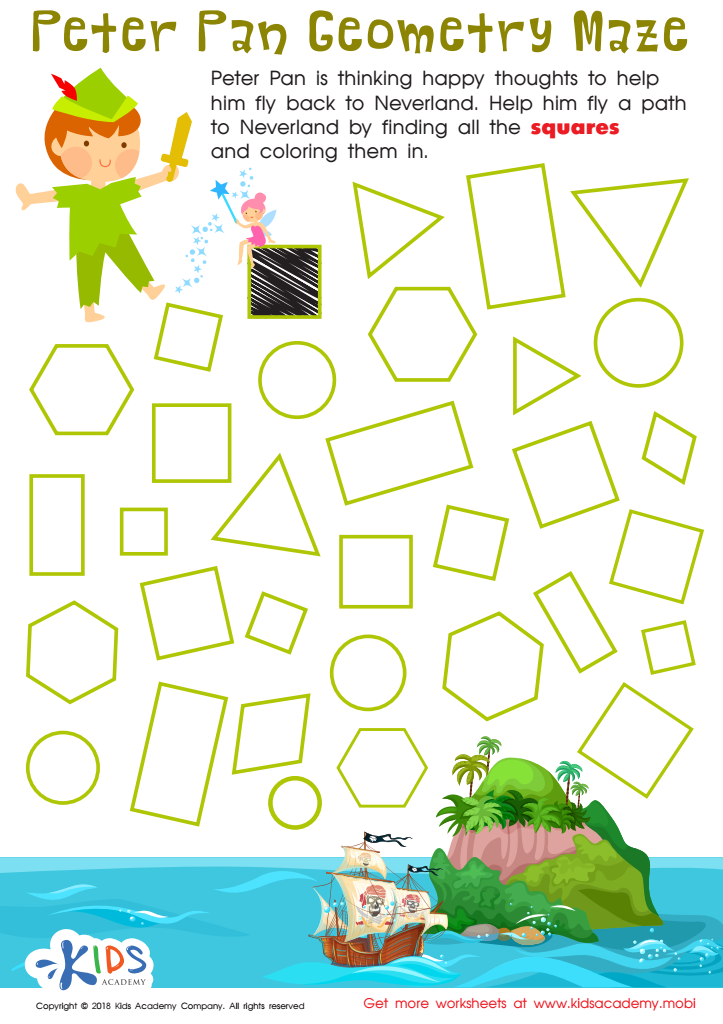
Peter Pan Worksheet
Kindergarteners can join Peter Pan on an adventure to Neverland! They can help him by coloring squares to create a path, strengthening their shape identification skills in a fun maze. Let the journey begin!
 Assign to My Students
Peter Pan Worksheet
Worksheet
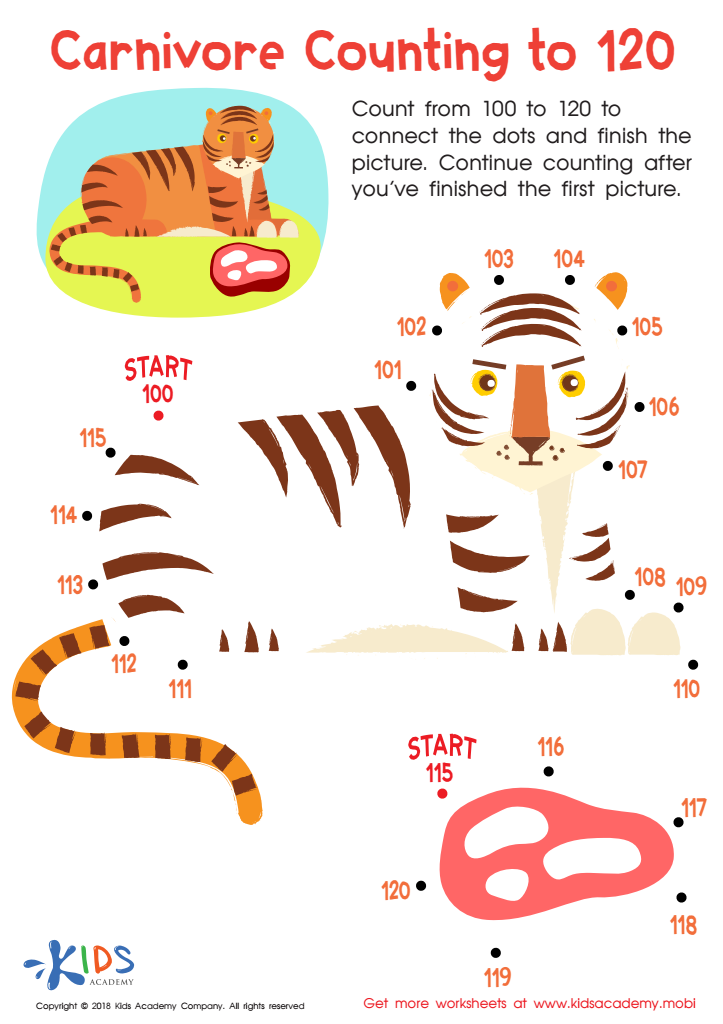
Carnivore Counting to 120 Worksheet
Ask your child to name some popular carnivores. Can they tell you what the animal in the worksheet is? A Tiger? Get them to count from 100 to 120 to connect the dots. After they finish the first picture, keep counting to help them practice!
Carnivore Counting to 120 Worksheet
Worksheet
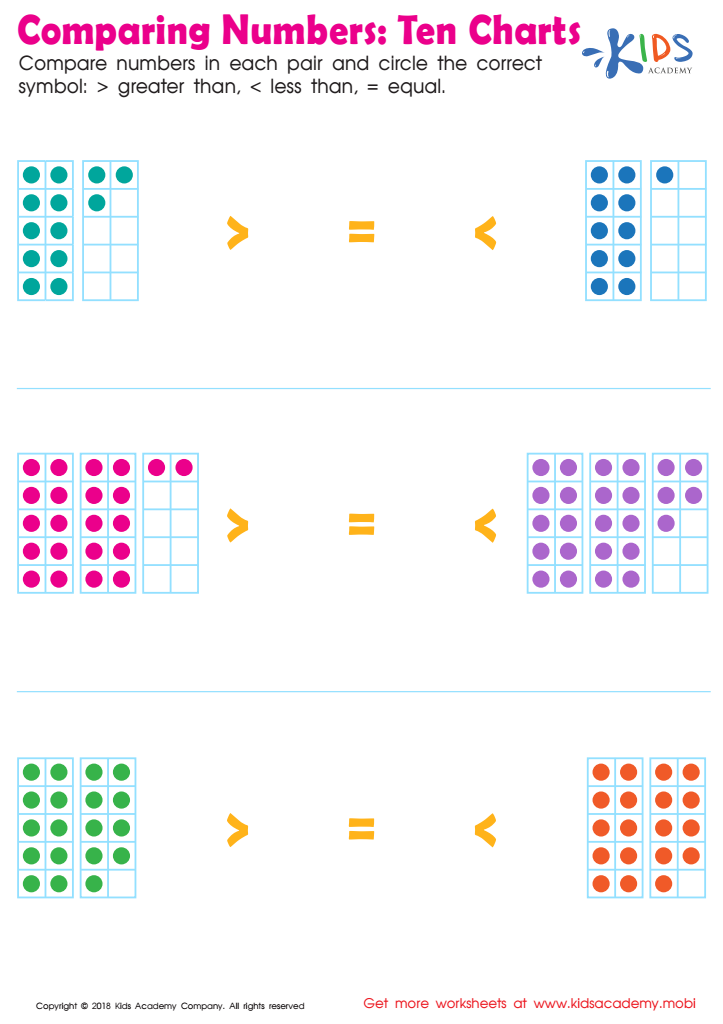
Ten Charts Worksheet
Help your child learn numbers in a creative way using this printable worksheet. They'll learn the difference between numbers, how to add them, and the symbols of "greater than", "less than" and "equals to". They can compare two sides, and identify which is greater, less or equal. Let their maths knowledge bloom!
Ten Charts Worksheet
Worksheet
Join Kids Academy for Free
Who is primarily going to use this learning content?








Understanding sequences is a foundational mathematical skill important for children ages 6-7 because it forms the basis for more complex concepts they'll encounter later. At this stage, recognizing and predicting patterns helps young learners to develop critical thinking and problem-solving skills. These skills are fundamental, not just in mathematics, but across various subjects and daily life situations.
For parents and teachers, fostering an early grasp of sequences ensures children build confidence in their mathematical abilities. When a child learns to identify that 2, 4, 6, 8 follows a certain rule, they are also unwittingly grasping the foundation of more advanced concepts, such as arithmetic and algebraic reasoning. Moreover, sequence activities are often enjoyable and can be tied into stories, games, or daily routines, making the learning process both effective and fun.
Additionally, understanding sequences aids in enhancing a child's memory and organizational skills. Activities involving sequencing can improve a child's ability to order events logically, follow instructions accurately, and even improve their reading comprehension. By focusing on symmetrical and predictable patterns, children perceive the world as more navigable and structured, giving them the tools to systematically approach both academic challenges and real-life tasks.
In essence, sequences provide a cornerstone upon which many other educational achievements are built, making them vital in early childhood education. Understanding sequences is much like laying down a strong foundation for a house—it supports everything that is constructed afterward.








