Practical math application Normal Measurement Worksheets for Ages 6-7
3 filtered results
-
From - To
Discover the perfect resource for young learners with our "Practical Math Application Normal Measurement Worksheets for Ages 6-7". These engaging and educational worksheets are designed to help children develop fundamental measurement skills. Through a variety of fun, hands-on activities, students will learn to use rulers, understand length, and solve real-world problems involving measurements. Each worksheet is tailored to align with grade-level standards, ensuring your child builds a strong mathematical foundation. Ideal for both classroom and home settings, these worksheets make learning math enjoyable and practical, preparing students for future academic success.
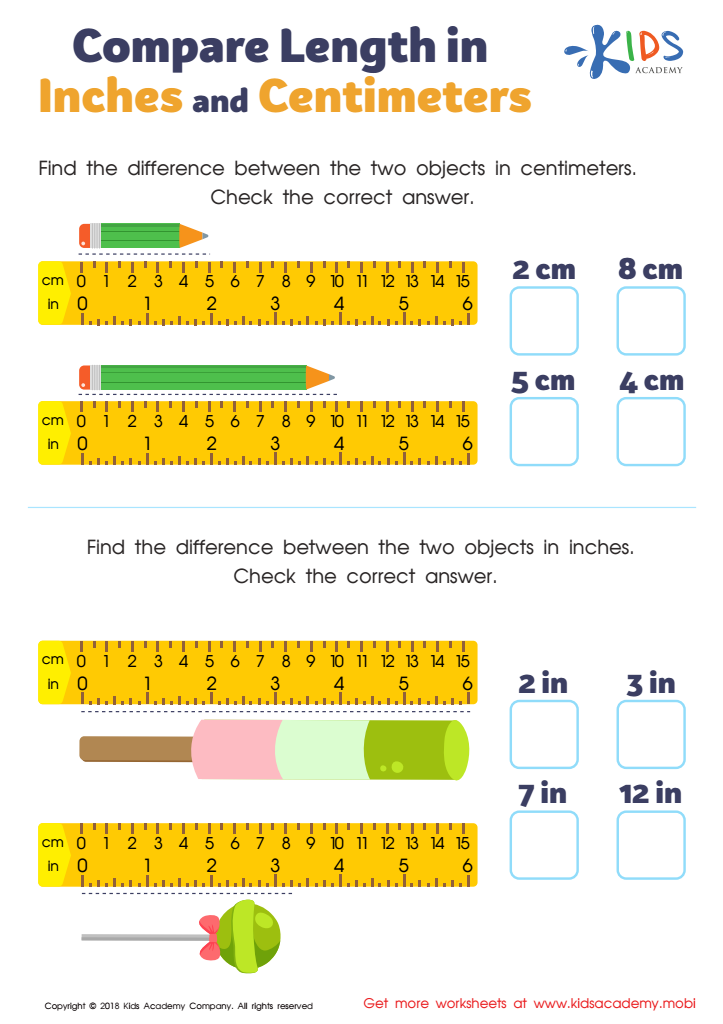
Compare Length in Inches and Centimeters Worksheet
 Assign to My Students
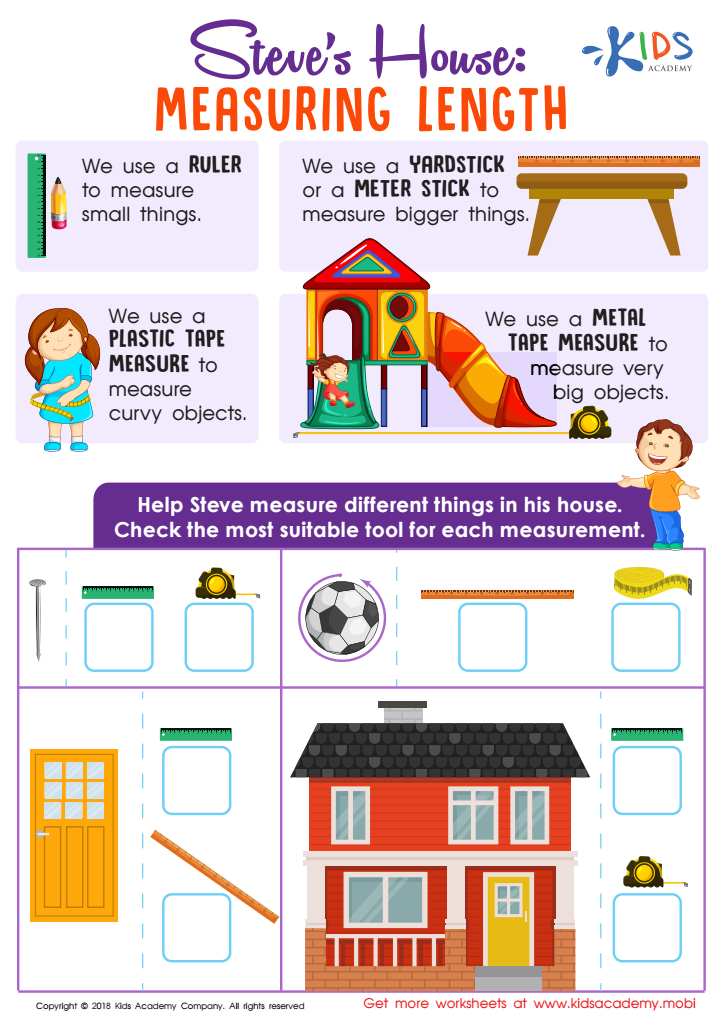
Steve's House: Measuring Length Worksheet
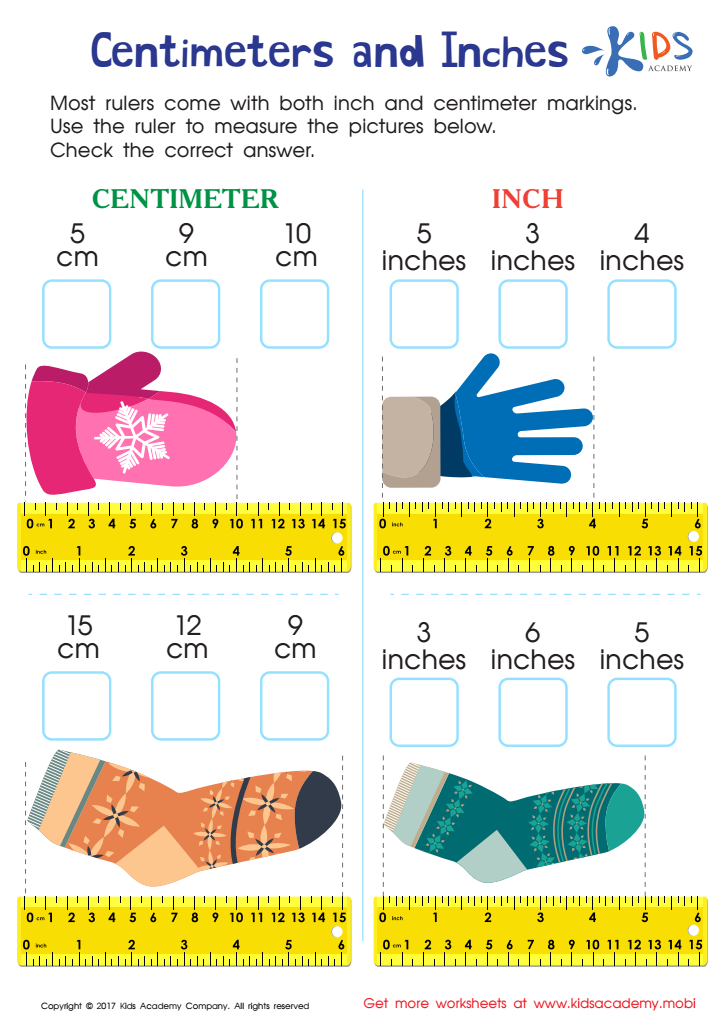
Centimeters and Inches Worksheet








Understanding practical math applications in normal measurement is crucial for children ages 6-7 as it lays the foundation for their quantitative reasoning and problem-solving abilities. At this developmental stage, kids are naturally curious and ready to explore the world around them, which makes it an ideal time to introduce practical math concepts.
Measurement is a fundamental aspect of math that extends beyond the classroom into everyday activities. By teaching children how to measure length, weight, and volume, and how to understand time and money, parents and teachers help them relate abstract math concepts to real-life scenarios. For instance, measuring ingredients while cooking can teach kids about volume and fractions; comparing heights can introduce units of length; managing allowances can provide practical lessons in counting and budgeting.
These skills are not only essential for academic success but also for independent living. Early exposure to measurement equips children with the ability to make estimations, understand proportions, and engage in logical reasoning. Furthermore, practical applications foster a hands-on learning environment where concepts become tangible, making the lessons more engaging and easier to retain.
By integrating measurement activities into daily routines, parents and teachers not only boost math proficiency but also nurture a child's confidence and interest in exploring the world mathematically. This nurturing approach cultivates a well-rounded understanding that serves as a robust foundation for future complex concepts.








