Counting skills Normal Word Problems Worksheets for Ages 6-7
4 filtered results
-
From - To
Enhance your child’s math proficiency with our Counting Skills Normal Word Problems Worksheets designed for ages 6-7. These engaging worksheets focus on practical scenarios that help young learners practice counting and develop critical thinking skills. Each worksheet presents age-appropriate word problems that encourage children to apply their counting skills in fun and relatable ways. Parents and teachers can easily download and print these resources to support math learning at home or in the classroom. Foster a love for numbers while building confidence in problem-solving abilities. Perfect for early grade learners, these worksheets make counting enjoyable and effective!
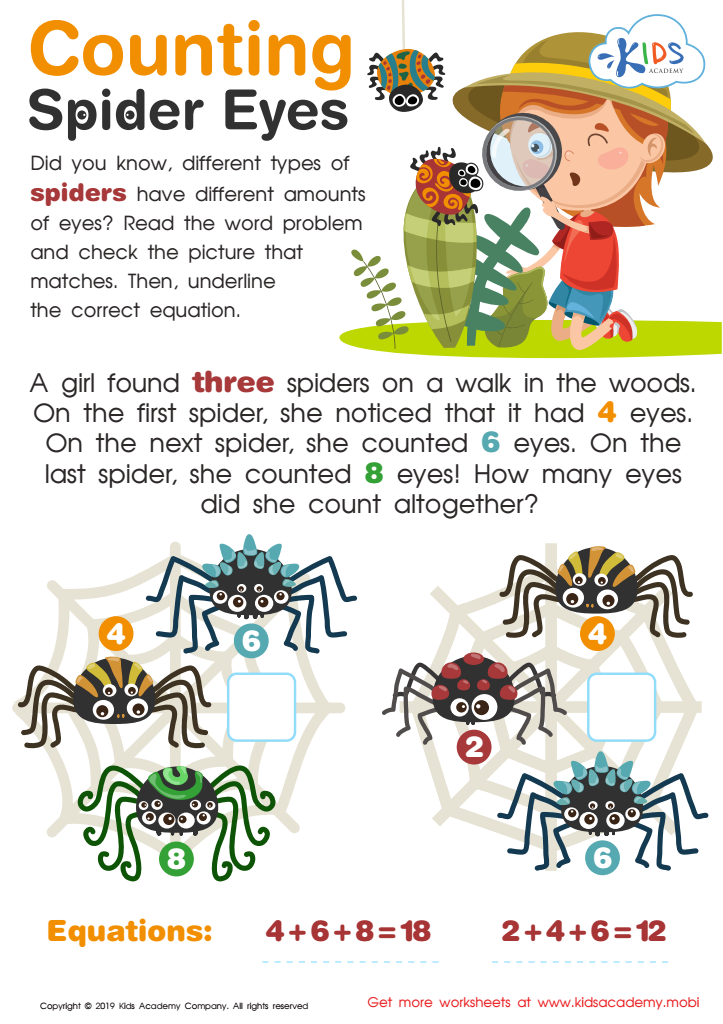
Counting Spider Eyes Worksheet
 Assign to My Students
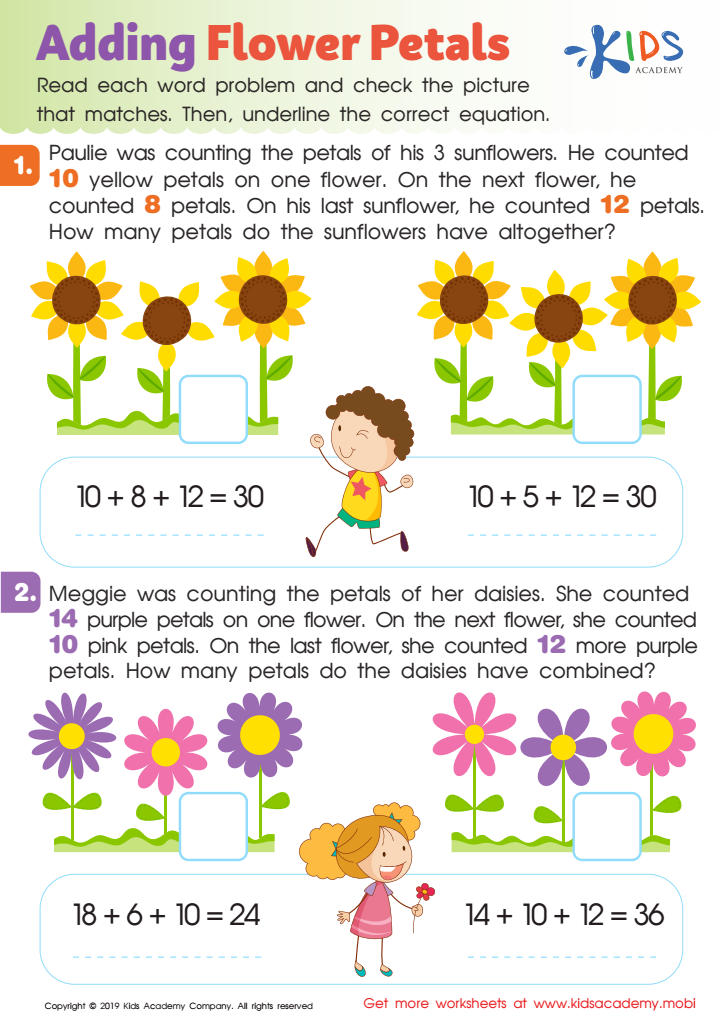
Adding Flower Petals Worksheet
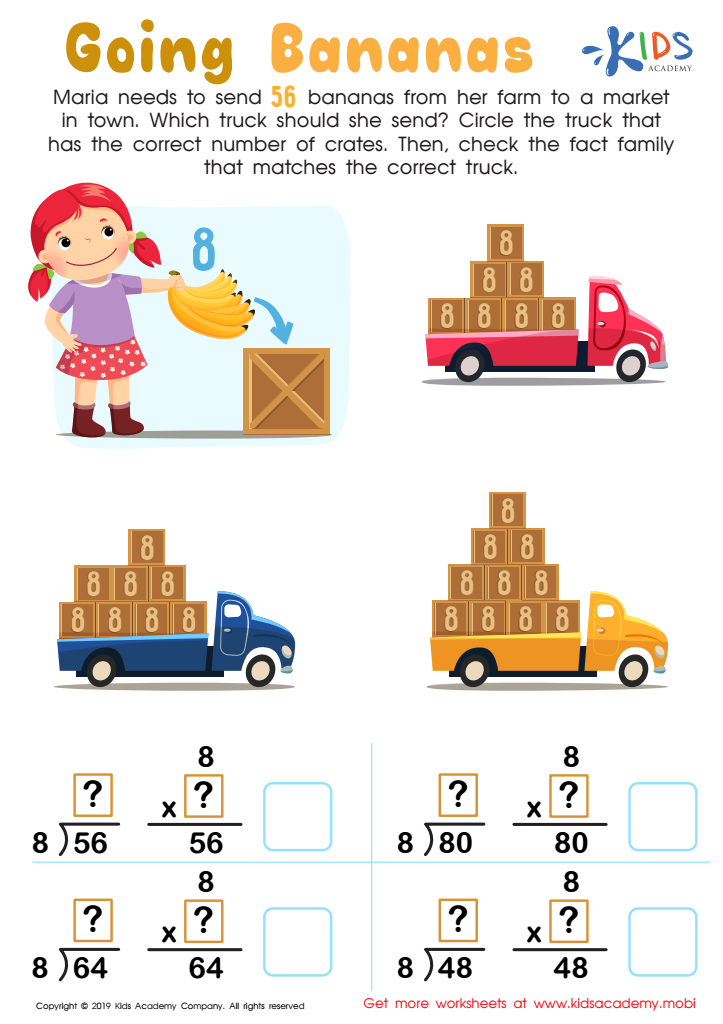
Going Bananas Worksheet
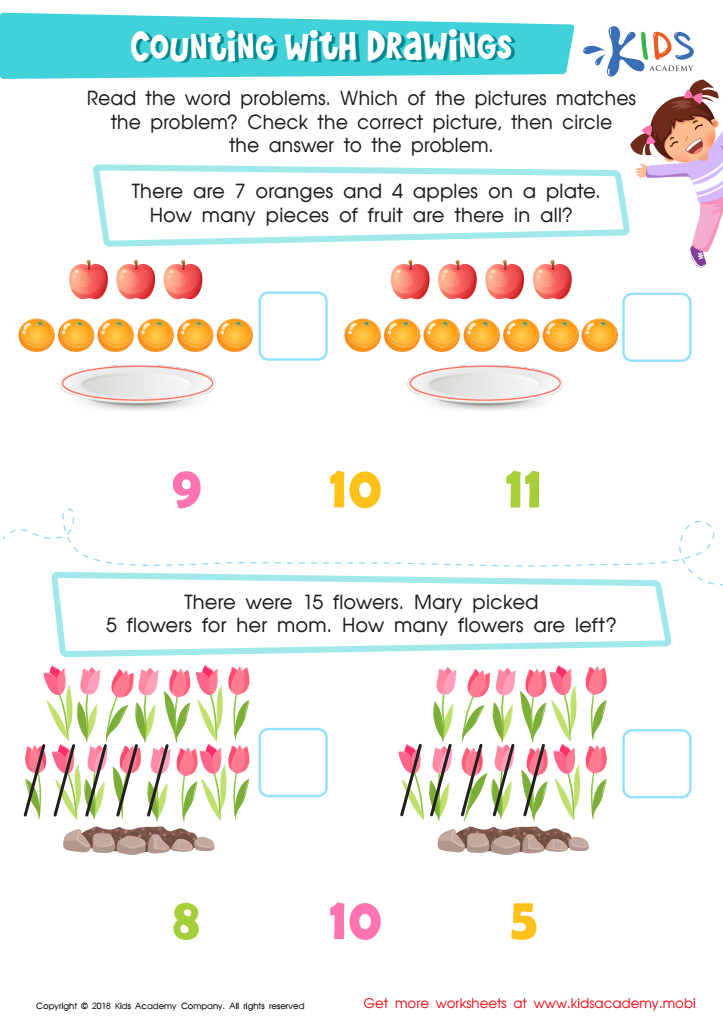
Counting with Drawings:Fruits & Flowers Worksheet








Counting skills and word problems are essential for children aged 6-7 as they form the foundation for mathematical understanding and problem-solving abilities. At this age, students transition from concrete counting to more abstract mathematical concepts. Teaching them to solve normal word problems helps children apply their counting skills in real-life situations, fostering critical thinking and logical reasoning.
Parents and teachers should care about these skills because they reflect a child's ability to interpret and analyze information, a crucial part of cognitive development. Word problems encourage children to engage with numbers in meaningful contexts, promoting not only mathematical proficiency but also language skills. This bilinguality fosters a better grasp of both math and communication, which are vital in social interactions and academics.
Moreover, mastering these skills early prepares children for more complex mathematical tasks in the future. A solid grasp of counting and problem-solving opens opportunities for increased confidence in their abilities, enhancing their overall learning experience. Engaging with word problems also encourages perseverance, teaching children to explore various strategies to find solutions—a lesson valuable beyond the classroom.
Cultivating these skills helps ensure children are well-equipped for future educational challenges and fosters a love for learning.








