Rhyming skills development Normal Reading Worksheets for Ages 6-7
3 filtered results
-
From - To
Enhance your child's reading journey with our Rhyming Skills Development Worksheets, specifically designed for ages 6-7. These engaging worksheets provide a fun and interactive way for young learners to recognize and create rhyming words. Through a variety of activities, children will develop their phonemic awareness, improve their vocabulary, and boost their overall literacy skills. Ideal for both classroom and home use, these worksheets promote critical thinking and reading comprehension while sparking a love for language. Join us in fostering your child's learning with our effective resources, setting the foundation for brighter reading experiences ahead!
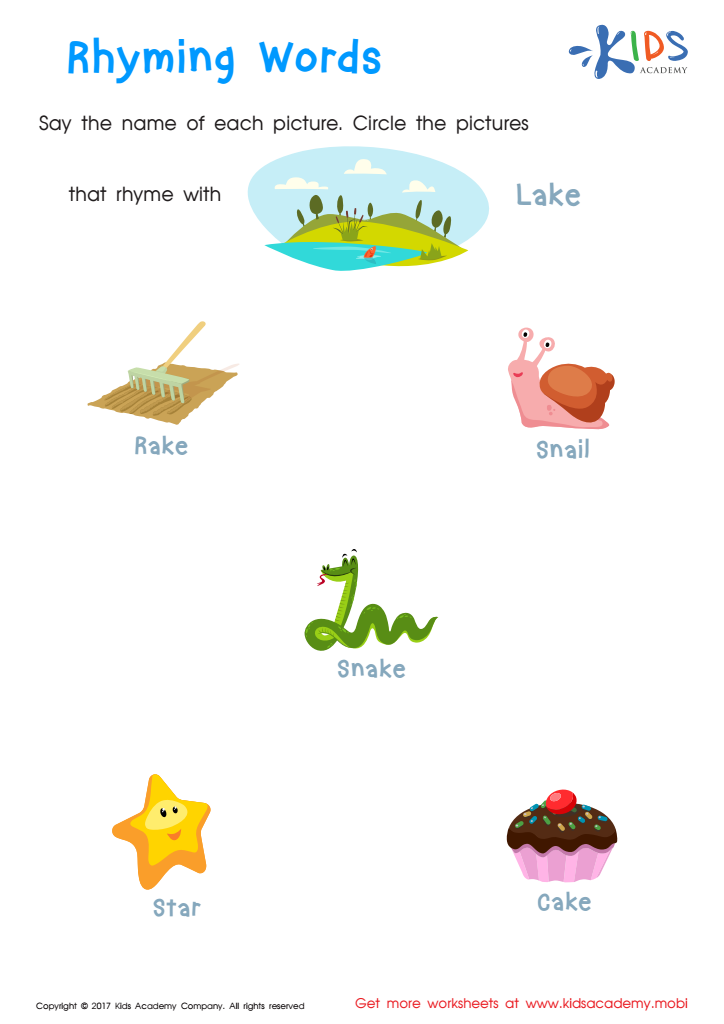
Rhyming Words Rhyming Worksheet
 Assign to My Students
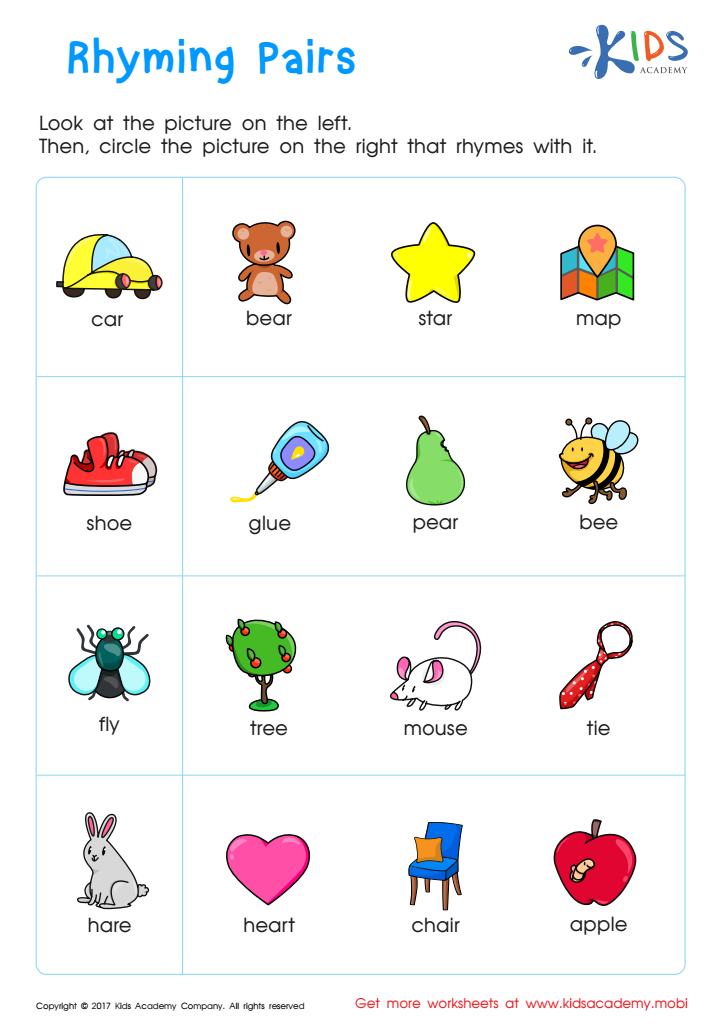
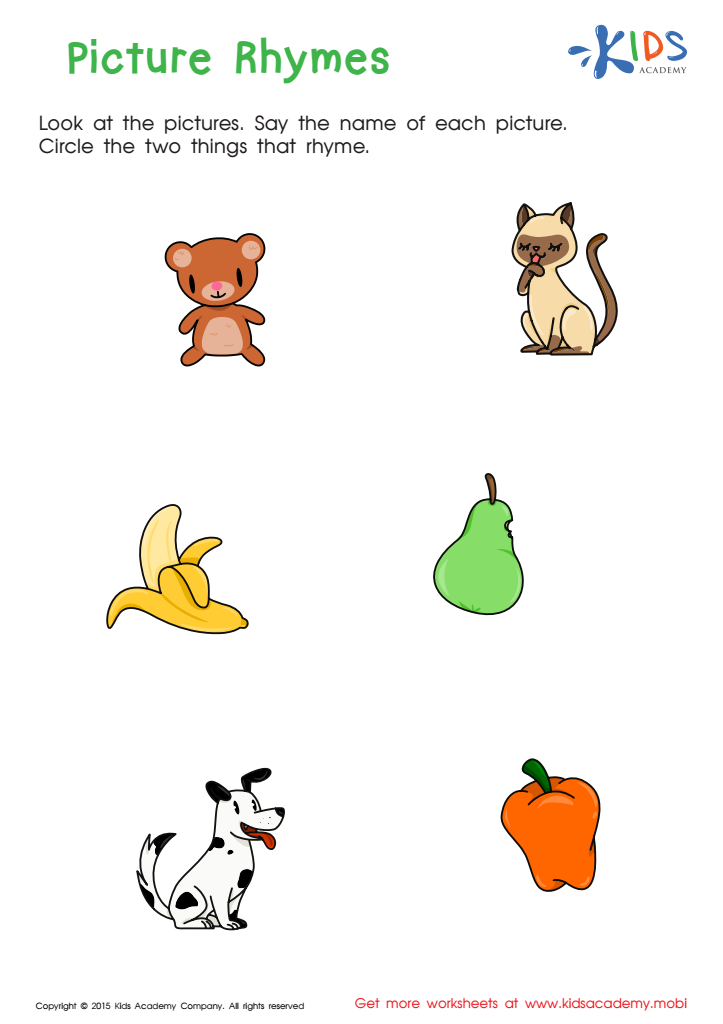
First Words: Picture Rhymes Worksheet


.jpg)




Rhyming skills play a crucial role in the reading development of children ages 6-7. At this developmental stage, children are mastering basic literacy concepts, and rhyming supports phonemic awareness, which is the ability to hear, identify, and manipulate the individual sounds in words. This skill is foundational for spelling and reading accuracy.
When children engage with rhymes, they enhance their auditory discrimination, which helps them recognize similarities in word sounds. This recognition is essential for decoding words while reading, forming the basis for smooth reading fluency. Rhyming also enriches vocabulary, as children are exposed to new words within enjoyable and memorable contexts.
Moreover, rhyming promotes a love for language and reading. Activities involving rhymes, such as singing songs or reading poetry, create a positive and engaging atmosphere for learning, which strengthens children's motivation and confidence in their reading abilities. Parents and teachers should emphasize rhyming through playful and interactive activities, as this encourages an early appreciation for literacy and supports longer-term academic success. By nurturing these skills, adults empower children to become proficient readers and lifelong learners, enhancing their critical thinking and creativity along the way.








