Story sequencing Normal Reading Comprehension Worksheets for Ages 6-7
13 filtered results
-
From - To
Our "Story Sequencing Normal Reading Comprehension Worksheets for Ages 6-7" are designed to enhance young readers' understanding and recall of narratives. These engaging worksheets help children practice arranging events in the correct order, boosting their ability to follow and retell stories accurately. By focusing on key learning skills, such as identifying the beginning, middle, and end of a story, kids improve their critical thinking and comprehension abilities. Ideal for classroom and home use, these worksheets provide a fun and educational way to develop essential reading skills for first and second graders. Explore our collection and support your child's reading journey today!
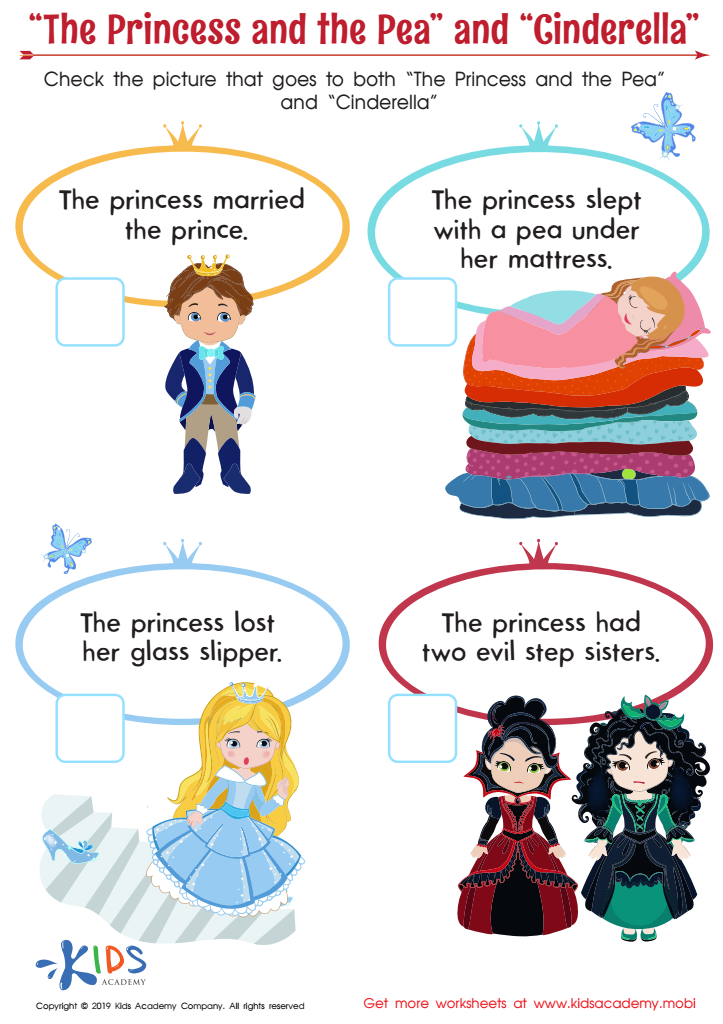
“The Princess and the Pea” and “Cinderella” Worksheet
 Assign to My Students
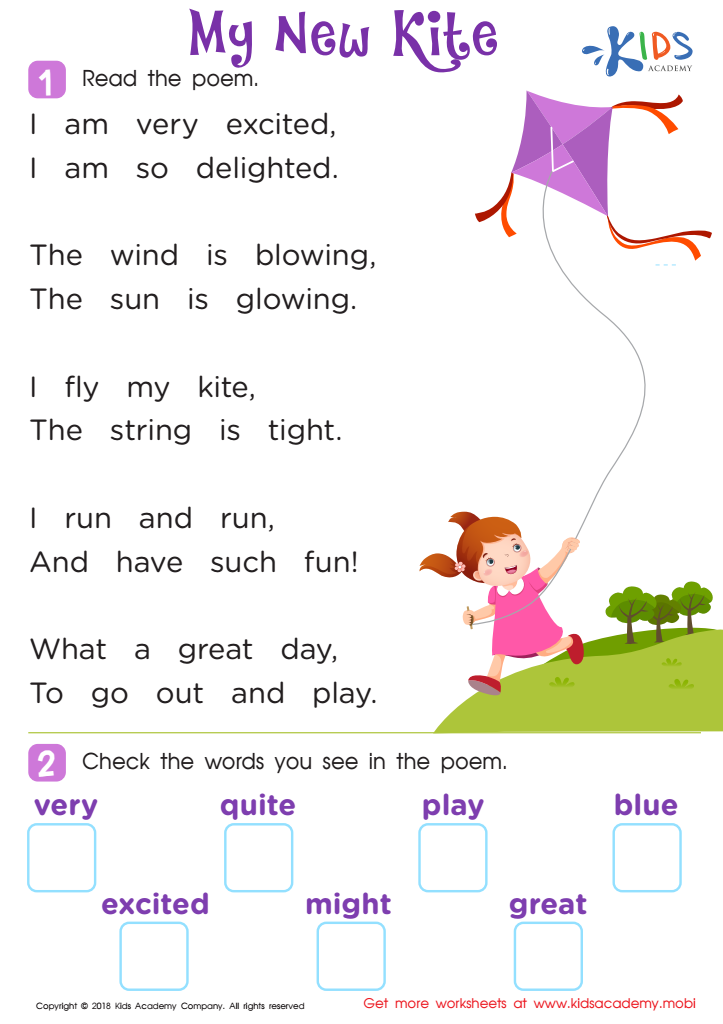
Poem: My New Kite Worksheet
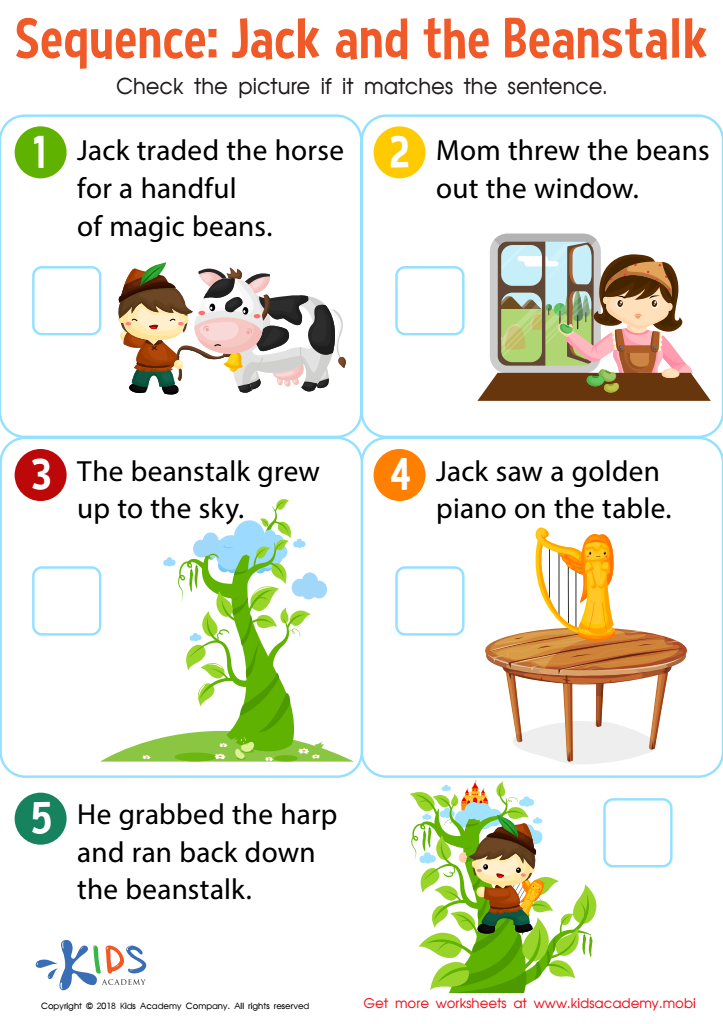
Sequence: Jack and The Beanstalk Worksheet
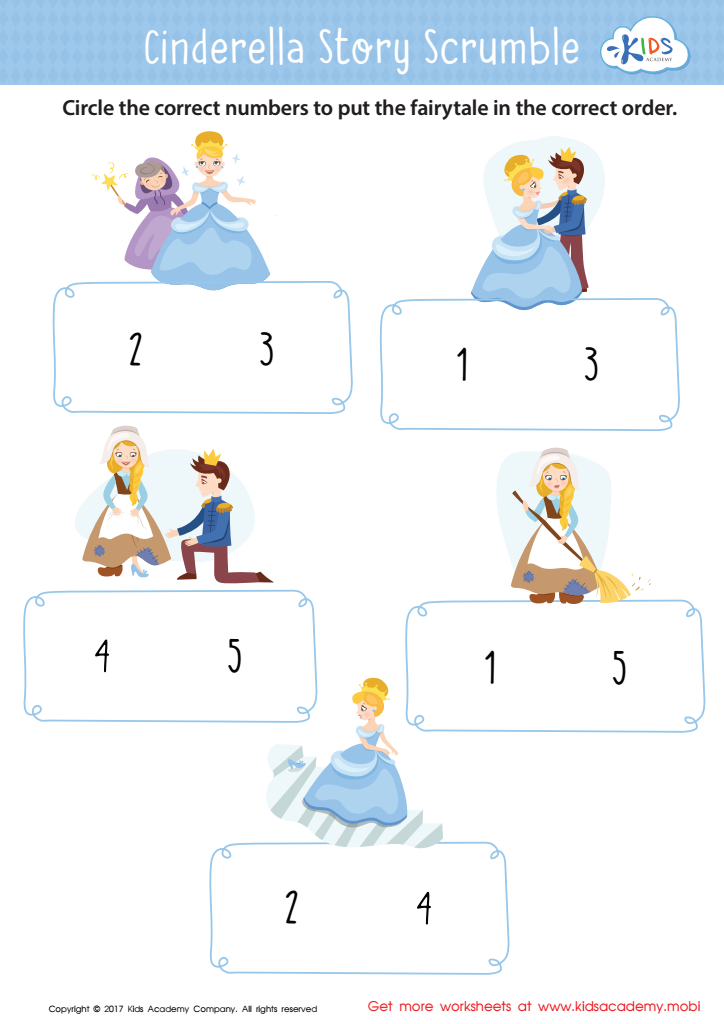
Cinderella Story Sequencing Worksheet
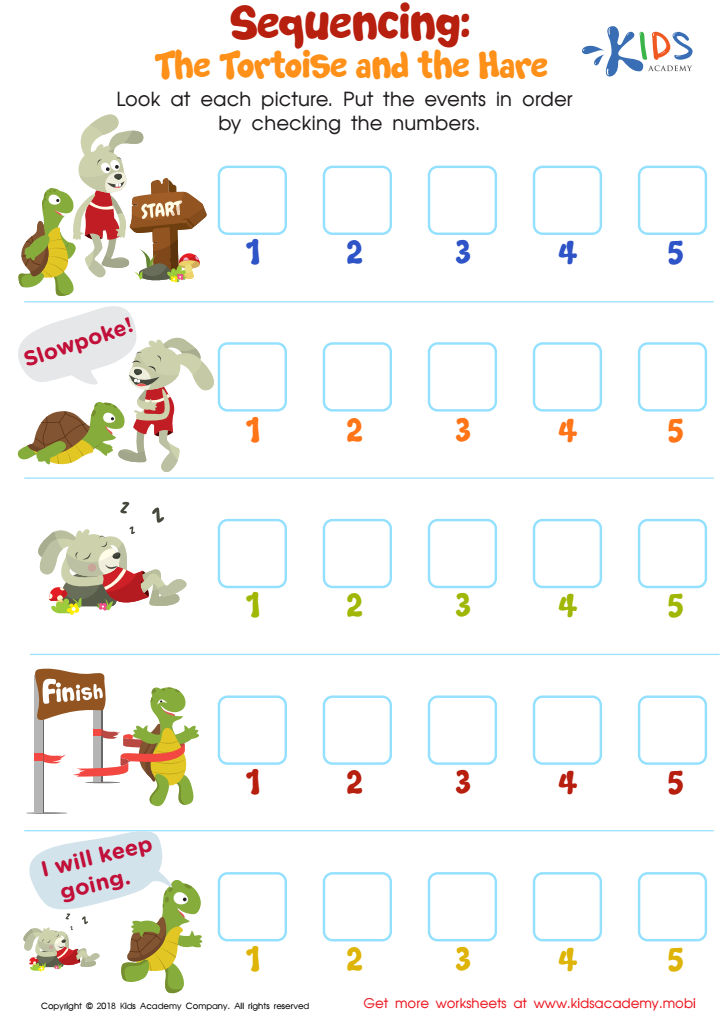
Sequencing: The Tortoise and the Hare Worksheet
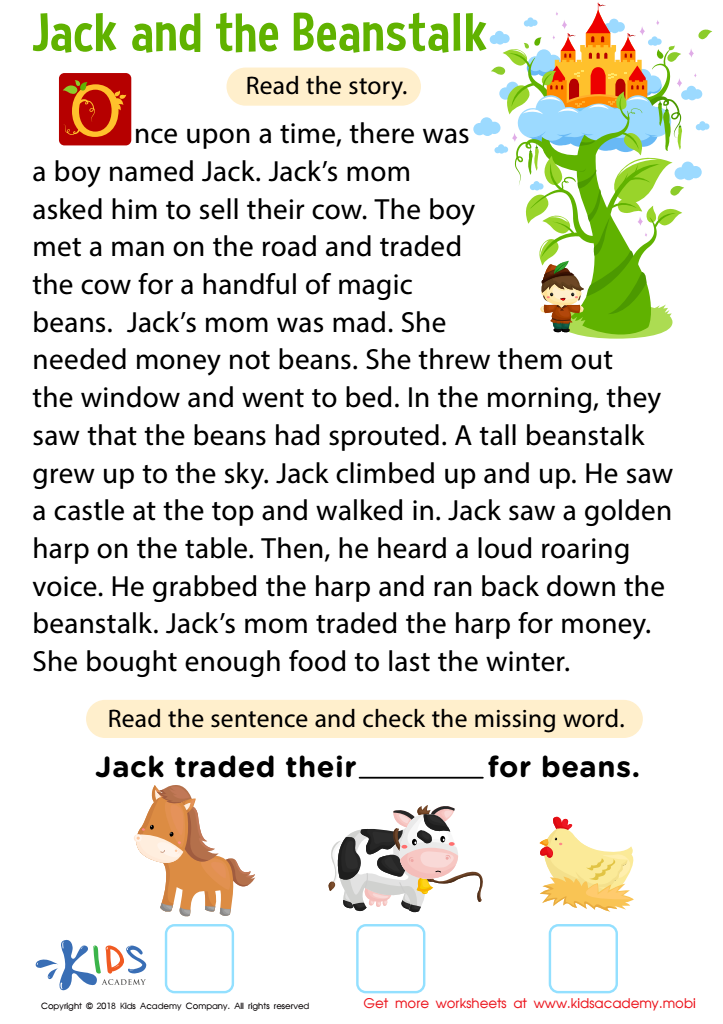
Jack and Beanstalk Worksheet
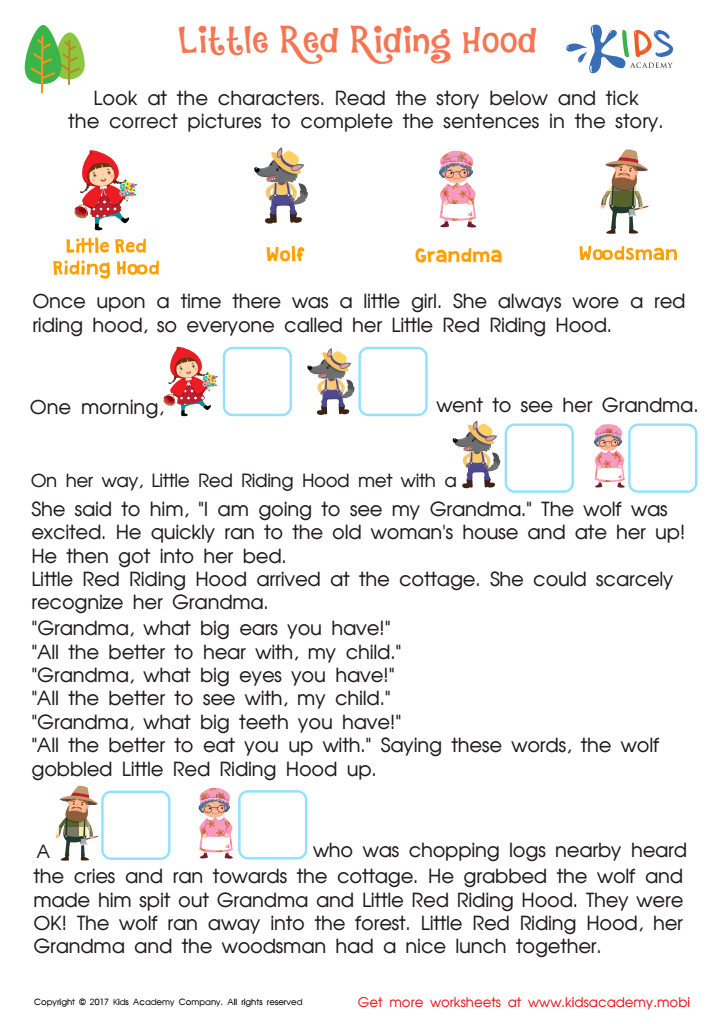
Little Red Riding Hood Printable
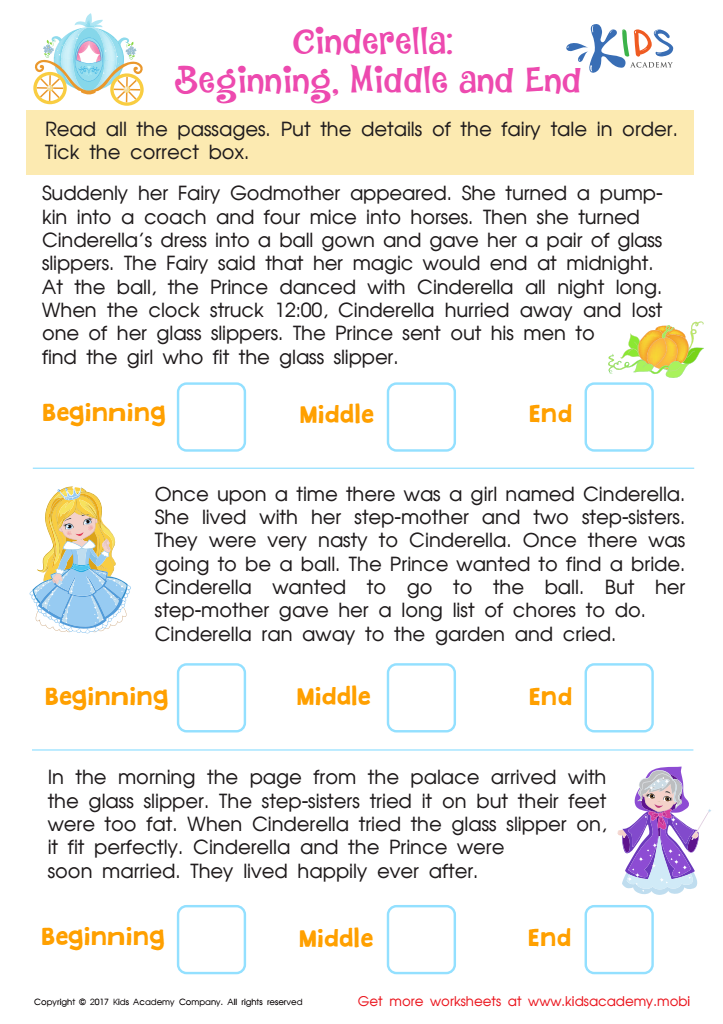
Cinderella: Beginning, Middle and End Worksheet
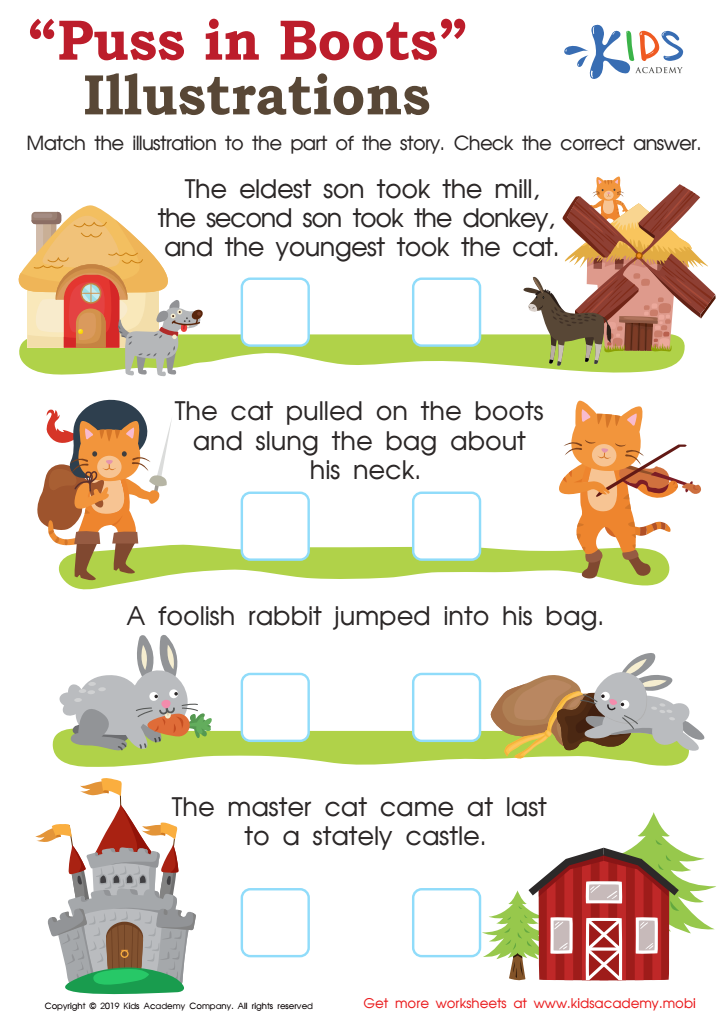
Puss in Boots Illustrations Worksheet
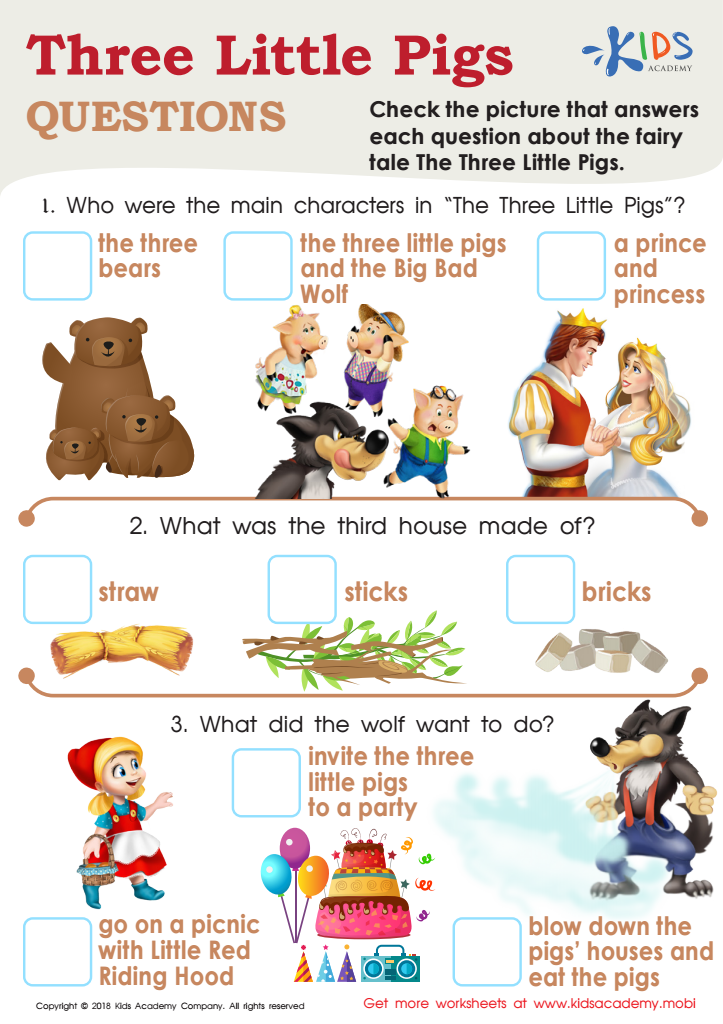
Three Little Pigs Questions Worksheet
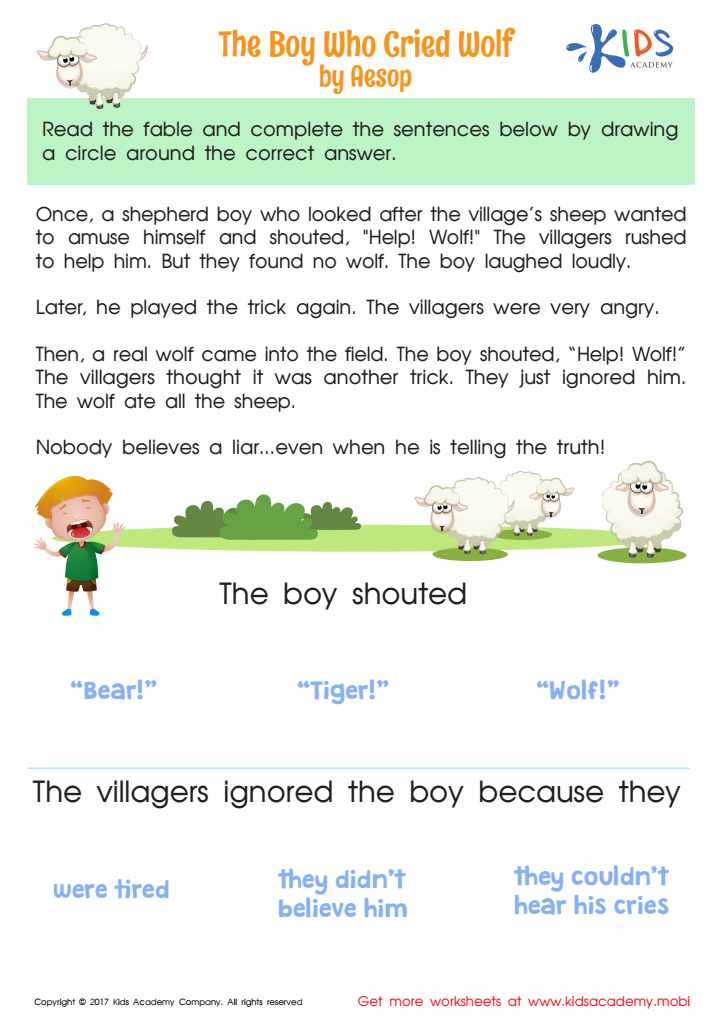
The Boy Who Cried Wolf Worksheet
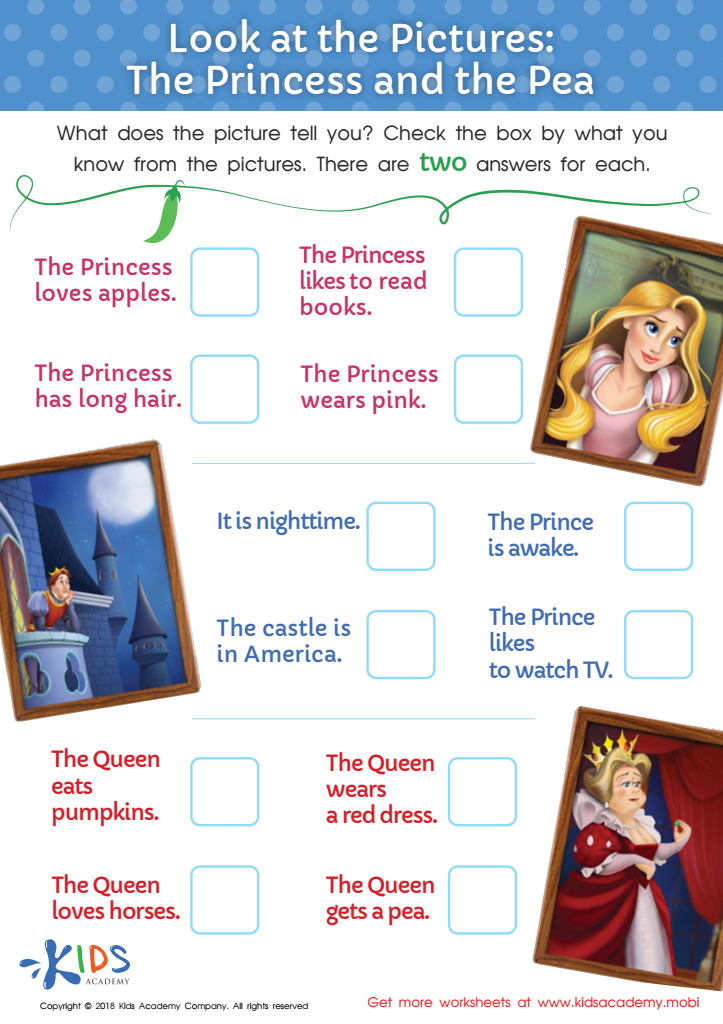
Look at the Pictures: The Princess and the Pea Worksheet
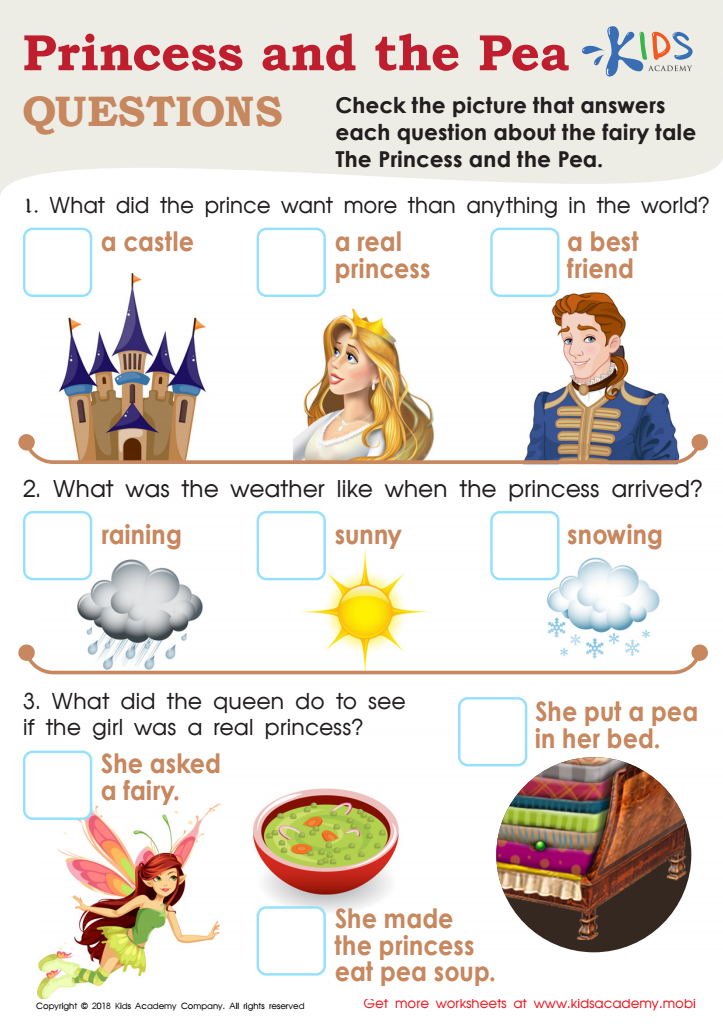
Princess and the Pea Questions Worksheet







Story sequencing and reading comprehension are foundational skills necessary for young children's academic success. At ages 6-7, children are rapidly developing their cognitive, language, and literacy abilities. Caring about story sequencing and normal reading comprehension at this stage is crucial because these skills support their overall understanding and enjoyment of reading.
Firstly, story sequencing helps children grasp the chronological order of events, which is a vital aspect of understanding narratives. When children can recognize what happens first, next, and last, they can better predict outcomes and infer meanings. This understanding is not limited to reading stories; it enhances their ability to follow routines and instructions in daily life, contributing to better problem-solving skills.
Secondly, normal reading comprehension involves not just decoding words, but also deriving meaning from the text. Children's abilities to answer 'who,' 'what,' 'where,' 'when,' 'why,' and 'how' questions are indicators of comprehension. This ability to understand and interpret text is critical for academic progress across all subjects. If parents and teachers focus on these skills early, they create a strong foundation for lifelong learning, critical thinking, and effective communication.
Therefore, investing time in fostering story sequencing and reading comprehension skills at this developmental stage ensures that children become confident readers and learners, paving the way for future educational achievements.








