Categorization skills Normal Animals Worksheets for Ages 6-7
3 filtered results
-
From - To
Enhance your child's understanding of the animal kingdom with our Categorization Skills Normal Animals Worksheets for ages 6-7. Designed by educators, these engaging worksheets help young learners identify and classify different animals based on shared characteristics. Through fun and interactive activities, children will improve their observation skills, critical thinking, and scientific knowledge. The varied exercises include sorting, matching, and grouping animals, providing a comprehensive approach to learning. Ideal for both classroom and home use, these worksheets make science exciting and accessible. Help your child develop essential categorization skills and a greater appreciation for nature today!
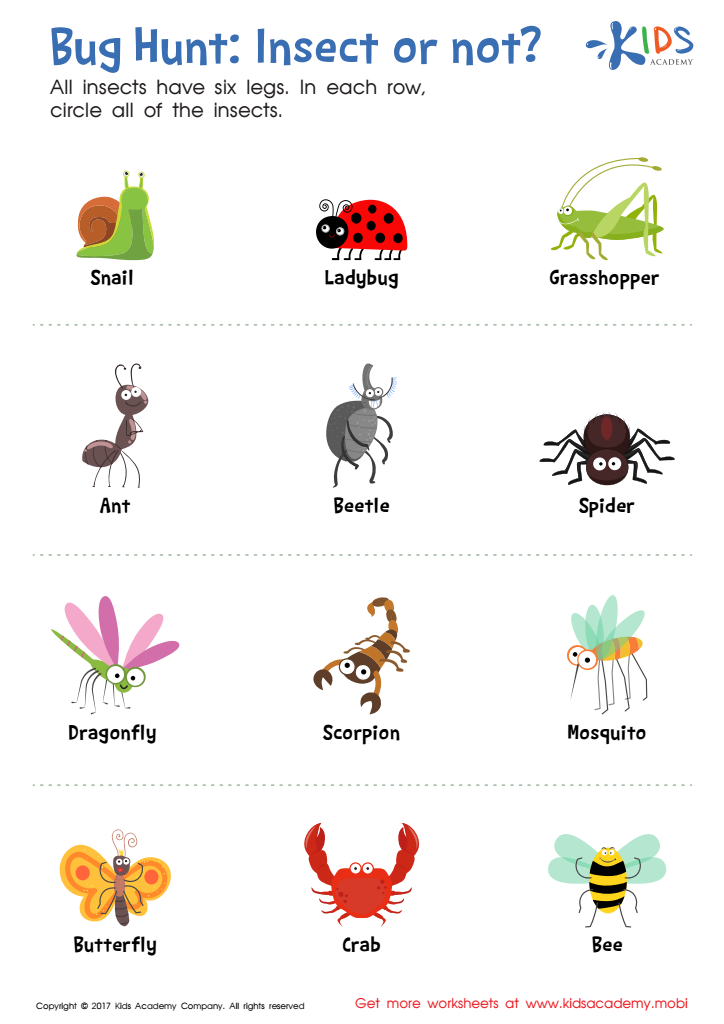
 Assign to My Students
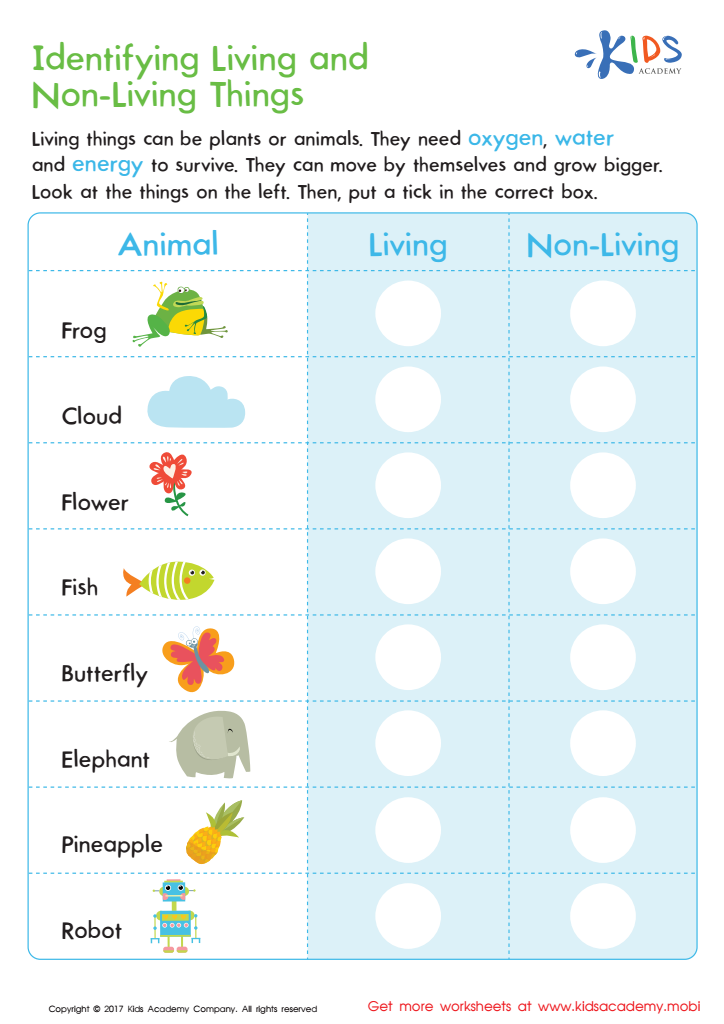
Identifying Living or Non–living Worksheet
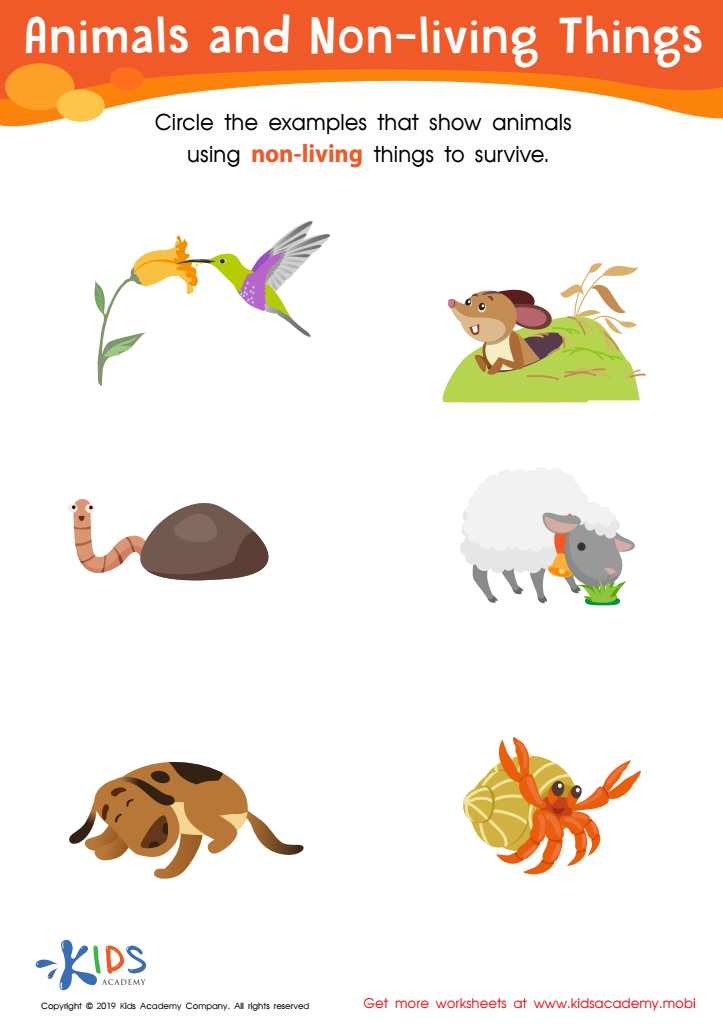
Animals and Non-Living Things Worksheet








Categorization skills are foundational cognitive abilities essential for children's intellectual and language development. For ages 6-7, focusing on categorizing normal animals offers multiple benefits. Firstly, it enhances memory and retention. By learning to classify animals by species, habitat, diet, etc., children better organize and recall information. This organization is crucial for effective learning and academic performance.
Moreover, categorization promotes critical thinking. Children learn not just to see individual animals but to understand broader concepts, like "mammals" or "reptiles," leading to deeper comprehension of biological science topics. It also helps in language development by encouraging the use of specific vocabulary related to classifications, thereby enriching their communication skills.
Socially, discussing animal categories can develop collaborative skills and empathy. Group projects or discussions about animals’ habitats and conservation teach children cooperative learning and concern for nature. Psychologically, consistency in categorization provides a sense of order and predictability, which is comforting and encouraging for young minds dealing with a plethora of new information daily.
Parents and teachers should prioritize categorization skills not just for academic growth, but also to nurture well-rounded, critical thinkers with abilities to understand and organize the world comprehensively, thus preparing them better for future learning tasks.








