Verb identification Normal Writing Worksheets for Ages 6-7
5 filtered results
-
From - To
Enhance your child's writing skills with our engaging Verb Identification Normal Writing Worksheets, specially designed for ages 6-7. These worksheets provide a fun and interactive way for young learners to recognize and use verbs effectively in their writing. Each activity is tailored to develop essential language skills, empowering children to identify action words while boosting their creativity. Our thoughtfully crafted lessons encourage independence and foster a love for learning through exciting exercises. Perfect for homeschoolers and classroom settings alike, these worksheets make grammar enjoyable and accessible. Start your child's journey to confident writing today with our captivating and educational resources!
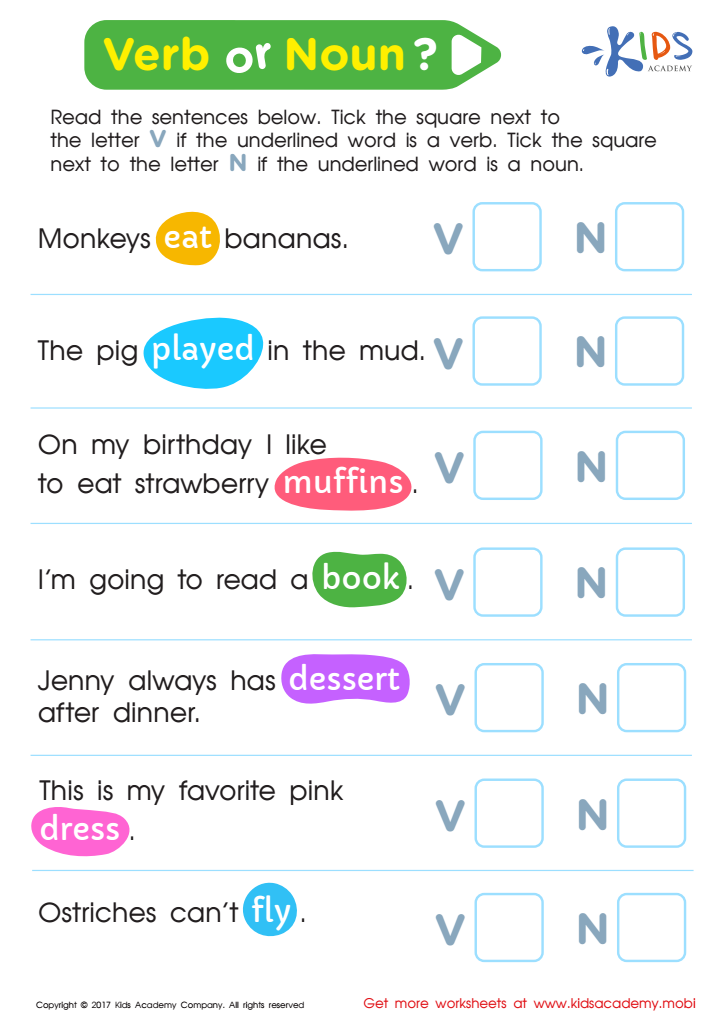
Verb or Noun Worksheet
 Assign to My Students
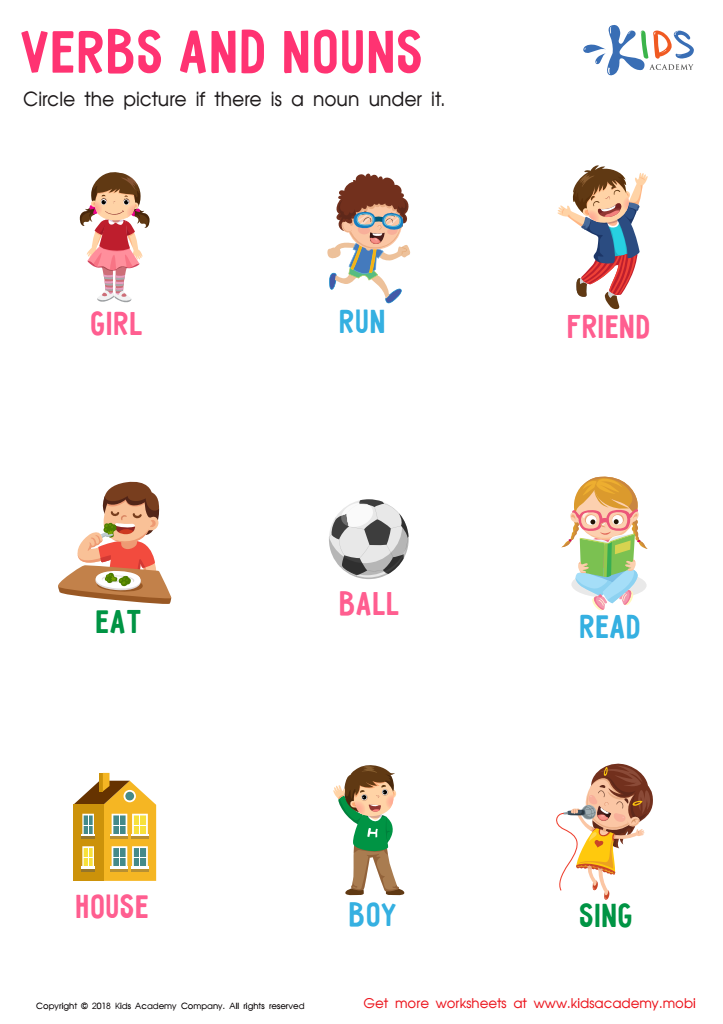
Verbs and Nouns Worksheet
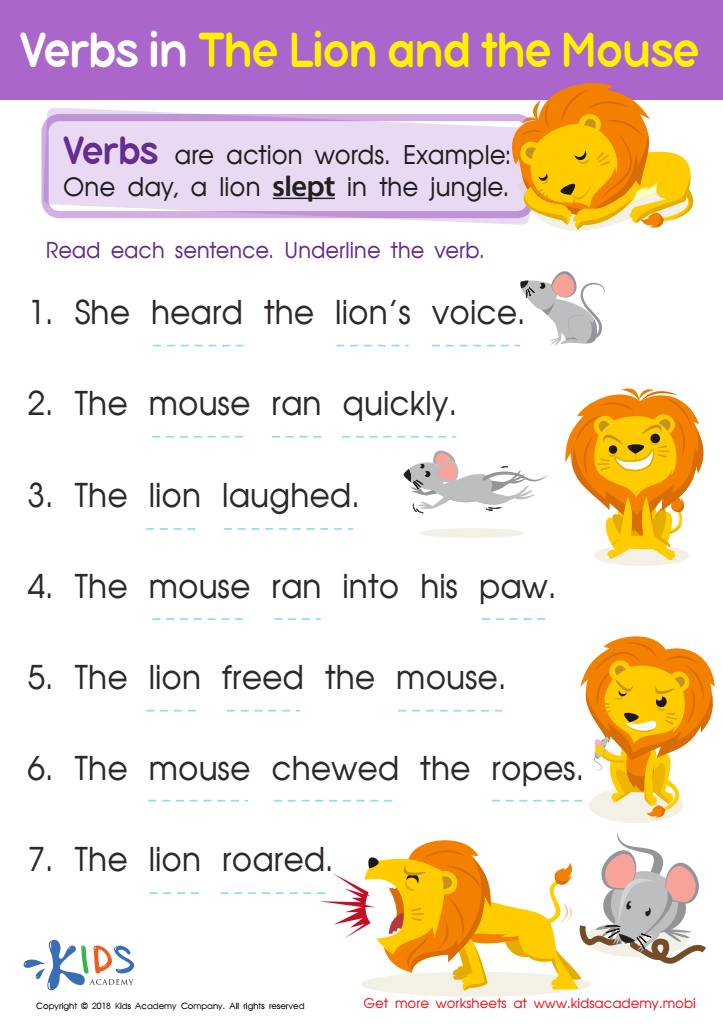
Verbs in The Lion and the Mouse Worksheet
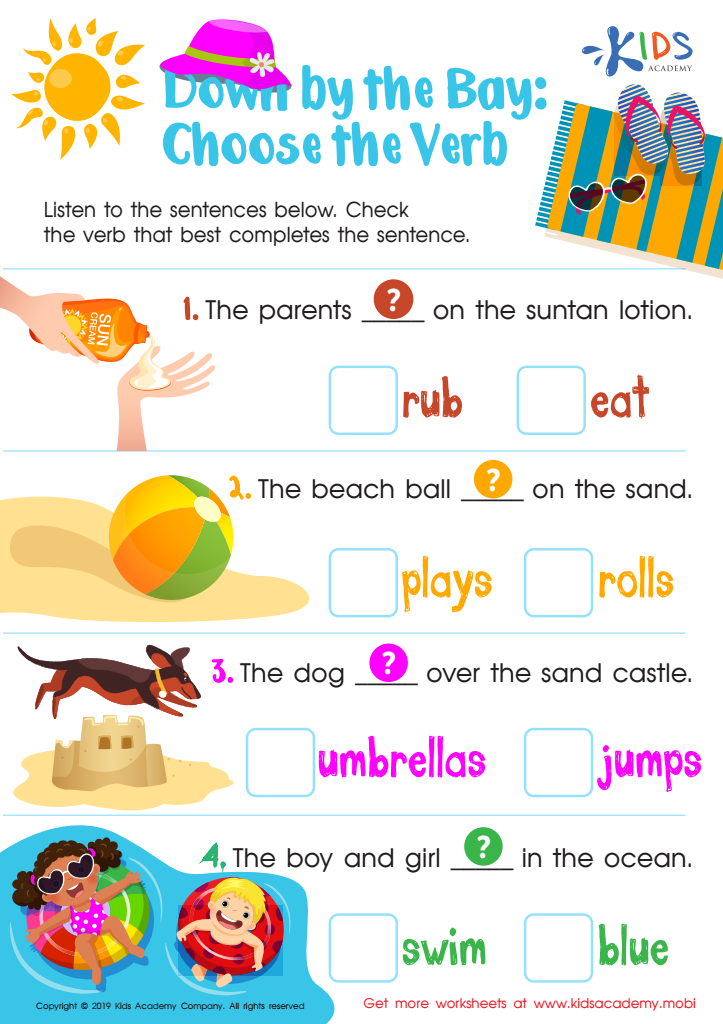
Down by the Bay: Choose the Verb Worksheet
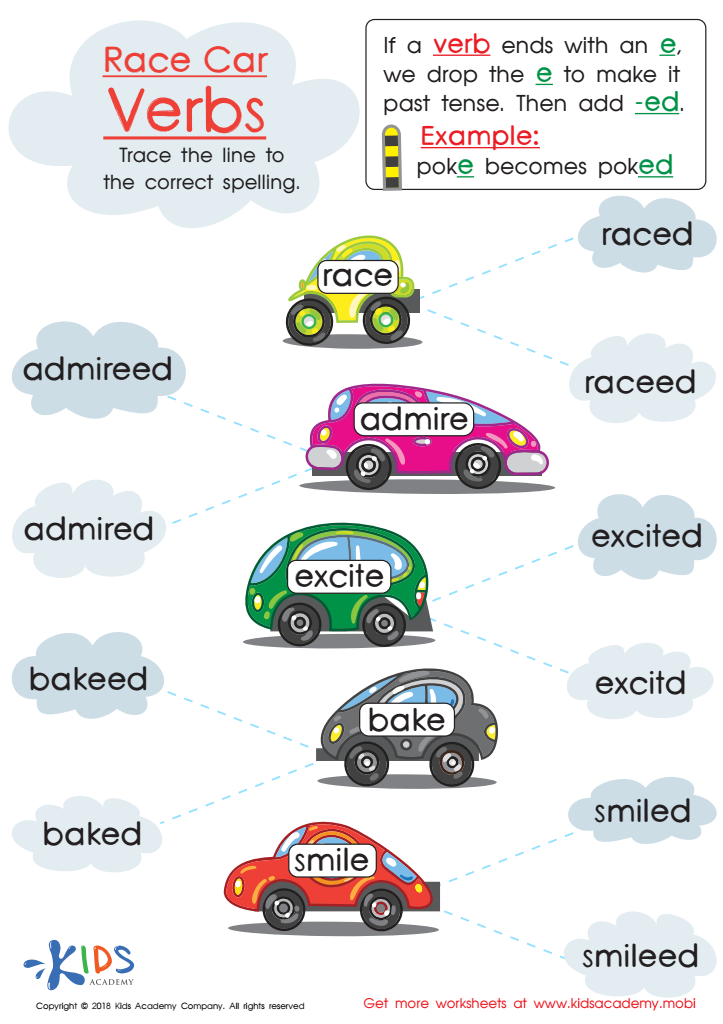
Race Car Verbs Worksheet








Verb identification is a crucial skill that young learners, particularly ages 6-7, need to develop to ensure their language and overall literacy skills flourish. Parents and teachers should care about this foundational aspect of reading and writing because verbs are essential components of sentences; they convey actions, states, or occurrences, and understanding them helps children grasp sentence structure effectively.
Promoting verb identification enhances children's reading comprehension; when children recognize verbs, they can better understand what actions are taking place in a story, leading to richer interpretations and discussions about the text. Moreover, it assists children in writing more vividly and descriptively, allowing them to express their thoughts and ideas clearly and creatively.
Additionally, focusing on verbs encourages vocabulary expansion. Young learners begin to explore various action words, which not only boosts their language acquisition but also aids in enhancing their expressive and receptive communication skills.
By incorporating activities that promote verb identification—such as verb hunts, storytelling, and dialogical play—adults can foster a supportive learning environment where children feel more confident in both listening and speaking. Consequently, this skill lays the groundwork for future literacy success.