Categorizing objects Normal Worksheets for Ages 6-8
4 filtered results
-
From - To
Our "Categorizing Objects Normal Worksheets for Ages 6-8" are expertly designed to enhance your child's critical thinking and organizational skills. Through engaging activities, young learners will gain the ability to sort and classify everyday items based on shared characteristics. These worksheets make learning fun and interactive, encouraging attention to detail and logical reasoning. Ideal for both homeschooling and classroom settings, our expertly crafted resources help children build a solid foundation in essential categorization skills. Perfect for ages 6-8, they make the complex task of categorizing objects simple and enjoyable, setting the stage for lifelong learning success.
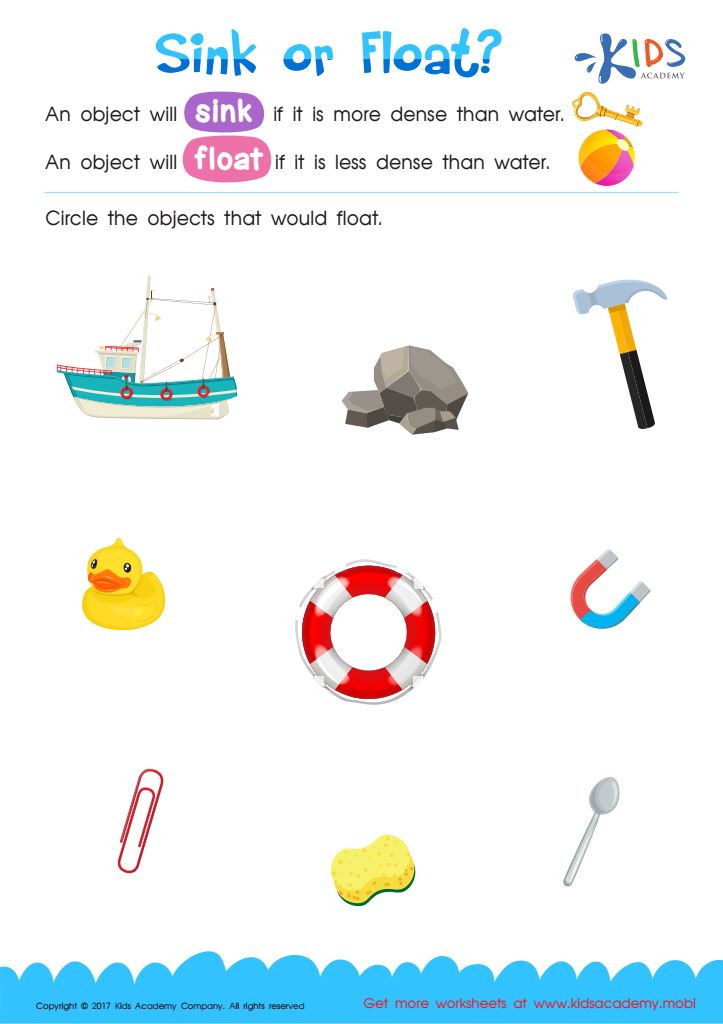
Sink or Float Printable
 Assign to My Students
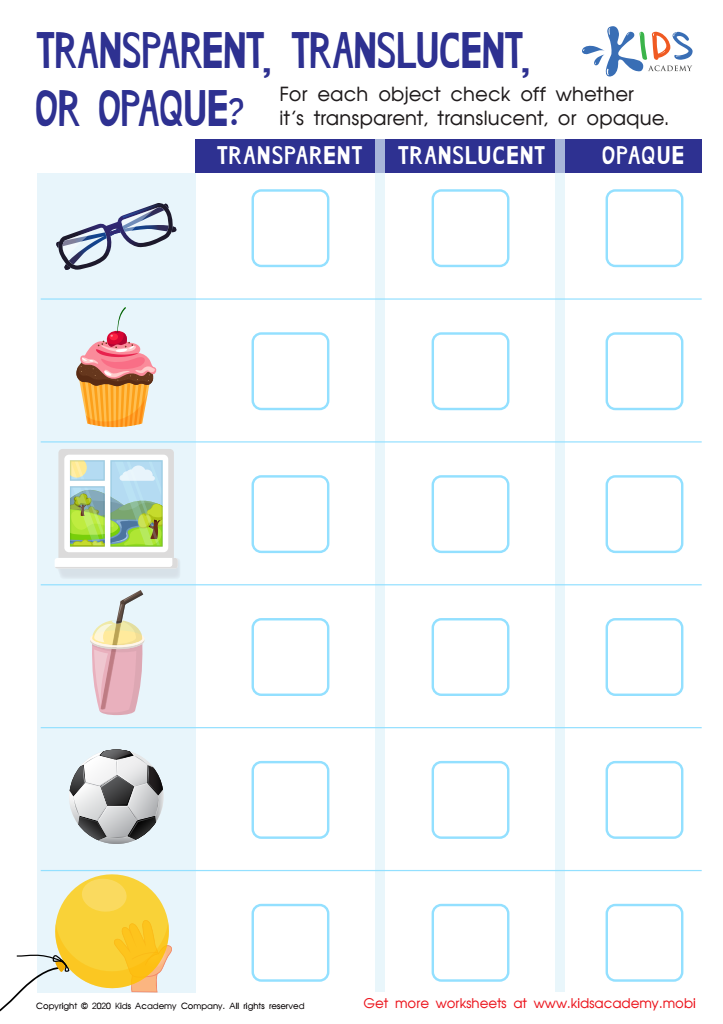
Transparent, Translucent, or Opaque Worksheet
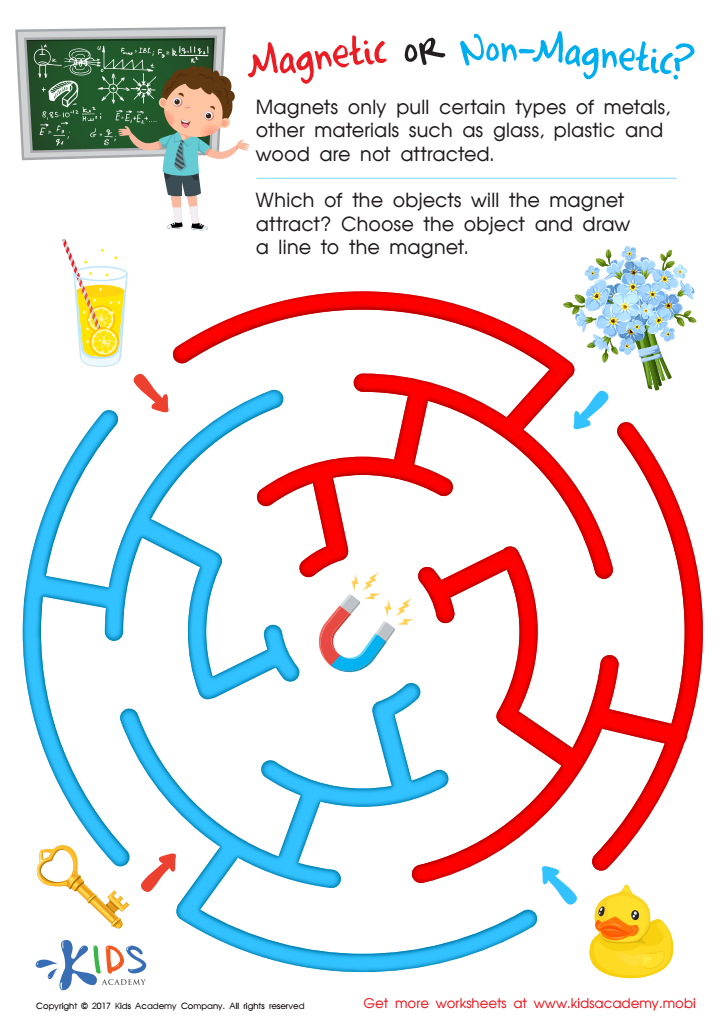
Magnetic or Non–Magnetic Worksheet
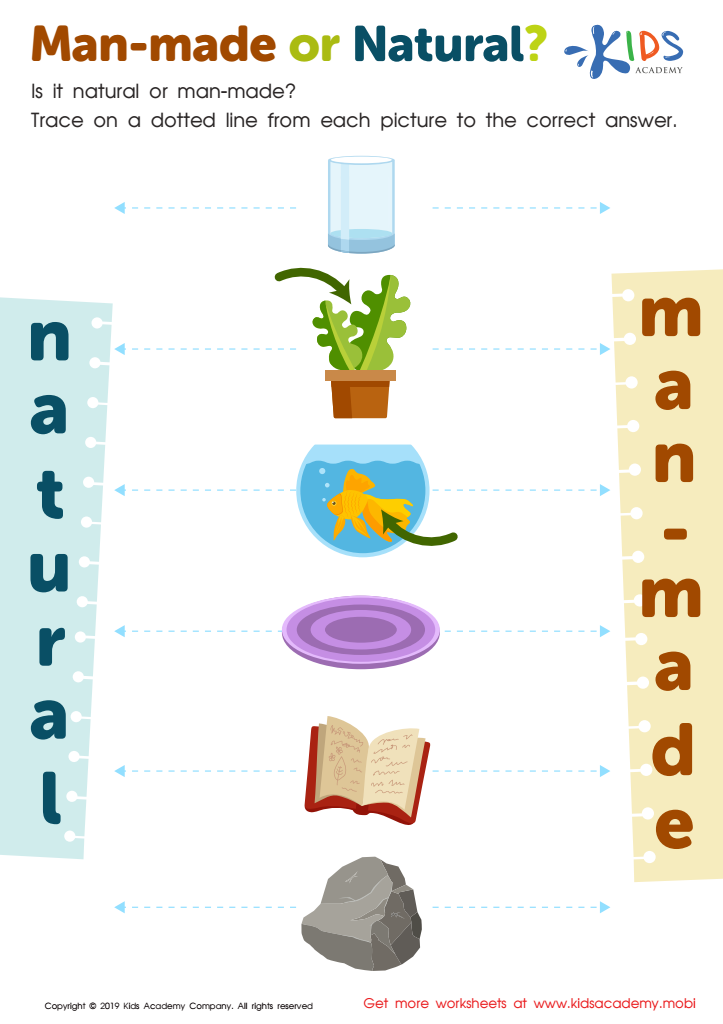
Man-Made or Natural? Worksheet





Categorizing objects is a crucial cognitive skill that parents and teachers should prioritize for children ages 6-8. At this developmental stage, kids are rapidly expanding their ability to understand and interact with the world around them. Teaching them to categorize helps in numerous ways, improving not only their academic abilities but also aiding in their overall cognitive development.
Firstly, categorizing objects helps build critical thinking and organizational skills. By grouping items based on similarities and differences such as size, shape, color, or function, children improve their logical reasoning. This fundamental skill makes it easier for them to grasp more complex subjects like mathematics and science later on.
Secondly, language development is significantly enhanced through categorization. When children classify objects, they often learn new vocabulary words related to the categories (e.g., fruits, animals, shapes). This enriched vocabulary enables better communication skills, allowing them to describe and understand more complex ideas.
Furthermore, sorting activities teach basic problem-solving techniques and focus. Kids learn how to approach tasks methodically, boosting their ability to concentrate and follow through – skills essential for academic success.
Finally, categorizing encourages social skills. Children often work in teams to sort items, which promotes collaboration, negotiation, and sharing.
In summary, parents and teachers should focus on categorizing activities because they build critical thinking, language, problem-solving skills, and social interaction necessary for well-rounded development.








