Filters

124 filtered results

Clear all filters
Favorites
With answer key
Interactive

124 filtered results

Difficulty Level

Grade


Check out this FREE "Fine Motor Skills" Trial Lesson for age 6-8!

D

Favorites
With answer key
Interactive
  • 6-8
  • Fine Motor Skills
  • Normal
letter d worksheets
letter d worksheets

Letter D Tracing Page

Trace and write capital and lowercase letter "D" with our free printable alphabet worksheet! Be careful not to mix up "b" and "d" - just look at the ducks and write their first letter. The dolphin wants to join the fun too - do you like dolphins? Get more fun worksheets and activities at Kids Academy!
Letter D Tracing Page
Worksheet
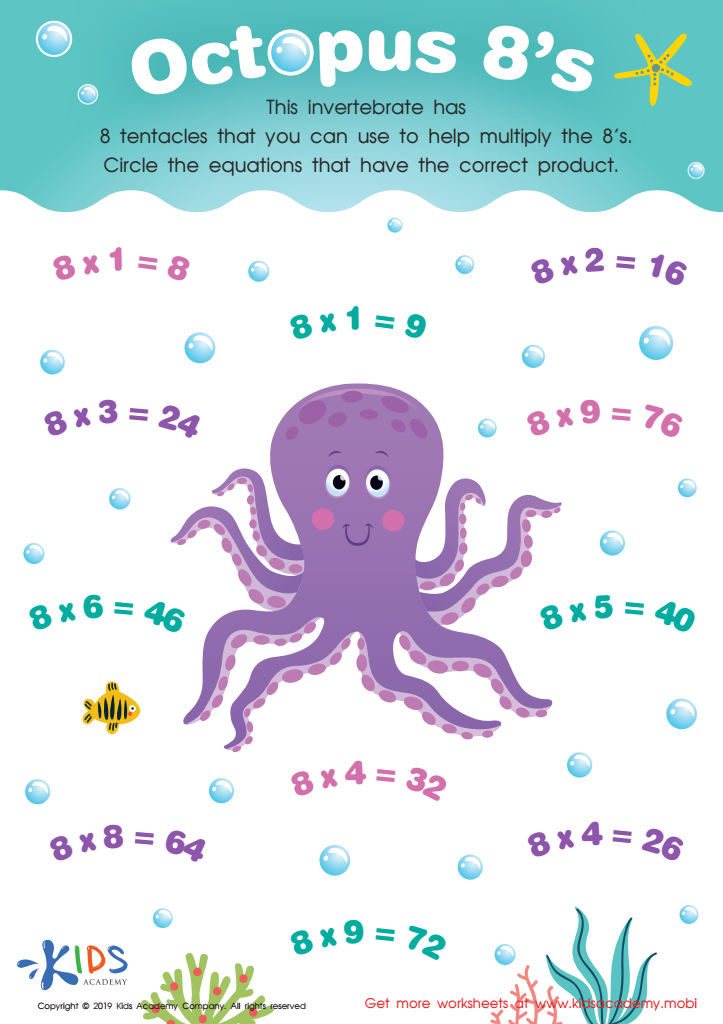
Octopus 8’s Worksheet

Octopus 8’s Worksheet

Can your child identify the octopus in the worksheet? It's an invertebrate with 8 tentacles. Have your child circle the equations with the correct products, and see if they can tell you some other features of the octopus too.
Octopus 8’s Worksheet
Worksheet
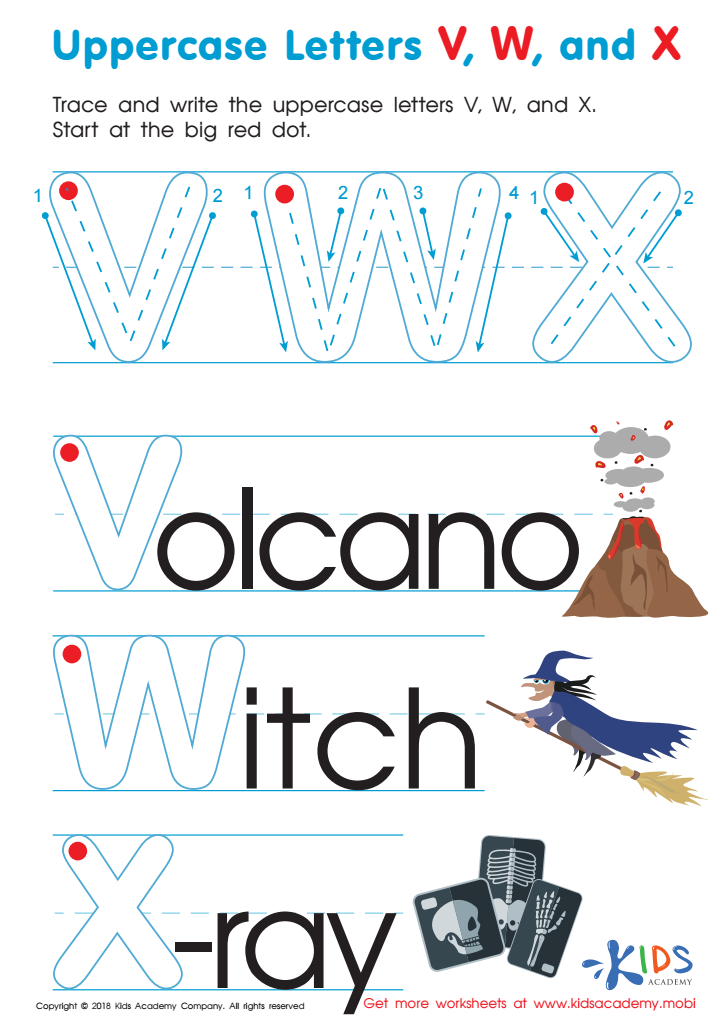
Uppercase Letters V, W, and X Worksheet

Uppercase Letters V, W, and X Worksheet

This worksheet is perfect for kids struggling to write uppercase letters V, W, and X. Warm up their brains first by having them name words starting with these letters. Then, help them trace and write each letter from the big red dot. With your assistance, they will quickly sharpen their writing skills.
Uppercase Letters V, W, and X Worksheet
Worksheet
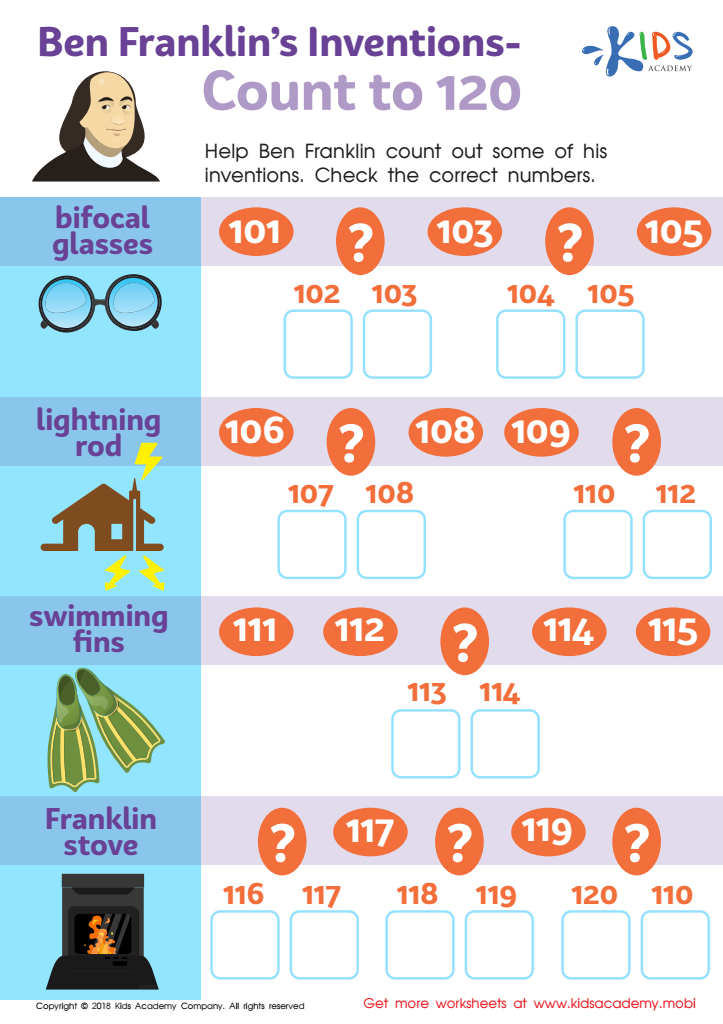
Ben Franklin’s Inventions – Count to 120 Worksheet


Ben Franklin’s Inventions – Count to 120 Worksheet

Benjamin Franklin is a significant figure in US history. He invented objects we use daily. If your child is interested in object history and invention, they'll love this worksheet. See if they can help Mr Franklin count his inventions and check their answers. It's a simple and enjoyable task!
Ben Franklin’s Inventions – Count to 120 Worksheet

Worksheet


... 5 6

Fine motor skills refer to the coordinated efforts of small muscles in our hands and fingers to perform precise movements. For children aged 6-8, these skills are crucial for their overall development and success in everyday tasks and school activities. Parents and teachers should care about fine motor skills because they directly impact a child's ability to perform essential tasks such as writing, drawing, cutting with scissors, and tying shoelaces. Proper development of these skills can lead to better handwriting, which is often a focus at this age. Improved handwriting can contribute to academic success, as legible writing is necessary for many school assignments and exams.

Additionally, fine motor skills are vital for self-care and independence. Proficiency in these skills allows children to dress themselves, manage personal hygiene, and eat independently. Developing fine motor skills also supports hand-eye coordination, which can enhance performance in sports and other physical activities.

Early identification and support can prevent frustration and boost a child's confidence and self-esteem. By providing age-appropriate activities and exercises, parents and teachers can promote fine motor skill development, ensuring that children build a strong foundation for future learning and daily life skills. This proactive approach ultimately fosters a well-rounded and self-reliant individual.