Time recognition Normal Worksheets for Ages 6-8
5 filtered results
-
From - To
Enhance your child's understanding of time with our Time Recognition Normal Worksheets designed for ages 6-8! These engaging, printable worksheets provide a fun and interactive way for young learners to master essential time-telling skills. Through a variety of activities, children will learn to read analog and digital clocks, understand time-related vocabulary, and solve practical time problems. Each worksheet is tailored to cater to different skill levels, ensuring students develop confidence as they progress. Perfect for home or classroom use, these worksheets make learning time concepts enjoyable and effective, preparing your child for future academic success!
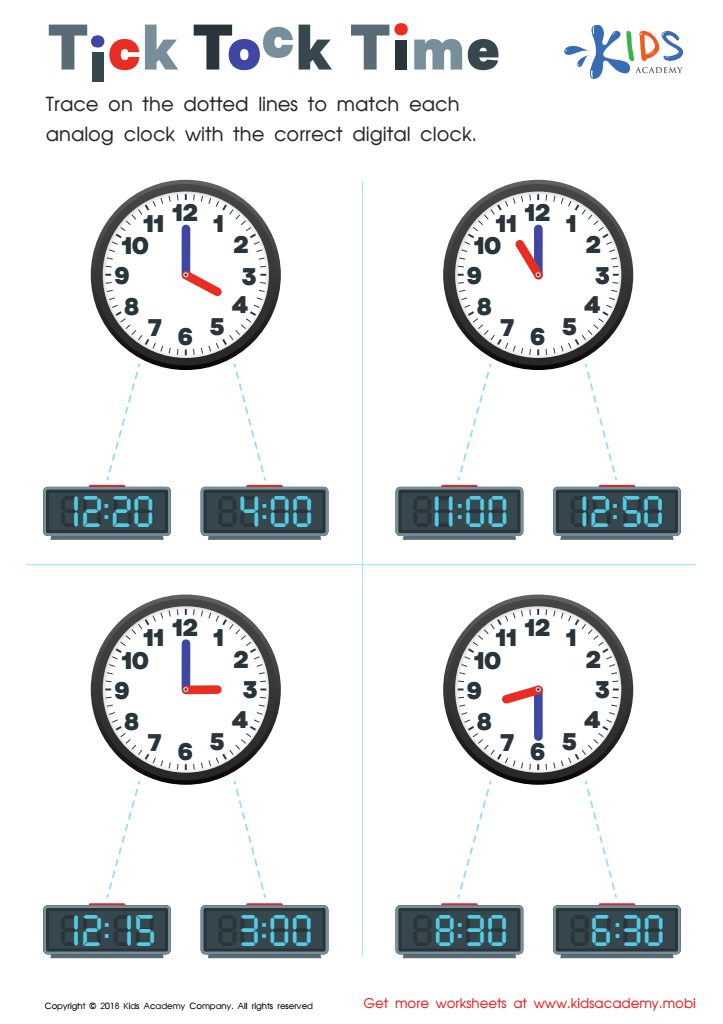
Tick Tock Time Worksheet
 Assign to My Students
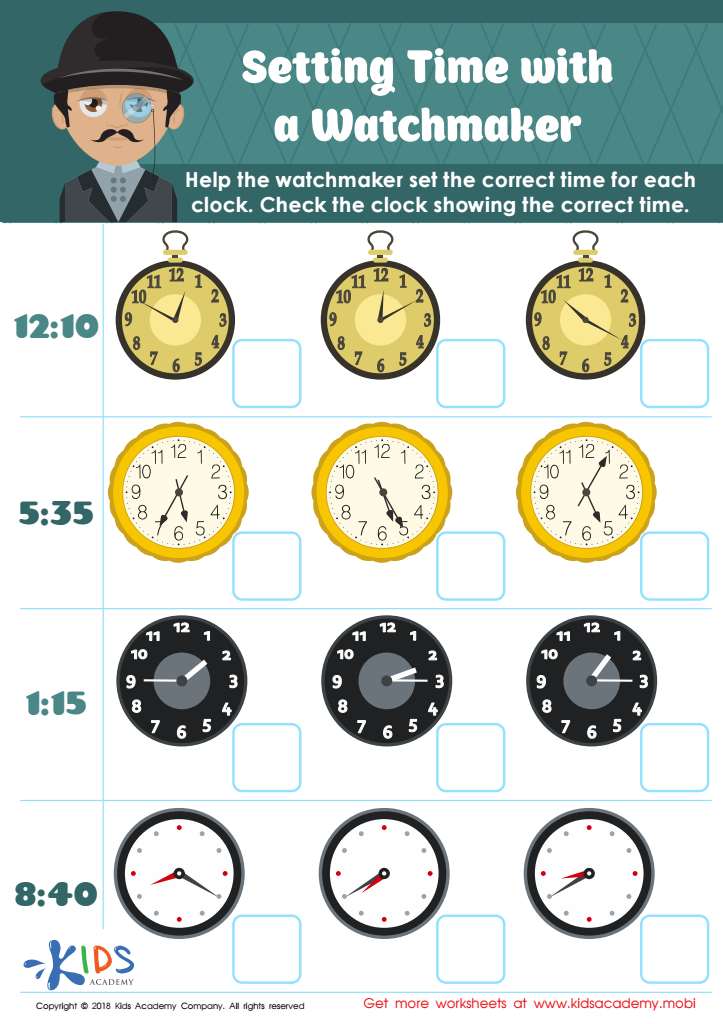
Setting Time with Watchmaker Worksheet
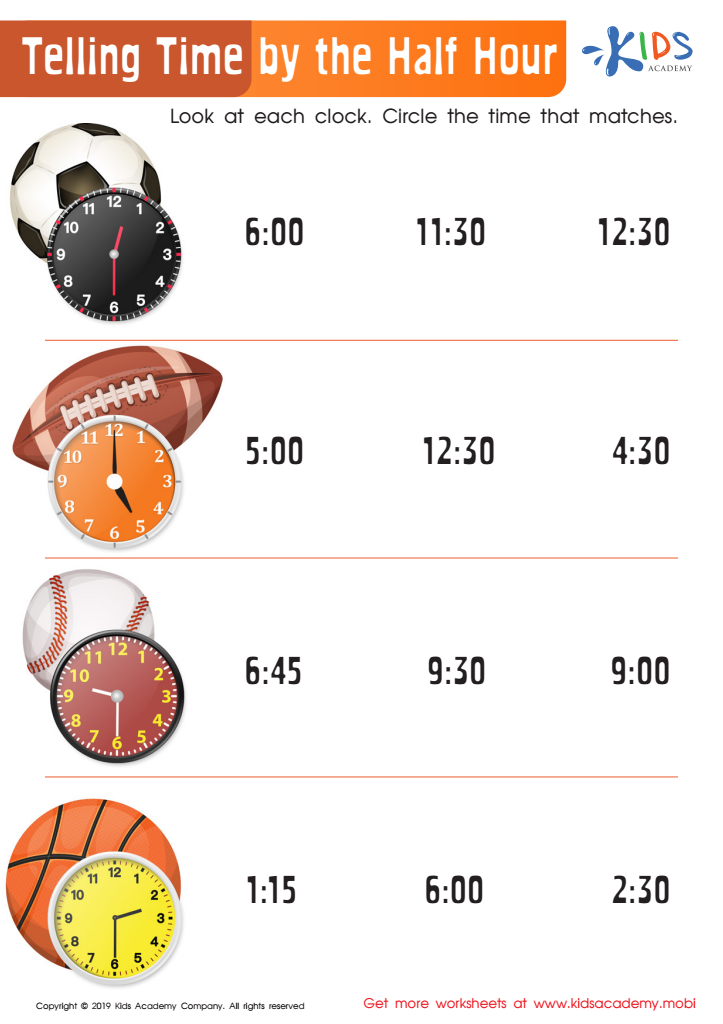
Telling Time by the Half Hour Worksheet
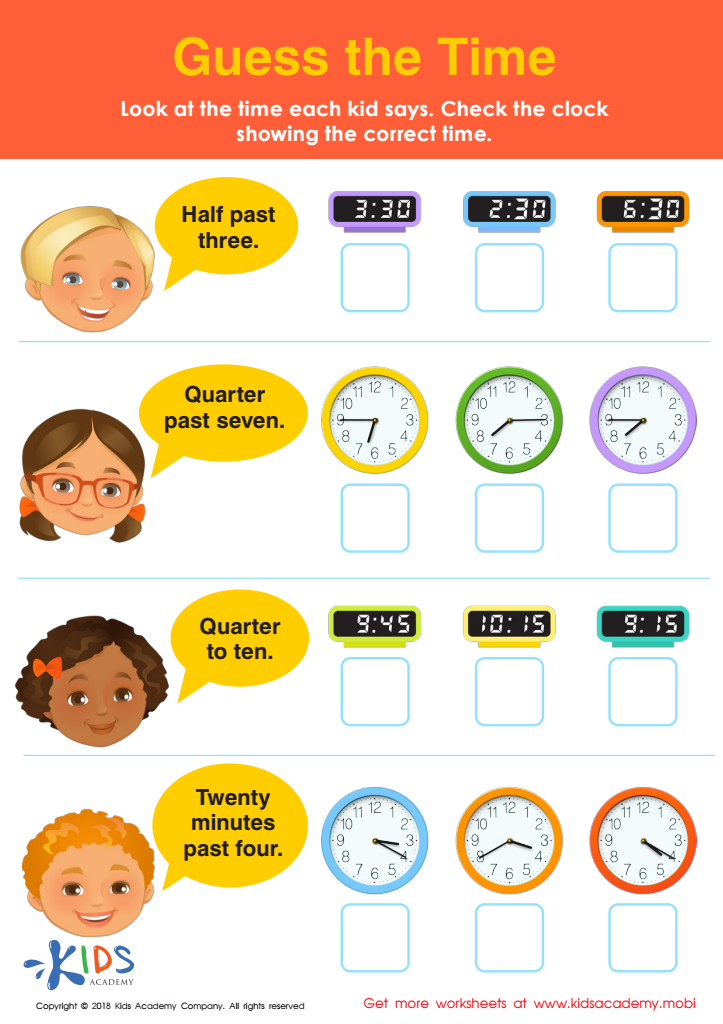
Guess the Time Worksheet
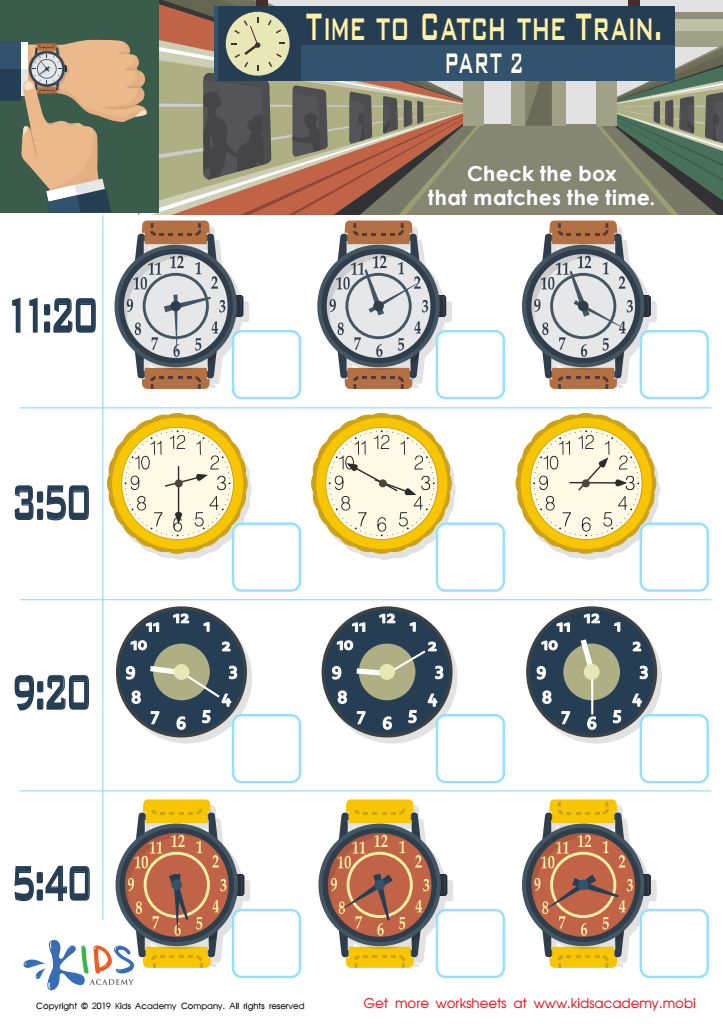
Time to Catch the Train Part 2 Worksheet







Time recognition is a crucial skill for children aged 6-8, as it lays the foundation for their independence, responsibility, and ability to manage their daily routines. During this developmental stage, children begin to comprehend abstract concepts, making it an ideal time to introduce and reinforce their understanding of time.
Firstly, recognizing time helps children schedule their day—knowing when it's time to wake up, eat meals, go to school, or do homework fosters a sense of structure and predictability, essential for their emotional well-being. Secondly, it enhances their ability to follow instructions and understand the importance of punctuality, which can influence their social interactions and participation in group activities.
Moreover, mastering time recognition also supports early mathematical skills; it involves counting, measuring intervals, and recognizing patterns. Parents and teachers play a vital role in providing engaging, interactive practices, such as using clocks, timers, or calendars, making learning about time fun and relatable.
Finally, equipping kids with time management skills not only prepares them for academic success but also builds habits that will benefit them throughout their lives, guiding them toward greater self-regulation and adaptability in various situations. This makes time recognition an essential focus for caregivers and educators alike.








