Understanding subtraction Normal Worksheets for Ages 6-8
10 filtered results
-
From - To
Discover our engaging "Understanding Subtraction Normal Worksheets" designed specifically for children ages 6-8. These worksheets help young learners develop a solid foundation in subtraction through fun and interactive exercises. With a variety of activities, including illustrations and real-life examples, kids can practice subtraction in an enjoyable way. Our resources are aligned with educational standards, ensuring effective learning and comprehension. Ideal for home or classroom use, these worksheets make mastering subtraction concepts accessible and enjoyable. Watch your child's confidence soar as they tackle challenges and improve their math skills with our thoughtfully designed subtraction worksheets! Start their math journey today!
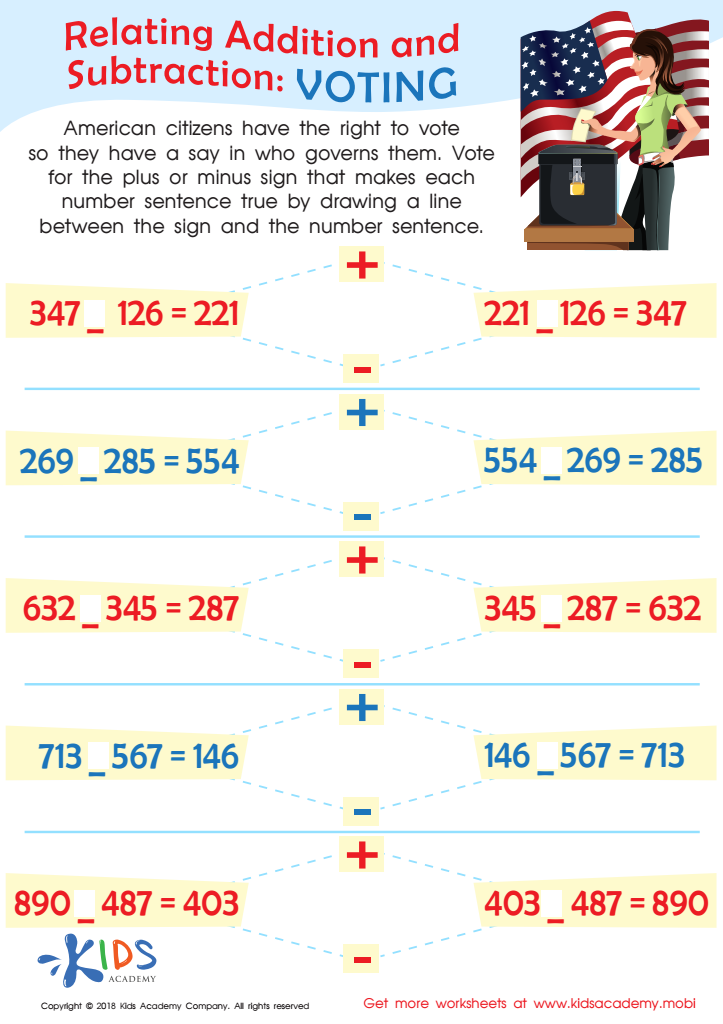
Voting Worksheet
 Assign to My Students
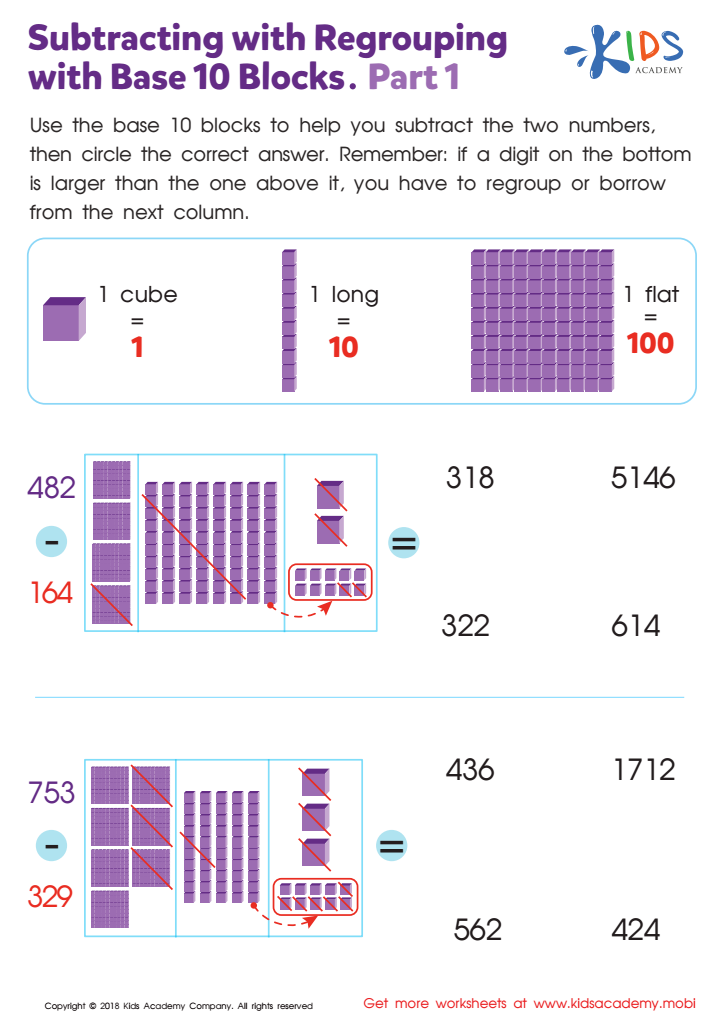
Subtracting with Regrouping with Base 10 Blocks. Part1 Worksheet
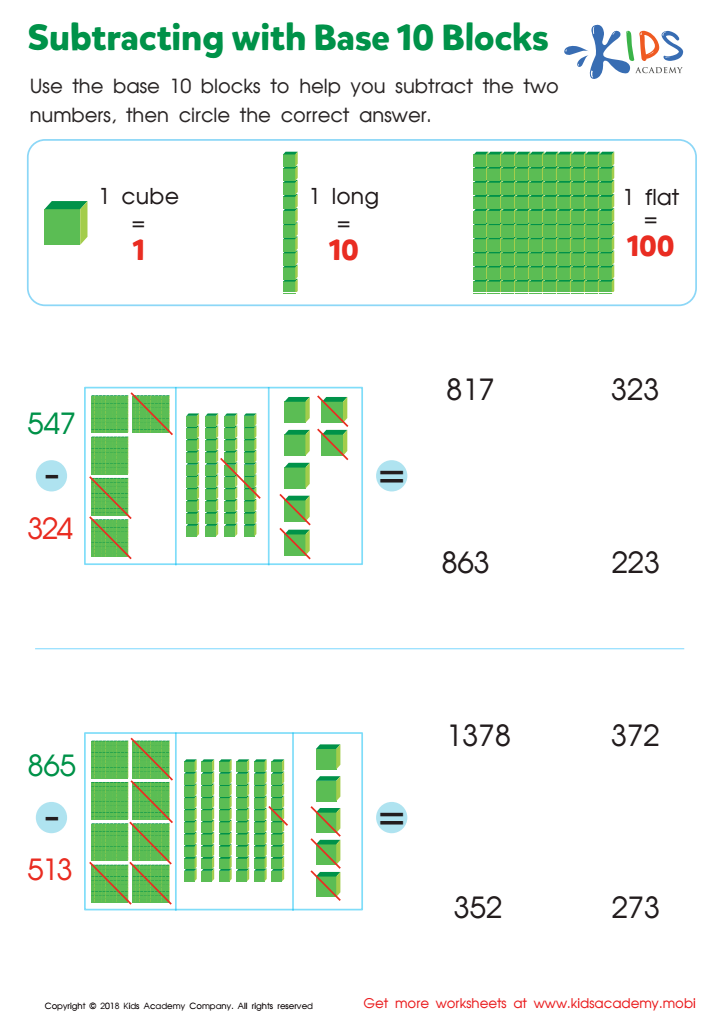
Subtracting with Base 10 Blocks Worksheet
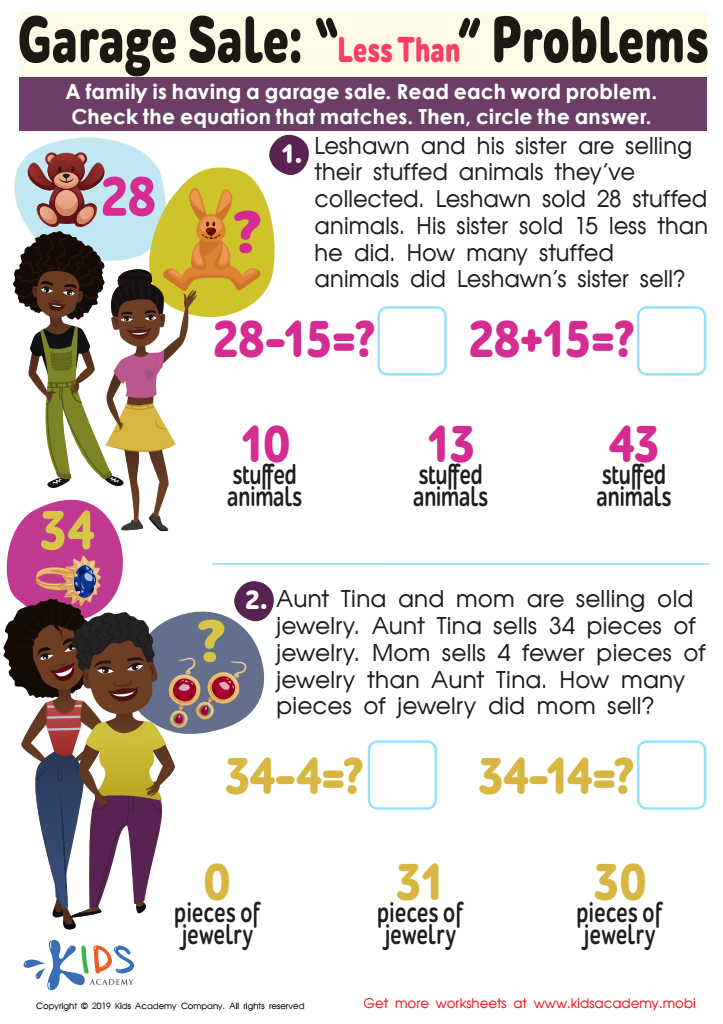
Garage Sale Less Than Worksheet
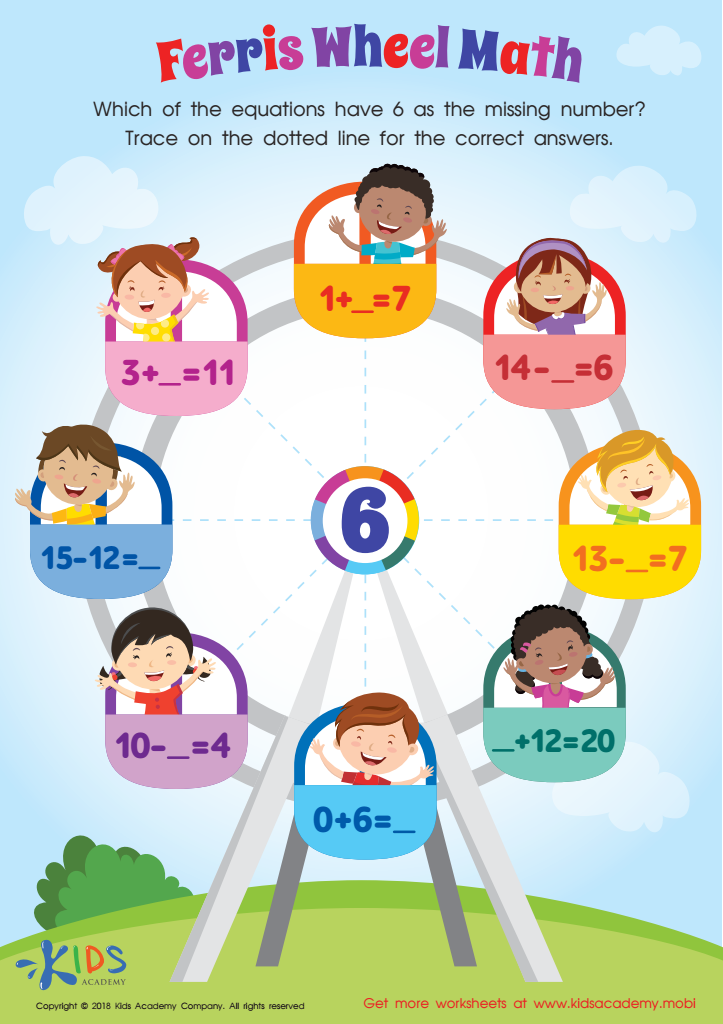
Missing Number: Ferris Wheel Math Worksheet
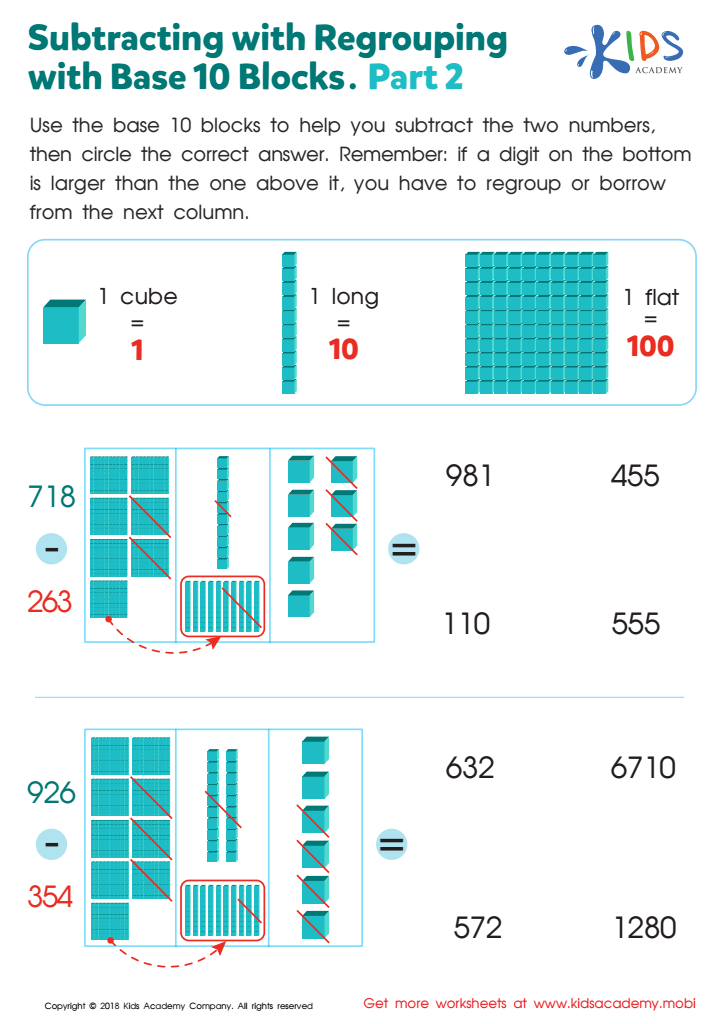
Subtracting with Regrouping with Base 10 Blocks. Part 2 Worksheet
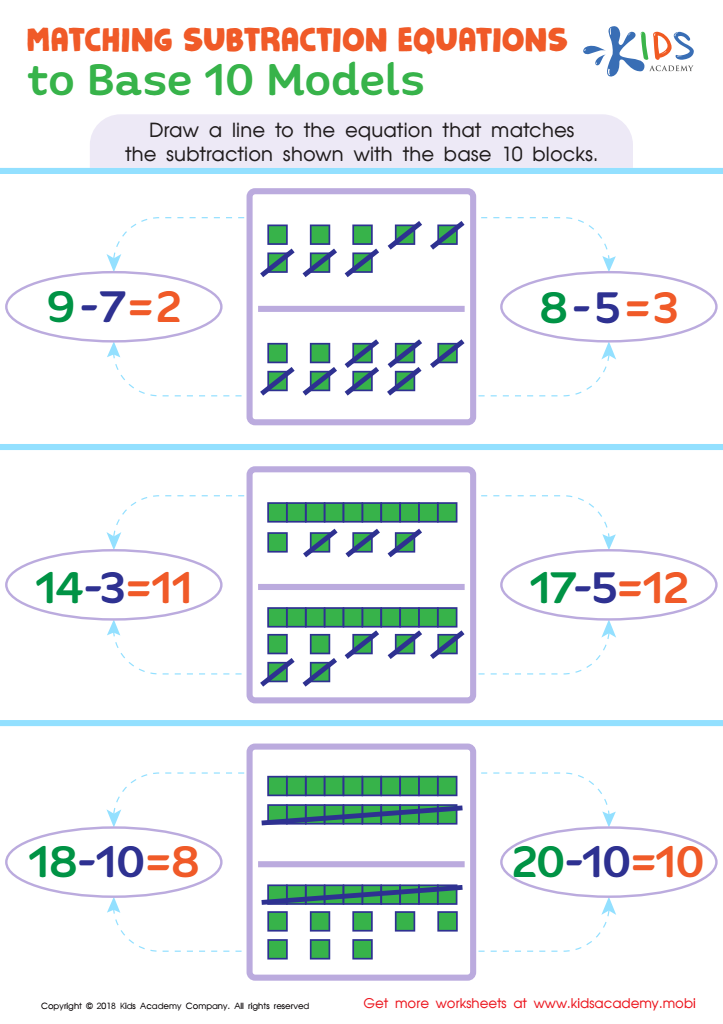
Matching Subtraction Equations To Base 10 Models Worksheet
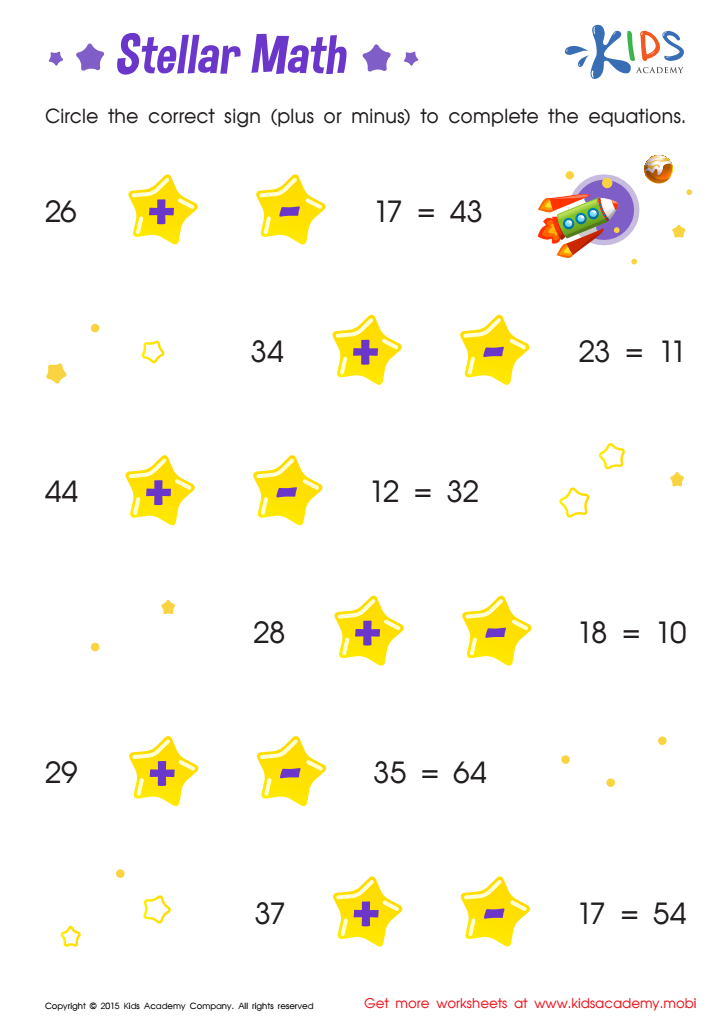
Stellar Math Substraction Worksheet
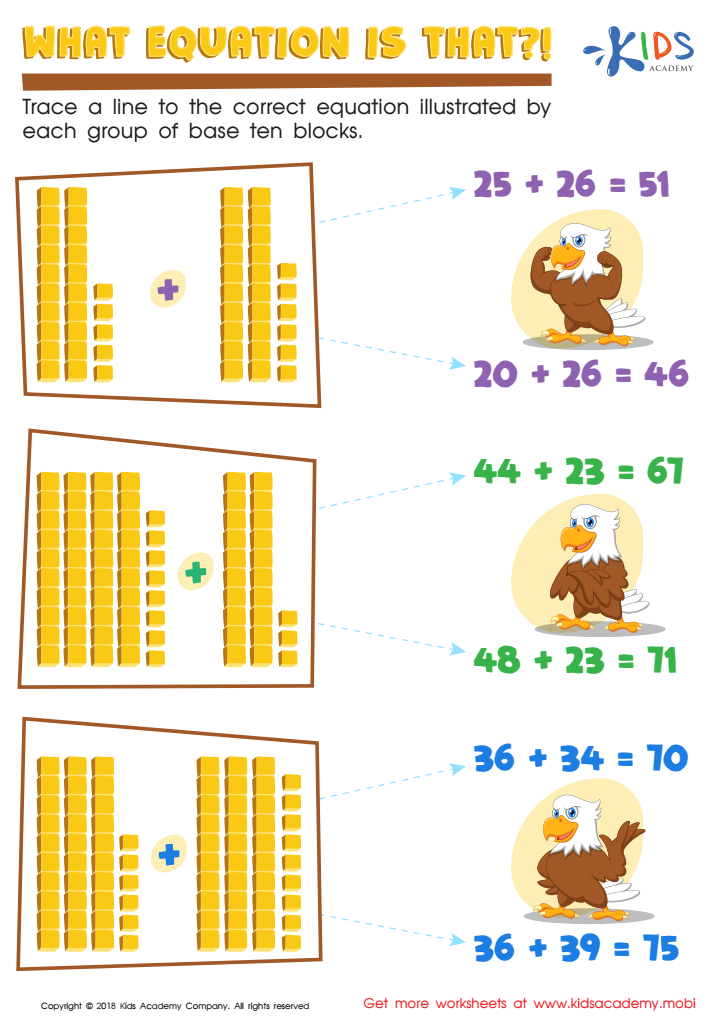
What Equation Is That? Worksheet
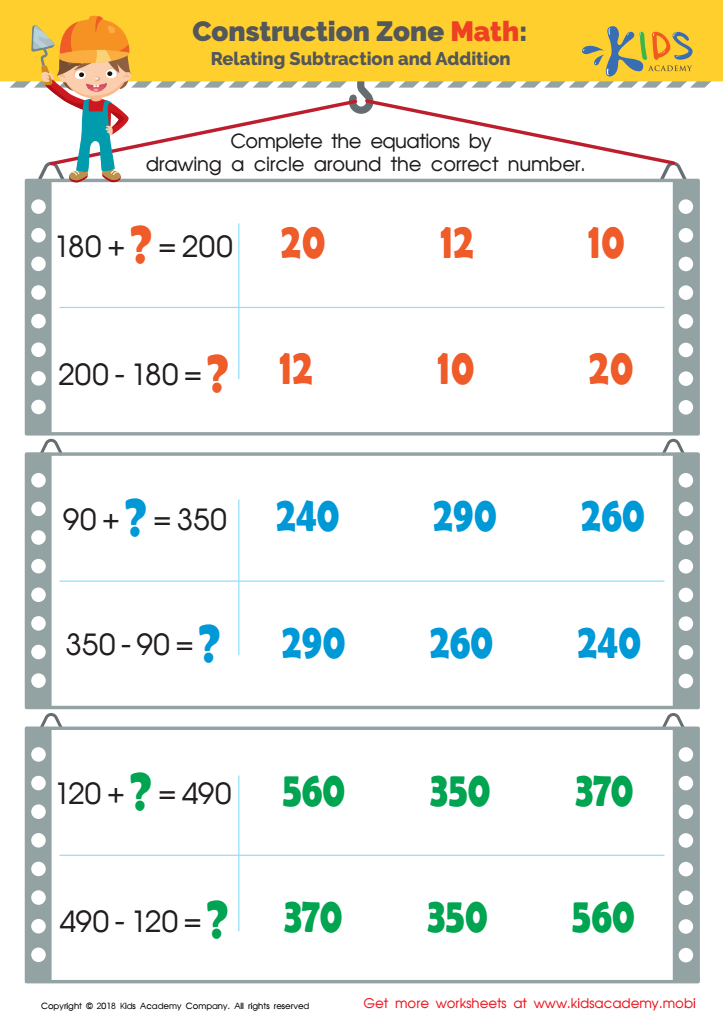
Construction Zone Math: Relating Subtraction and Addition Worksheet








Understanding subtraction is crucial for children aged 6-8 as it lays a foundational skill essential for future learning in mathematics and daily life. During these formative years, children begin to grasp the concept of "taking away," which helps them develop critical thinking and problem-solving abilities. As they relate subtraction to real-world scenarios—such as sharing candies or counting down to an event—they gain a clearer understanding of how numbers function, leading to better numerical fluency.
Teachers and parents play an integral role in this learning phase. By fostering a positive attitude towards subtraction with engaging activities, games, and practical applications, they can help children overcome potential anxiety linked to math. A solid grasp of subtraction not only supports advanced arithmetic concepts like addition, multiplication, and division but also enhances logical reasoning.
Moreover, understanding subtraction is crucial for developing skills in areas outside of mathematics, including science, finance, and even life skills like decision-making. By emphasizing subtraction in early education, parents and teachers equip children with the confidence and competence they need to excel academically and handle real-life challenges. Investing time in this essential skill can lead to brighter futures for our children.








