
Visual perception Normal Worksheets for Ages 6-8
16 filtered results
Difficulty Level
Grade
Age
-
From - To
Subject
Activity
Standards
Unlock your child's potential with our "Visual Perception Normal Worksheets for Ages 6-8"! These engaging worksheets are specifically designed to enhance visual processing skills, essential for academic success. Tailored for early learners, they feature a variety of fun activities that encourage observation, attention, and spatial awareness. Children will enjoy tasks that promote critical thinking and problem-solving, all while boosting their confidence in interpreting visual information. Perfect for use at home or in the classroom, our worksheets are a valuable resource for fostering cognitive development. Download now and give your child the tools they need to excel in their learning journey!
Favorites
With answer key
Interactive
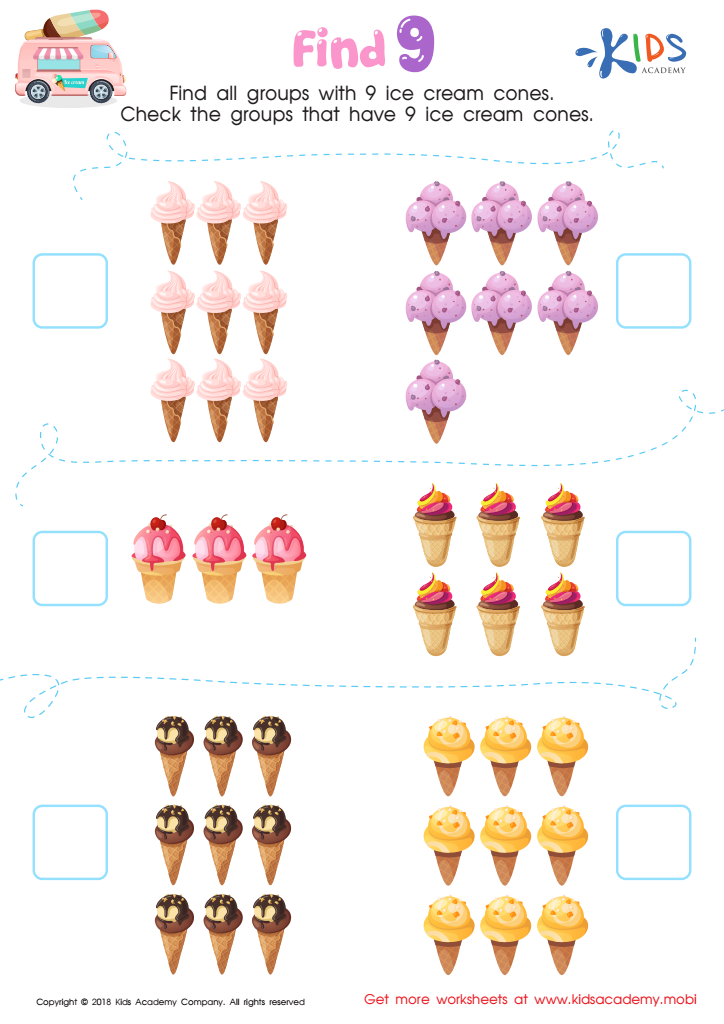
Find 9 Worksheet
Let your kids practice grouping numbers with this fun downloadable worksheet! It's full of ice cream colors and will help them improve their accuracy in addition and multiplication. Tracing the lines will also boost their fine motor skills.
 Assign to My Students
Find 9 Worksheet
Worksheet
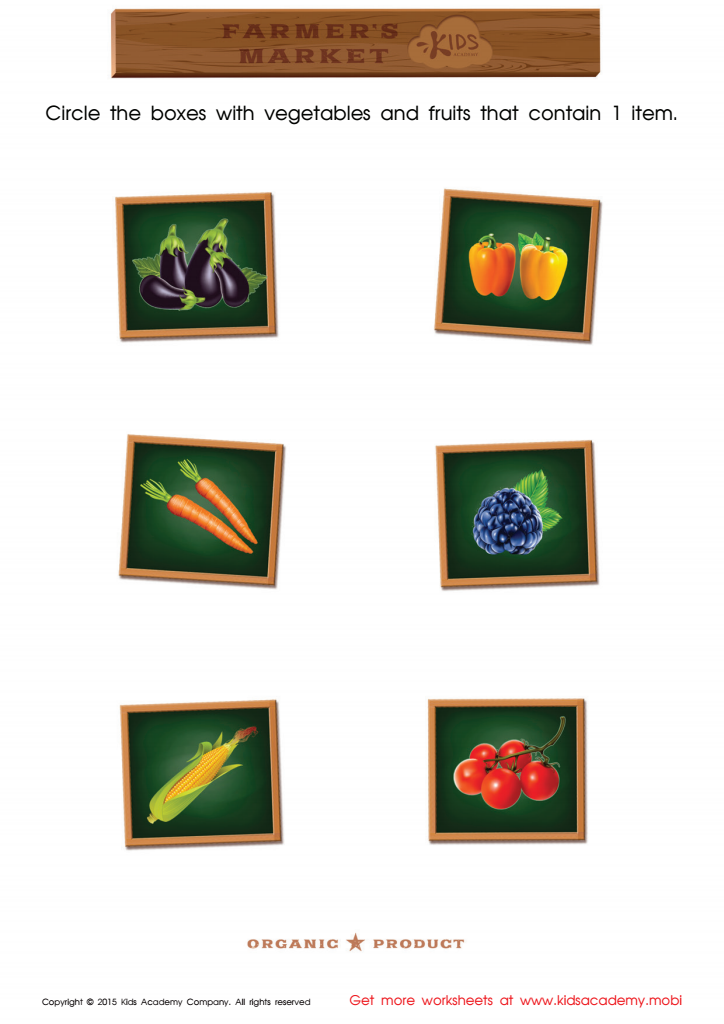
Count and Match Boxes with Vegetables
Print one and help your kid sharp his counting skills. With a variety of veggies to count, such as raspberries and eggplants, your little mathematician will have lots of fun.
Count and Match Boxes with Vegetables
Worksheet
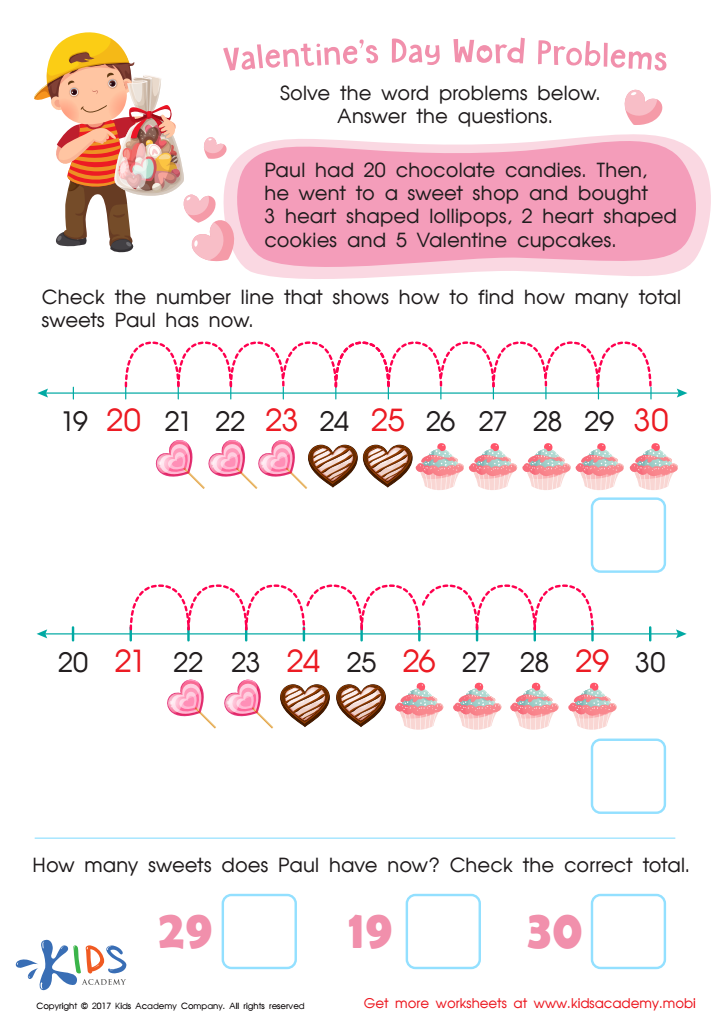
Valentines Day 2 Printable
This PDF worksheet uses a number line to help solve the problems. Your child will be ready for Valentine's Day after completing it. Counting and adding from 20 is also reinforced.
Valentines Day 2 Printable
Worksheet
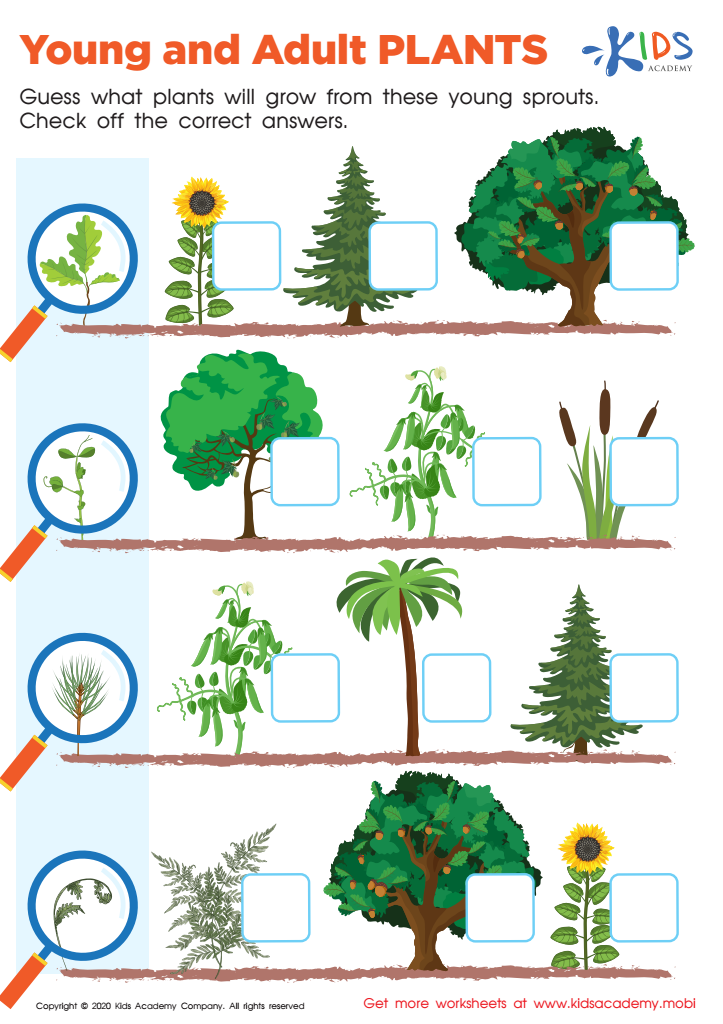
Young and Adult Plants Worksheet
Examine the sprouts, then compare the leaves of the nearby trees. Check the box next to the tree that looks similar to the sprout to complete the worksheet. Problem-solving and analysis skills will be put to the test! 80 words.
Young and Adult Plants Worksheet
Worksheet
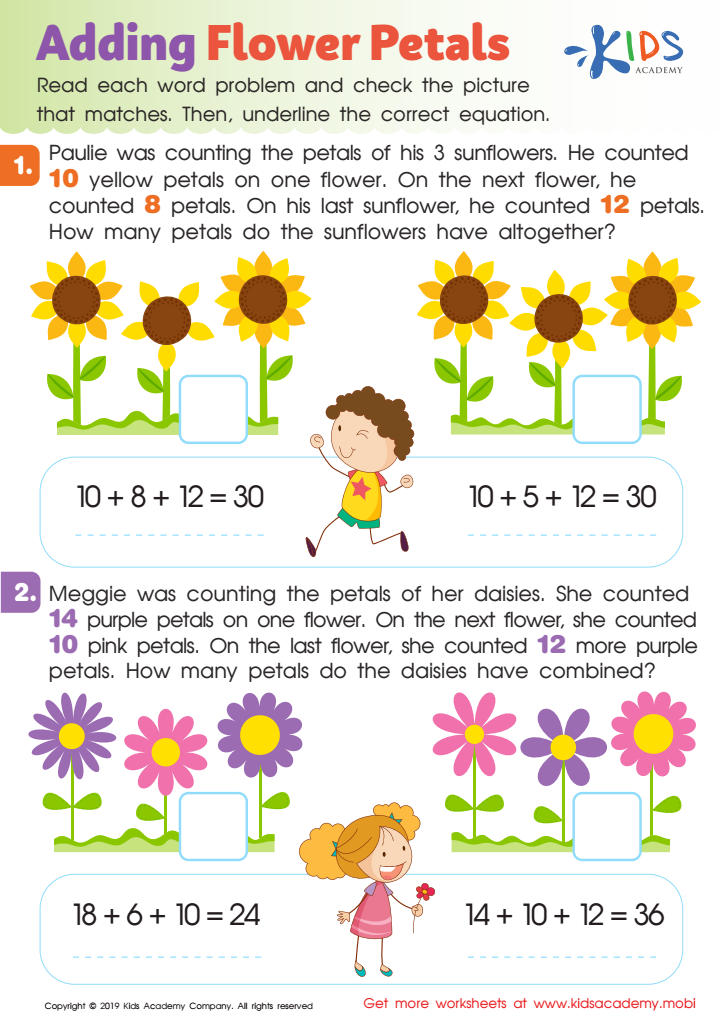
Adding Flower Petals Worksheet
This free worksheet helps little mathematicians learn to understand word problems. They'll read each one and match it to the corresponding picture. Important info is highlighted, teaching kids to look for key info when solving problems. Then they'll underline the correct number equation that matches the picture. A great way to practice problem-solving skills!
Adding Flower Petals Worksheet
Worksheet
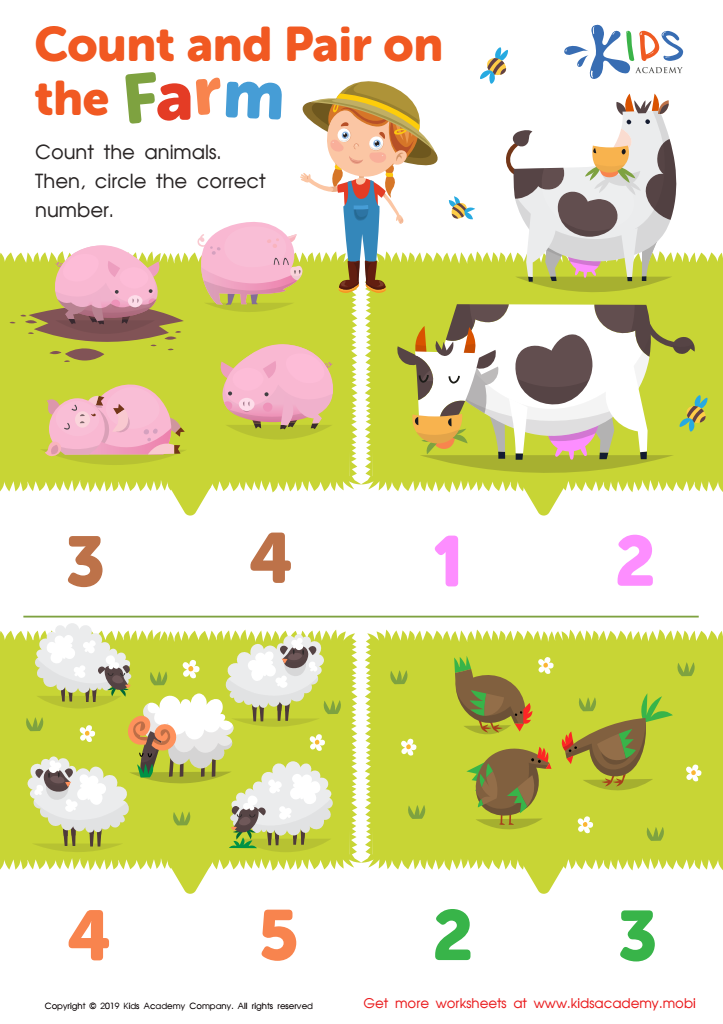
Count and Pair on the Farm Worksheet
Farms are essential to our society: they grow food and crops, and raise animals for us to use. Kids can have a great time at a farm, engaging in activities like identifying animals, counting them, and circling the correct number. On this worksheet, ask your kids to try all three!
Count and Pair on the Farm Worksheet
Worksheet
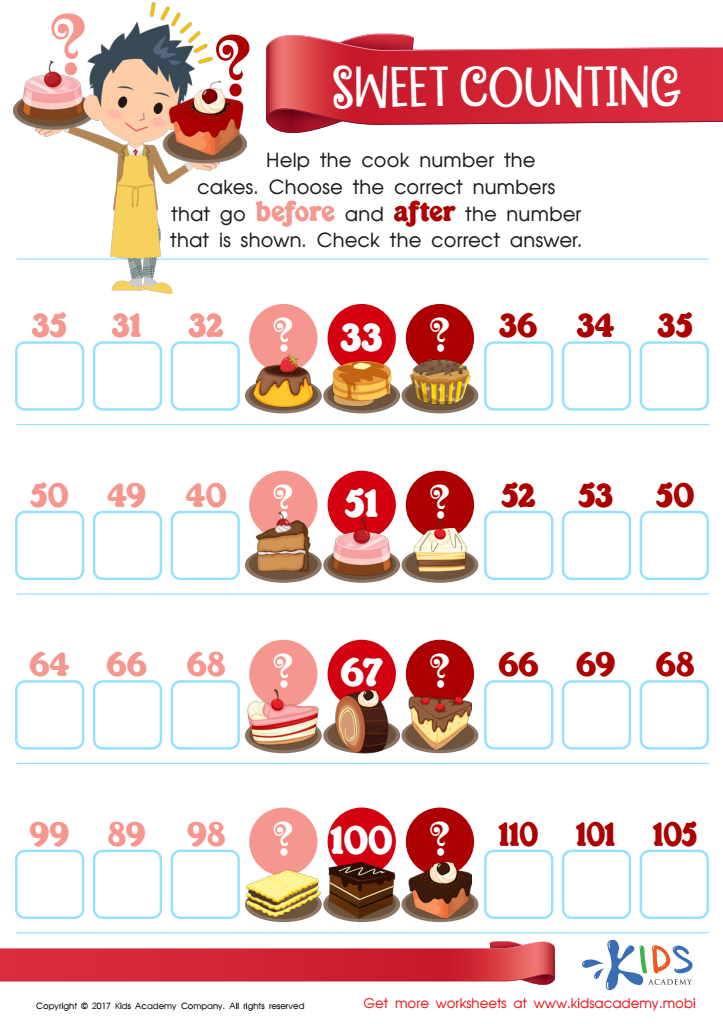
Sweet Counting - Part 1 Worksheet
Help your child learn numbers by counting cakes! Download this fun worksheet and have them fill in the numbers missing in the line of cakes. They'll have fun helping the cook and be learning at the same time!
Sweet Counting - Part 1 Worksheet
Worksheet
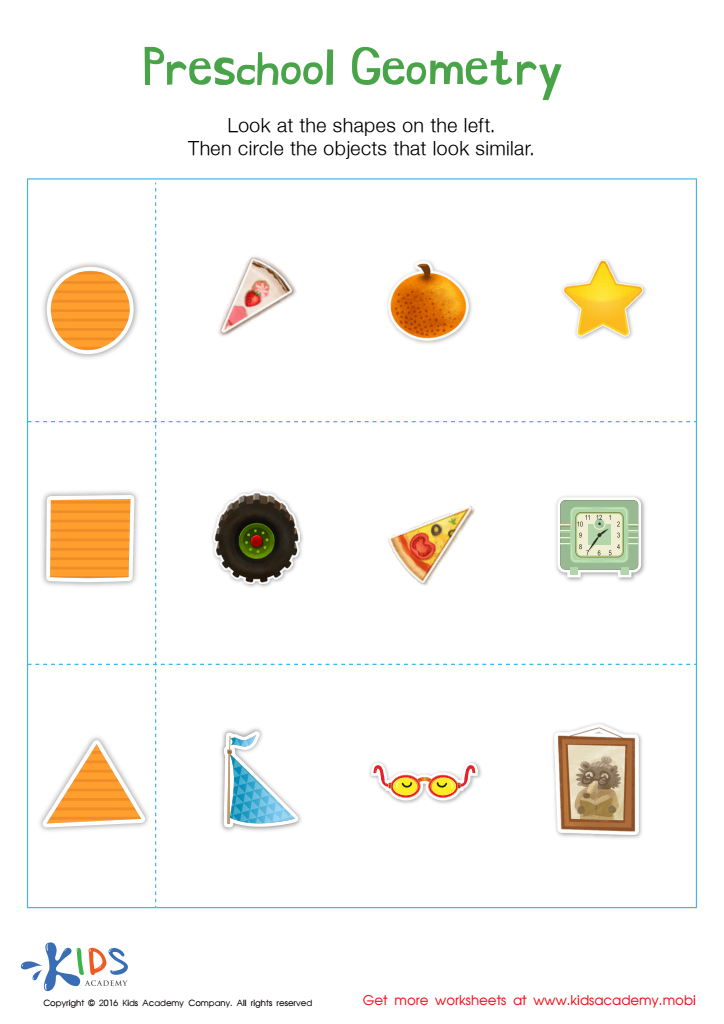
Preschool Geometry Match Up Worksheet
Teach your preschooler geometry using everyday objects. This printable worksheet helps them recognize, match, and follow directions like left and right. Start a conversation to extend their learning and they'll see how shapes appear in the world around them.
Preschool Geometry Match Up Worksheet
Worksheet
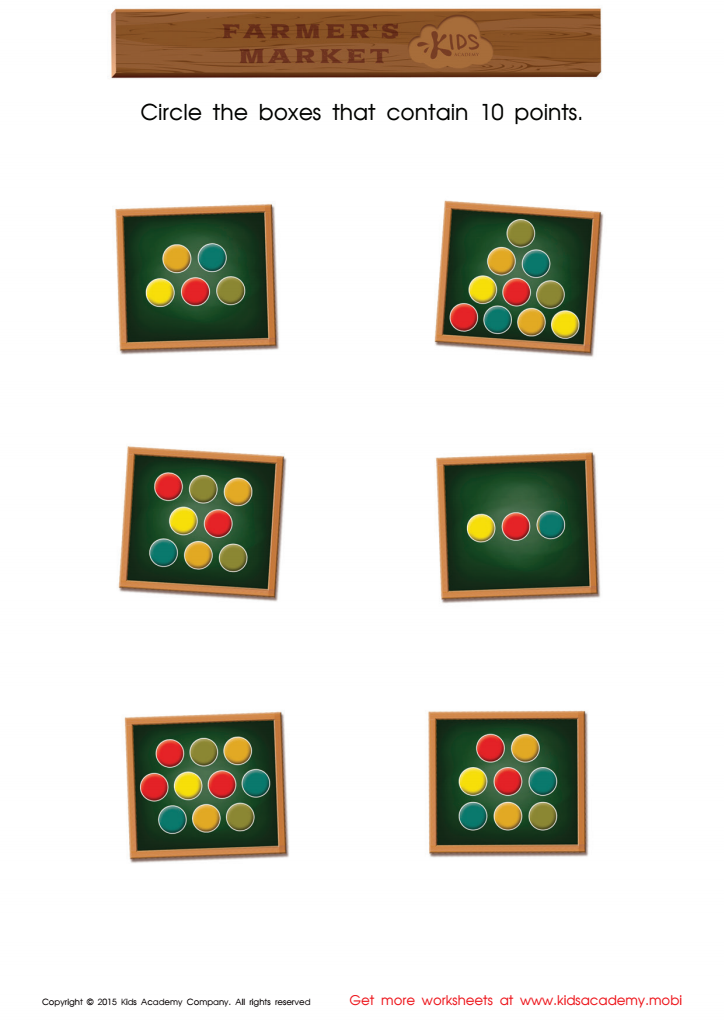
Count and Match Points 10 Math Worksheet
Help your youngster practice counting with this worksheet. Count the points in each box and circle any with up to 10 points. It will improve their counting and matching ability. Forget about addition and subtraction; it's time for a fun exercise for you both!
Count and Match Points 10 Math Worksheet
Worksheet
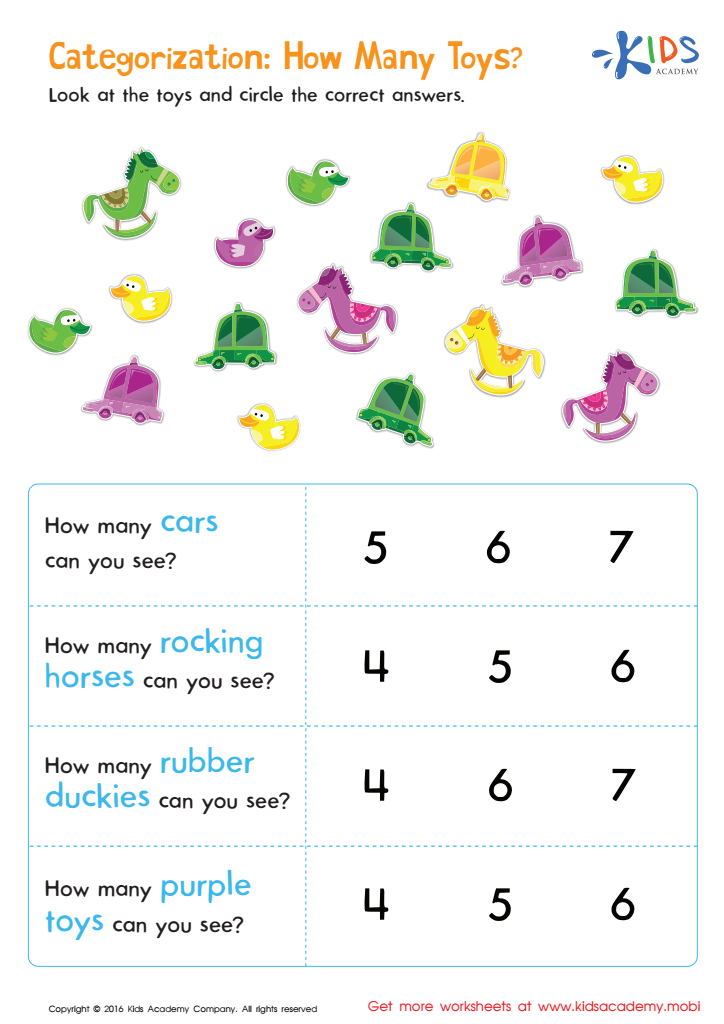
Classifying Toys by Type and Color Sorting Worksheet
Kids Academy offers free math worksheets to help practice counting, categorization & recognition skills. Kids will enjoy counting by color & type while strengthening problem-solving & literacy skills.
Classifying Toys by Type and Color Sorting Worksheet
Worksheet
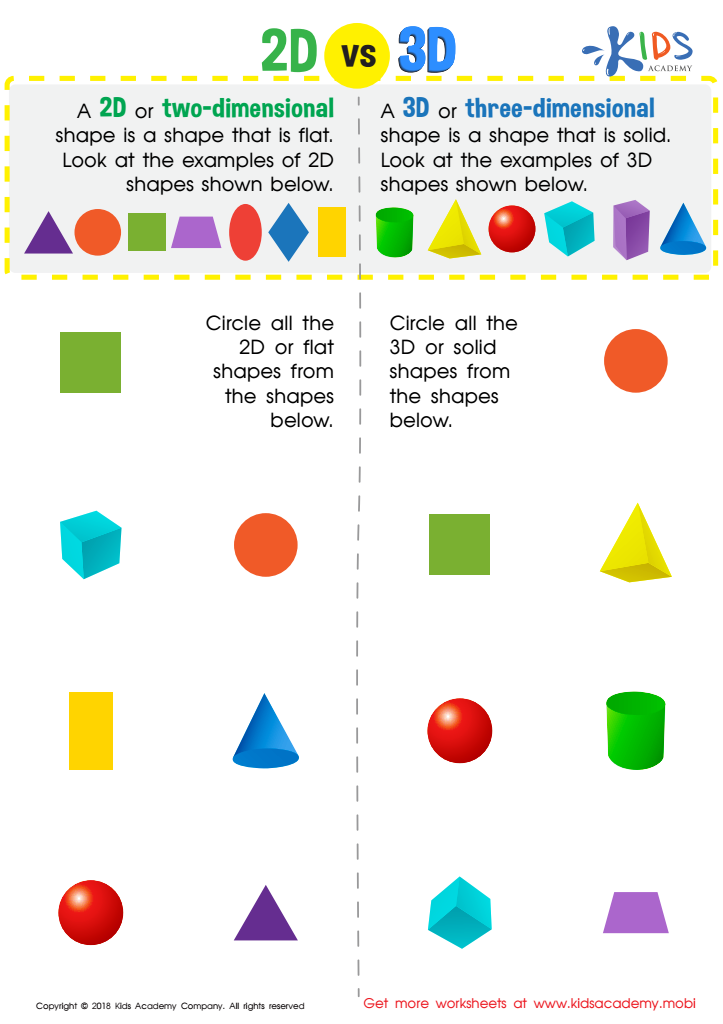
2D vs 3D Shapes Worksheet
Help your child understand 3D shapes using this engaging worksheet! Read the descriptions at the top and search for 2D and 3D shapes. An ideal activity for toddlers learning shapes. A fun way to understand the tricky concept of 3D shapes!
2D vs 3D Shapes Worksheet
Worksheet
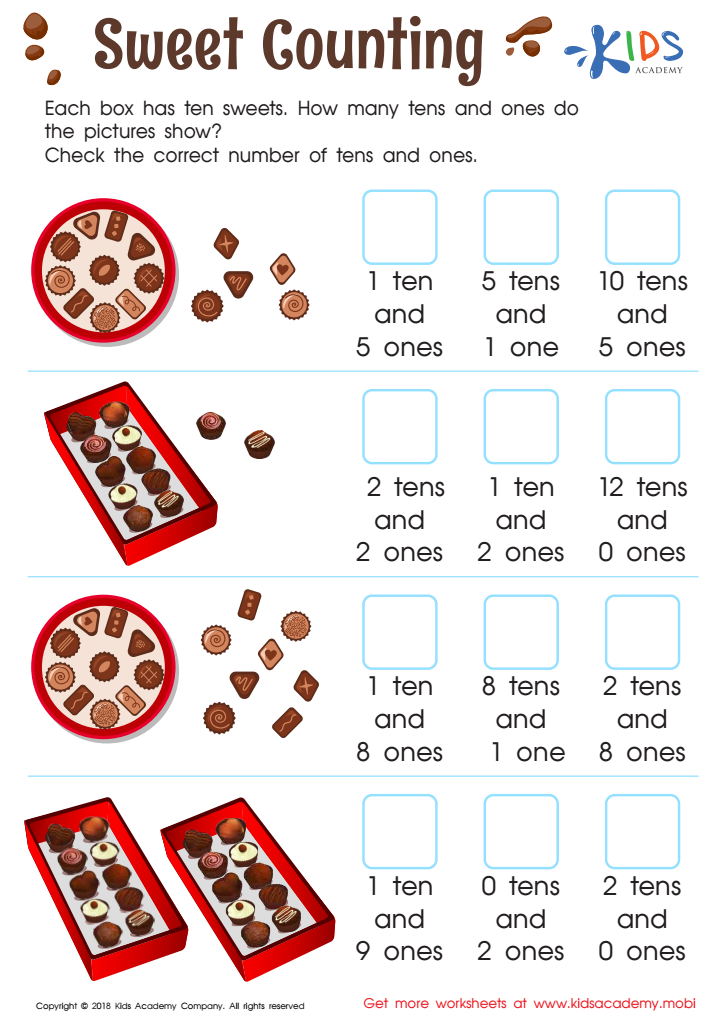
Sweet Counting - Part 2 Worksheet
Kids adore sweets! Make counting fun with this sweet-themed worksheet. Guide your child to count chocolates in boxes of 10, plus individual candies. Group them into tens and ones. Ask: "How many ones and tens are in each row?" Check the answer and complete the practice sheet.
Sweet Counting - Part 2 Worksheet
Worksheet
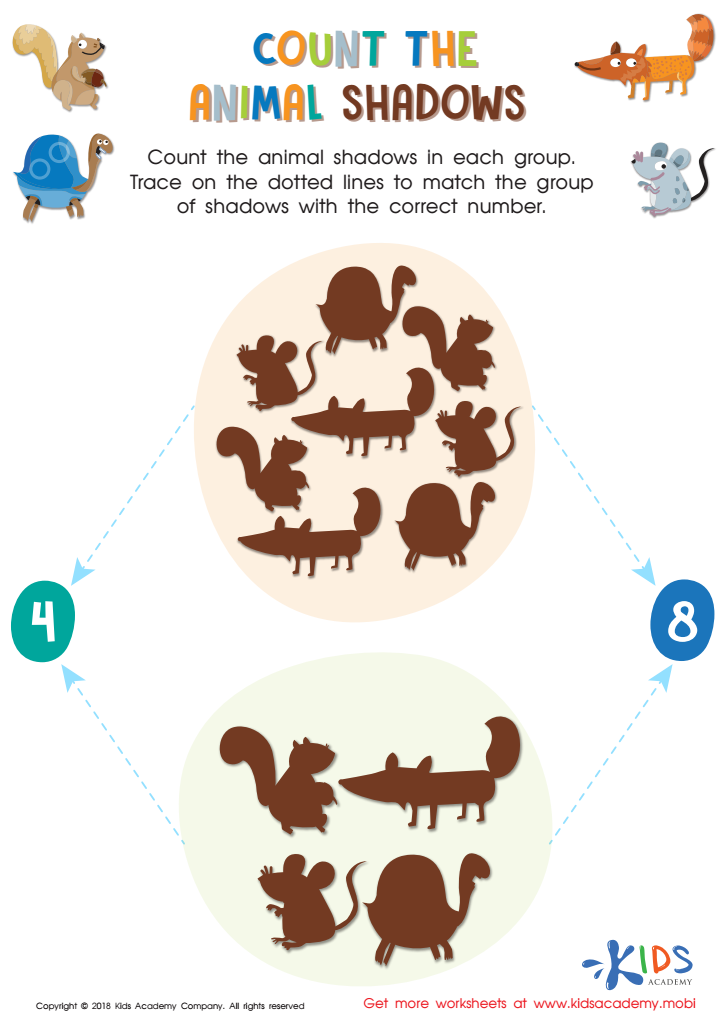
Count the Animal Shadows Worksheet
Our shadows accompany us wherever we go. Even your kids have seen theirs! Did they know that animals have shadows too? Count the animal shadows in each group with this worksheet. Ask your child to identify the animals pictured, then help them trace the dotted lines to match with the right number.
Count the Animal Shadows Worksheet
Worksheet
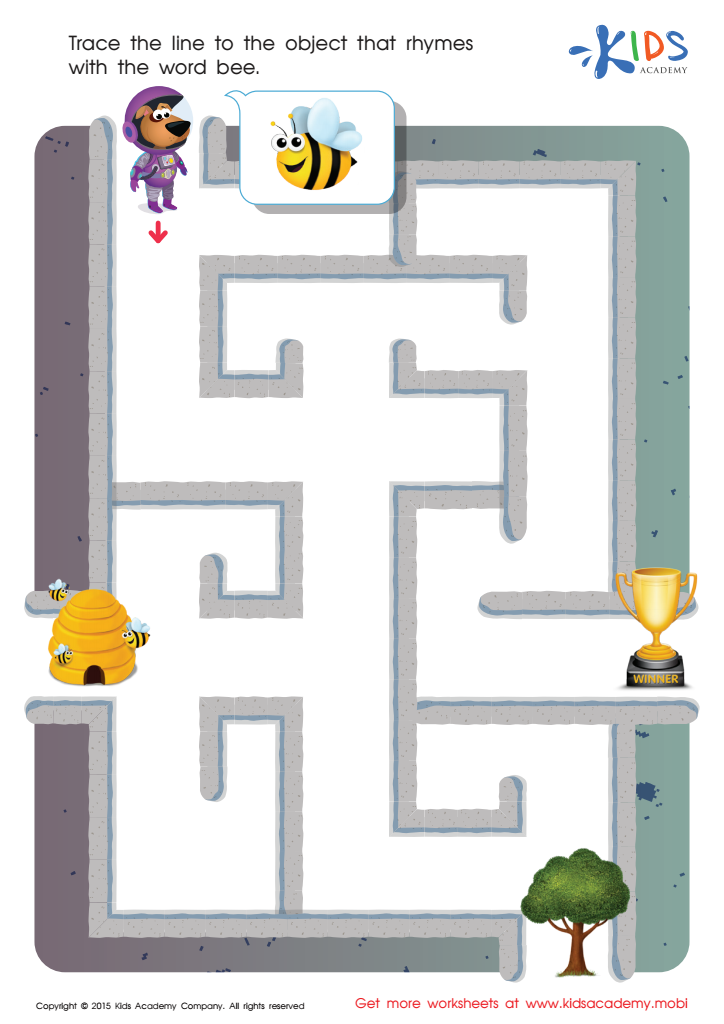
Bee Rhyming Words Worksheet
Download our new vocab builder worksheet and help our pup find rhymes. See how easy it is to trace the root between words! Make learning fun with our collection of English materials and worksheets. Get them now on our web site.
Bee Rhyming Words Worksheet
Worksheet
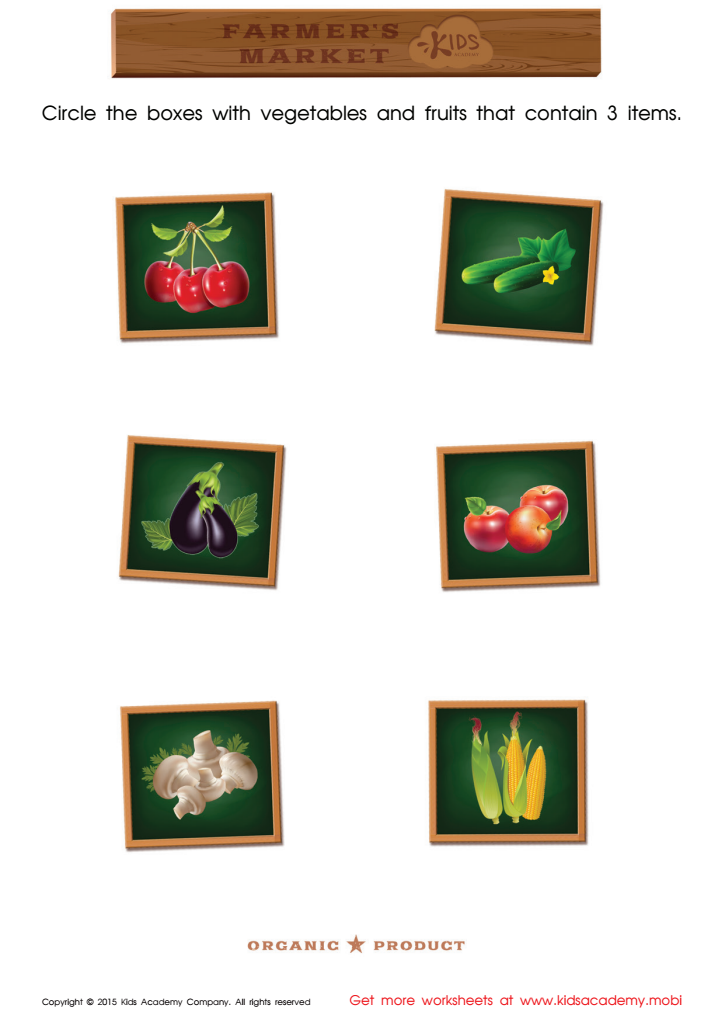
Count and Match Vegetables 1 – 5 Math Worksheet
Get your kindergartener to match the same number of vegetables with the boxes using this fantastic math worksheet. Using the Singapore approach, this printable worksheet makes math problems easy and fun for kids. Want more free worksheets? Click here for Kids Academy's selection!
Count and Match Vegetables 1 – 5 Math Worksheet
Worksheet
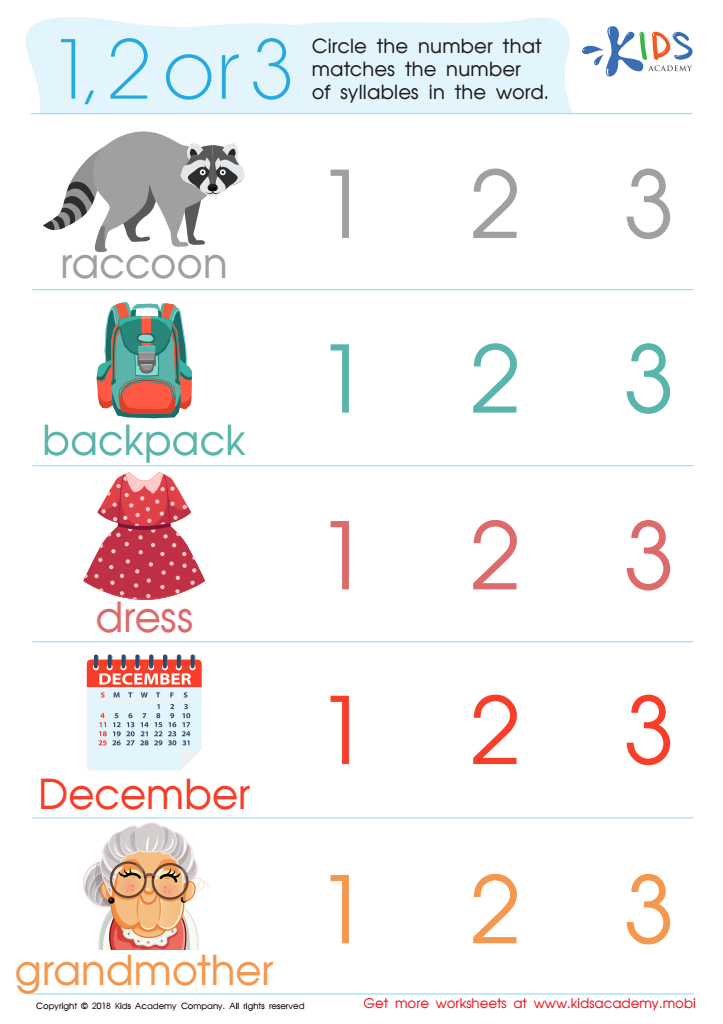
1, 2 or 3? Worksheet
Do your kids know about syllables? Test their understanding with this worksheet. Read the words aloud and ask them to say them with you. Help them circle the number that matches the number of syllables in each word. Perfect for expanding knowledge or testing how much they've already learned.
1, 2 or 3? Worksheet
Worksheet
Join Kids Academy for Free
Who is primarily going to use this learning content?








Visual perception is a crucial skill for children aged 6 to 8, as it is intricately linked to their learning and overall development. At this stage, children are beginning to tackle more complex tasks in school, including reading, writing, and problem-solving. Effective visual perception enables them to interpret and organize what they see, which is essential for understanding letters, numbers, and spatial relationships.
When parents and teachers prioritize visual perception, they help support children's academic success. Difficulties in visual perception can lead to challenges in learning, manifesting as trouble with reading fluency, math problems, and even social interactions. Recognizing the importance of encouraging activities that promote visual skills—such as puzzles, drawing, and games—can make a transformative difference in a child's learning trajectory.
Additionally, strong visual perception skills contribute to a child's confidence in handling tasks independently and foster enthusiasm for school. By paying attention to visual perceptual development, parents and teachers can identify and address any potential issues early on, creating a supportive learning environment that caters to each child's unique needs and strengths. In doing so, they support not only academic accomplishment but also holistic childhood development.








