Normal Seasons Worksheets for Ages 6-8
5 filtered results
-
From - To
Discover the exciting world of seasons with our "Normal Seasons Worksheets for Ages 6-8". Perfect for curious young minds, these worksheets are designed to teach children about the wonders of weather patterns, seasonal changes, and nature’s cycles. Each activity combines fun and education, fostering curiosity and problem-solving skills. Your kids will enjoy coloring, matching, and sorting tasks while learning about the different seasons, their characteristics, and how they affect the environment. Ideal for classroom use or homeschooling, our engaging worksheets make learning about the world around us both enjoyable and enlightening. Explore now and inspire a love for science in your child!
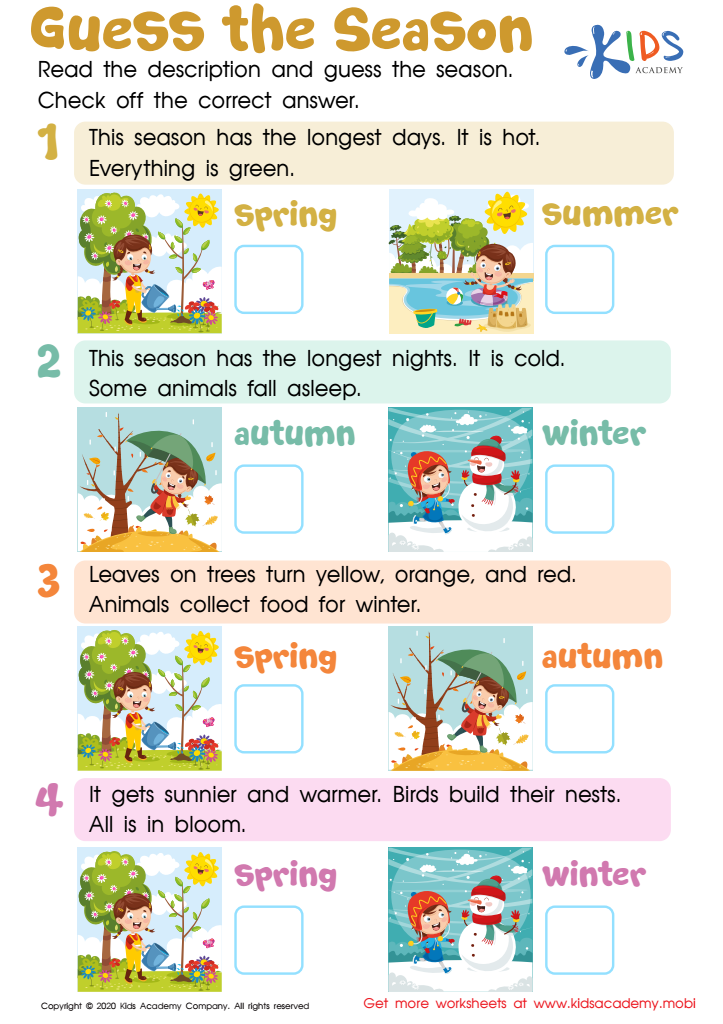
Guess the Season Worksheet
 Assign to My Students
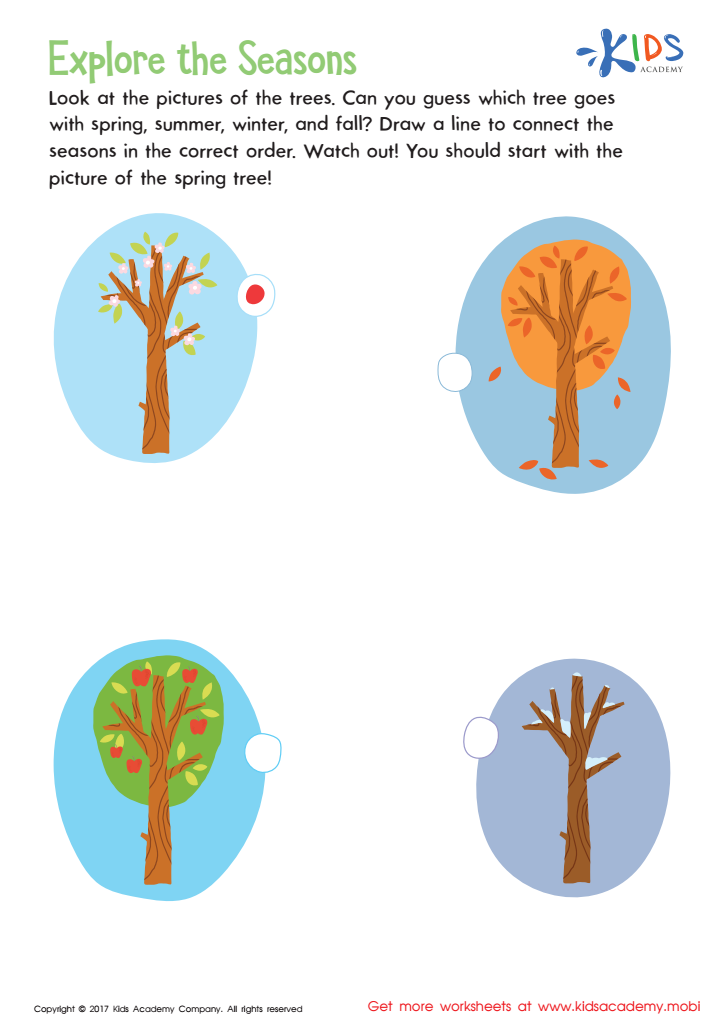
Explore the Seasons Worksheet
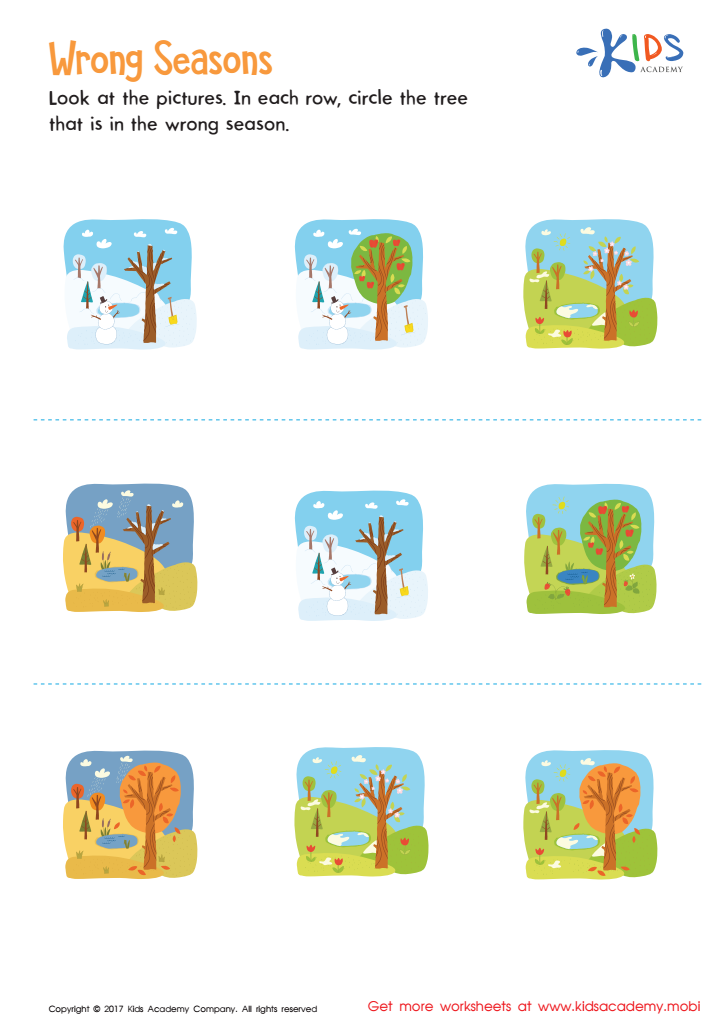
Wrong Seasons Worksheet
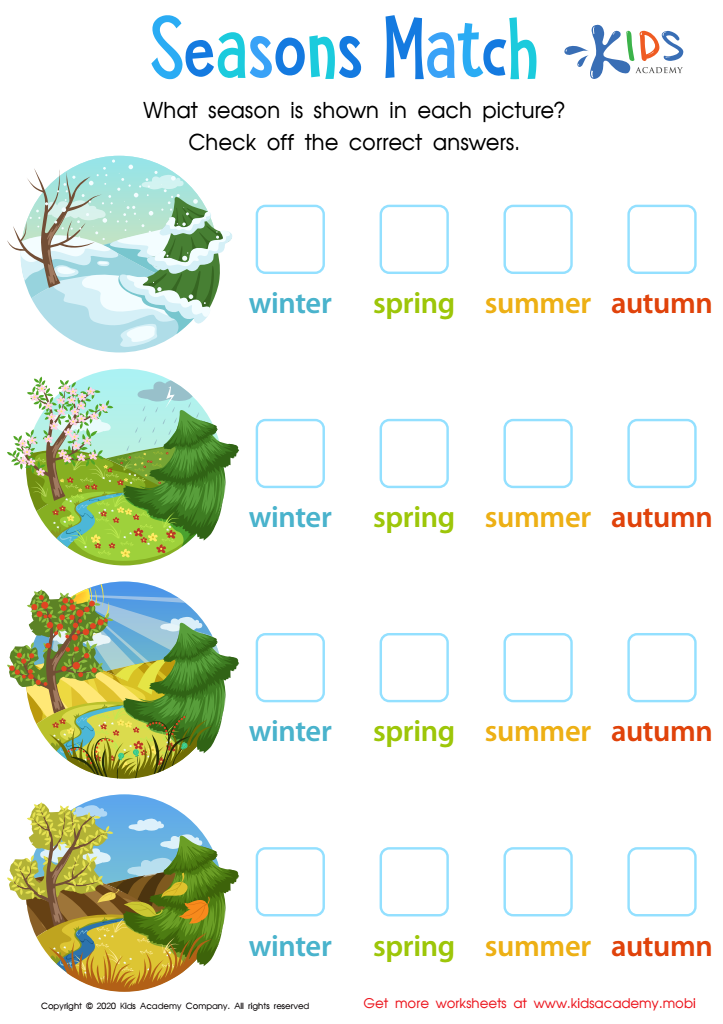
Seasons Match Worksheet
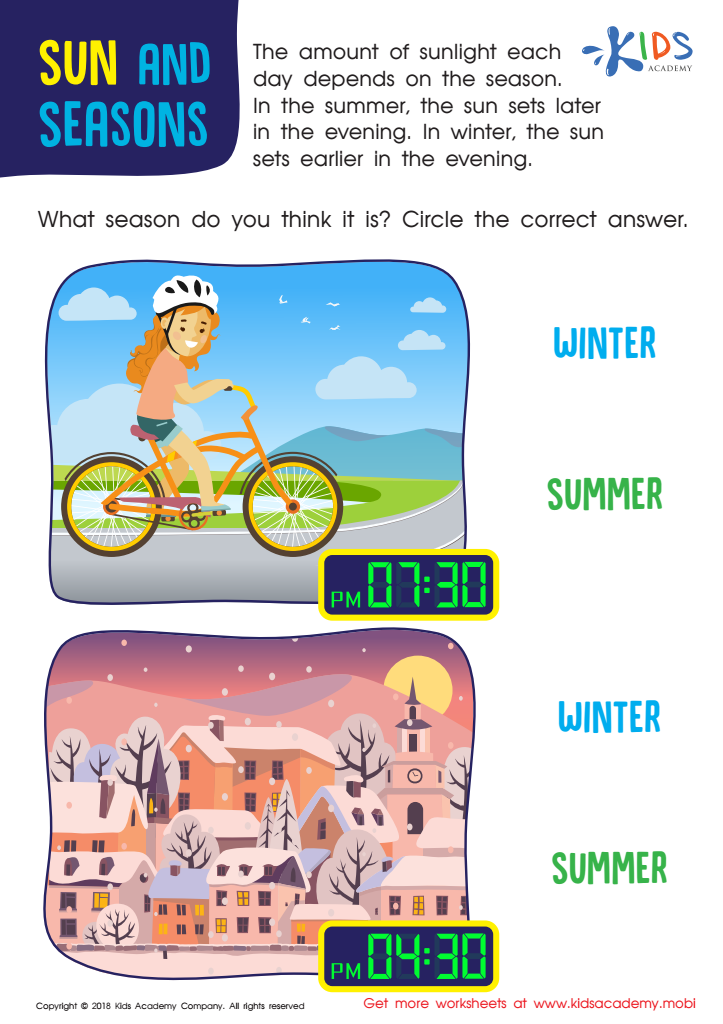
Sun and Seasons Worksheet


%20(1).jpg)


Understanding normal seasons is crucial for young children, and parents or teachers have a vital role in fostering this awareness. At ages 6-8, kids start grasping the world around them with more complexity. Learning about seasons helps them appreciate nature's cycles, contributing to a sense of order and predictability.
Firstly, associating activities, holidays, and weather patterns with different seasons enriches their cognitive development. For instance, by recognizing that leaves fall in autumn or snow comes in winter, kids can better understand their environment and anticipate changes, enhancing their observational and analytical skills.
Secondly, knowledge of seasons fosters a child's connection to nature, promoting outdoor play and physical activity, whether it's building snowmen in winter or collecting flowers in spring. This active engagement is essential for physical health, creativity, and overall well-being.
Finally, awareness of seasonal changes is fundamental in understanding time and sequences, which are critical math and science skills. Recognizing that seasons change in a specific order lays the groundwork for grasping more complex scientific concepts later on.
In conclusion, parents and teachers should prioritize teaching kids about seasons to support their intellectual development, connection to nature, and future academic success. It's a key aspect of learning that brings immediate curiosity and long-term educational benefits.







