Word identification Normal Writing Worksheets for Ages 6-8
5 filtered results
-
From - To
Unlock your child's potential with our Word Identification Normal Writing Worksheets designed for ages 6-8. These expertly crafted resources from Kids Academy focus on enhancing word recognition skills through engaging activities and exercises. Our worksheets are tailored to develop your child's reading and writing abilities, making learning both fun and effective. Ideal for early learners, these worksheets cover various word identification techniques, building a solid foundation for literacy. Encourage independent learning and watch as your child confidently identifies and writes new words. Visit Kids Academy to explore our comprehensive collection of word identification worksheets and give your child a head start!
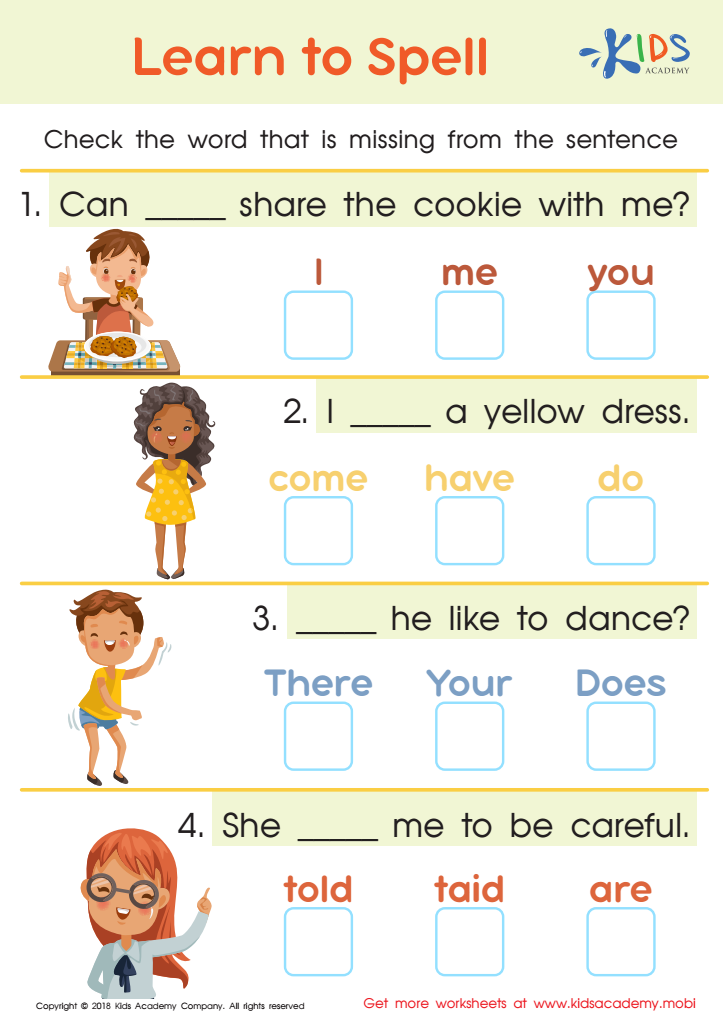
Learn to Spell Worksheet
 Assign to My Students
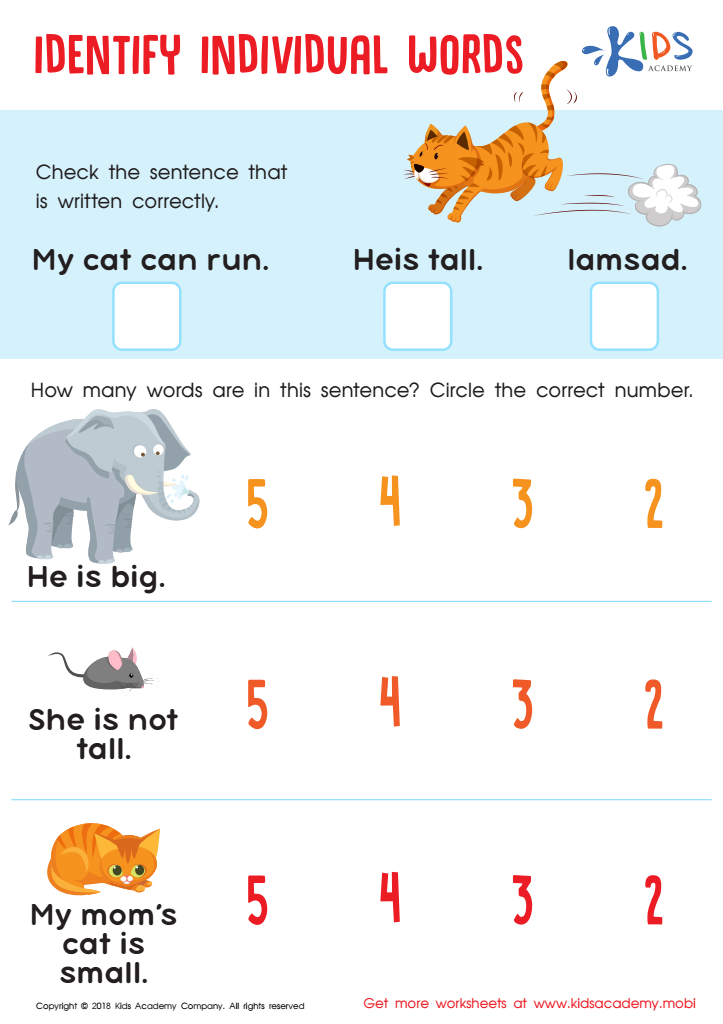
Identify Individual Words Worksheet
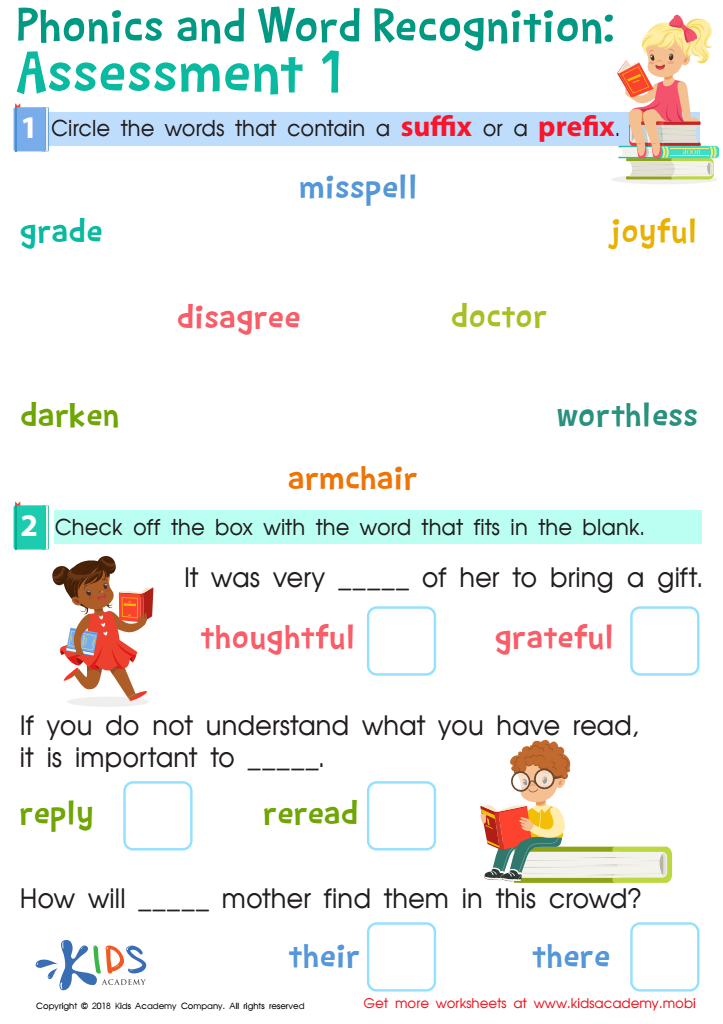
Phonics and Word Recognition: Assessment 1 Worksheet
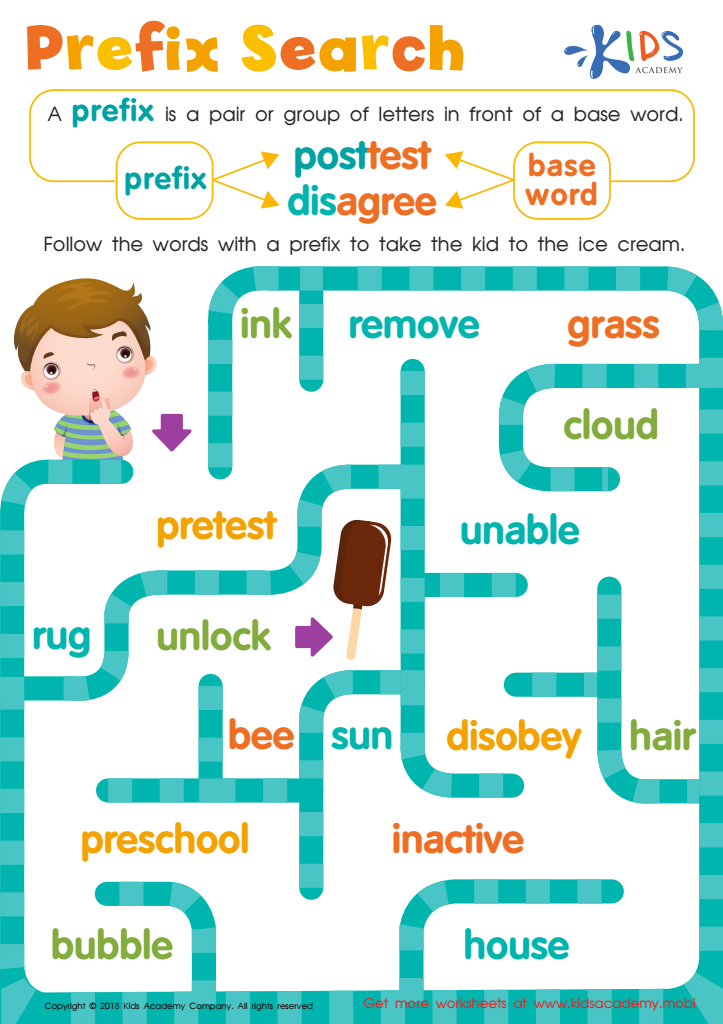
Reading: Prefix Search Worksheet
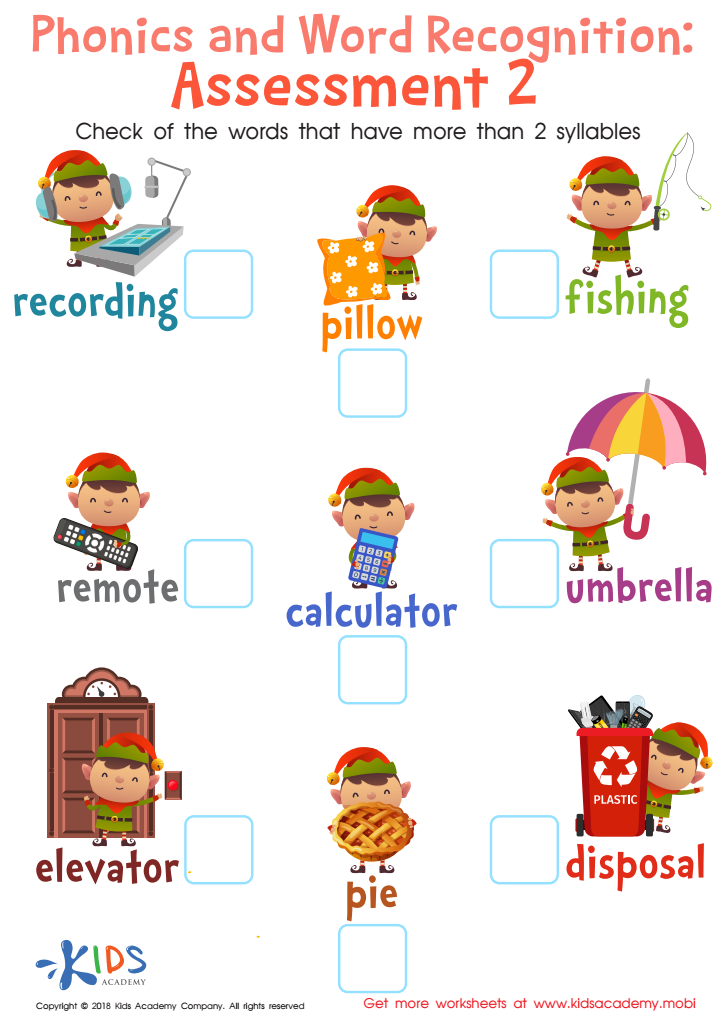
Phonics and Word Recognition: Assessment 2 Worksheet








Word identification and normal writing are critical skills for children aged 6-8, as they form the foundation for successful reading and writing in later years. At this stage, children are transitioning from learning to read to reading to learn, making mastery of these skills essential for academic development. Proficient word identification enables children to recognize and understand words quickly, improving their reading fluency and comprehension. This fluency is crucial as students begin to tackle more complex texts across various subjects.
Additionally, writing during these early years isn’t just about penmanship; it’s about expressing ideas clearly and structuring sentences correctly. Good writing skills foster communication abilities, critical thinking, and creativity, which are valuable in both academic and real-world settings.
By focusing on word identification and normal writing, parents and teachers can provide children with the tools needed for efficient learning and personal expression. Error-free writing minimizes misunderstandings and boosts a child’s confidence, encouraging them to participate actively in classroom discussions and written assignments. Support in these areas helps struggling students catch up, ensuring that every child has the opportunity to succeed. Cultivating these early literacy skills sets the stage for lifelong learning and academic achievement.