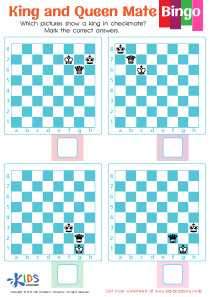
Understanding chess rules Normal Chess Worksheets for Ages 6-9
5 filtered results
-
From - To
Discover the engaging "Understanding Chess Rules Normal Chess Worksheets" designed for children ages 6-9! These fun and interactive worksheets help young learners grasp essential chess concepts, from piece movements to basic rules of the game. Each worksheet uses colorful graphics and age-appropriate language, making it easy for kids to follow along and enjoy the learning process. Ideal for classroom settings or at-home practice, these resources foster critical thinking, enhance concentration, and build strategic skills. Empower young minds with the foundation of chess—optimizing their learning experience while on their journey to becoming confident chess players! Explore the fun now!
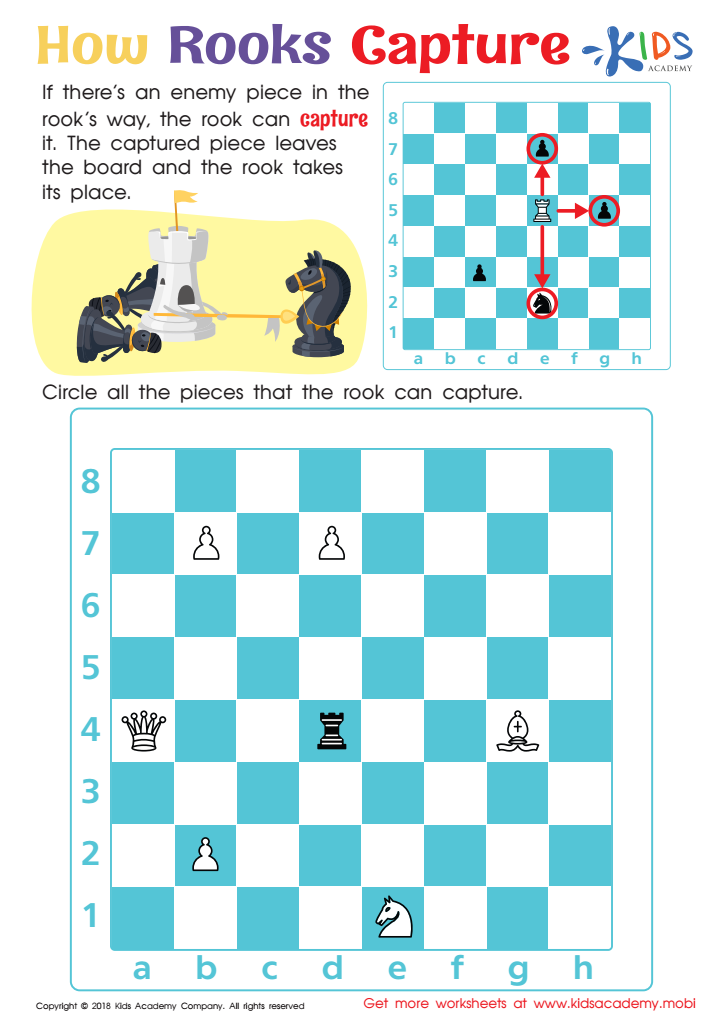
How Rooks Capture Worksheet
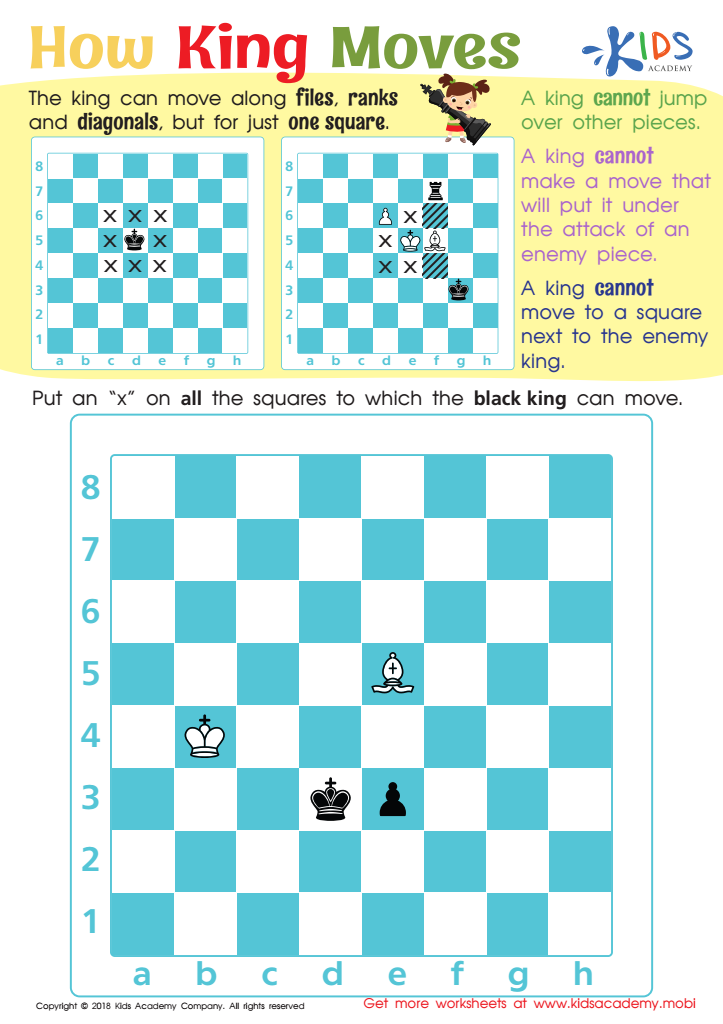
How King Moves Worksheet
 Assign to My Students
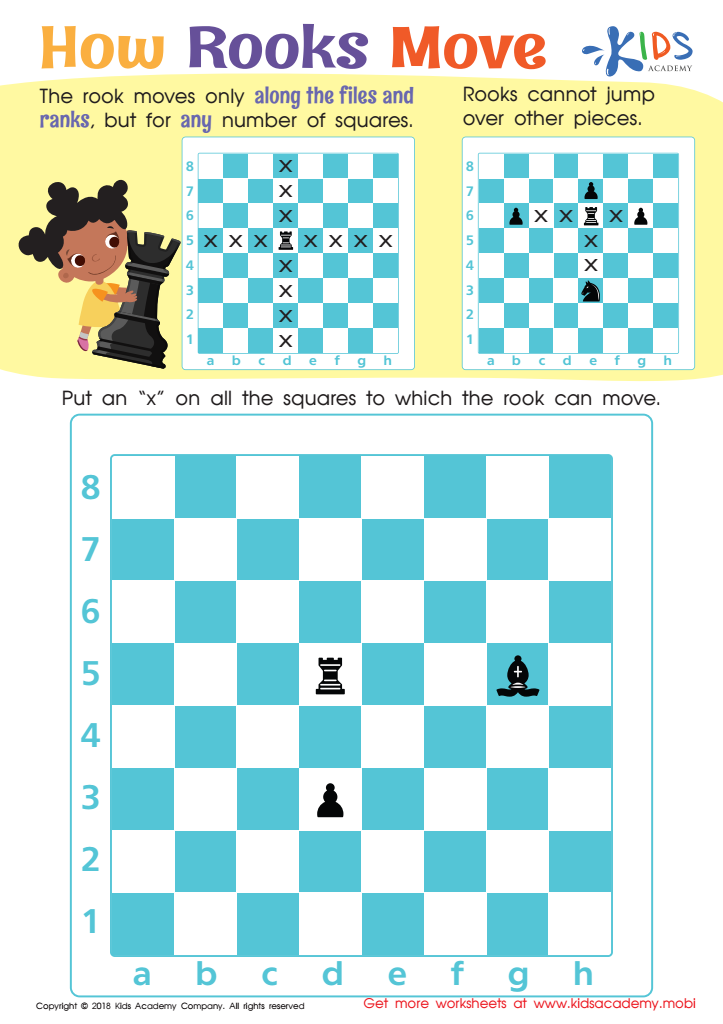
How Rooks Move Worksheet
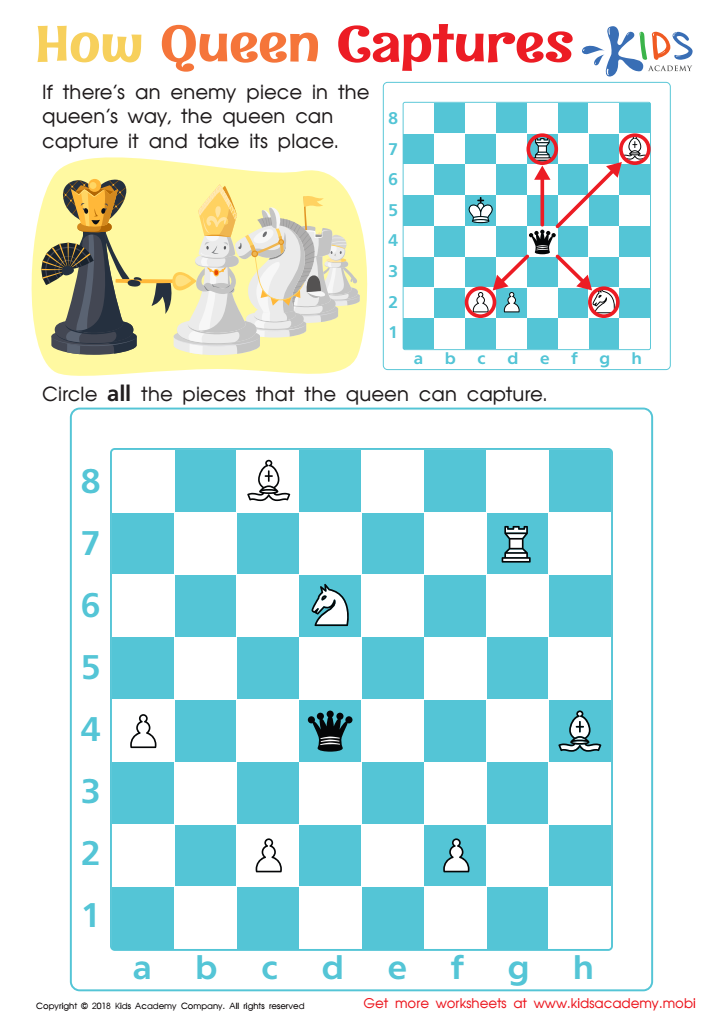
How Queen Captures Worksheet
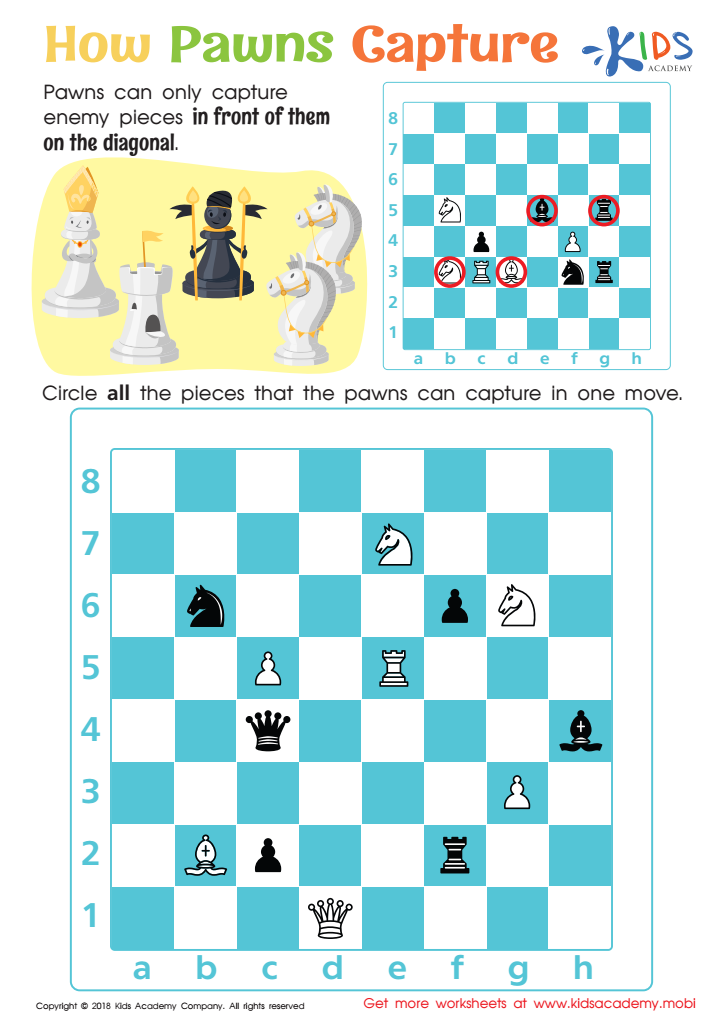
How Pawns Capture Worksheet








Understanding the rules of chess for children aged 6-9 is essential for parents and teachers for several reasons. First, chess enhances critical thinking and problem-solving skills. By learning the rules, children develop the ability to analyze situations, anticipate opponents' moves, and strategize their own. These cognitive skills extend beyond the chessboard, benefiting children's academic performance and everyday decision-making.
Moreover, chess fosters social interaction and emotional resilience. When children engage in chess, they learn sportsmanship—handling both victory and defeat gracefully. This exposure encourages them to express emotions and develop patience, focus, and discipline. In a collaborative learning environment, teachers can integrate chess into lessons, making learning more dynamic and enjoyable.
Additionally, chess can bridge cultural and age gaps, providing a common ground for children to interact with peers and adults. Teaching chess rules also offers parents a shared activity with their children, promoting family engagement and bonding.
Ultimately, by caring about chess education for young learners, parents and teachers are investing in their character development, cognitive skills, and social abilities, nurturing well-rounded individuals who are equipped for future success both on and off the chessboard.