Contextual understanding Normal Worksheets for Ages 6-9
6 filtered results
-
From - To
Discover our engaging Contextual Understanding Worksheets for ages 6-9 at Kids Academy. Designed to enhance young learners' grasp of language, these worksheets boost reading comprehension through fun and interactive activities. Children will enjoy exploring stories, answering questions, and connecting ideas within texts. Our materials promote critical thinking by encouraging kids to interpret context clues and convey meaning effectively. Perfect for both classroom and home use, these worksheets support foundational learning skills, empowering children to excel in reading and understanding written content. Equip your kids for academic success with our expertly crafted resources at Kids Academy.
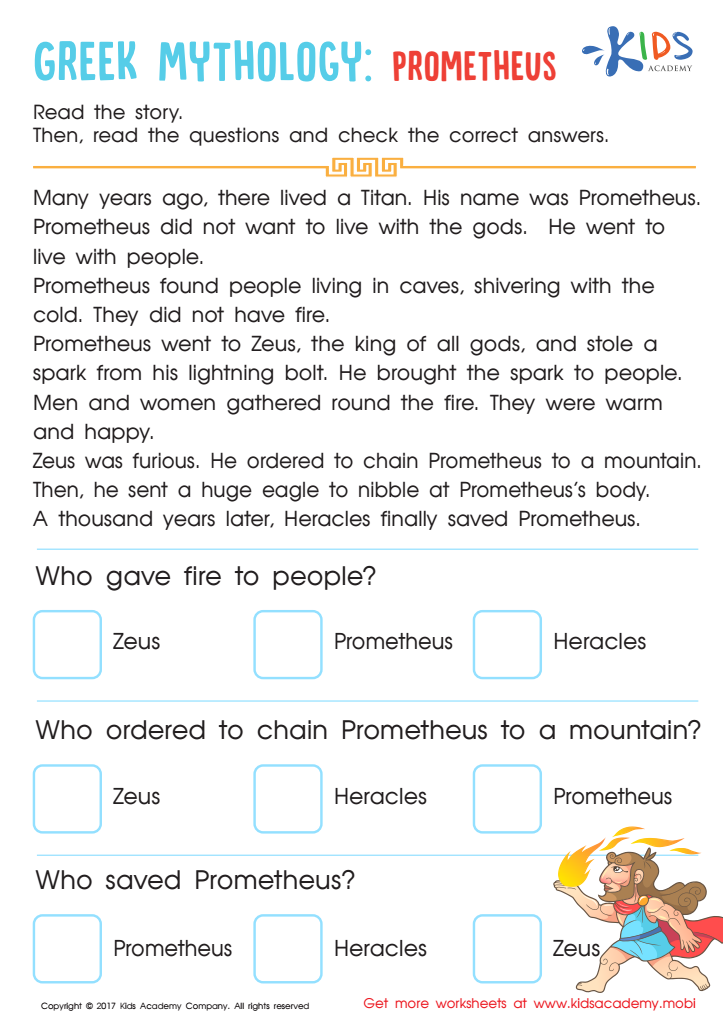
Prometheus Story Worksheet
 Assign to My Students
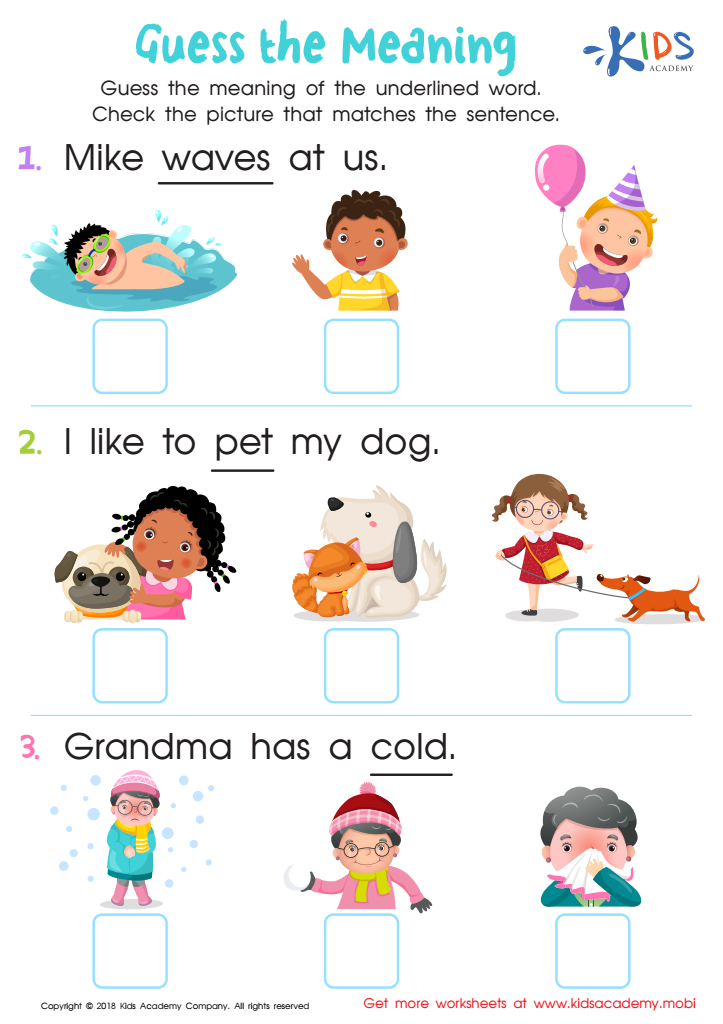
Guess the Meaning Worksheet
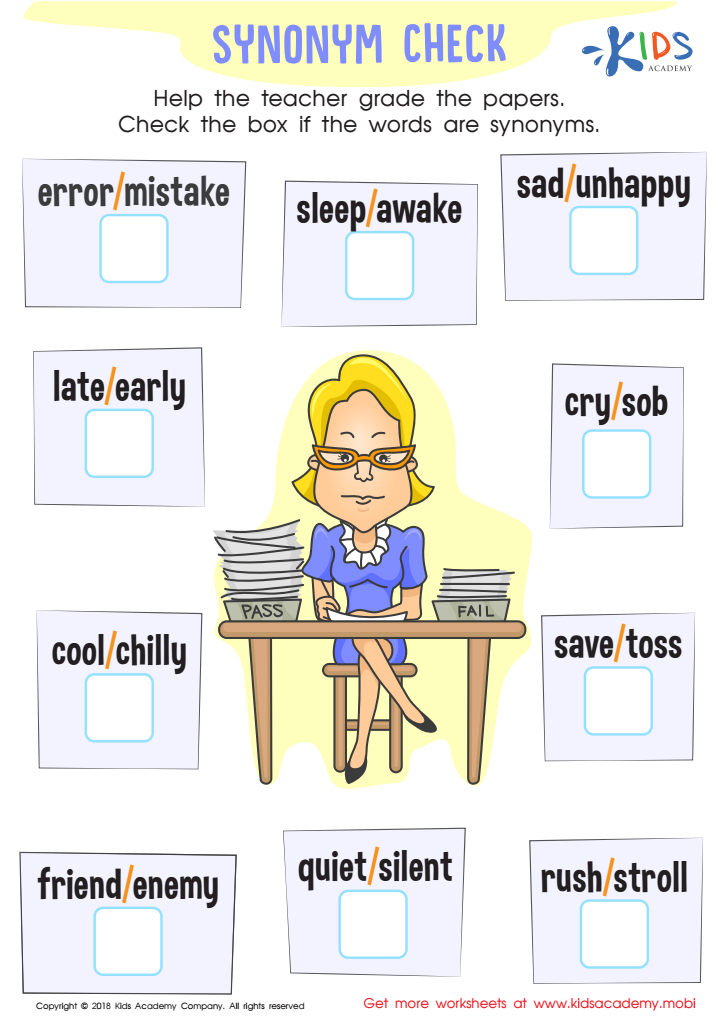
Synonym Check Worksheet
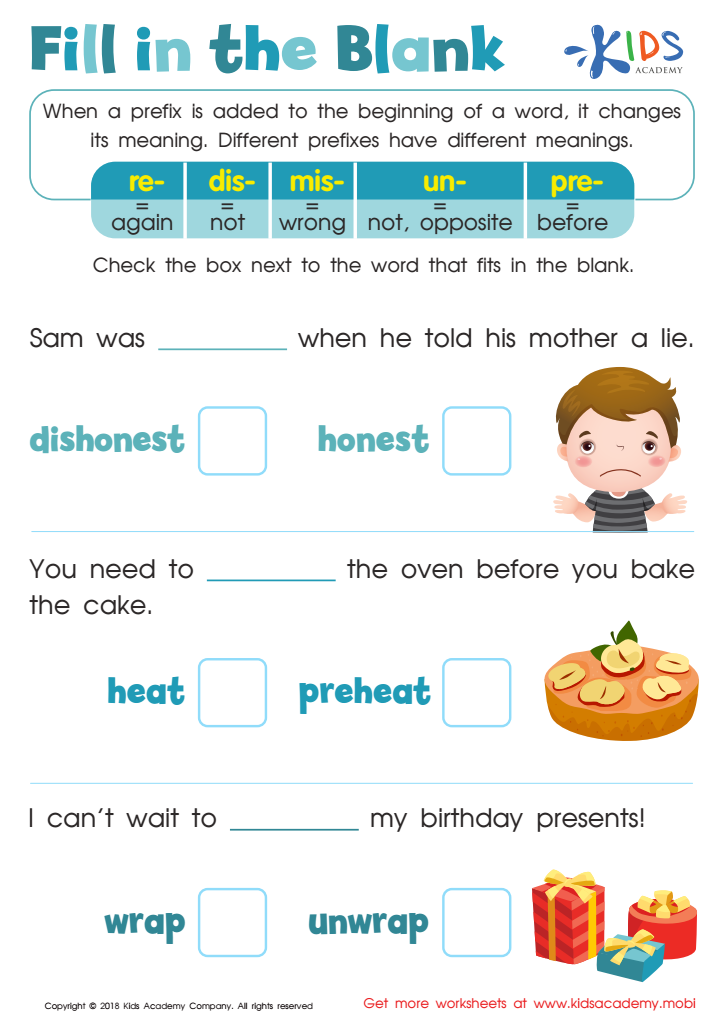
Reading: Fill in the Blank Worksheet
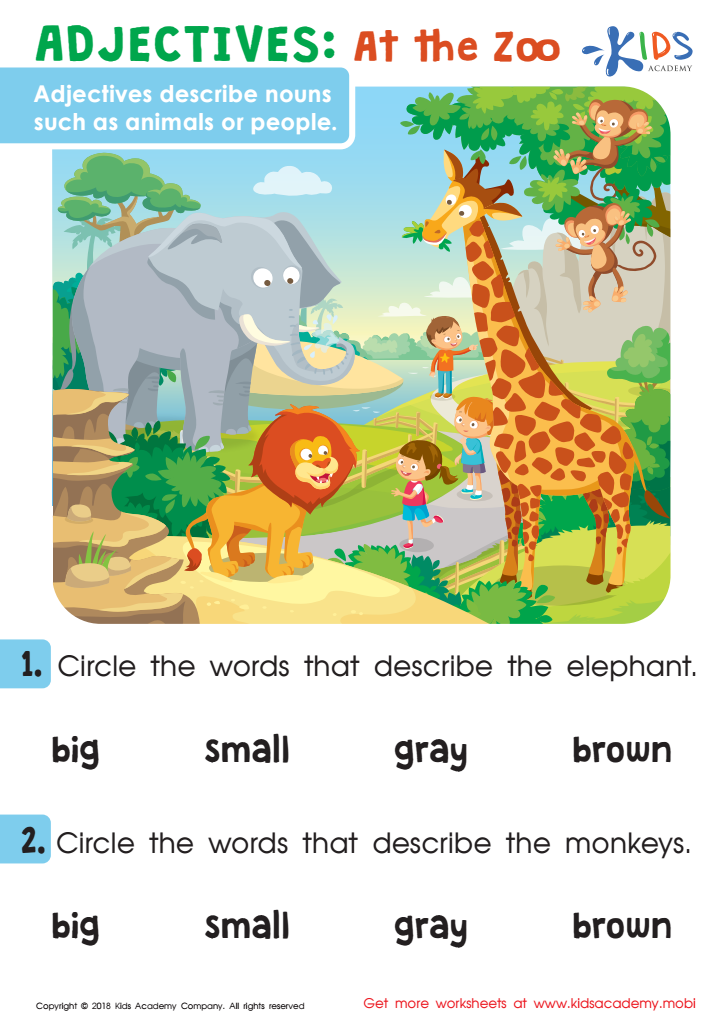
Adjectives: At The Zoo Worksheet
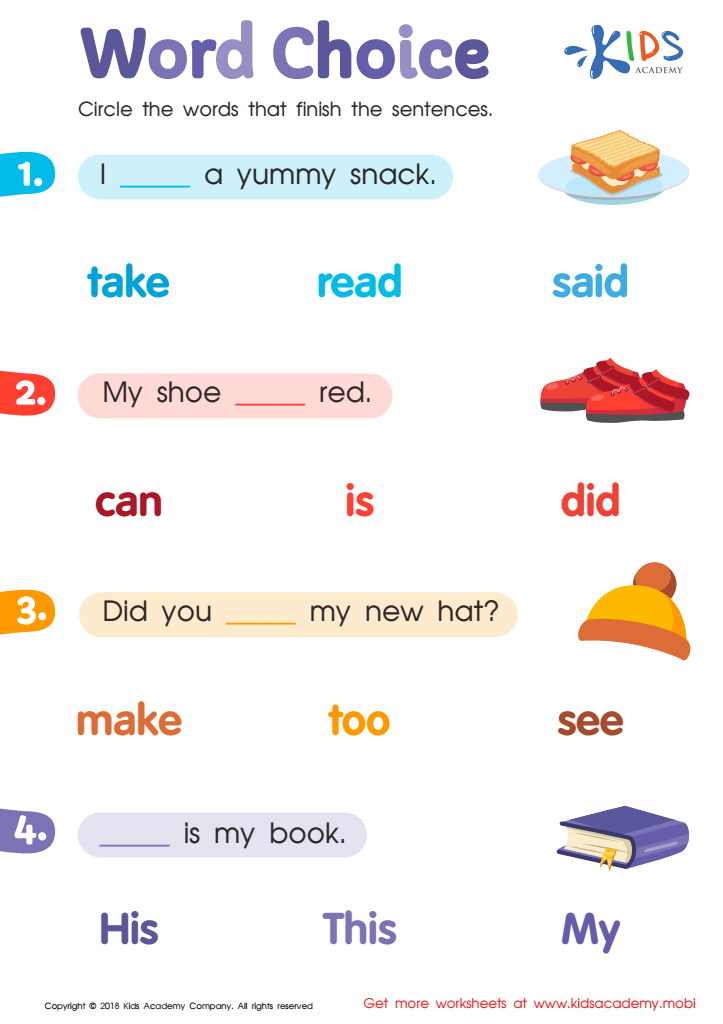
Word Choice Worksheet






Contextual understanding is crucial for children aged 6-9 as it forms the bedrock for effective communication, reading comprehension, and critical thinking. At this stage, kids are transitioning from simple word recognition to more sophisticated language skills, including understanding context in both spoken and written forms. When parents and teachers prioritize contextual understanding, they help children discern meaning based on surrounding words, sentences, or situations.
This skill is vital for academic success across subjects. For instance, in reading, a child who grasps context is better equipped to figure out the meaning of new words and fully comprehend stories and information texts beyond a literal interpretation. This deeper understanding fosters a love of reading and learning, essential components of lifelong education.
Moreover, social interactions benefit from contextual understanding. Children learn to engage in conversations accurately and sensitively, recognizing cues and adjusting their behavior and responses appropriately, which in turn enhances their emotional intelligence and empathy.
By focusing on contextual understanding during these formative years, parents and teachers empower children with the foundational skills they need to navigate both academic challenges and social situations. This well-rounded development sets the stage for ongoing success and well-being.








