
Improving counting skills Normal Worksheets for Ages 6-9
4 filtered results
Difficulty Level
Grade
Age
-
From - To
Subject
Activity
Standards
Enhance your child's counting proficiency with our engaging Worksheets for Ages 6-9, designed to strengthen fundamental math skills. Carefully crafted, these normal worksheets offer a variety of fun activities that make learning to count enjoyable and effective. Children will practice numbers through diverse exercises, including counting objects, simple addition, and interactive games. Ideal for home or classroom use, our worksheets promote independent learning and boost confidence in young learners. Give your child the tools they need to master counting, build a solid mathematical foundation, and enjoy the process of learning. Treat them to an educational adventure today!
Favorites
With answer key
Interactive
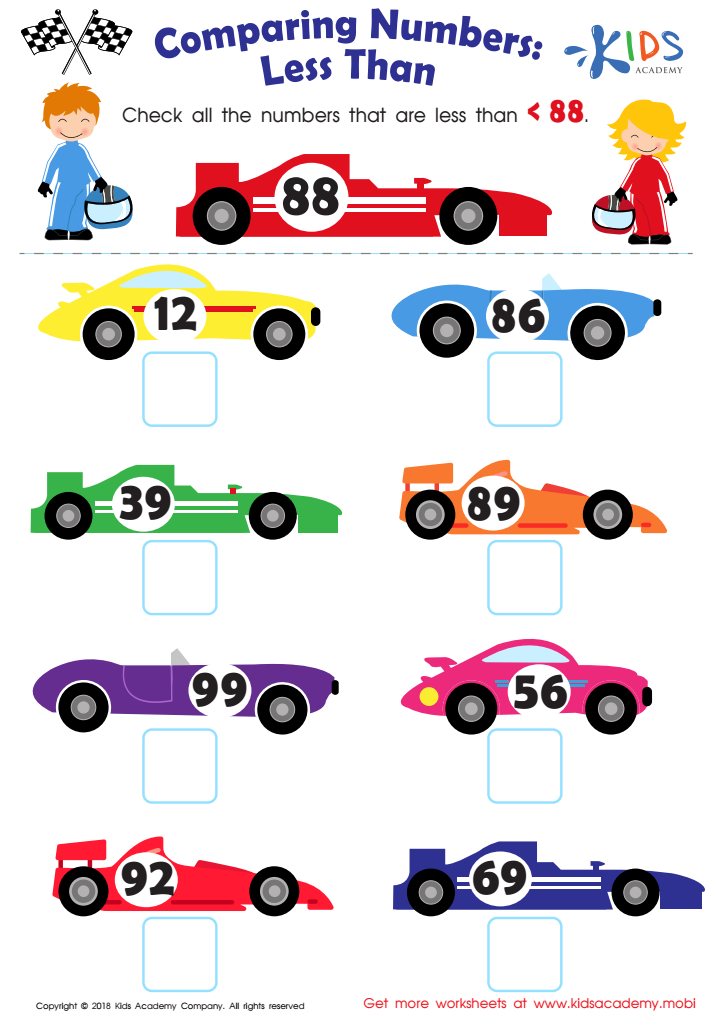
Less Than Worksheet
Compare numbers with your child using this fun worksheet! Paintings of sports cars add visuals to the task of counting up to 88. Make learning enjoyable with this colorful activity - your child will stay engaged and eager to learn more.
 Assign to My Students
Less Than Worksheet
Worksheet
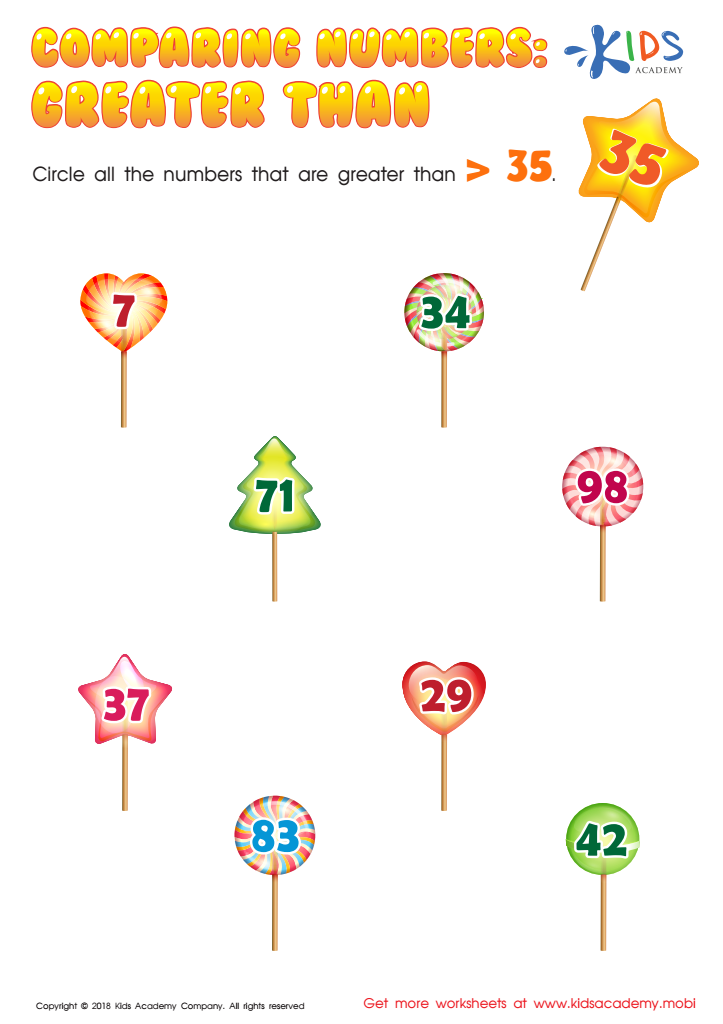
Greater Than Worksheet
Tired of generic maths problems? Try this fun pdf worksheet! With your child or student, carefully look through the numbers in the balloon and circle those greater than 35. Enjoyable and educational!
Greater Than Worksheet
Worksheet
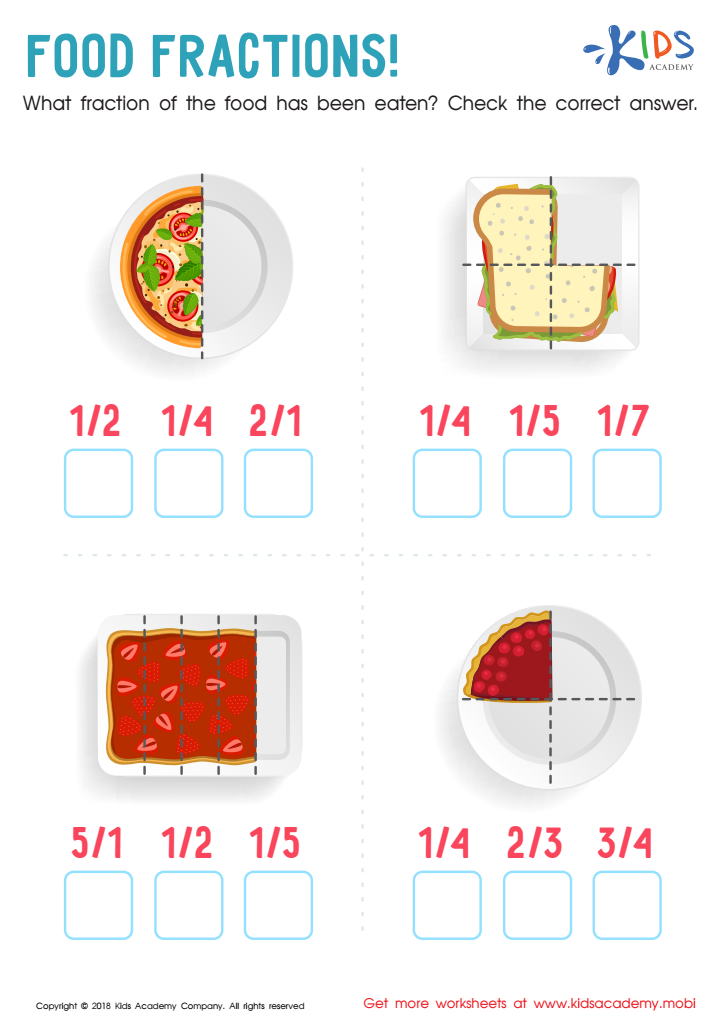
Food Fractions Worksheet
Test your child's understanding of fractions with this Food Fractions worksheet. Ask them to identify what fraction of the food in the four pictures has been eaten and select the correct answer from the options provided. See how well they understand your lessons!
Food Fractions Worksheet
Worksheet
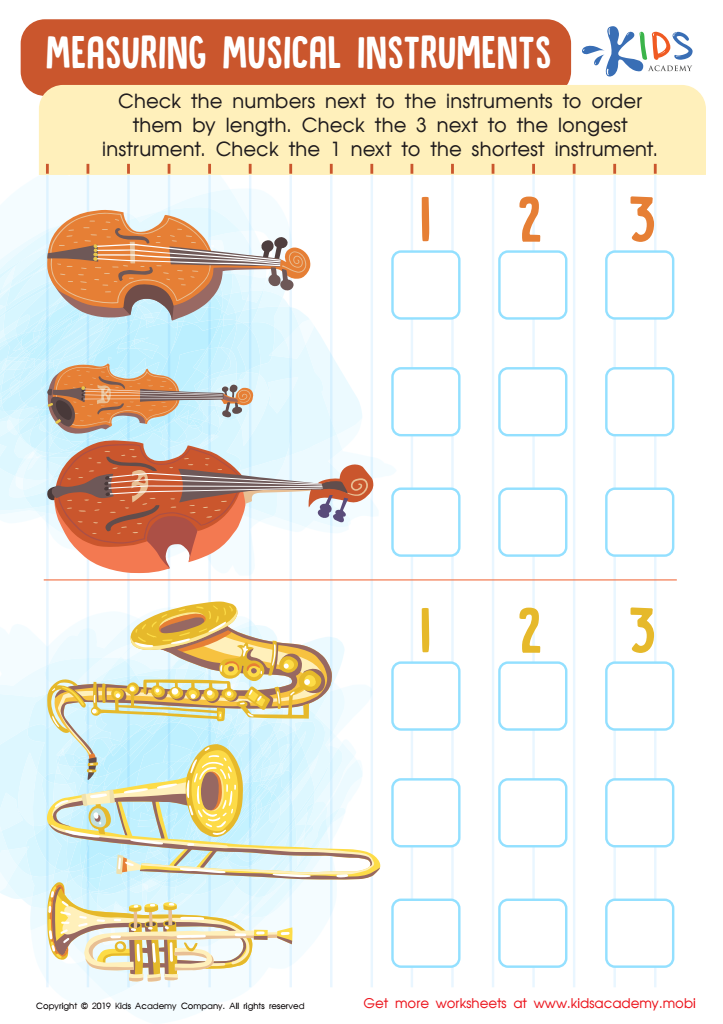
Measuring Musical Instruments Worksheet
Learning measurements can be tricky, but this worksheet makes it easy. Ask your child to identify the instruments in the pictures. Then, order them by length using the numbers. 3 is the longest, 1 is the shortest. Simple exercises like this will help them understand the different metric systems.
Measuring Musical Instruments Worksheet
Worksheet
Join Kids Academy for Free
Who is primarily going to use this learning content?




Improving counting skills in children aged 6 to 9 is crucial for several reasons. During this developmental stage, children transition from basic counting to more advanced mathematical concepts. Strong counting skills form the foundation for arithmetic operations like addition and subtraction, which are essential for their academic success. When children can confidently count, they also develop better problem-solving skills, allowing them to tackle more complex math challenges later on.
Moreover, counting skills are not just academic; they enhance cognitive development, fostering critical thinking and sequential reasoning. Engaging in counting activities can also promote a child’s fine motor skills and attention span, both essential for effective learning.
Additionally, counting is a key life skill. It aids in daily activities such as shopping, sharing, and organizing, helping children become more independent and improving their numeracy skills in real-world contexts.
Parents and teachers should understand that promoting counting skills contributes to a child’s overall confidence and enthusiasm towards learning. This early investment can lead to a lifelong appreciation for mathematics and critical thinking. Thus, prioritizing counting skills during this formative period can have lasting benefits.








