Learning about ecosystems Normal Worksheets for Ages 6-9
3 filtered results
-
From - To
Discover our engaging "Learning about Ecosystems" worksheets designed for children ages 6-9! These delightful printable worksheets explore the wonders of diverse ecosystems, teaching young learners about plants, animals, habitats, and environmental interactions. Through fun and educational activities, children will develop a deeper understanding of how ecosystems function, fostering an appreciation for nature. Perfect for classroom settings or home learning, our worksheets encourage observation, critical thinking, and a love for science. Start your child's ecological adventure today with Kids Academy's expertly crafted resources that make learning about ecosystems an exciting journey!
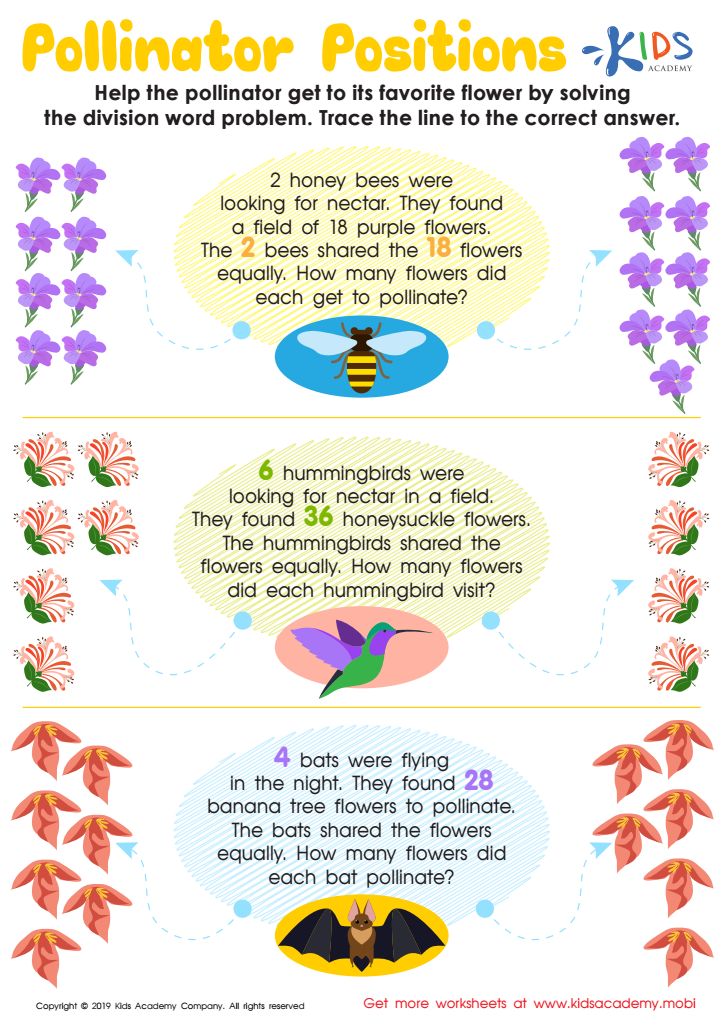
Pollinator Positions Worksheet
 Assign to My Students
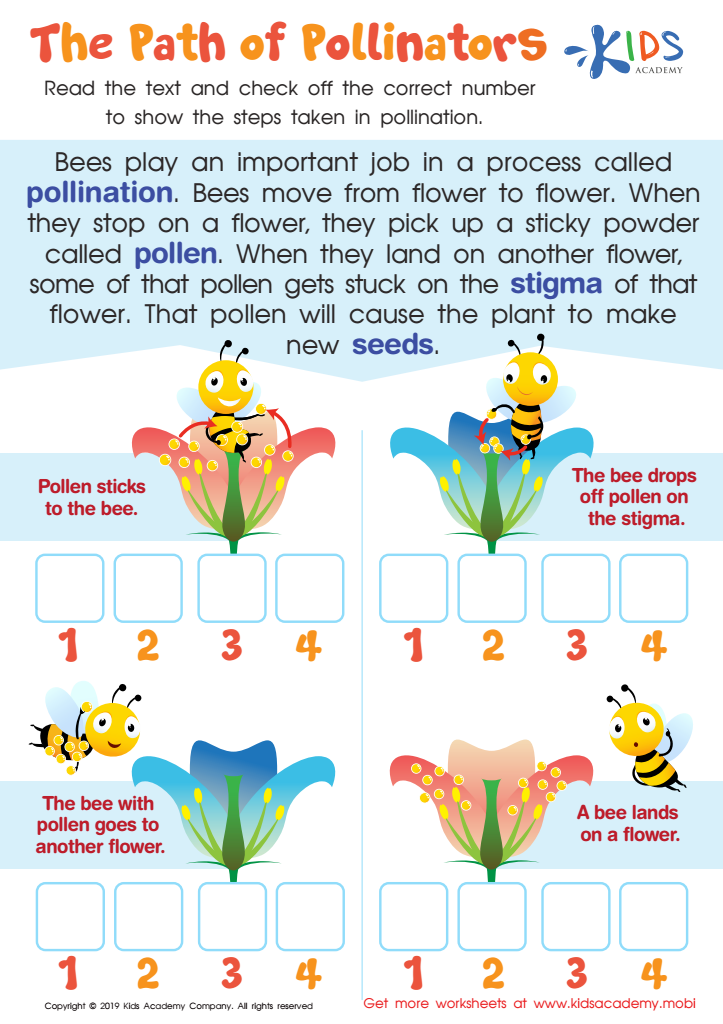
The Path of Pollinators Worksheet
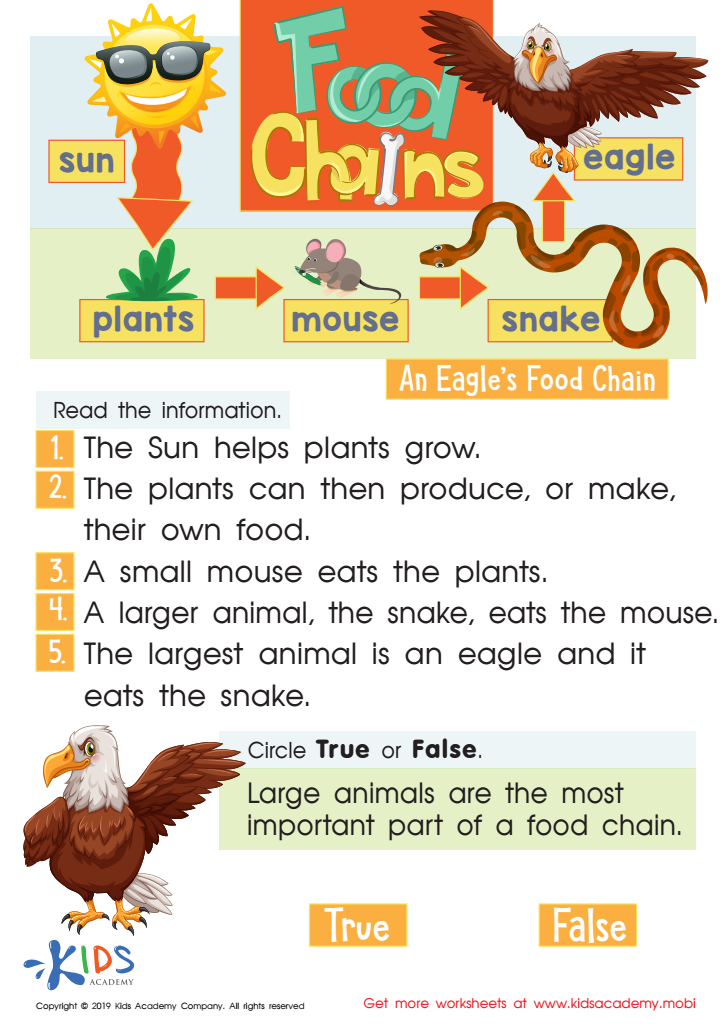
Food Chains Worksheet







Understanding ecosystems at an early age is essential for several reasons. First, learning about ecosystems helps young children, ages 6 to 9, appreciate the interconnections among living organisms and their environments. This foundational knowledge fosters respect for nature and informs children about the importance of each species, including plants, animals, and even microorganisms, in maintaining a balanced ecosystem.
Second, it lays the groundwork for environmental stewardship. By understanding how ecosystems thrive and the role humans play, children can become more mindful about conservation efforts. This early education can lead to sustainable habits such as recycling, reducing waste, and respecting wildlife.
Third, studying ecosystems encourages curiosity and critical thinking. Kids learn to ask questions, observe, and explore the world around them, which enhances their cognitive development. They develop problem-solving skills as they consider issues like habitat destruction or species extinction.
Lastly, engaging with ecosystems through hands-on activities and outdoor experiences makes learning enjoyable and memorable. It strengthens their sense of wonder and encourages them to spend time outside, which has numerous health benefits.
In conclusion, learning about ecosystems from a young age not only cultivates a love for the natural world but also empowers children to become informed and responsible citizens who are capable of making positive environmental impacts.








