
Map reading Normal Worksheets for Ages 6-9
3 filtered results
Difficulty Level
Grade
Age
-
From - To
Subject
Activity
Standards
Explore our engaging map reading worksheets designed specifically for children aged 6 to 9. These expertly crafted resources aim to enhance map literacy and develop essential navigation skills in young learners. Each worksheet features age-appropriate activities that promote critical thinking, spatial awareness, and understanding of maps. From identifying landmarks to understanding symbols and directions, our maps provide a fun and interactive way for kids to learn. These resources foster independent learning and are perfect for use at home or in the classroom. Download our normal worksheets today to help your child embark on an exciting journey through the world of maps!
Favorites
With answer key
Interactive
 Assign to My Students
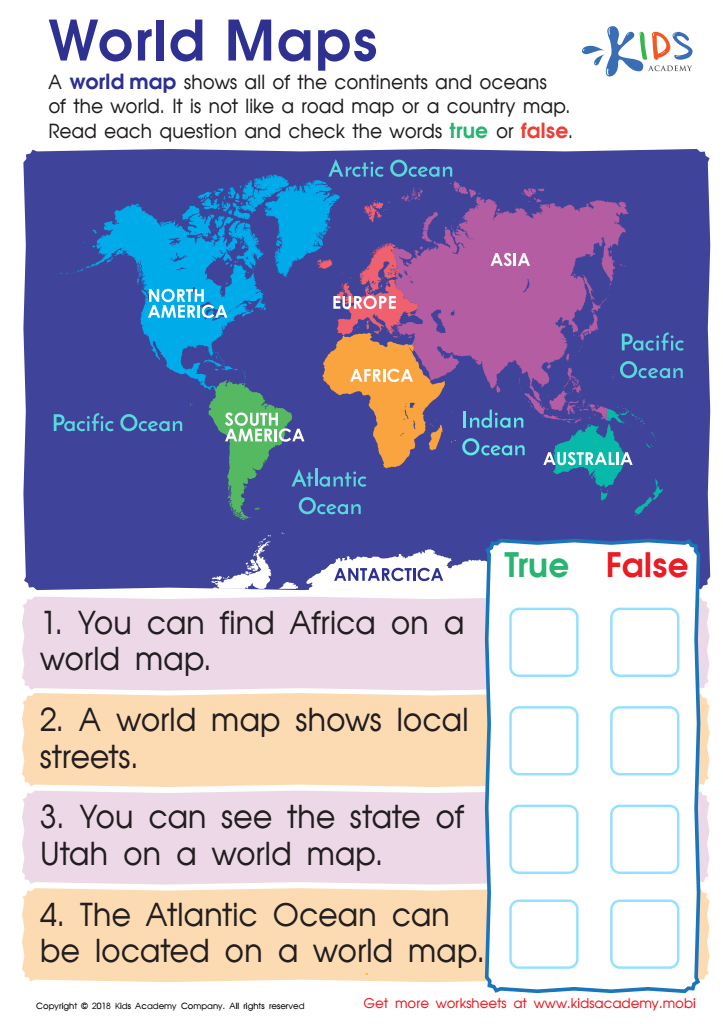
World Maps Worksheet
Help your young geographer learn about world maps. Show them that it displays all the oceans, continents and is distinct from other maps. Challenge them to answer the true/false questions on this free worksheet, and help them become a global citizen who understands the purpose of world maps.
World Maps Worksheet
Worksheet
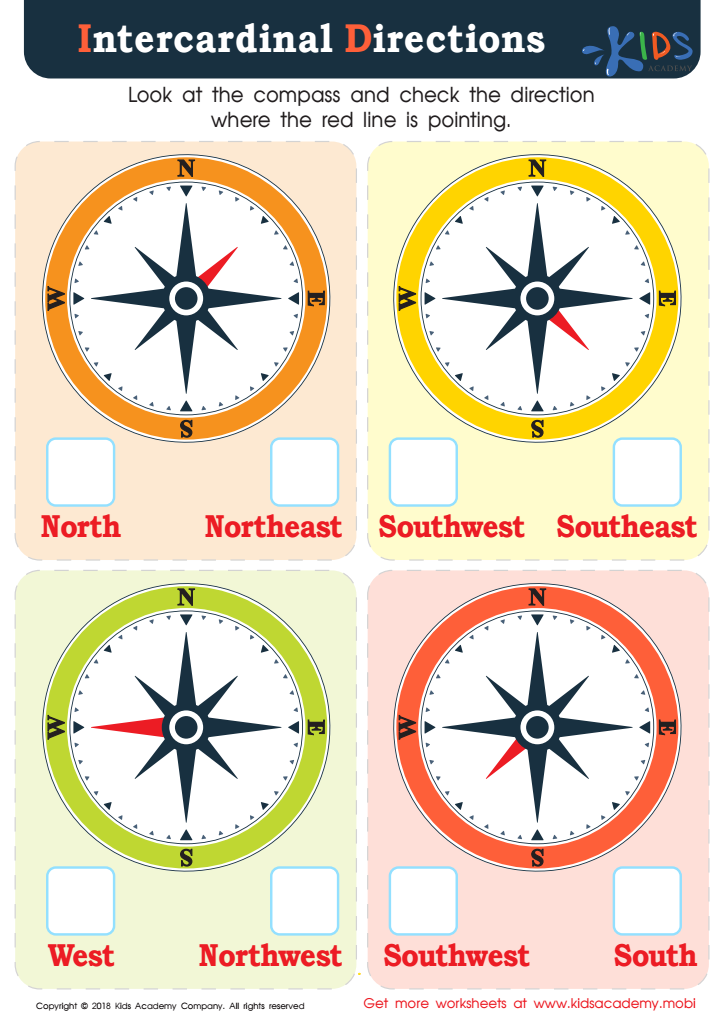
Intercardinal Directions Worksheet
Young students often don't get to practice cardinal and intercardinal directions in the digital age, but it's an important social studies and geography concept to learn. This PDF provides colorful compasses for them to practice with, giving them a real-world skill for common curriculum and independent living.
Intercardinal Directions Worksheet
Worksheet
Join Kids Academy for Free
Who is primarily going to use this learning content?





Map reading is a crucial skill for children aged 6-9, as it lays the foundation for spatial awareness and critical thinking. As children begin to understand their environment, learning to read maps empowers them to navigate the world—both literally and figuratively. This skill fosters independence, helps them develop problem-solving abilities, and enhances their understanding of geography.
For parents and teachers, encouraging map reading can stimulate curiosity and engagement in learning. It connects to various subjects, such as math, by teaching concepts like distance and scale, as well as to social studies, where children explore communities and cultures through maps. Moreover, it can serve as a fun and interactive activity, promoting collaboration and communication skills when children work in pairs or groups.
Additionally, map reading encourages observation and attention to detail, qualities that are beneficial not only in academics but in everyday life. By nurturing these skills early on, parents and teachers prepare children to navigate the complexities of an increasingly interconnected world. Overall, prioritizing map reading is essential for building critical life skills and promoting a sense of adventure and exploration in young learners.








