Multiplication practice Normal Worksheets for Ages 6-9 - Page 2
30 filtered results
-
From - To
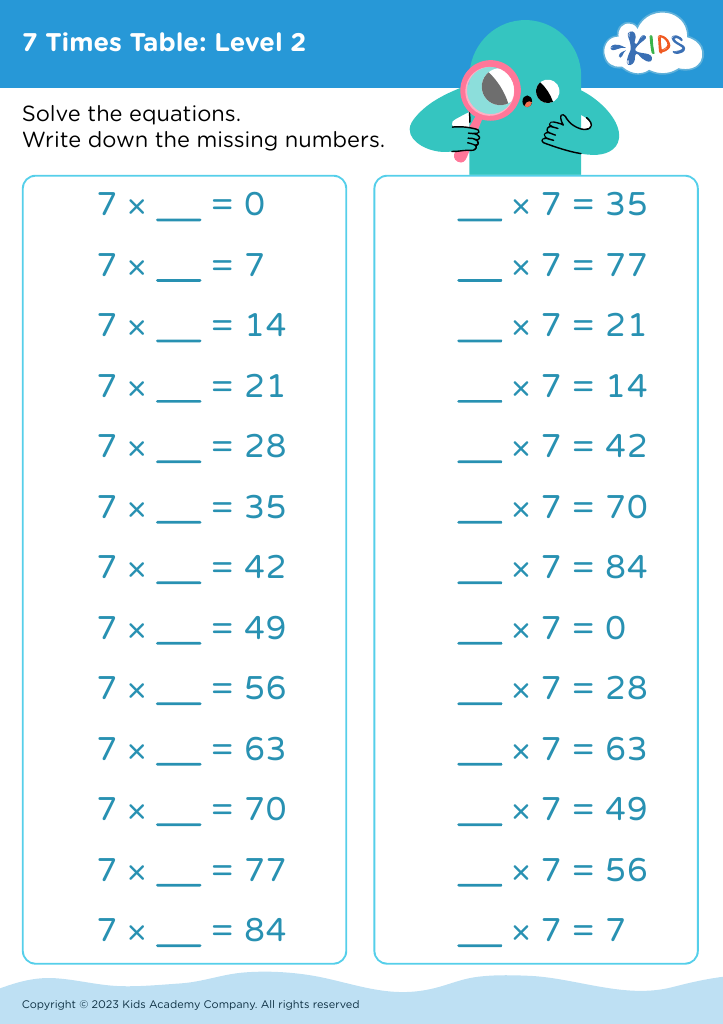
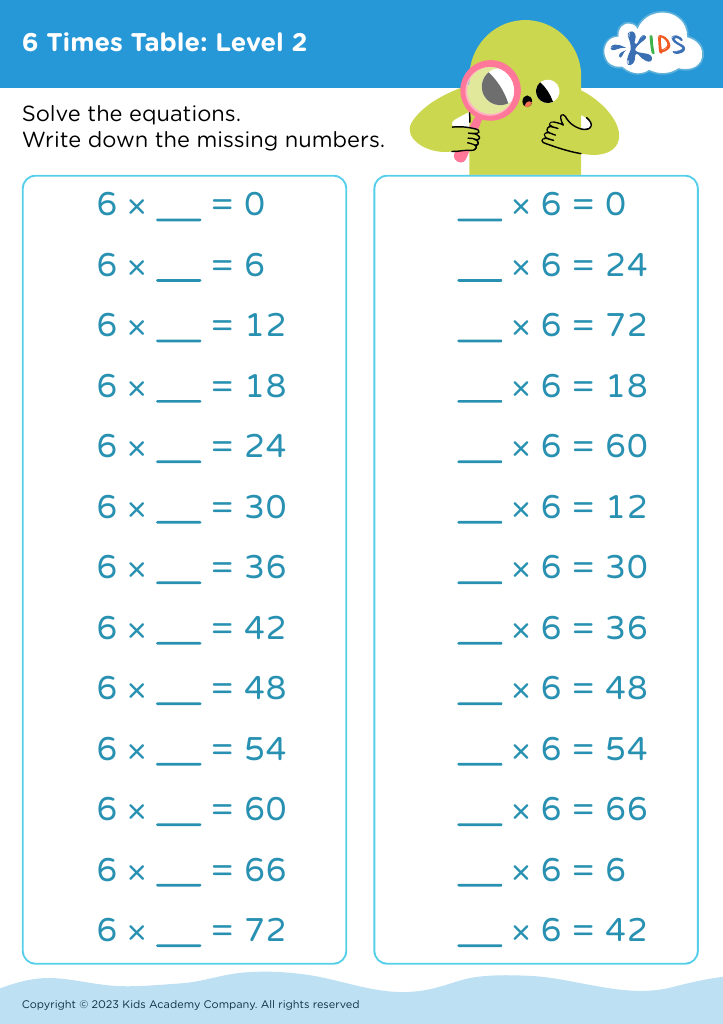
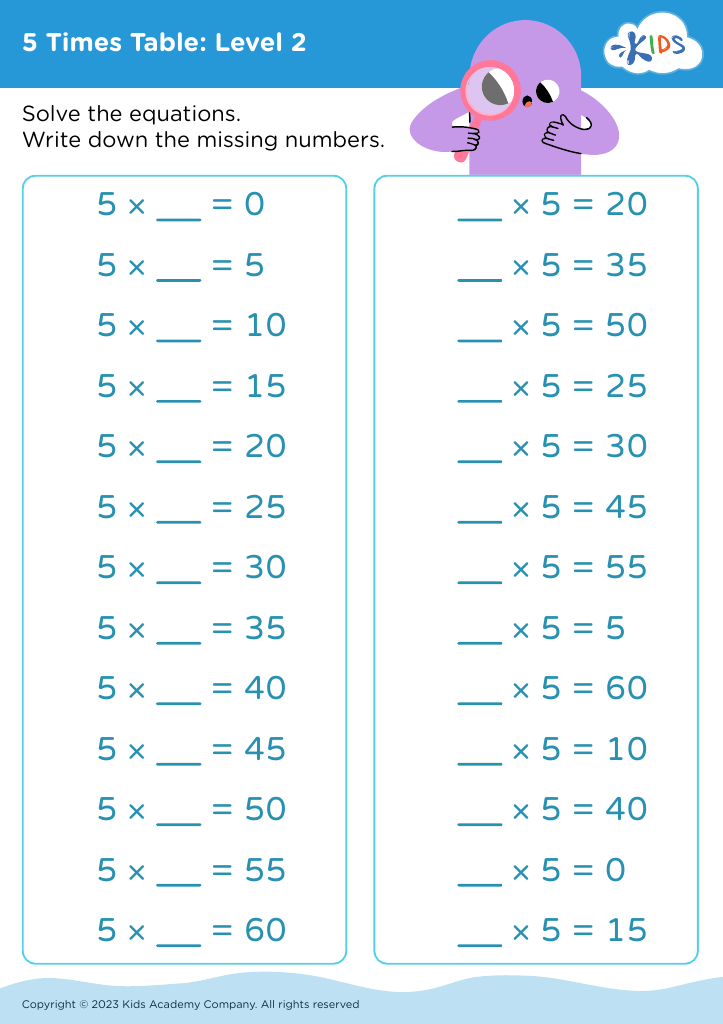
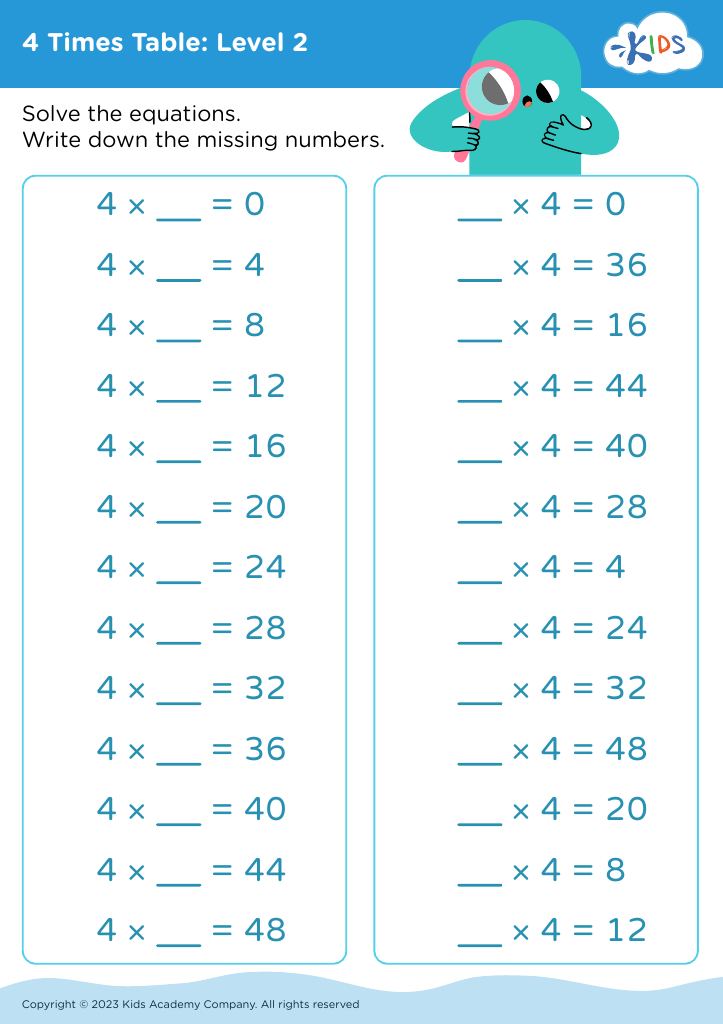
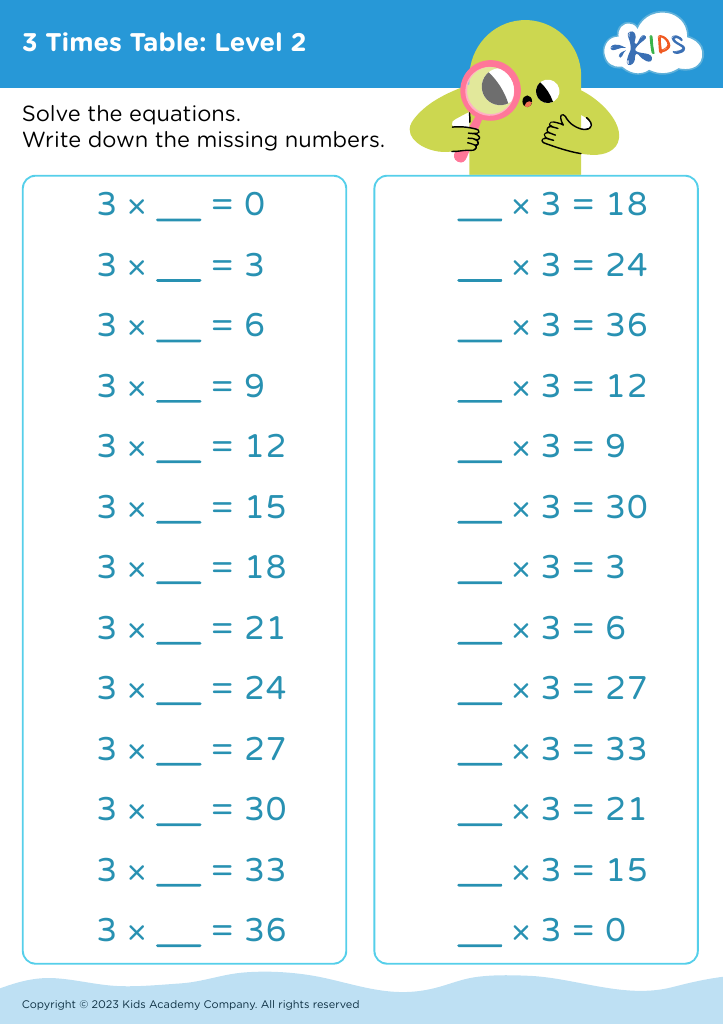
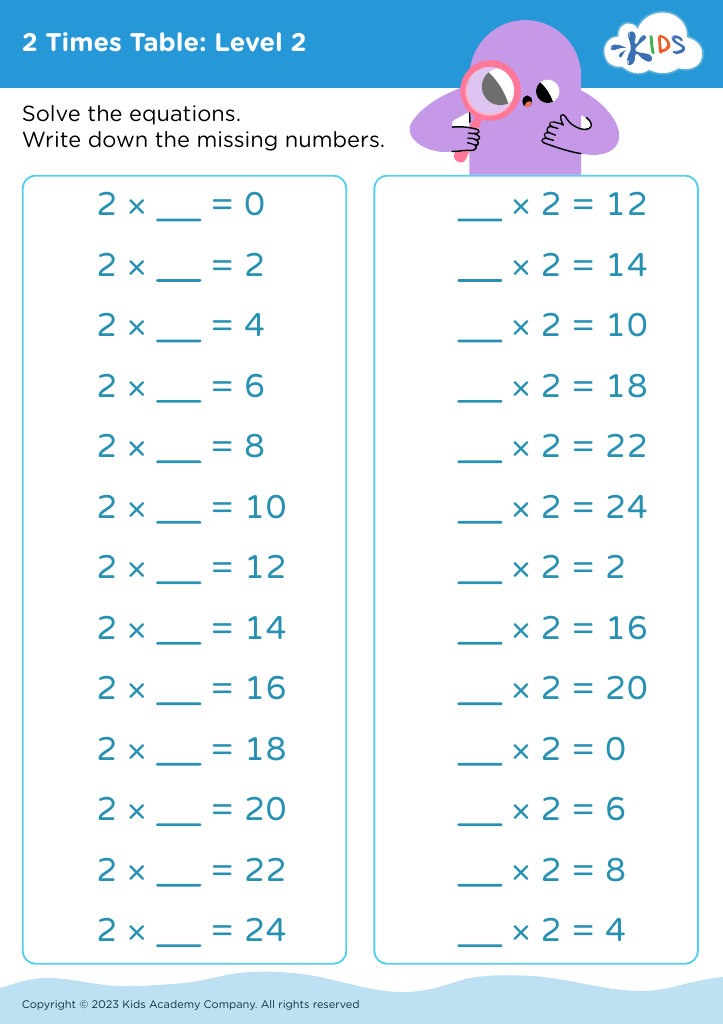








Parents and teachers should prioritize multiplication practice for children aged 6-9 because this foundational skill is crucial for their mathematical development. At this age, children transition from concrete concepts to more abstract mathematical thinking. Mastering multiplication not only enhances their ability to solve math problems but also builds confidence in their overall arithmetic skills.
Multiplication is a building block for more complex math operations like division, fractions, and even algebra. When children understand multiplication facts, they can approach new concepts with a solid base, making learning more effective. Additionally, fluency in multiplication enhances problem-solving skills and helps in everyday situations, from calculating change during a purchase to understanding time and distance.
Regular practice reinforces memory retention and cognitive processing, ensuring that these skills become second nature. It can also facilitate a sense of accomplishment, motivating children to tackle more challenging math problems in the future. Furthermore, engaging in multiplication activities fosters a positive attitude toward math, promoting greater enthusiasm and a lifelong love for learning.
In sum, multiplication practice is not just a task but a critical aspect of a child's academic journey that influences their success in mathematics and beyond.








