Time recognition Normal Worksheets for Ages 6-9
5 filtered results
-
From - To
Discover our engaging Time Recognition Normal Worksheets designed for children aged 6-9! These printable resources help young learners master the concepts of telling time, from digital to analog clocks. Our worksheets offer a variety of fun activities that promote understanding of hours, half-hours, and quarter-hours, making learning interactive and enjoyable. Perfect for classroom use or at-home practice, our time recognition worksheets enhance essential math skills while boosting confidence. Empower your child to grasp the importance of time with clear instructions and vivid illustrations. Explore our collection today and watch them excel in this crucial skill!
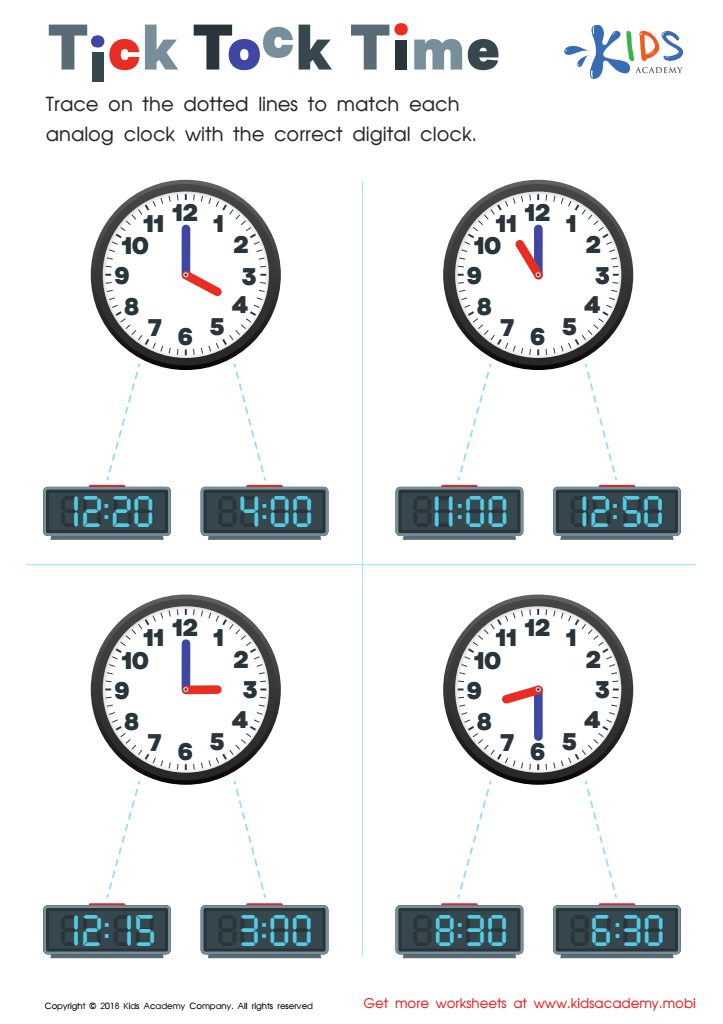
Tick Tock Time Worksheet
 Assign to My Students
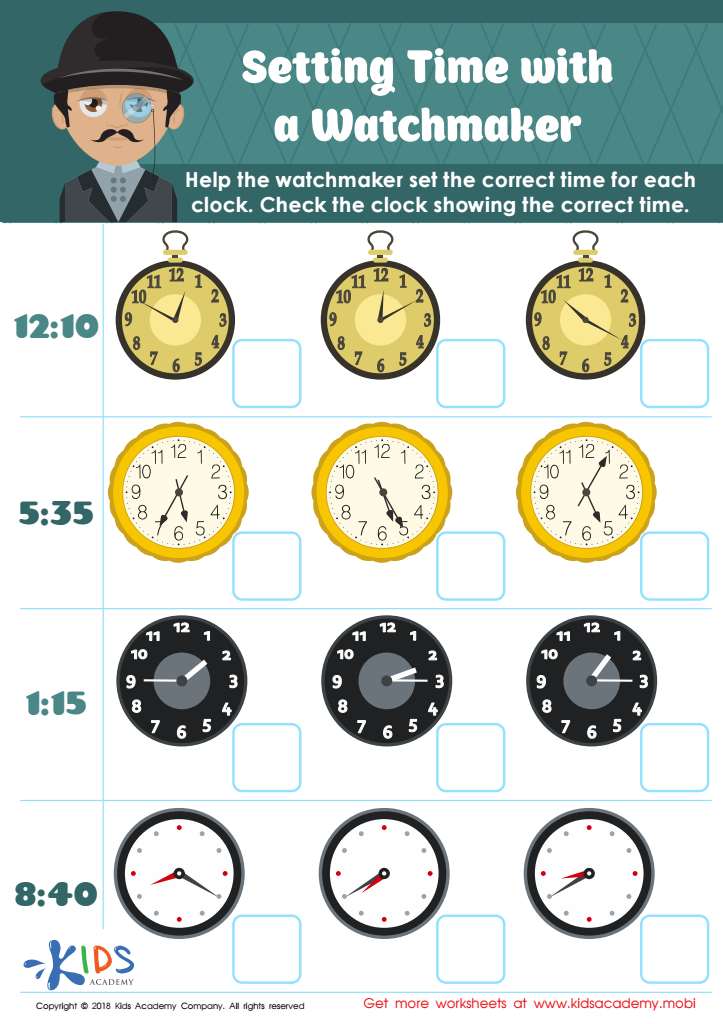
Setting Time with Watchmaker Worksheet
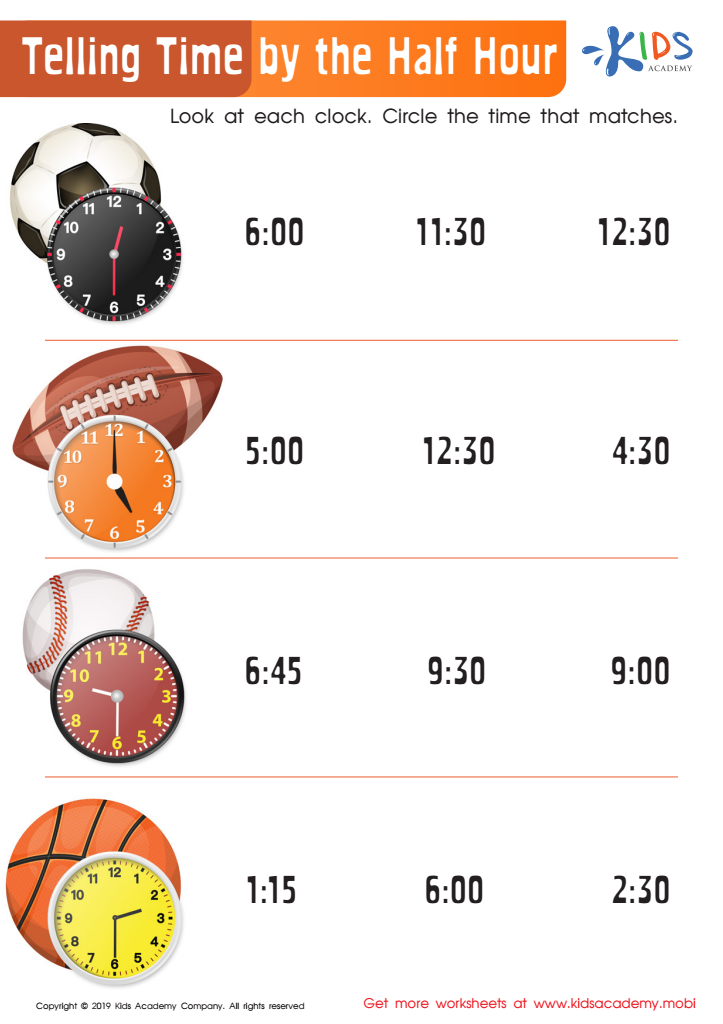
Telling Time by the Half Hour Worksheet
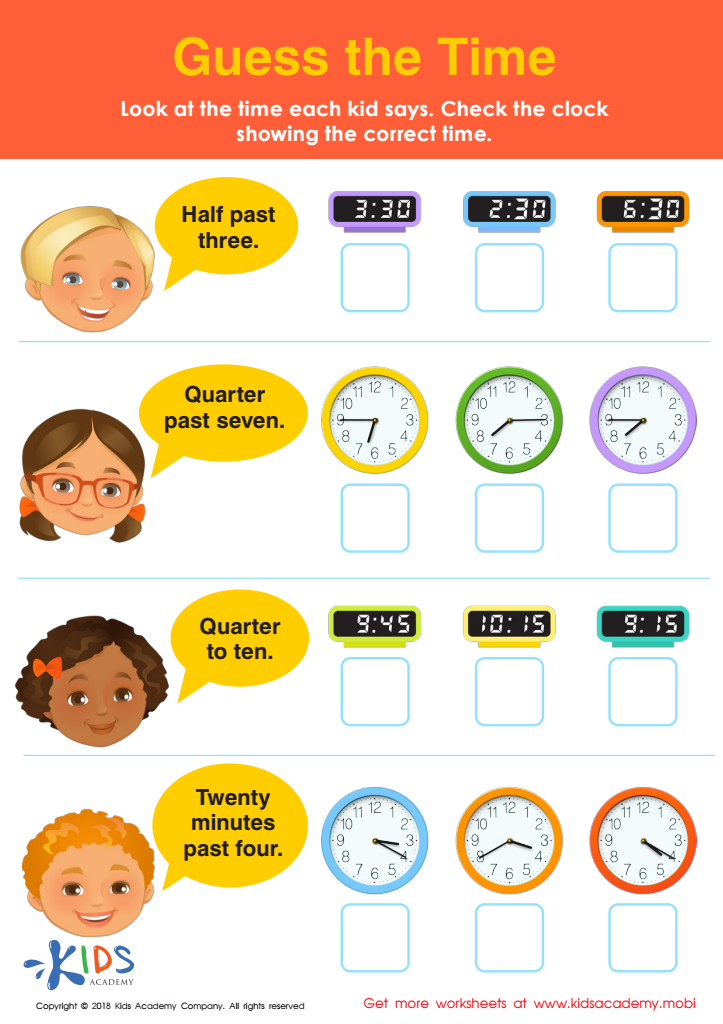
Guess the Time Worksheet
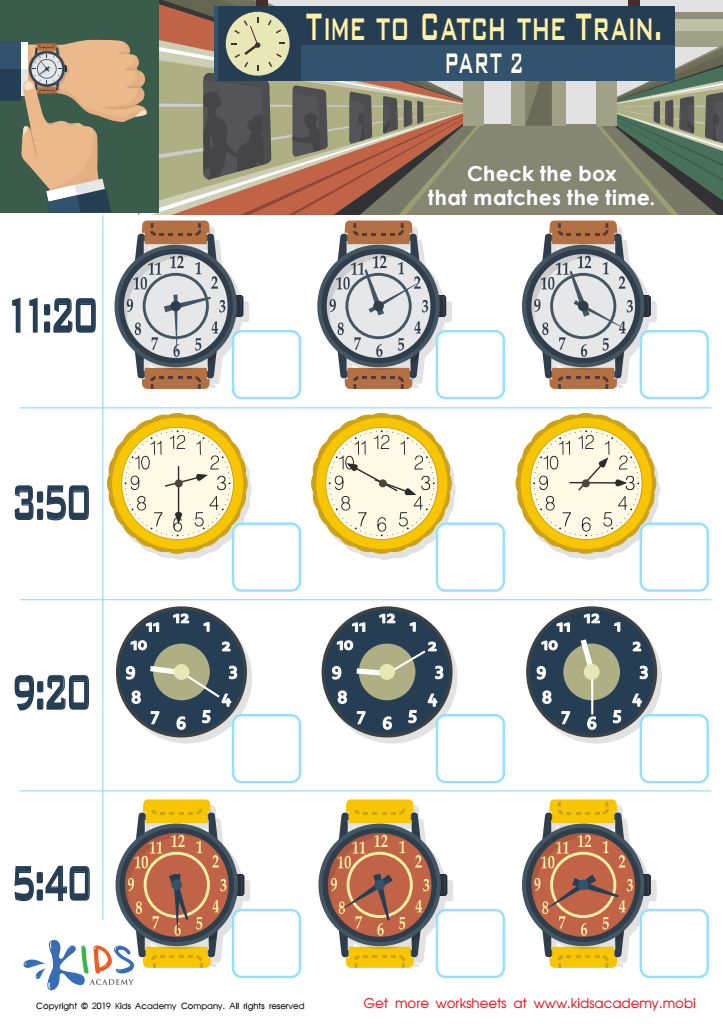
Time to Catch the Train Part 2 Worksheet







Time recognition is a foundational skill essential for children aged 6 to 9, significantly impacting their daily lives and overall development. Parents and teachers should prioritize this skill for several reasons. Firstly, understanding time helps children manage their routines effectively, such as school schedules, homework assignments, and extracurricular activities. This fosters a sense of responsibility and independence as they learn to plan their day.
Moreover, time recognition enhances cognitive development. It involves both numerical skills and abstract thinking as children grasp the concepts of hours, minutes, and daily cycles. As they learn to read clocks and understand calendars, they also improve their math skills, critical thinking, and comprehension abilities, which are vital for their academic success.
Additionally, teaching children about time promotes social skills. Knowing how to manage time allows children to participate in group activities and coordinate with peers. It also helps them understand timelines in history, creating connections to the past and present.
Lastly, early mastery of time recognition lays a strong foundation for future learning. As students progress academically, the ability to conceptualize and navigate time becomes increasingly crucial, impacting everything from assignments to life skills. Thus, fostering time recognition in young learners is essential for their overall growth and success.








