Time-telling skills Normal Worksheets for Ages 6-9
3 filtered results
-
From - To
Elevate your child’s confidence with our Time-Telling Skills Normal Worksheets for ages 6-9. Specially designed for young learners, these engaging worksheets help children master reading both analog and digital clocks. Combining fun exercises with educational rigor, they reinforce important concepts like distinguishing between hours and minutes, identifying half-hours and quarter-hours, and understanding AM and PM. With vibrant visuals and interactive activities, each worksheet transitions smoothly from basic concepts to more advanced time-telling skills, ensuring a comprehensive learning experience. Perfect for classroom use or at-home practice, these worksheets prepare kids for everyday tasks by improving their time management and math skills.
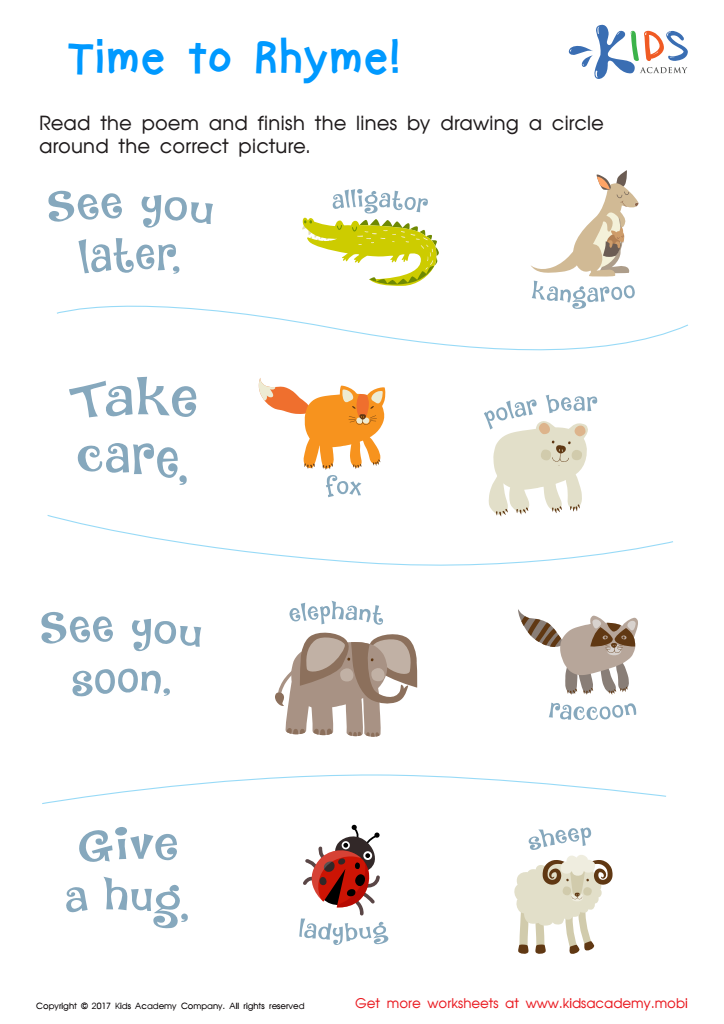
Time to Rhyme Rhyming Worksheet
 Assign to My Students
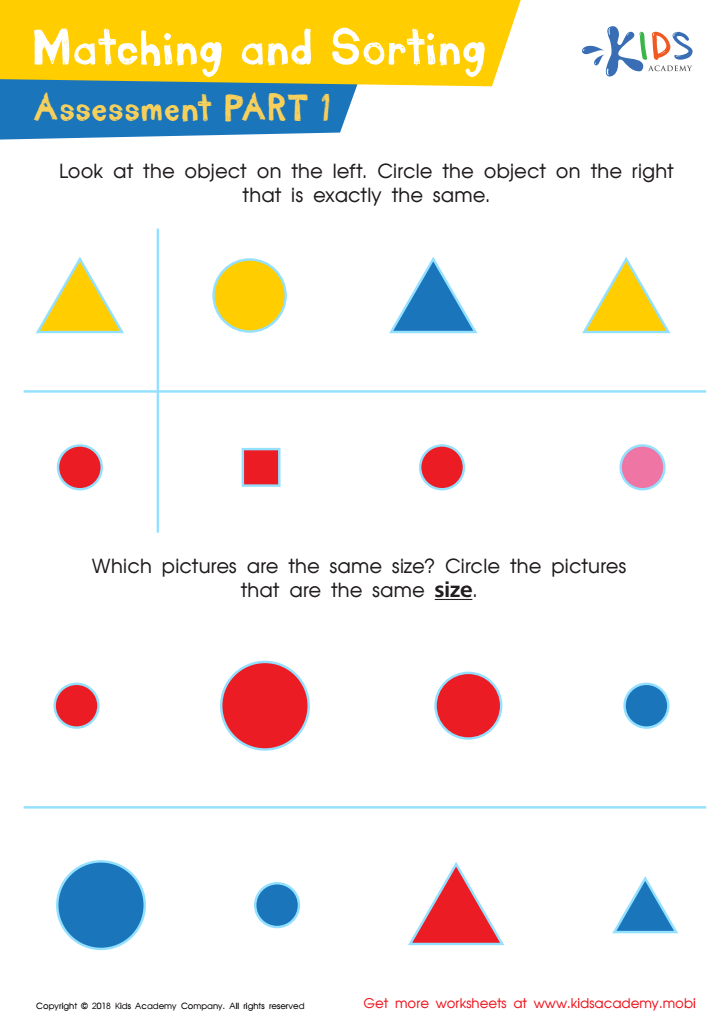
Matching and Sorting for Kindergarten: Assessment 1 Worksheet
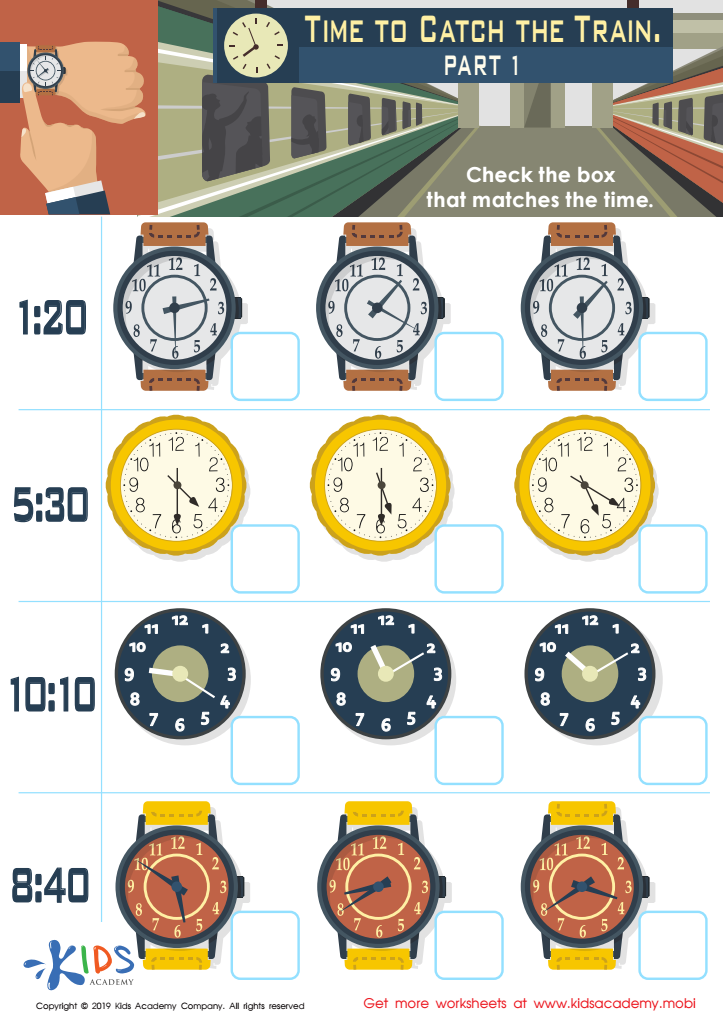
Time to Catch the Train Part 1 Worksheet








Time-telling is an essential life skill that aids in fostering a child's independence, organizational abilities, and overall cognitive development. For children aged 6-9, understanding time helps set the foundation for their daily routines, such as knowing when to wake up, start an activity, or expect a school bus. Mastering these skills at this age equips them with the ability to manage tasks more efficiently and self-regulate their schedule, which are key components of executive functioning.
For parents and teachers, emphasizing time-telling provides a structured framework that children rely on for punctuality and responsibility. In the classroom, a clear grasp of time helps maintain a disciplined environment where children transition smoothly between activities. It also teaches the value of time management, an attribute crucial for academic success and daily functioning.
Furthermore, time-telling is a fundamental component of math literacy, introducing children to concepts such as numbers, sequences, and basic arithmetic operations. When adults prioritize these skills, children can also find a rhythm in learning and play, nurturing their cognitive and social development in a balanced manner. Overall, such focus not only boosts confidence but also instills a sense of autonomy, preparing children for future challenges.








