Understanding communities Normal Worksheets for Ages 6-9
5 filtered results
-
From - To
Understanding Communities Normal Worksheets for Ages 6-9 cover crucial learning skills that help children grasp the concept of communities. Perfect for young learners aged 6-9, these worksheets are designed to teach children about different types of communities and their roles. They encourage thinking about family, school, and neighborhood communities through engaging activities and exercises. Children will enjoy vibrant illustrations and interactive tasks that make learning about social structures fun and accessible. Carefully crafted to align with educational standards, these worksheets support both classroom instruction and at-home learning for a comprehensive understanding of communities.
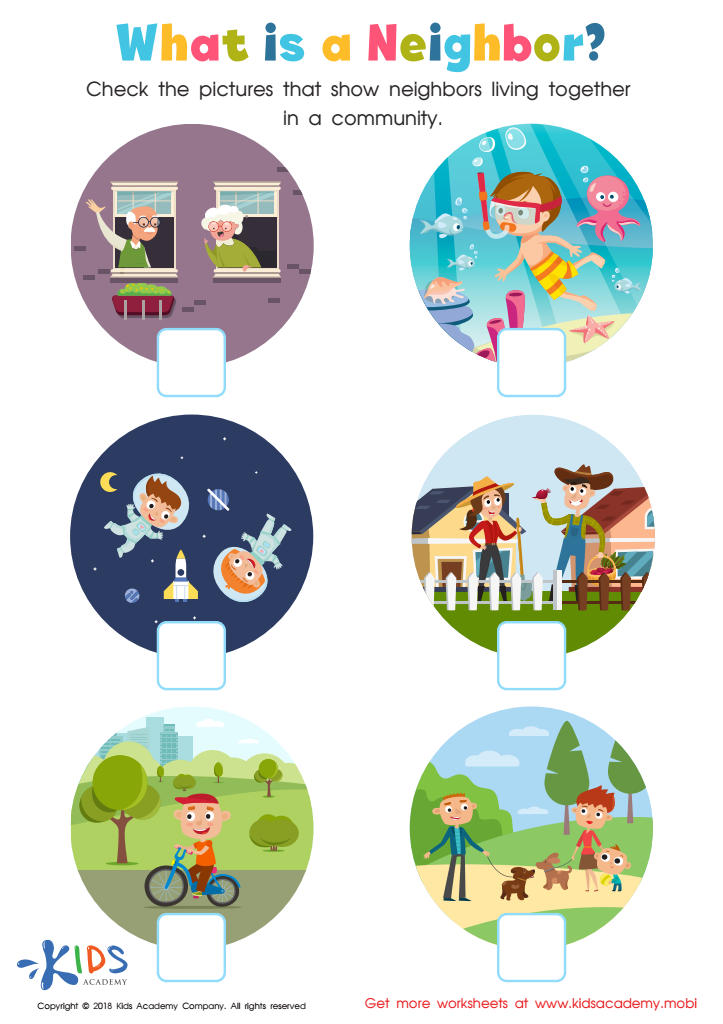
What is a neighbor Worksheet
 Assign to My Students
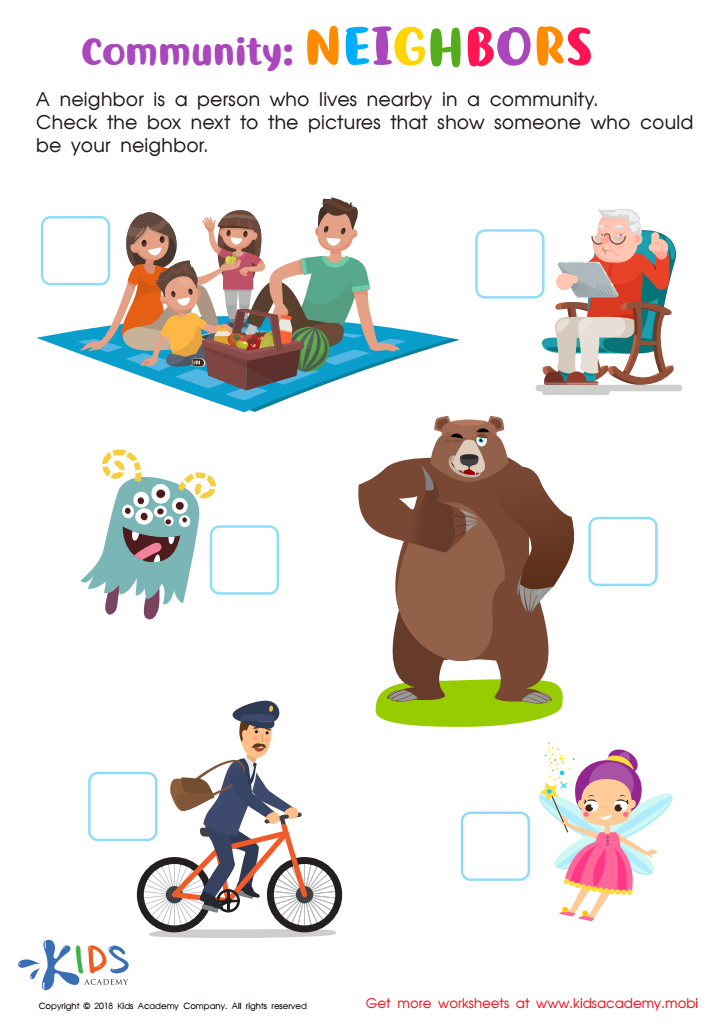
Community: Neighbors Worksheet
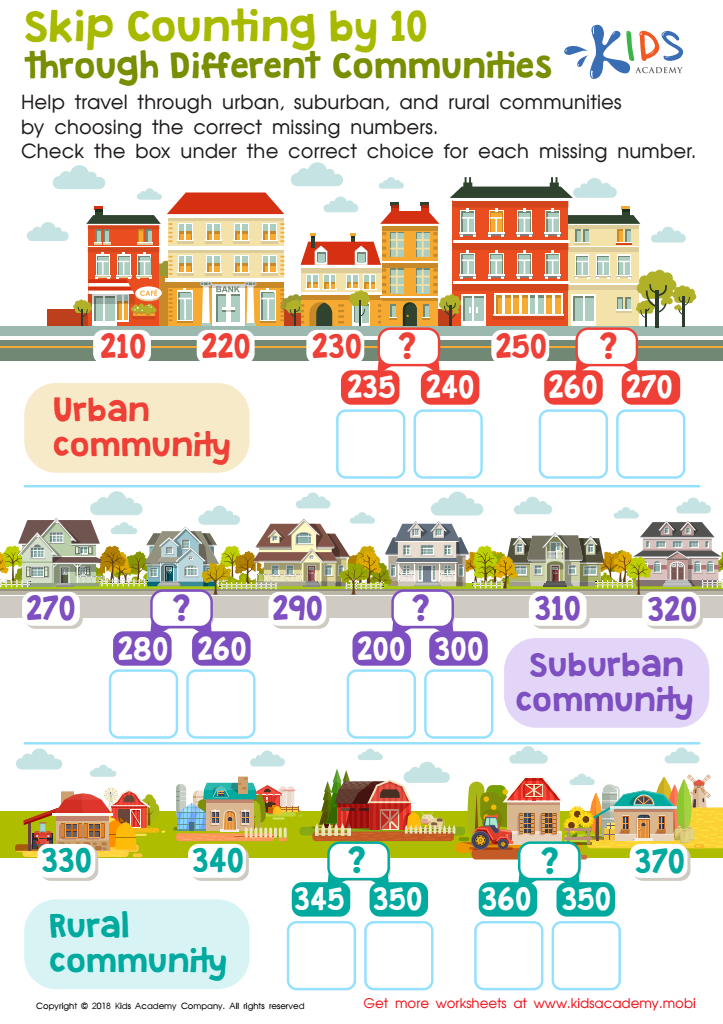
Skip Counting by 10 through Different Communities Worksheet
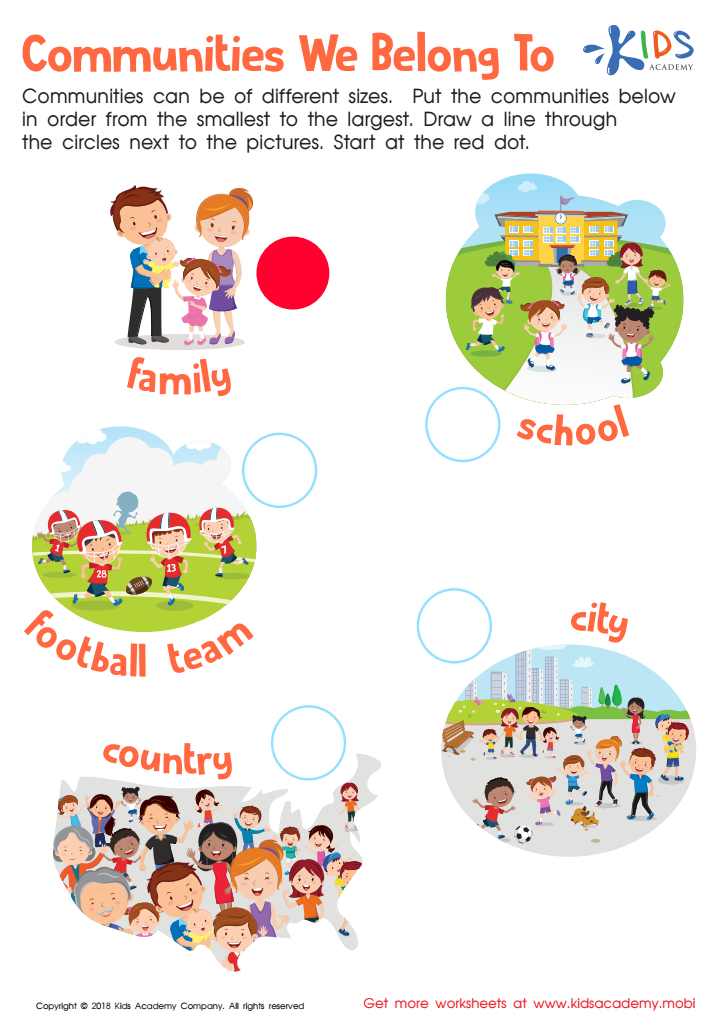
Communities We Belong to Worksheet
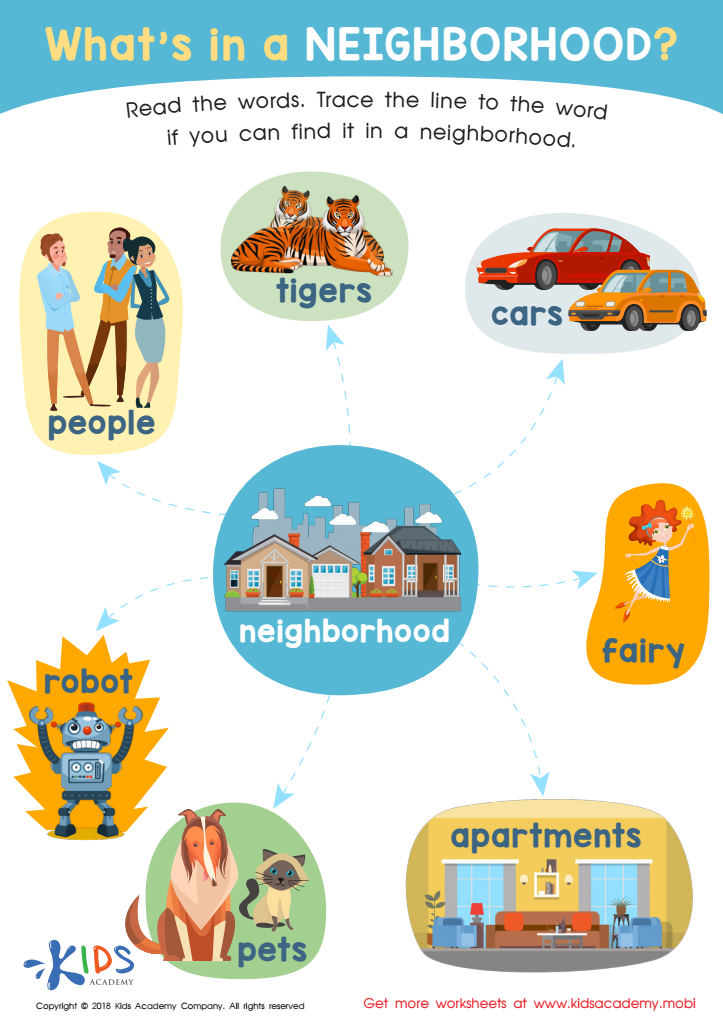
What's in a Neighborhood? Worksheet






Understanding communities is vital for children aged 6-9 because it serves as a foundation for their social and emotional development. For one, it helps kids recognize their role within different groups, fostering a sense of belonging and responsibility. Parents and teachers can educate children on the importance of community, teaching them values like cooperation, respect, and empathy, which are indispensable for healthy relationships.
Around these ages, children begin to notice differences and similarities among peers. Understanding communities helps them appreciate diversity and develop inclusivity. This awareness also curbs the early formation of prejudices and promotes acceptance, making for a more harmonious environment at school and in the neighborhood.
Additionally, when children learn about community roles and functions—such as the work done by doctors, teachers, firefighters, and sanitation workers—they cultivate respect and appreciation for various professions. This knowledge can inspire children to think about their future aspirations and the importance of contributing positively to society.
Understanding the basic concept of communities also empowers young minds to participate more actively in community activities, enhancing their social skills and providing them avenues for leadership and learning outside. In sum, caring about and fostering children's understanding of communities builds a sociable, empathetic, and conscientious future generation.








