Understanding life cycles Normal Worksheets for Ages 6-9
4 filtered results
-
From - To
Discover our "Understanding Life Cycles Normal Worksheets for Ages 6-9" designed to engage young learners. Our resources offer age-appropriate activities, helping kids grasp the stages of life cycles for various plants and animals. Foster curiosity and scientific thinking with visuals and exercises that make learning fun and effective. Perfect for both classroom and homeschooling use, these worksheets adhere to educational standards while nurturing a love for biology. Equip your child with foundational skills that will last a lifetime. Visit Kids Academy to download and explore today!
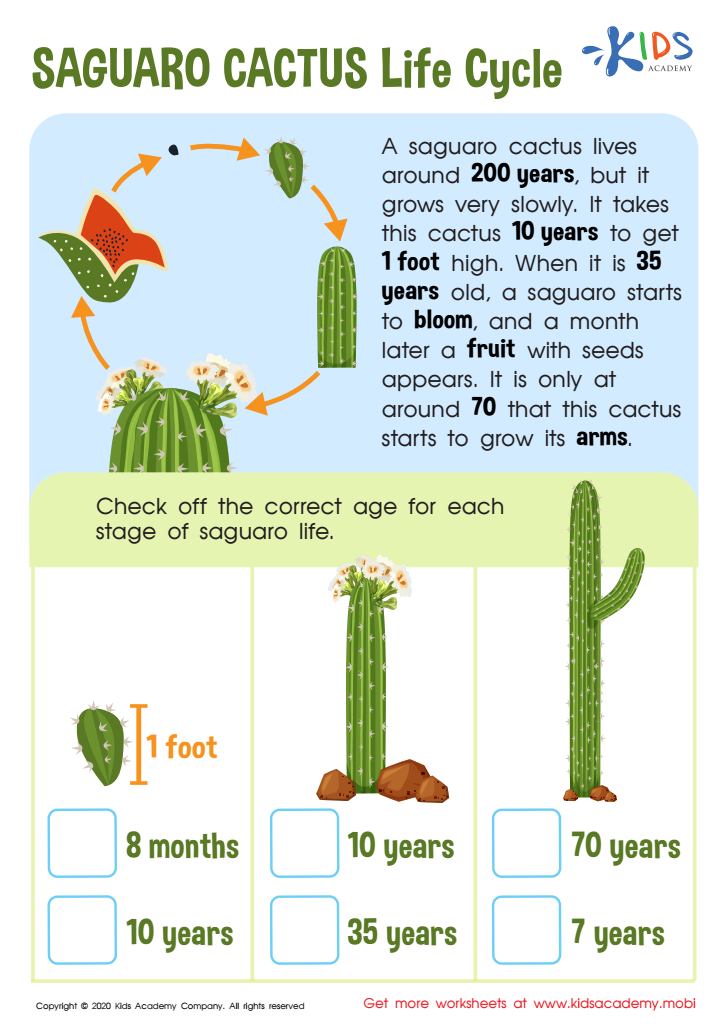
Saguaro Cactus Life Cycle Worksheet
 Assign to My Students
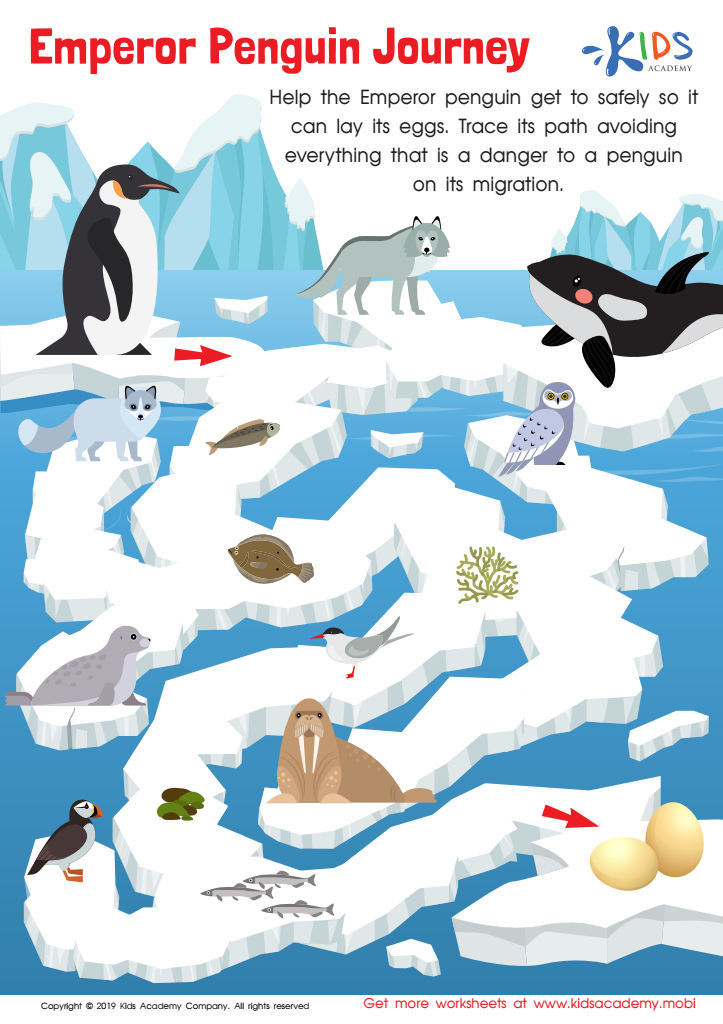
Emperor Penguin Journey Worksheet
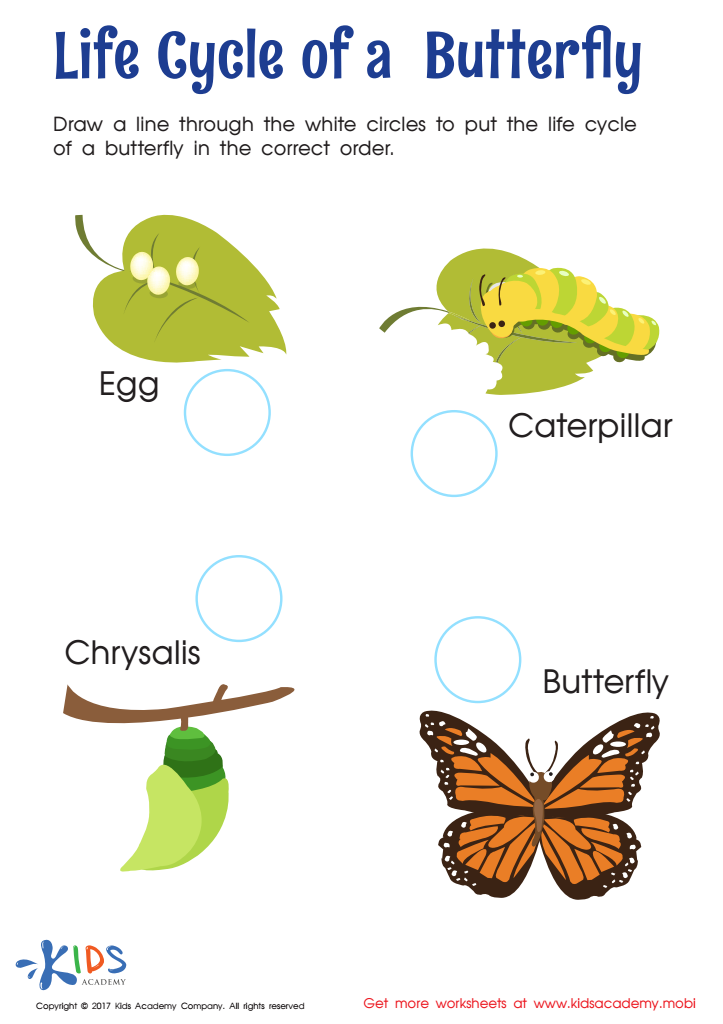
Life Cycle of Butterfly Worksheet
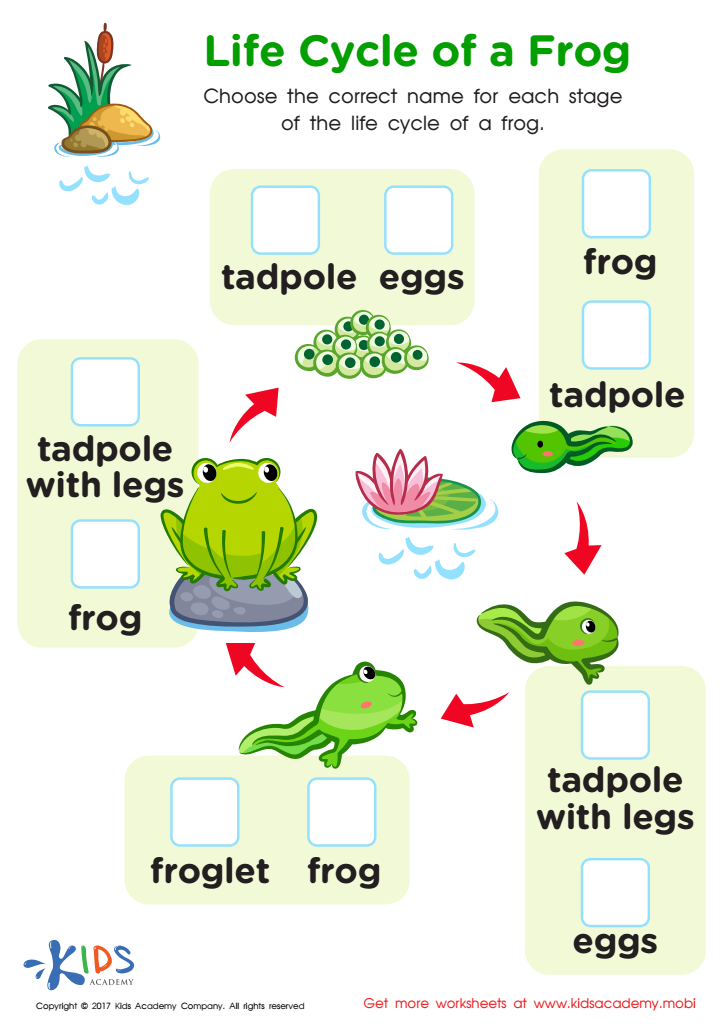
Life Cycle Frog Printable







Understanding life cycles is fundamental in nurturing a child's curiosity and comprehension of the natural world, especially for ages 6-9. At this developmental stage, children are naturally curious and eager to explore how things work around them. Comprehending life cycles enhances their appreciation for nature and fosters a sense of responsibility towards living organisms.
For parents and teachers, grasping these concepts helps to instill in children a sense of connectivity to the environment. By understanding the various stages—birth, growth, reproduction, and eventually death—children learn about the continuity of life. This can promote empathy and a realistic understanding of life's processes, making discussions about changes, like the death of a pet, more comprehensible.
Moreover, knowledge of life cycles is integral to various school subjects. For instance, in biology, observing the transformation from caterpillar to butterfly captivates and enriches their learning experience. It aids in developing observation skills, critical thinking, and the ability to hypothesize and draw conclusions.
Engaging with these concepts also aligns with STEM education goals, promoting early interest in science, technology, engineering, and math. It encourages investigation and experimentation, which are key skills for academic growth.
In essence, by understanding life cycles, children gain essential knowledge and attitudes that form the foundation for lifelong learning, compassion, and environmental stewardship.








