Understanding prepositions Normal Worksheets for Ages 6-9
3 filtered results
-
From - To
Explore our engaging "Understanding Prepositions Normal Worksheets" designed for children aged 6-9! These worksheets help young learners grasp essential preposition concepts through fun activities and colorful illustrations. Each page is crafted to enhance vocabulary and strengthen sentence structure, ensuring students can communicate effectively. With a variety of exercises, including fill-in-the-blank, matching, and colorful visuals, these worksheets promote interactive learning and keep children excited about language skills. Ideal for classroom use or at-home practice, our resources empower educators and parents to support children's literacy development. Unlock your child’s potential in understanding and using prepositions in everyday communication. Perfect for progressive learning!
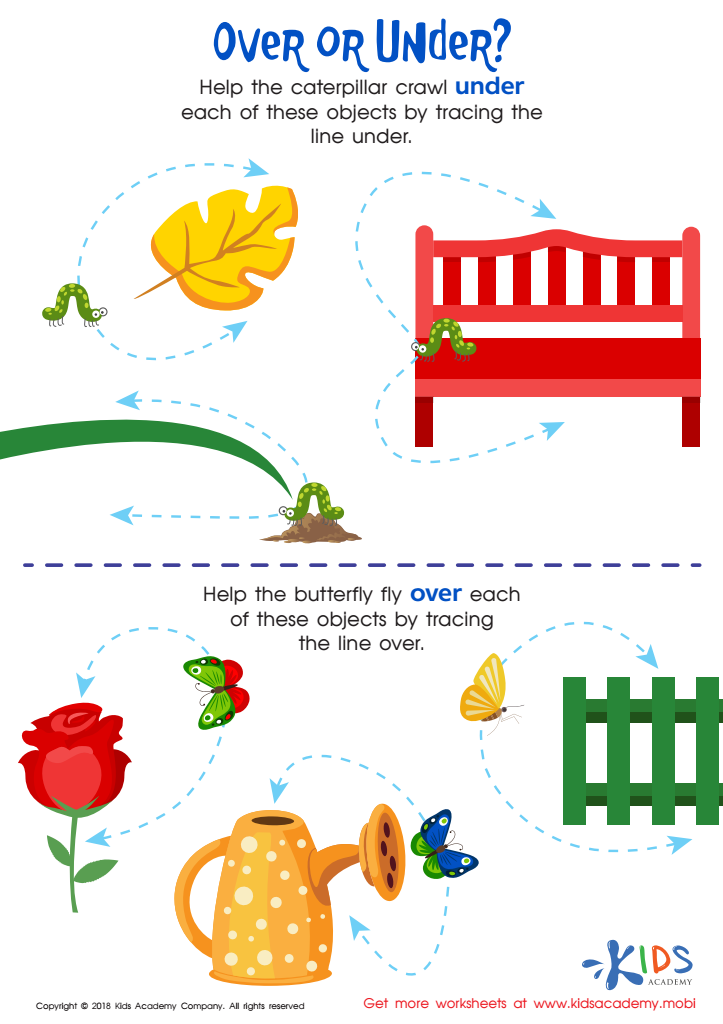
Over or Under? Worksheet
 Assign to My Students
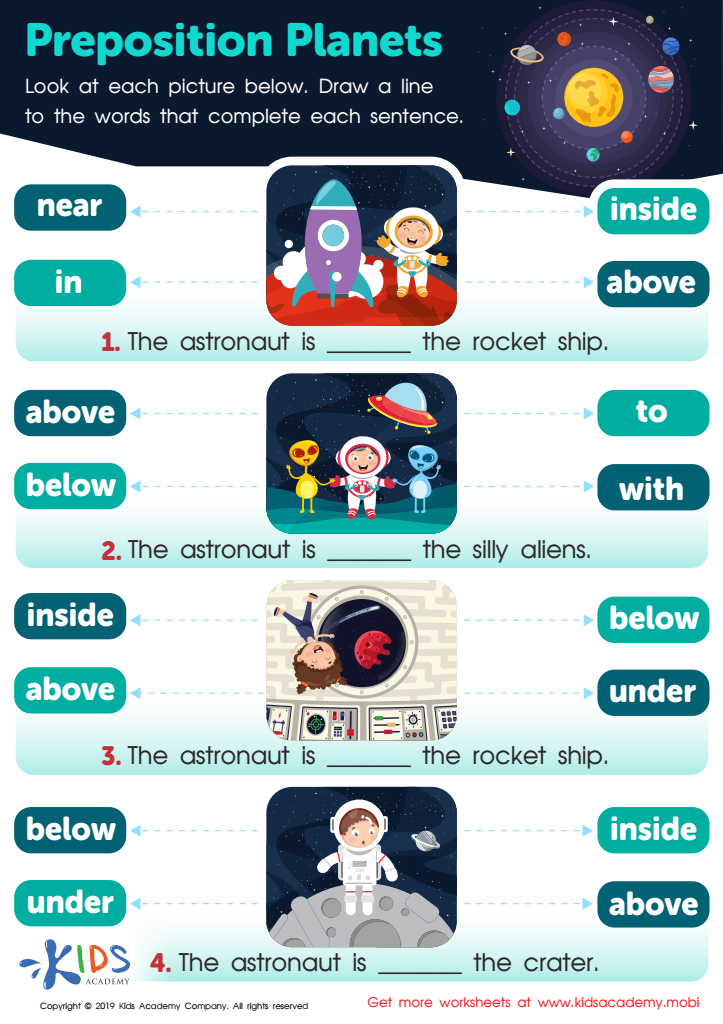
Preposition Planets Worksheet
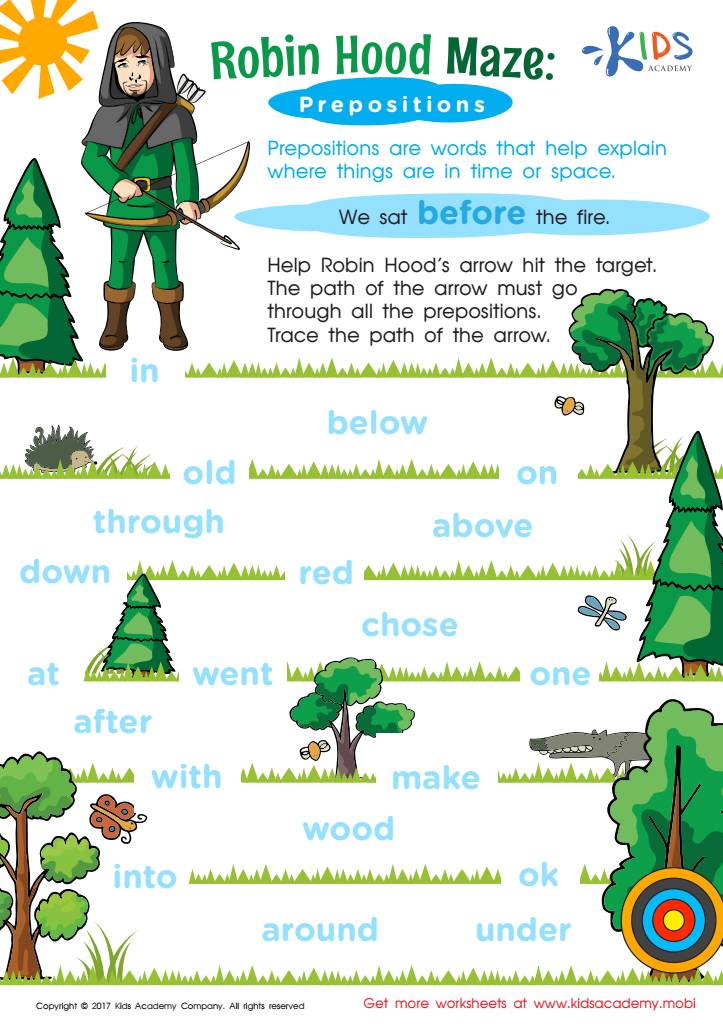
Prepositions Worksheet






Understanding prepositions is crucial for children aged 6-9, as it significantly enhances their language skills, comprehension, and overall communication. At this age, children are developing their grammar and vocabulary, and prepositions play a critical role in helping them form clear and meaningful sentences. By grasping how prepositions indicate relationships in space (e.g., "in," "on," "under") and time (e.g., "before," "after"), children can better describe their surroundings and experiences.
Moreover, prepositions contribute to reading comprehension. When children understand the context provided by prepositions in sentences, they are more equipped to visualize and interpret stories or instructions. This understanding fosters critical thinking and creativity in expressing thoughts through writing.
Additionally, strong prepositional understanding allows for better everyday communication, helping children follow directions more accurately—crucial for success in school settings. Parents and teachers should take an active role in teaching prepositions through fun games, engaging activities, and practical examples to solidify this foundational aspect of language. By investing in understanding prepositions, adults can support children in becoming more confident communicators, paving the way for academic success and meaningful social interactions.








