Critical Thinking Normal Addition & Subtraction Worksheets for Ages 6-9
6 filtered results
-
From - To
Enhance your child's problem-solving skills with our engaging Critical Thinking Normal Addition & Subtraction Worksheets for ages 6-9. Designed to challenge young minds, these worksheets promote logical thinking and sharpen math abilities through fun, thought-provoking exercises. Whether they're practicing basic arithmetic or delving deeper into complex problems, your kids will learn to approach math with confidence and creativity. Perfect for home or classroom use, these printable worksheets are a valuable resource for fostering independent thinking and strong foundational skills in mathematics. Ideal for parents and teachers aiming to inspire a love for learning and critical analysis in young learners.
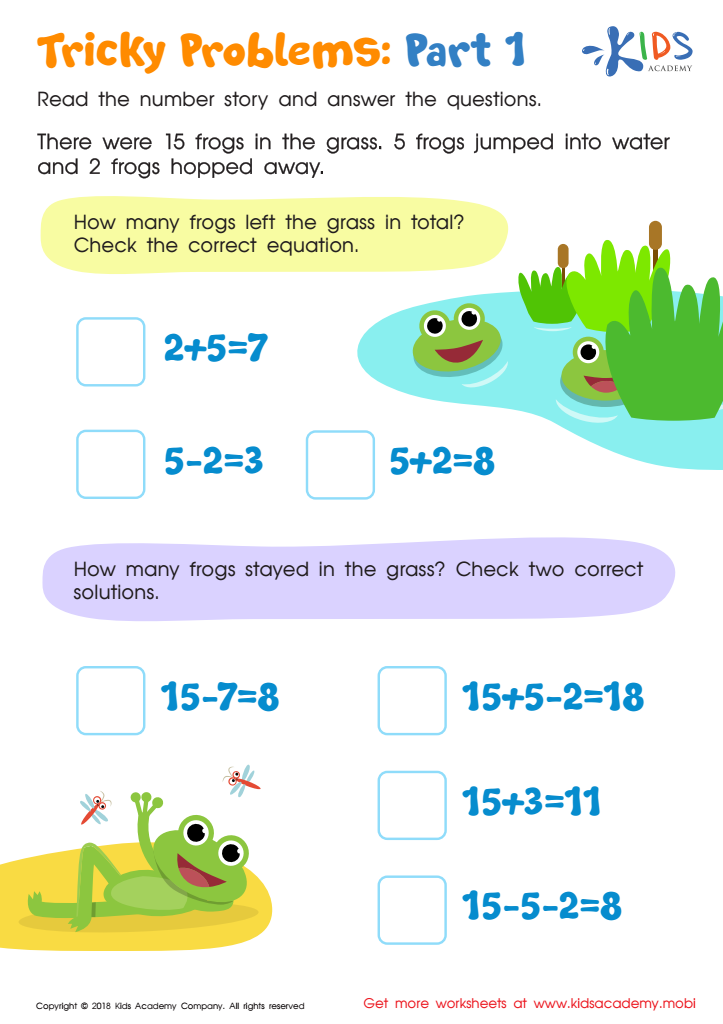
Tricky Problems Worksheet: Part 1
 Assign to My Students
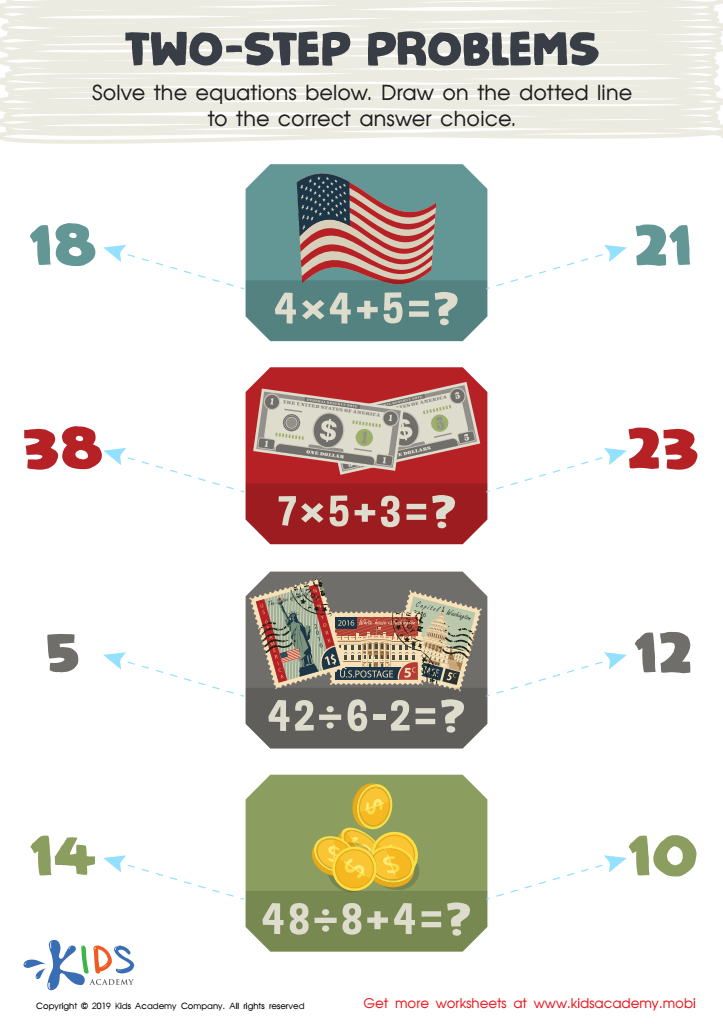
Two-Step Problems Worksheet
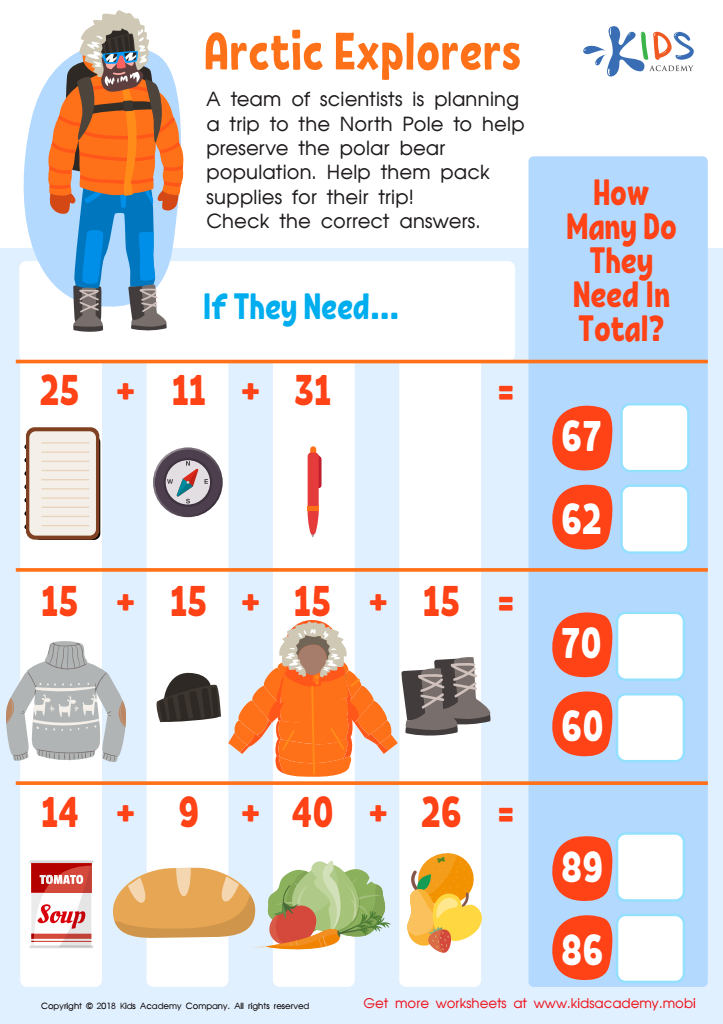
Arctic Explorers Worksheet
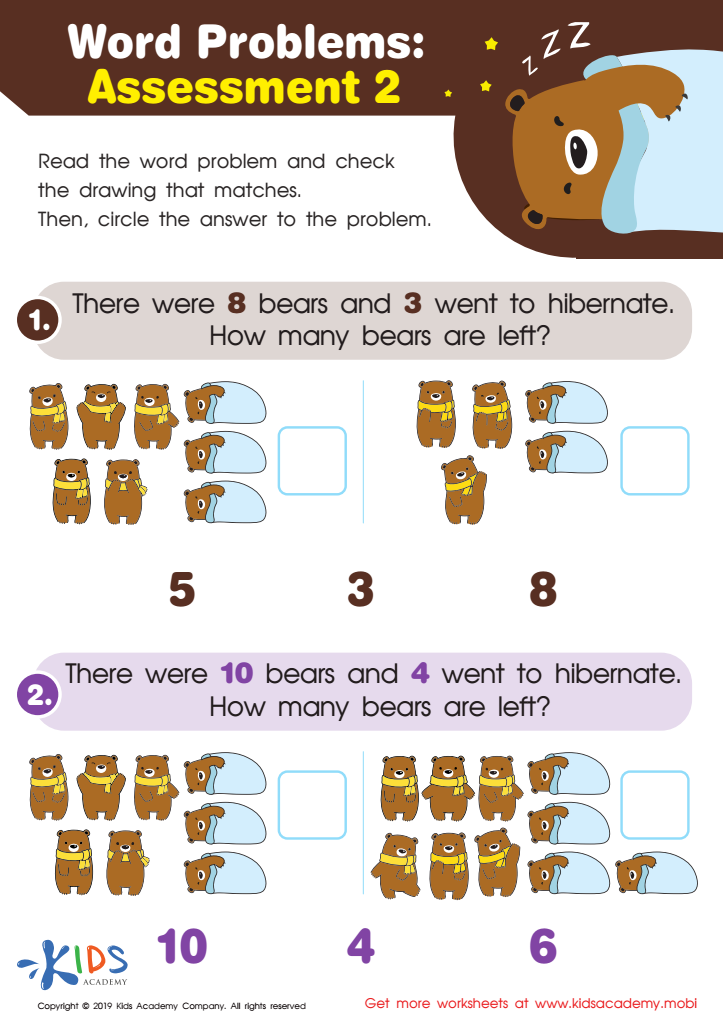
Word Problems: Assessment 2 Worksheet
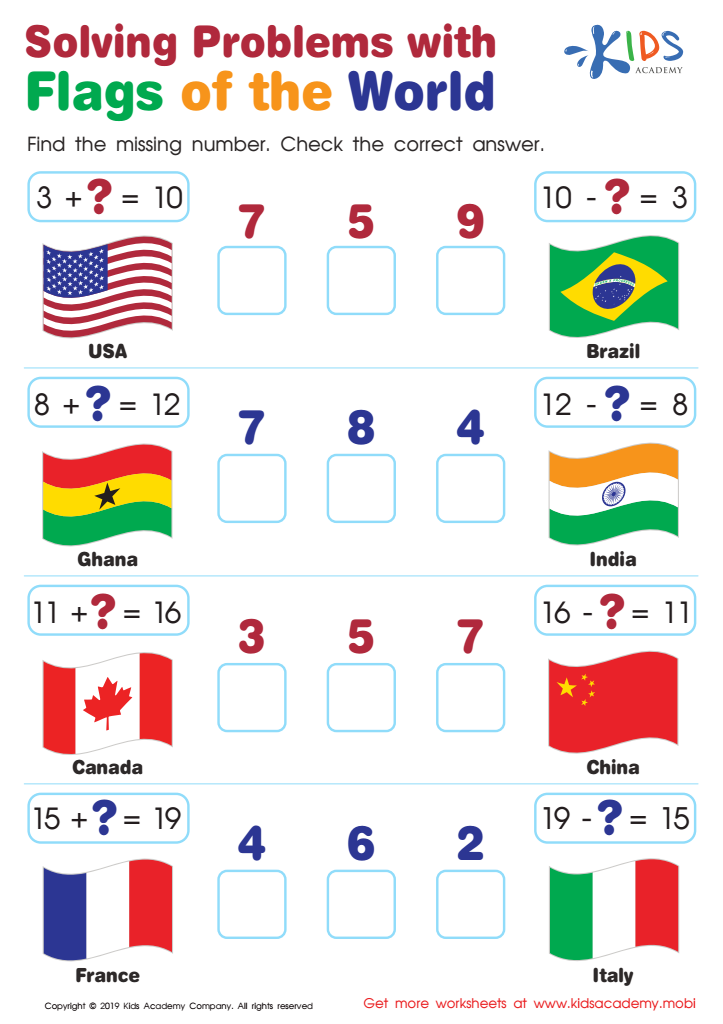
Solving Problems with Flags of the World Worksheet
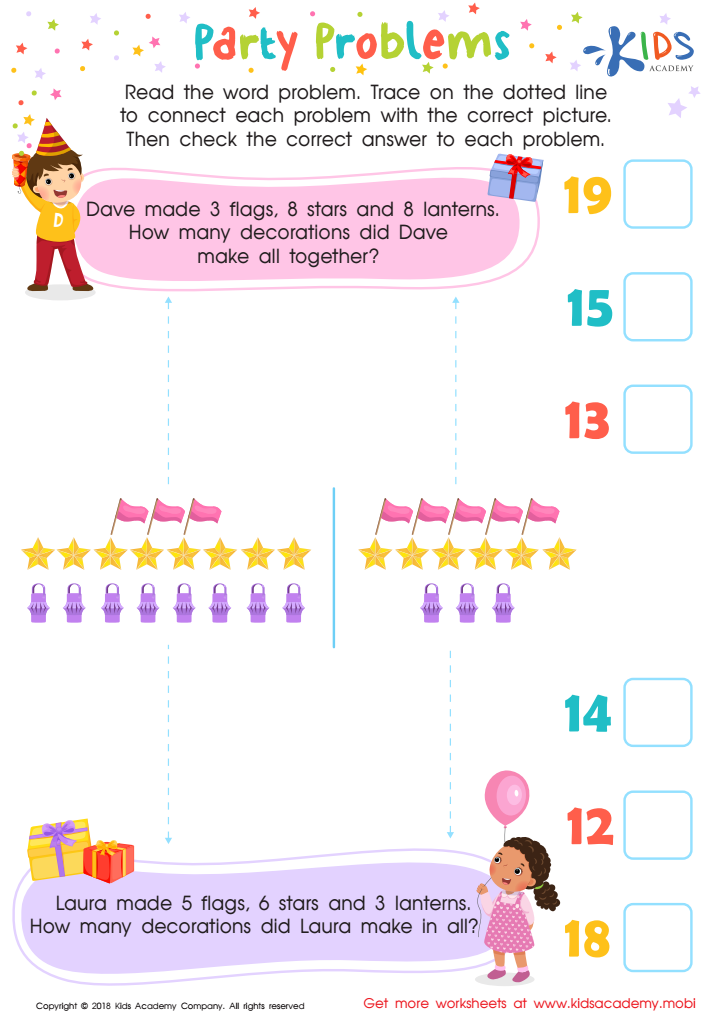
Party Problems Worksheet








Parents and teachers should prioritize fostering critical thinking through normal addition and subtraction for children aged 6-9 because these foundational math skills are pivotal for cognitive development and everyday problem-solving.
Critical thinking in math enhances children's capacity to understand and apply concepts rather than merely memorize them. When kids learn addition and subtraction critically, they move beyond rote learning to grasp the 'why' and 'how' of mathematical relationships. This deeper understanding improves their ability to tackle complex problems, laying a solid groundwork for future advanced math and logical reasoning skills.
Additionally, early age is crucial for cognitive development as children's brains are highly receptive to new concepts. Introducing critical thinking through routine math operations during this time can optimize their cognitive elasticity, creating stronger neural connections that support not only mathematical but also general intellectual growth.
Furthermore, mastery of basic arithmetic aids in practical life skills. Routine tasks like handling money, cooking with measurements, and planning time are all easier for children who proficiently add and subtract. It builds their confidence and promotes independence.
Overall, emphasizing critical thinking in addition and subtraction primes children for academic success and equips them with essential life skills, making it an invaluable focus for educators and parents alike.








