Understanding fractions Normal Fractions Worksheets for Ages 6-9
8 filtered results
-
From - To
Explore our "Understanding Fractions Normal Fractions Worksheets" for children aged 6 to 9, designed to make learning fractions engaging and enjoyable! These worksheets help young learners grasp fundamental fraction concepts through interactive activities that simplify and clarify their understanding. Our resources feature colorful visuals and practical exercises tailored to reinforce skills such as identifying fractions, comparing sizes, and performing basic calculations. Perfect for use at home or in the classroom, these worksheets empower students to build confidence in their math abilities. Start your child's journey towards mastering fractions today with our carefully crafted materials that promote learning through fun!
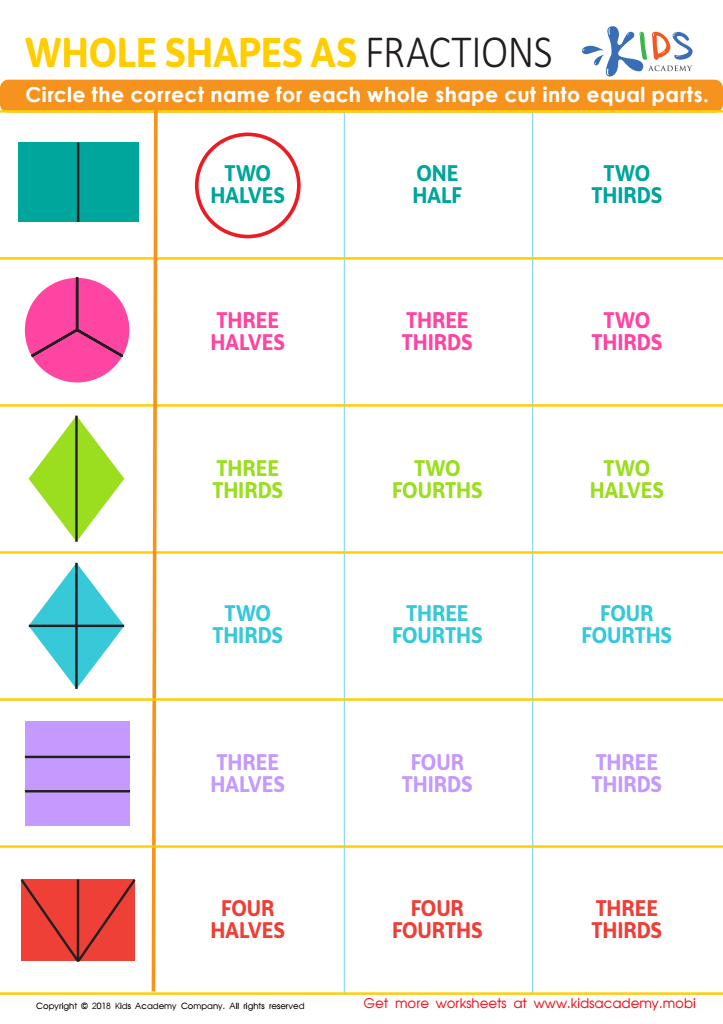
Whole Shapes as Fractions Worksheet
 Assign to My Students
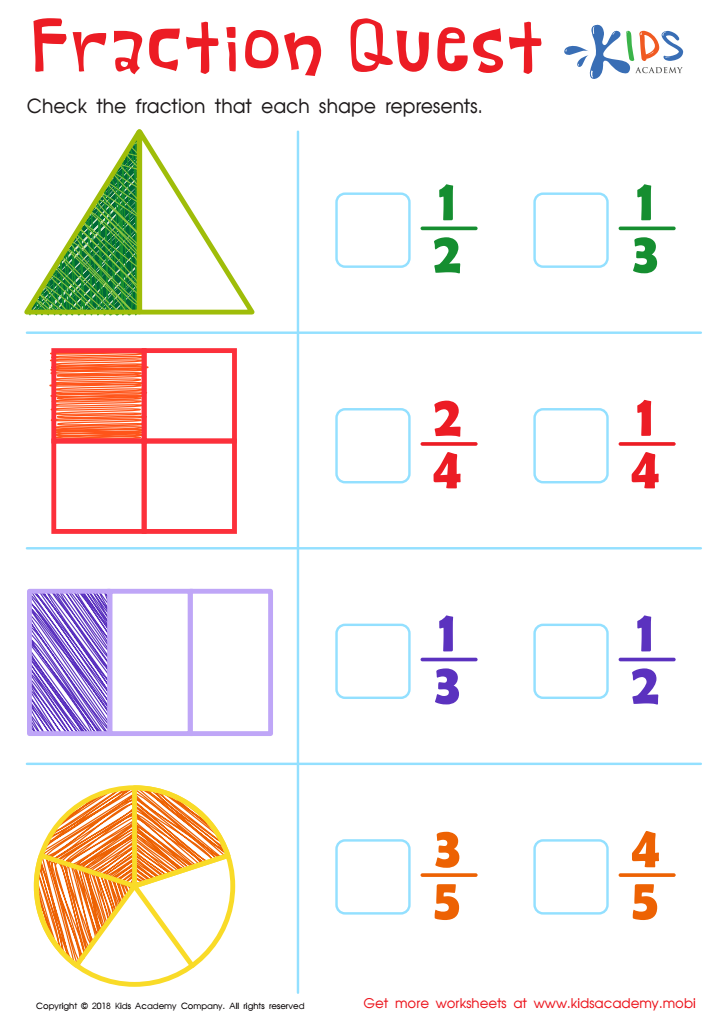
Fraction Quest Worksheet
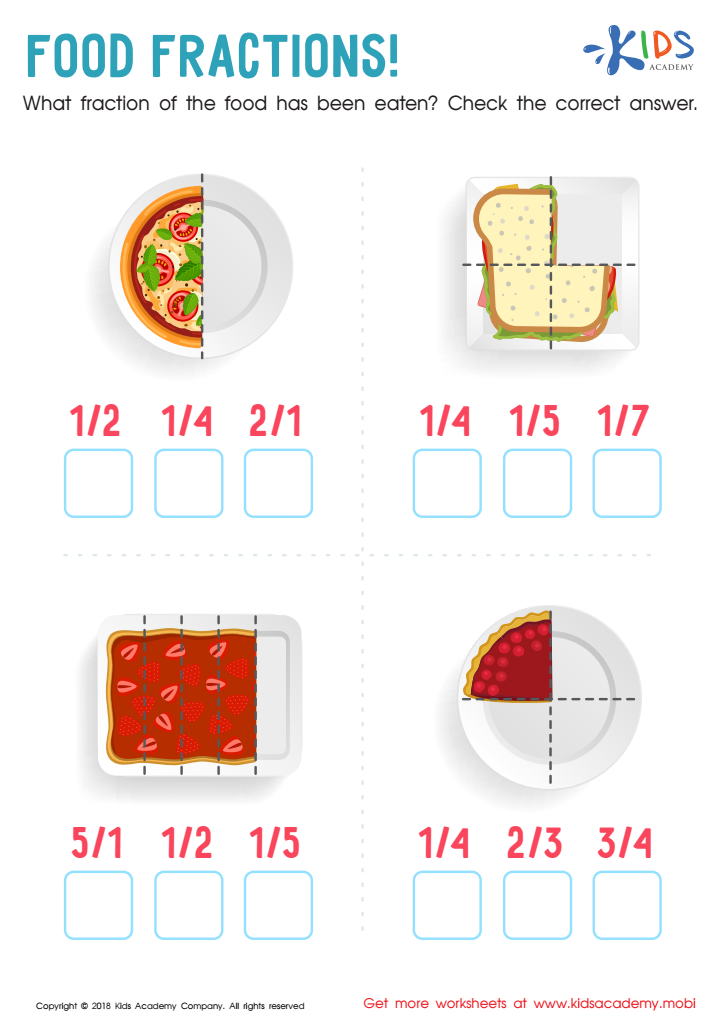
Food Fractions Worksheet
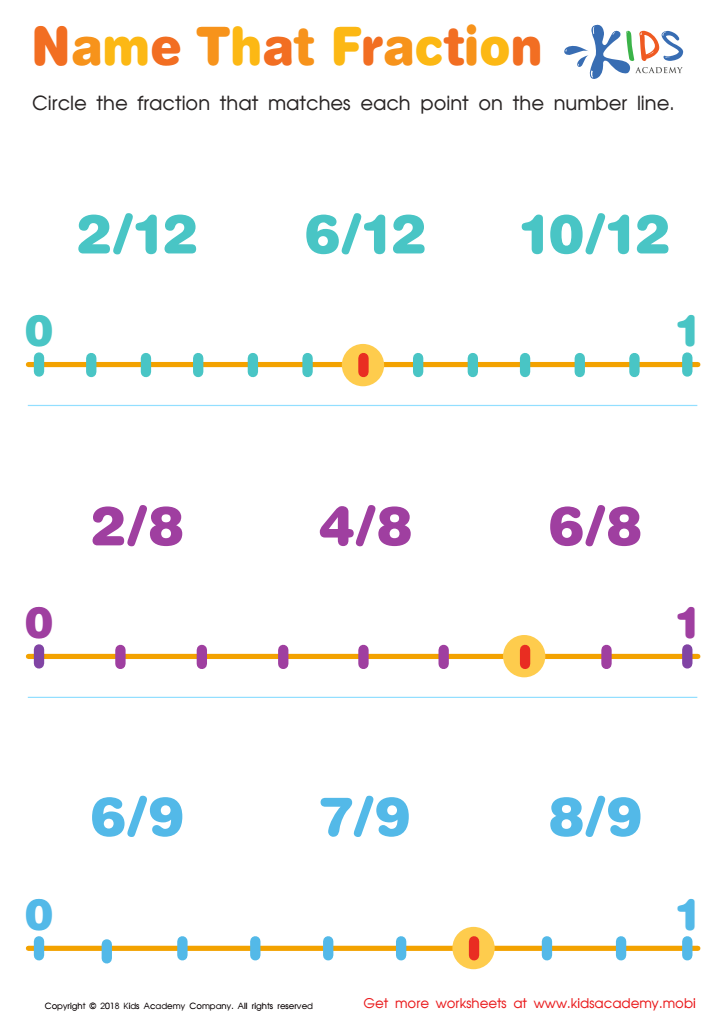
Name That Fraction Worksheet
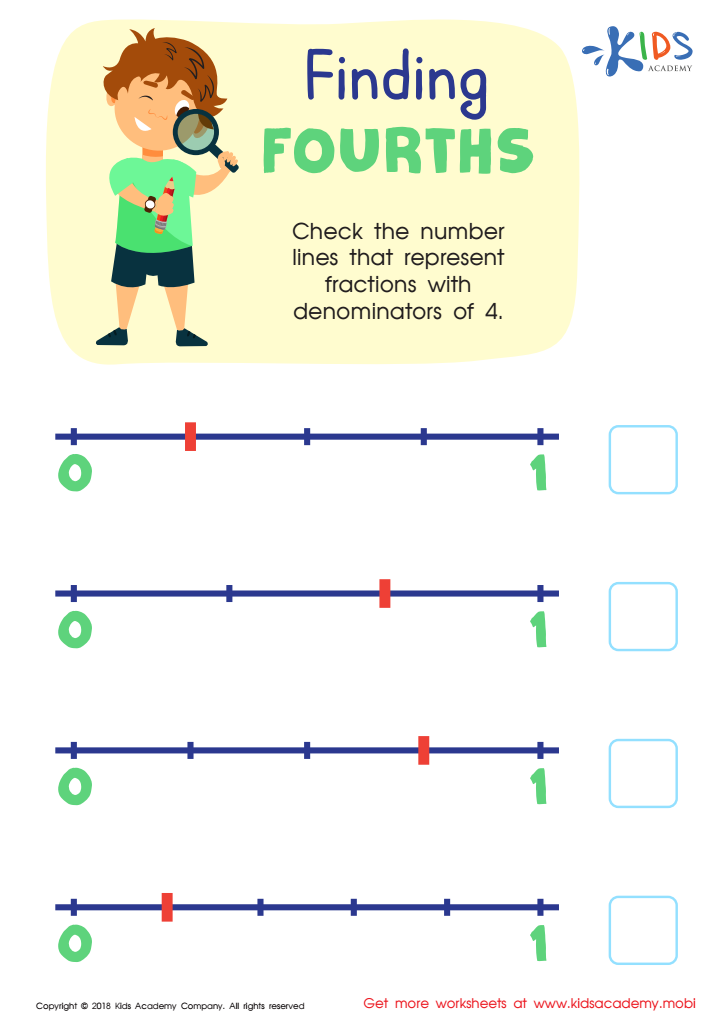
Finding Fourths Worksheet
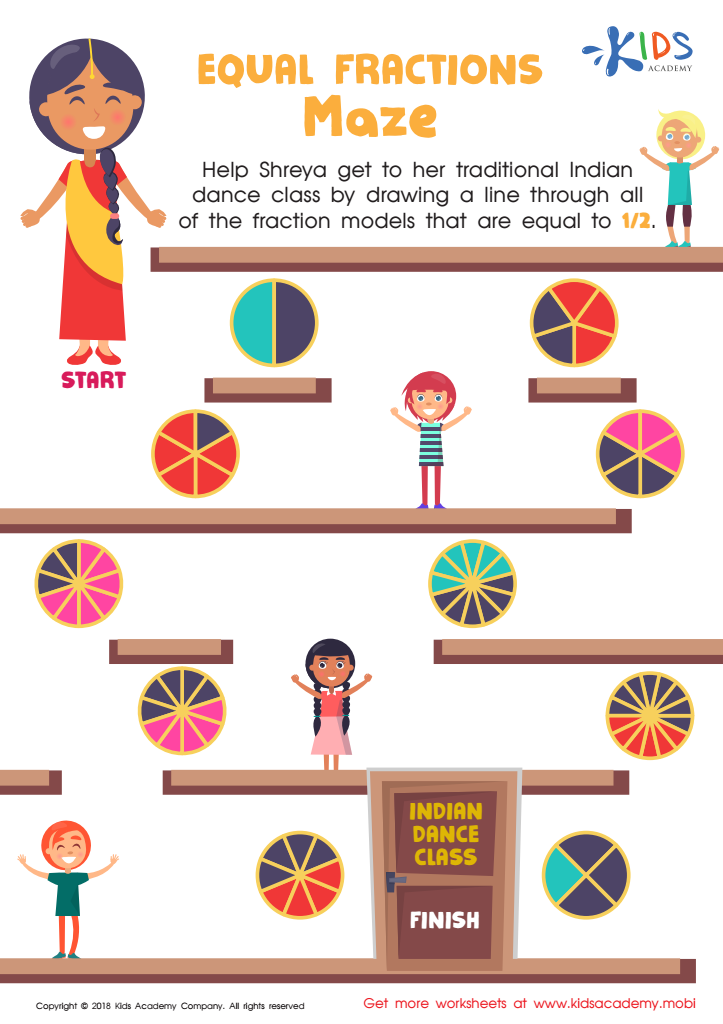
Equal Fractions Maze Worksheet
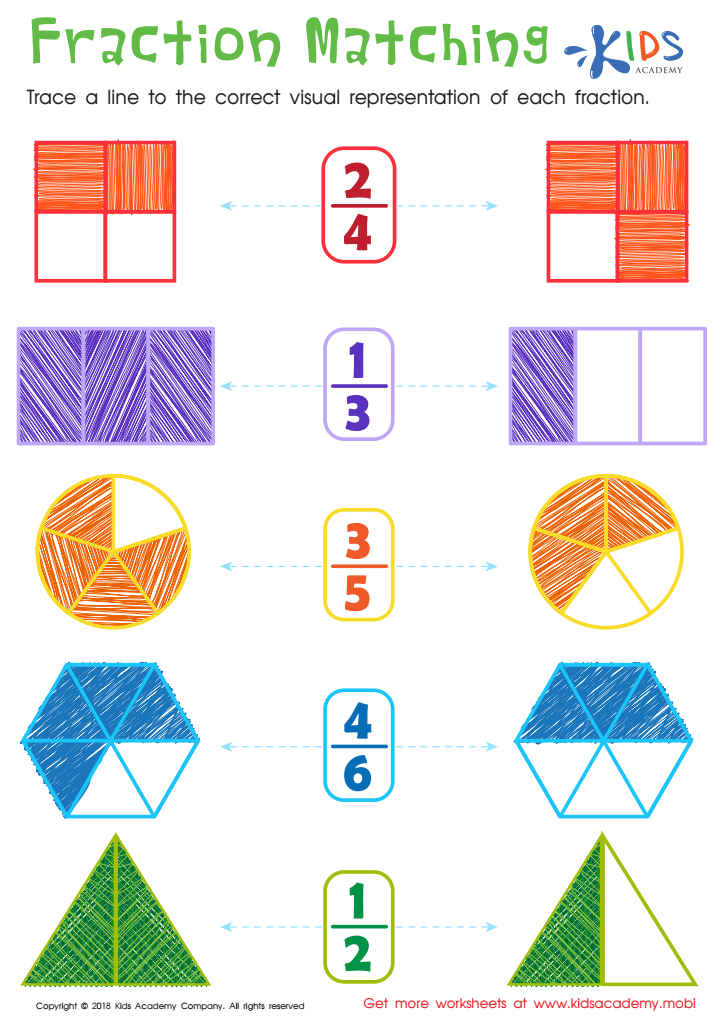
Fraction Matching Worksheet
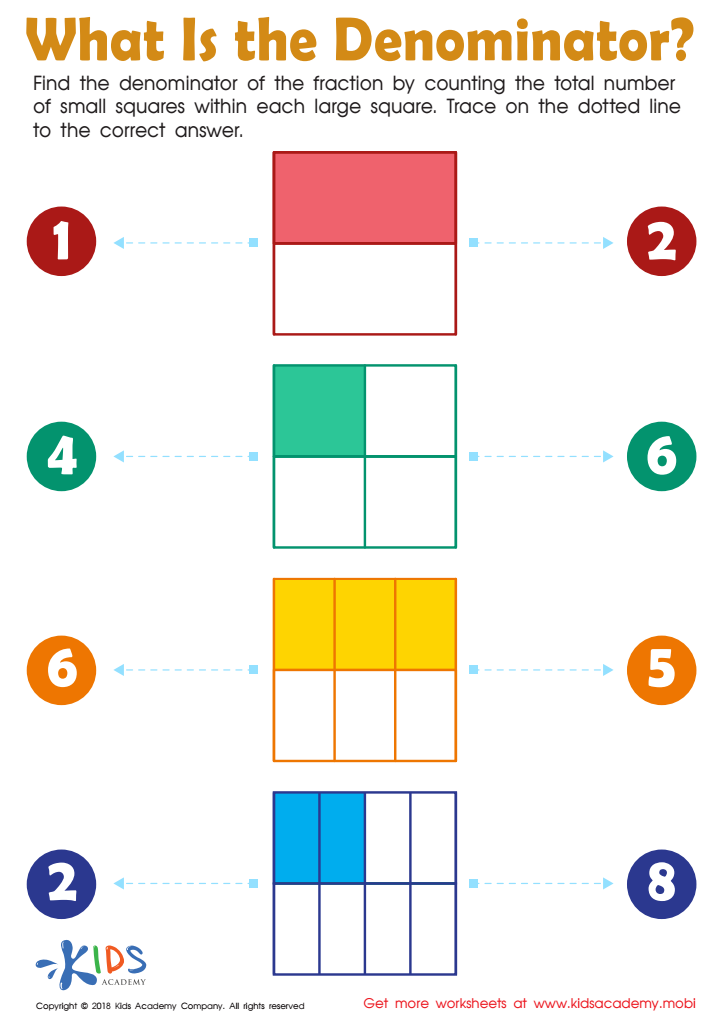
What Is the Denominator? Worksheet







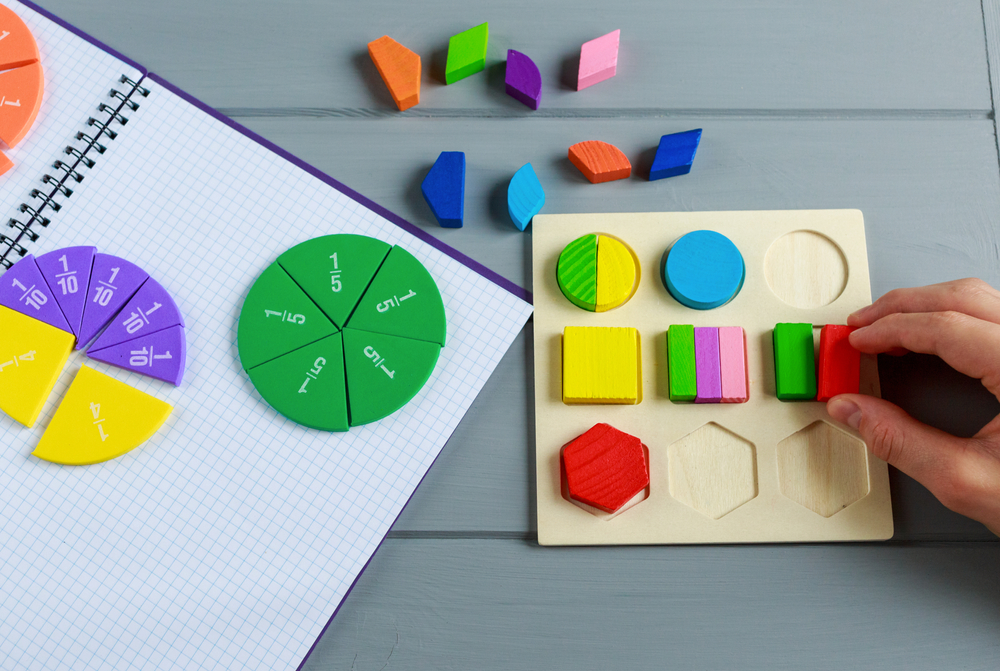
Understanding fractions is a foundational skill for children aged 6-9, and it's crucial for both parents and teachers to prioritize this learning. Fractions form a vital part of everyday life, from splitting a pizza to measuring ingredients for a recipe. By grasping how fractions work, children develop critical thinking and problem-solving skills that are applicable across various subjects.
Beyond practical applications, understanding normal fractions helps solidify concepts of equivalency, comparisons, and part-whole relationships. At this age, students begin building their confidence in mathematics; a strong grasp of fractions sets the stage for future success in more advanced topics like decimals and percentages. Engaging children with hands-on activities and visual representations can make this learning process more enjoyable and effective.
Moreover, when parents and teachers collaborate on fraction understanding, they create a strong support system that boosts children’s motivation and interest in math. Encouraging discussions, games, and real-world applications can make learning fractions a fun experience, fostering a positive attitude toward math in general. Ultimately, establishing a solid foundation in fractions can lead to greater academic success and life skills, making it a critical focus for parents and educators alike.








