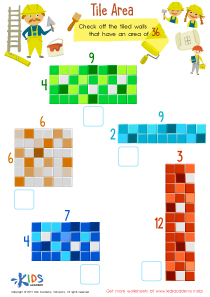
Addition skills Normal Numbers Worksheets for Ages 6-9
7 filtered results
-
From - To
Enhance your child's math abilities with our Addition Skills Normal Numbers Worksheets, designed for ages 6-9. At Kids Academy, we provide engaging and educational resources tailored to developing young learners' addition proficiency. These printable worksheets encourage practice and confidence, using familiar contexts and vibrant visuals to make learning fun. Each worksheet is carefully crafted to suit the learning pace of early graders, ensuring they grasp basic addition concepts step-by-step. Perfect for both classroom and at-home learning, watch your child excel and foster a love for math with these comprehensive and interactive worksheets.
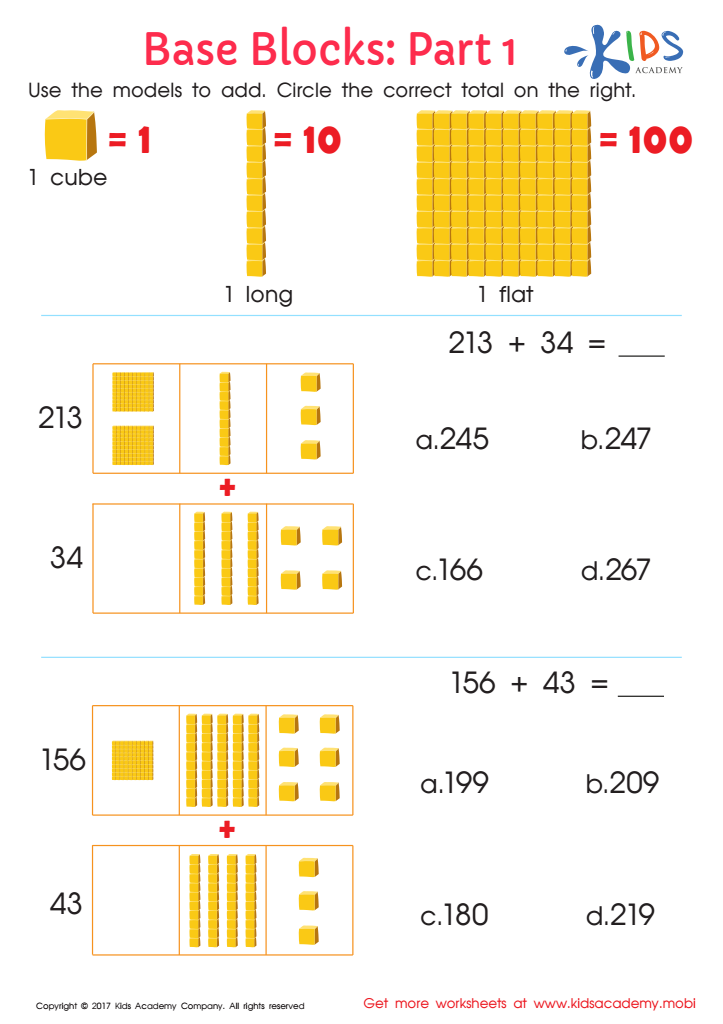
Base Ten Blocks Worksheet: Part 1
 Assign to My Students
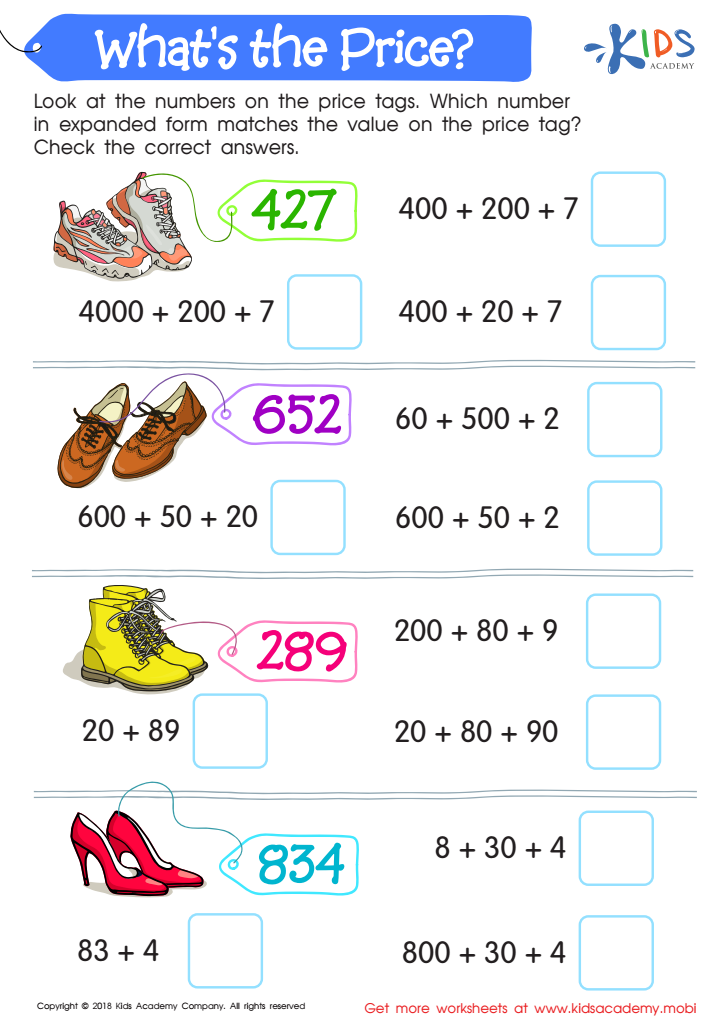
What's the Price? Worksheet
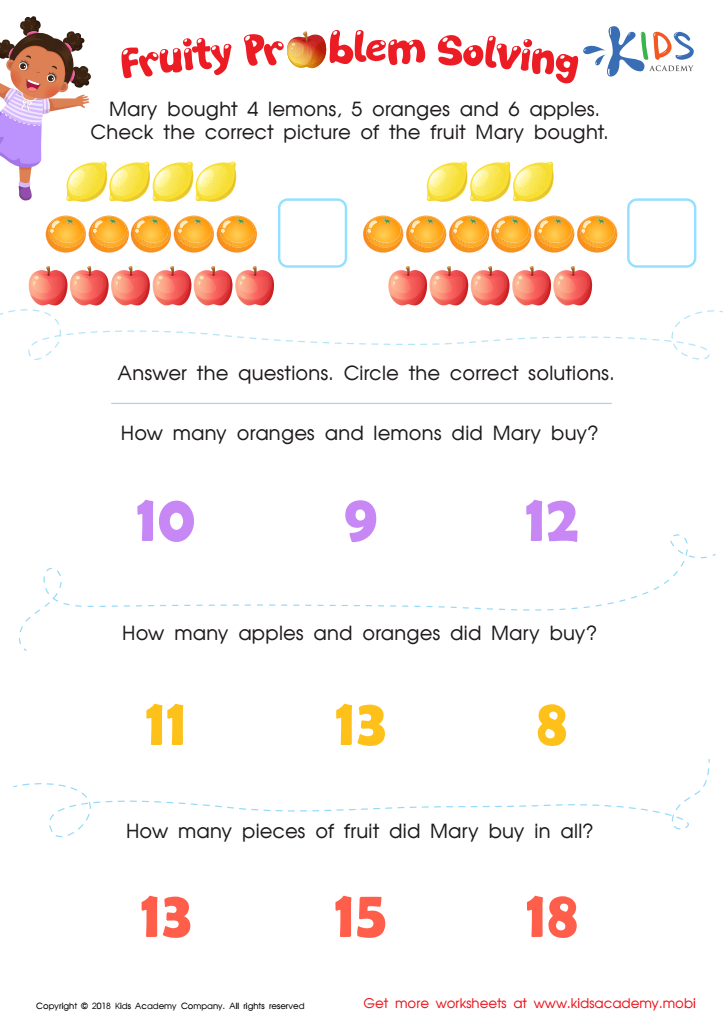
Fruity Problem Solving Worksheet
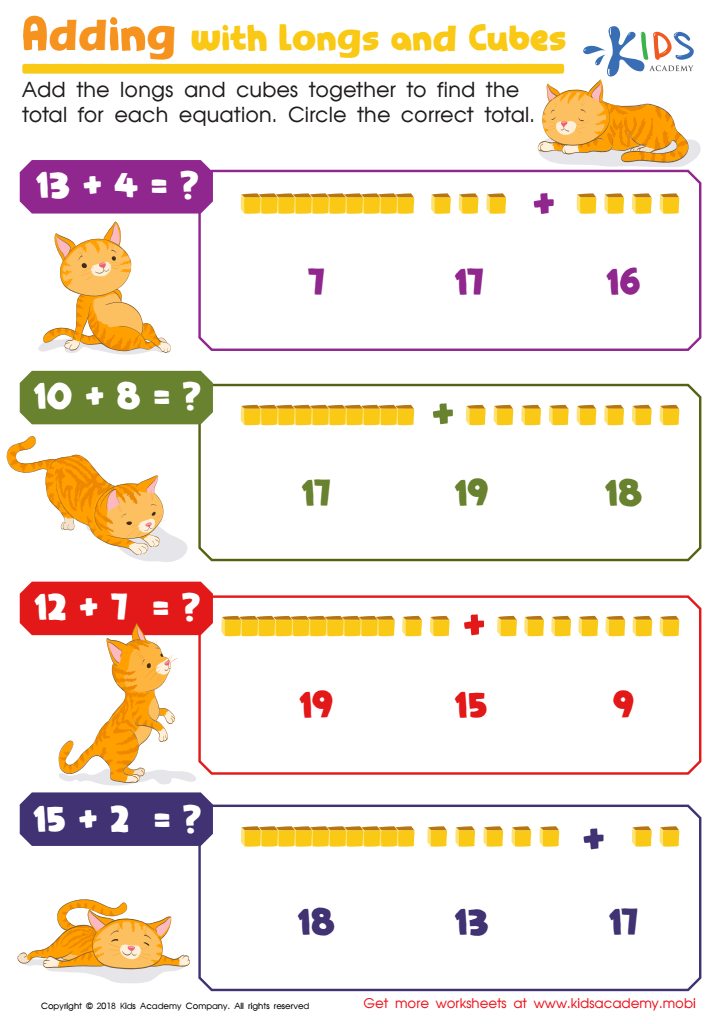
Adding With Longs and Cubes Worksheet
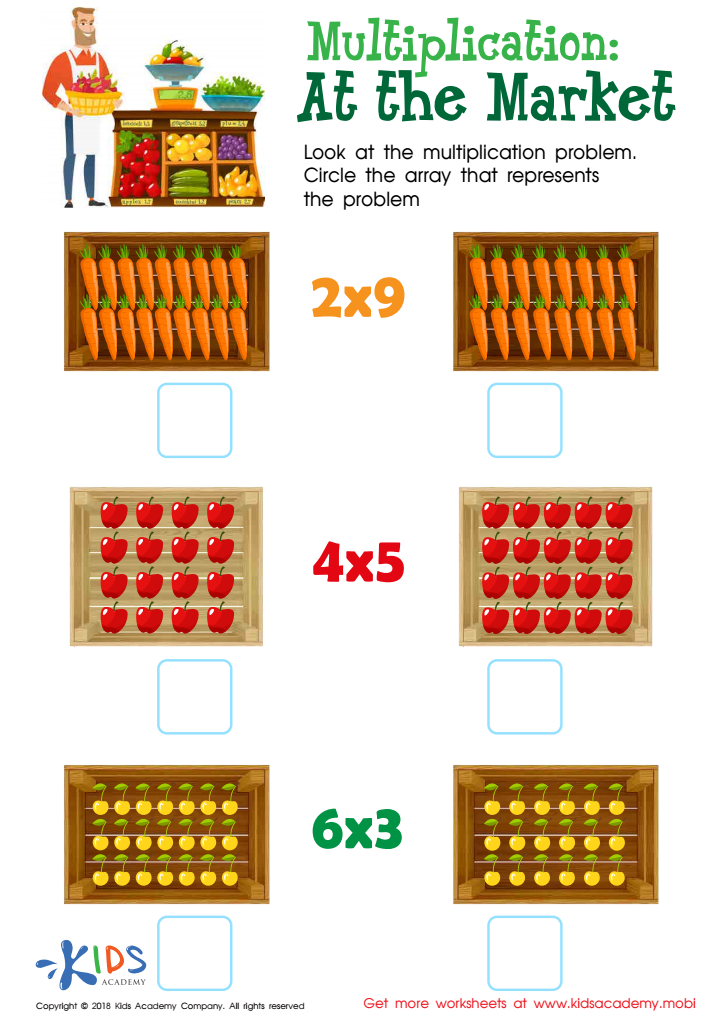
At the Market Worksheet
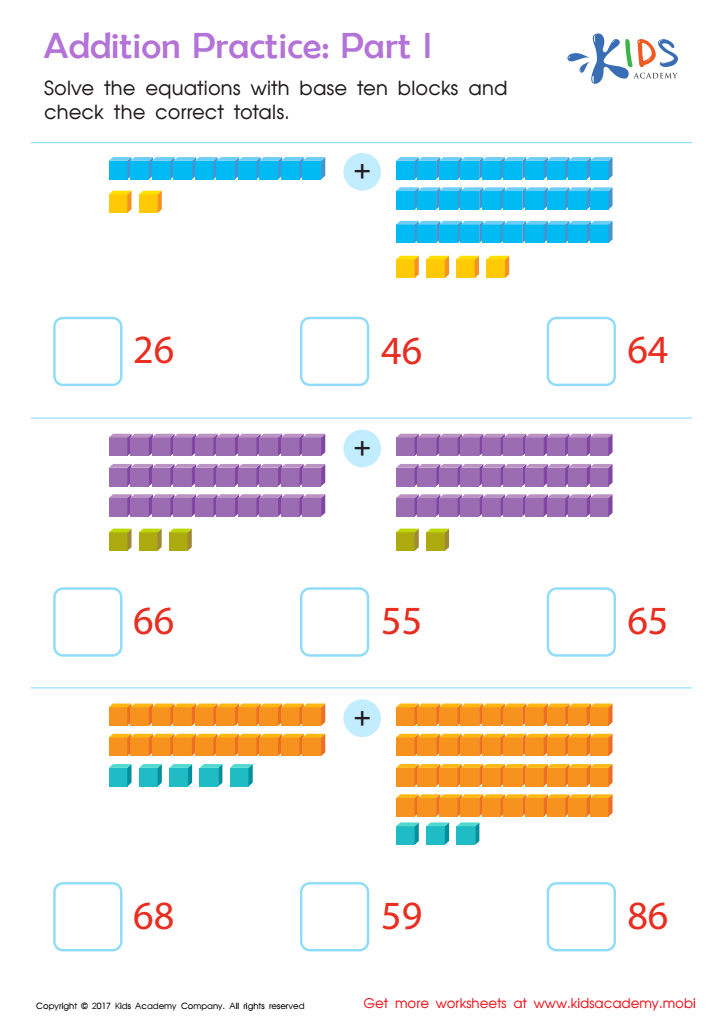
Addition Practice Sheet: Part 1
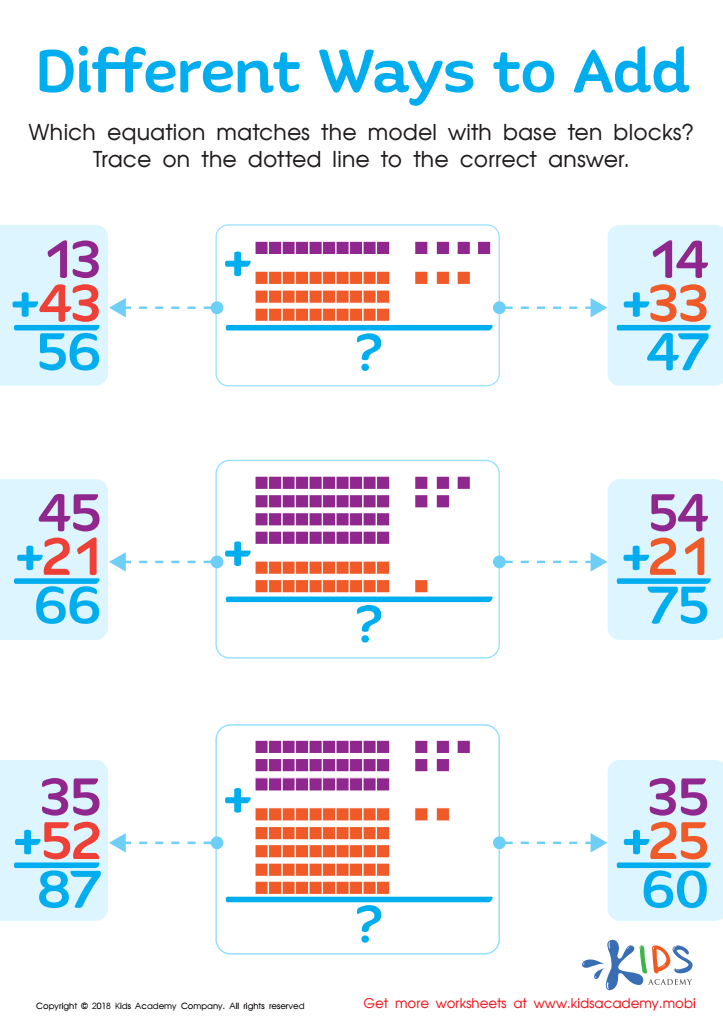
Different Ways to Add Worksheet








Developing addition skills with normal numbers for children aged 6-9 is crucial for several reasons. First, addition is a foundational mathematical operation that supports further learning in mathematics, including subtraction, multiplication, and division. Mastering addition helps children build a strong numerical sense, which is essential for their future academic success in math-related subjects.
Second, acquiring addition skills enhances problem-solving abilities. As children learn to add, they practice reasoning and critical thinking, which are vital life skills. These abilities extend beyond math, influencing everyday decision-making and tasks such as budgeting, cooking, and time management.
Third, proficiency in addition boosts confidence. When children successfully solve addition problems, they feel a sense of accomplishment, fostering a positive attitude toward learning. This positive reinforcement encourages them to tackle more advanced mathematical concepts with enthusiasm.
Lastly, early exposure to addition contributes to cognitive development. It helps strengthen memory, attention, and processing speed as children practice and recall addition facts.
Overall, teaching addition to children between the ages of 6-9 lays the groundwork for lifelong mathematical competence and cognitive growth. Parents and teachers play a critical role in nurturing these skills through consistent practice, encouragement, and real-world applications.