
Hand-eye Coordination Normal Math Worksheets for Ages 6-9
8 filtered results
Difficulty Level
Grade
Age
-
From - To
Subject
Activity
Standards
Enhance your child's hand-eye coordination with our engaging Normal Math Worksheets, specifically designed for children ages 6-9. These worksheets offer a fun and interactive way to improve fine motor skills alongside mathematical concepts. Through a variety of creative activities, children will practice essential math skills while refining their coordination abilities. Our resources cater to different learning styles, ensuring an enjoyable experience that supports cognitive development. With colorful illustrations and age-appropriate challenges, these worksheets make learning math an exciting adventure. Perfect for home or classroom use, our hand-eye coordination math worksheets are a fantastic tool for fostering both numerical understanding and physical dexterity.
Favorites
With answer key
Interactive
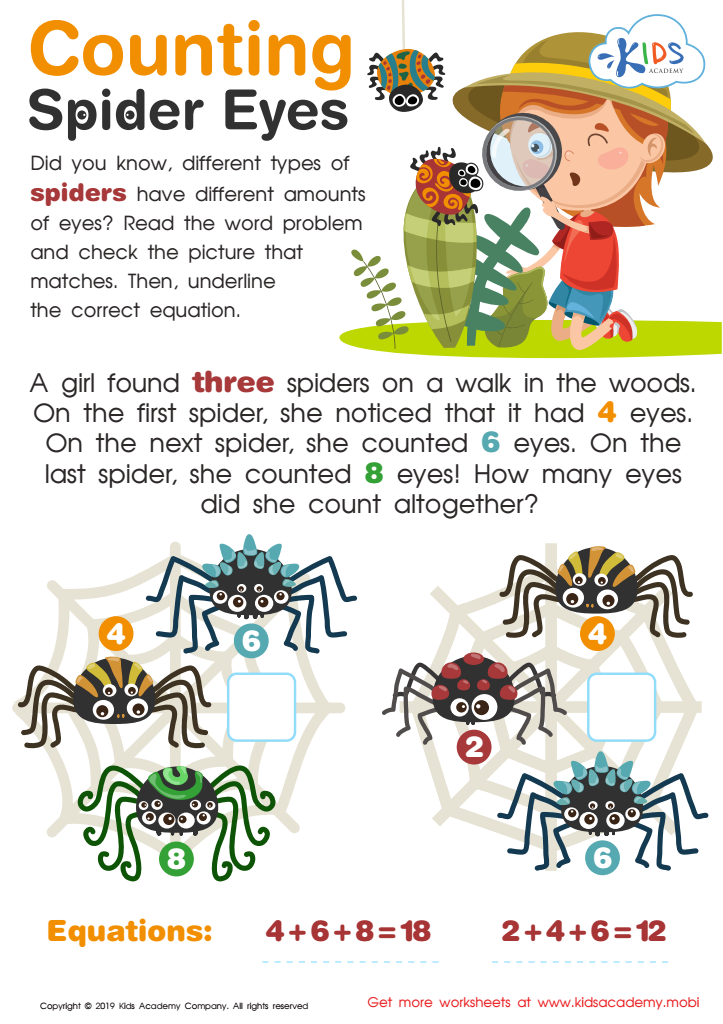
Counting Spider Eyes Worksheet
Did you know different spiders have different eye numbers? Kids will love learning this fact and solving the spider word problems on this free worksheet! Word problems promote a deeper understanding of the concept, plus they get to add up the spiders’ eyes while solving addition problems with more than one addend. Fun and math all in one!
 Assign to My Students
Counting Spider Eyes Worksheet
Worksheet
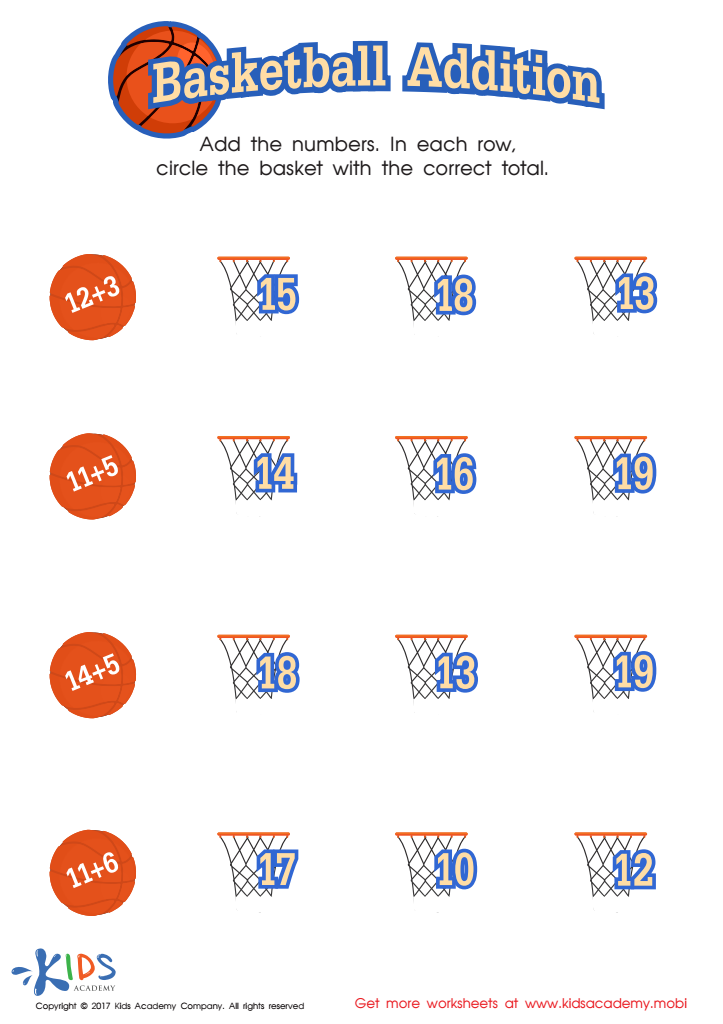
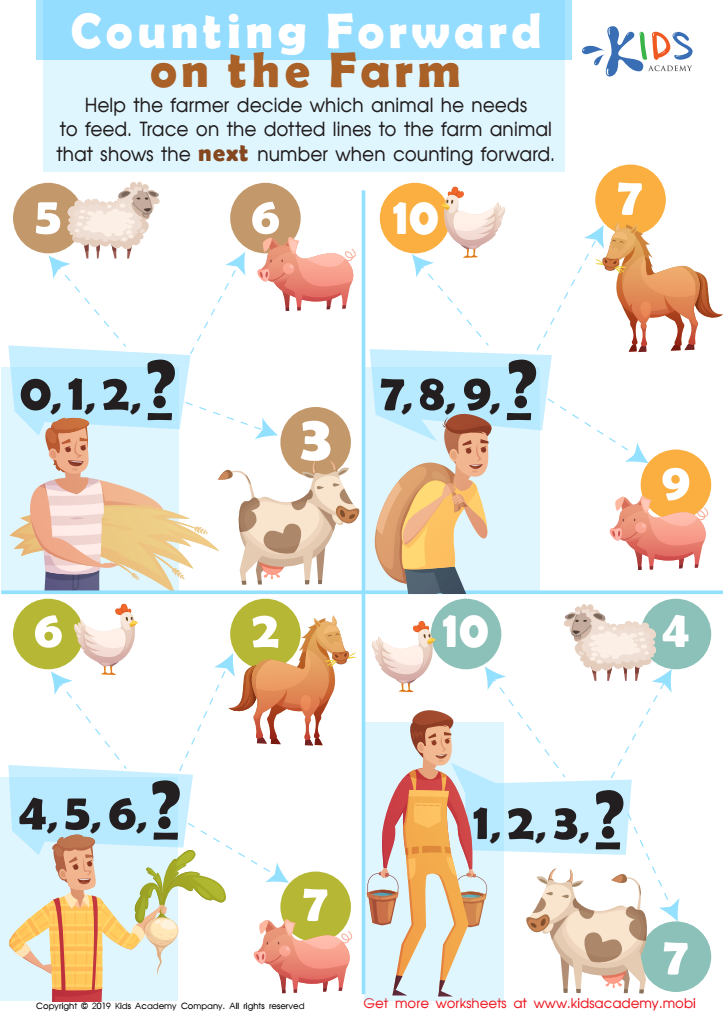
Counting Forward On the Farm Worksheet
Help your child practice counting with this fun worksheet. Have them help a farmer feed the right animal by counting on from a starting point. This activity will help them build number line thinking and refine fine motor skills.
Counting Forward On the Farm Worksheet
Worksheet
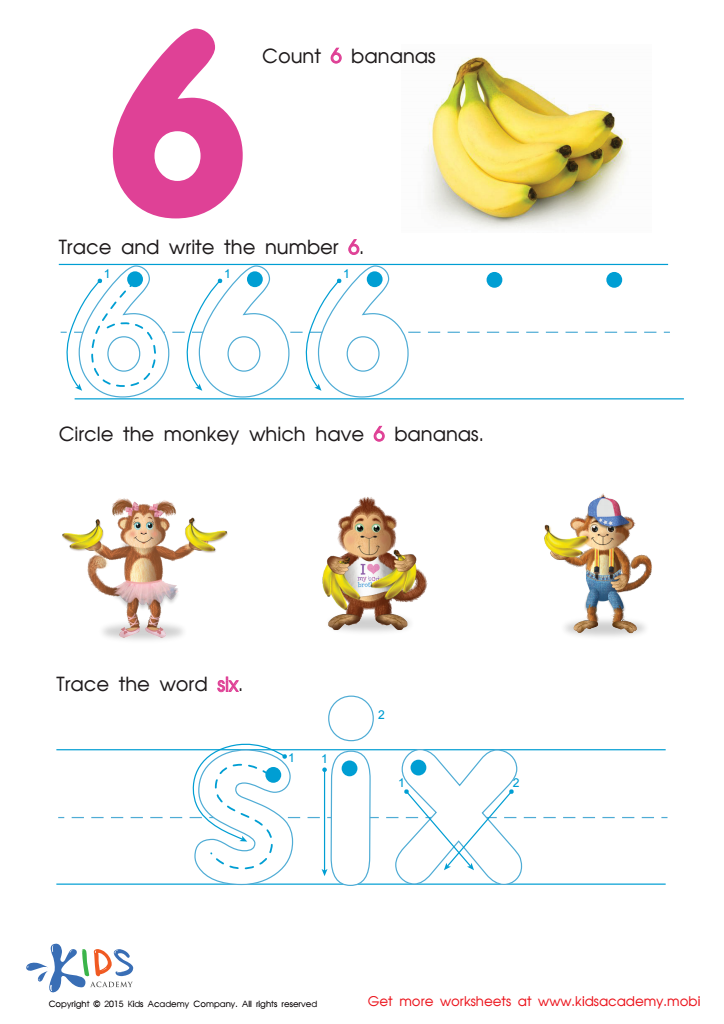
Tracing And Writing Number 6 Worksheet
Learn numbers in a fun way with our preschool number worksheets. Count six bananas, trace and write the number, find the monkey with six bananas, and trace the word "six." Explore more activities at Kids Academy.
Tracing And Writing Number 6 Worksheet
Worksheet
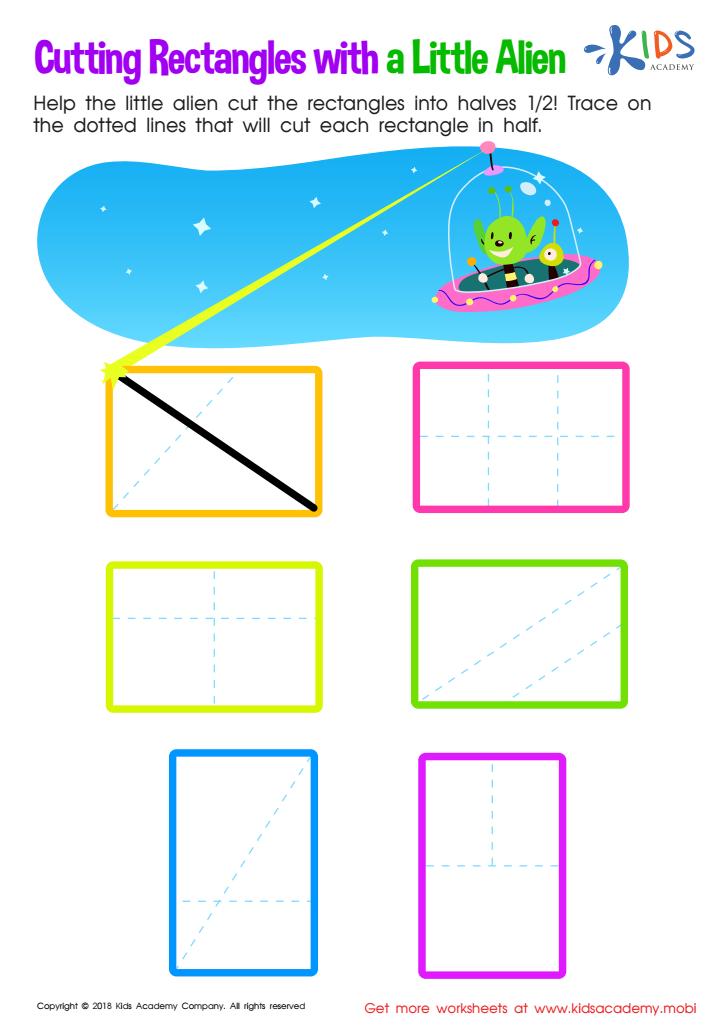
Cutting Rectangles with Alien Worksheet
If your students are interested in aliens and otherworldly events, they'll love this exercise! It requires them to help a small alien cut rectangles into halves (½). They must trace the dotted lines to accurately cut each rectangle.
Cutting Rectangles with Alien Worksheet
Worksheet
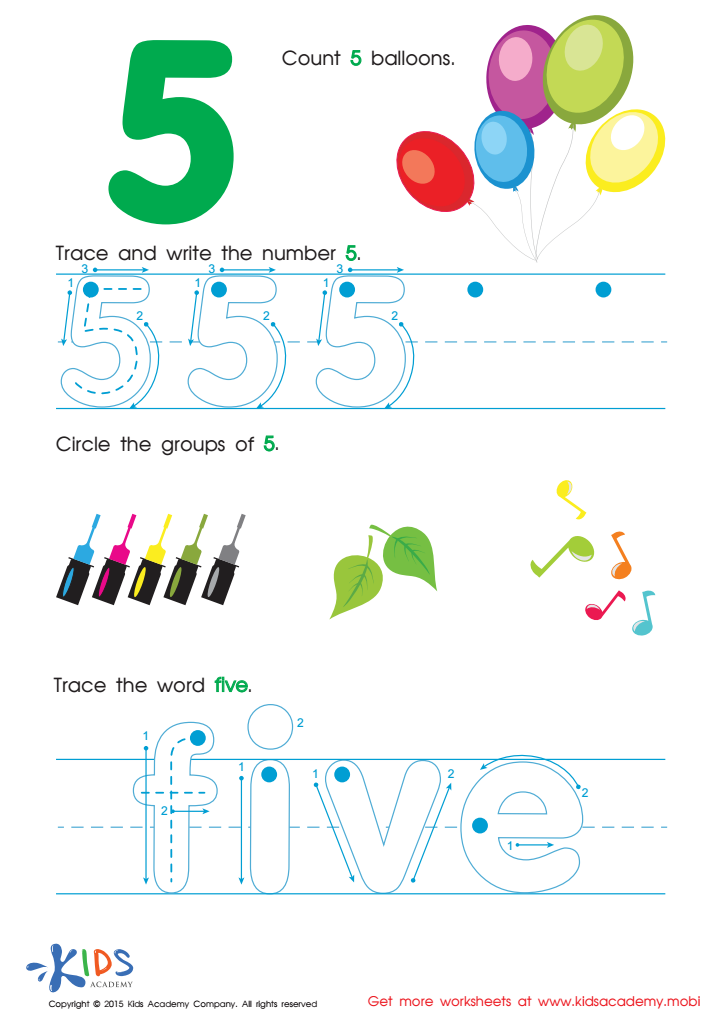
Practice Writing Number 5 Worksheet
Make learning numbers fun! Let your kids count the balloons, trace numbers, and circle the groups with five items. Also, have them trace the word "five" for letter revision. Get the full collection of preschool number worksheets from Kids Academy for a fun and interactive learning experience.
Practice Writing Number 5 Worksheet
Worksheet
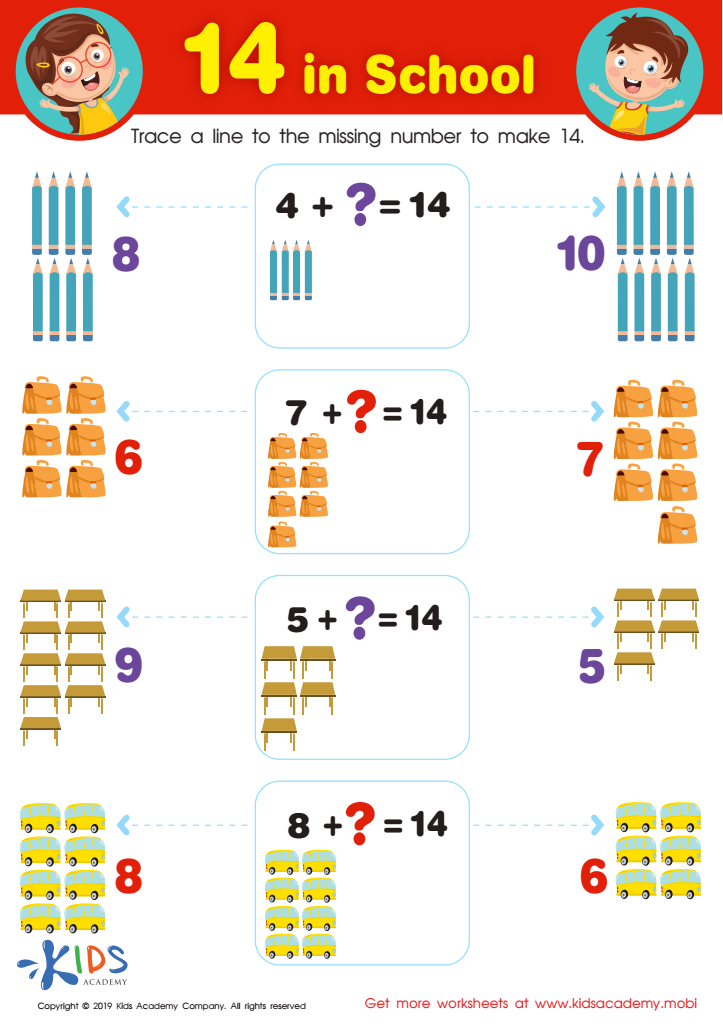
14 in School Worksheet
Remind your kids that adding different sets of numbers can give the same total (e.g. 2+3=5, 4+1=5). Ask them for more examples. Afterwards, work through the exercise. Help them count the objects and trace a line to the missing number that makes the total 14.
14 in School Worksheet
Worksheet
Join Kids Academy for Free
Who is primarily going to use this learning content?



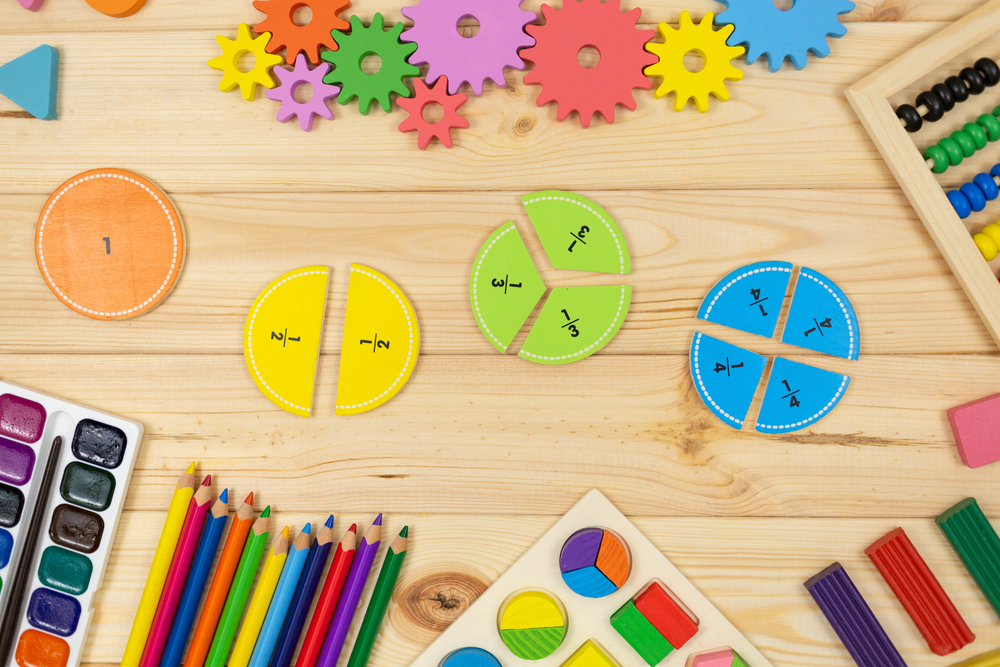


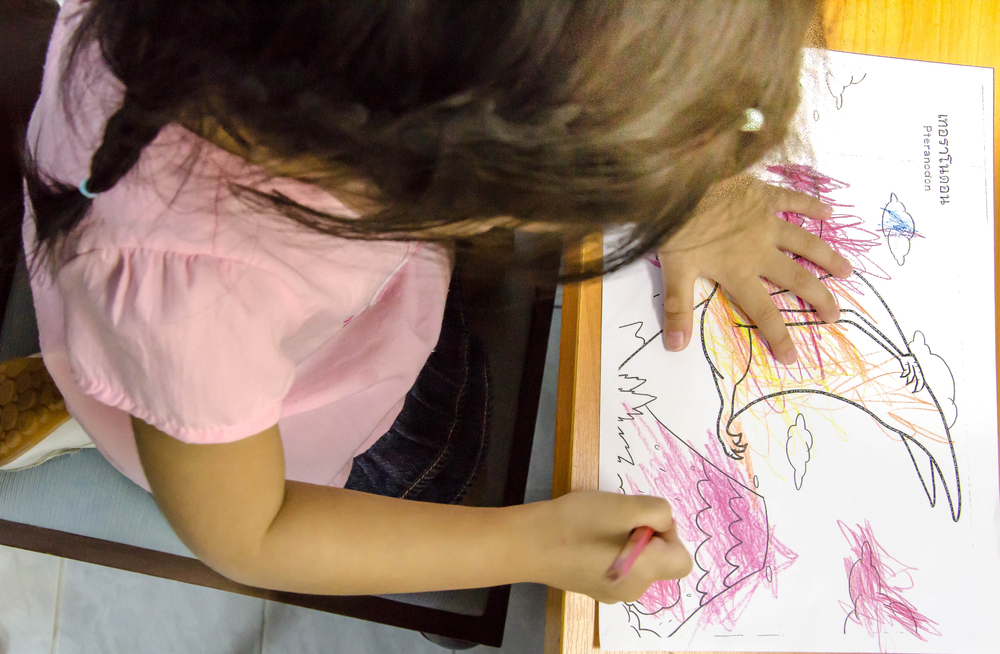
Hand-eye coordination is a crucial skill for children aged 6-9, significantly impacting their overall development and learning, particularly in subjects like math. During this developmental stage, children are refining their fine motor skills and learning essential concepts. Normal hand-eye coordination enhances their ability to manipulate objects, write neatly, and engage in activities like measuring and drawing geometrical shapes. These skills are foundational for grasping math concepts effectively.
Furthermore, strong hand-eye coordination can foster a child’s confidence and motivation. When children can accurately write numbers or perform activities like cutting paper or placing blocks, they experience a sense of accomplishment, paving the way for a positive attitude towards learning math. Activities that involve hands-on learning, such as puzzles or building blocks, can be incorporated into math lessons to reinforce this coordination.
Moreover, research indicates that engaging children in physical activities that promote hand-eye coordination can improve their focus and memory, essential skills for succeeding in academic assessments. Thus, by prioritizing the development of hand-eye coordination, parents and teachers can lay a stronger foundation for children's mathematical understanding and overall academic success, fostering a lifelong love for learning. Encouraging these skills ultimately benefits children's holistic development and future problem-solving abilities.








