Visual learning enhancement Normal Math Worksheets for Ages 6-9
3 filtered results
-
From - To
Discover our "Visual Learning Enhancement Normal Math Worksheets" designed specifically for children aged 6 to 9. These engaging worksheets utilize vibrant visuals and interactive elements to reinforce essential math skills, making learning fun and effective. Catered to diverse learning styles, each worksheet encourages visual spatial skills, problem-solving, and number comprehension through colorful illustrations and engaging activities. Ideal for both classroom settings and home practices, our resources support young learners in building a solid foundation in math. Promote your child’s confidence and academic success with these dynamic, visually appealing worksheets that bring math concepts to life! Explore now for transformative learning experiences!
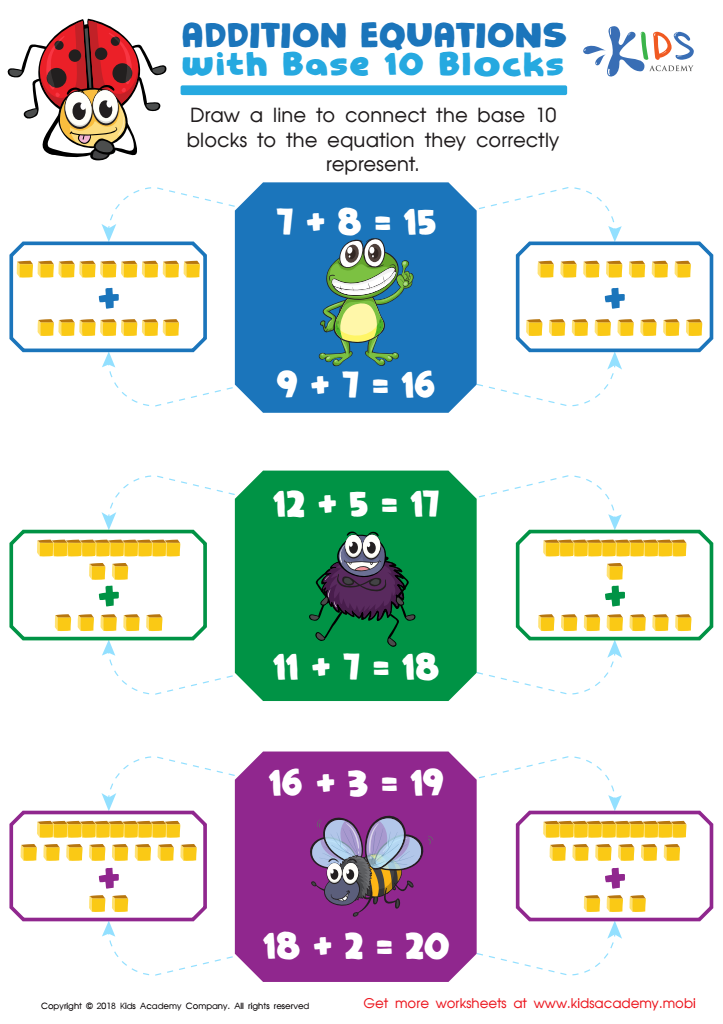
Addition Equations With Base 10 Blocks Worksheet
 Assign to My Students
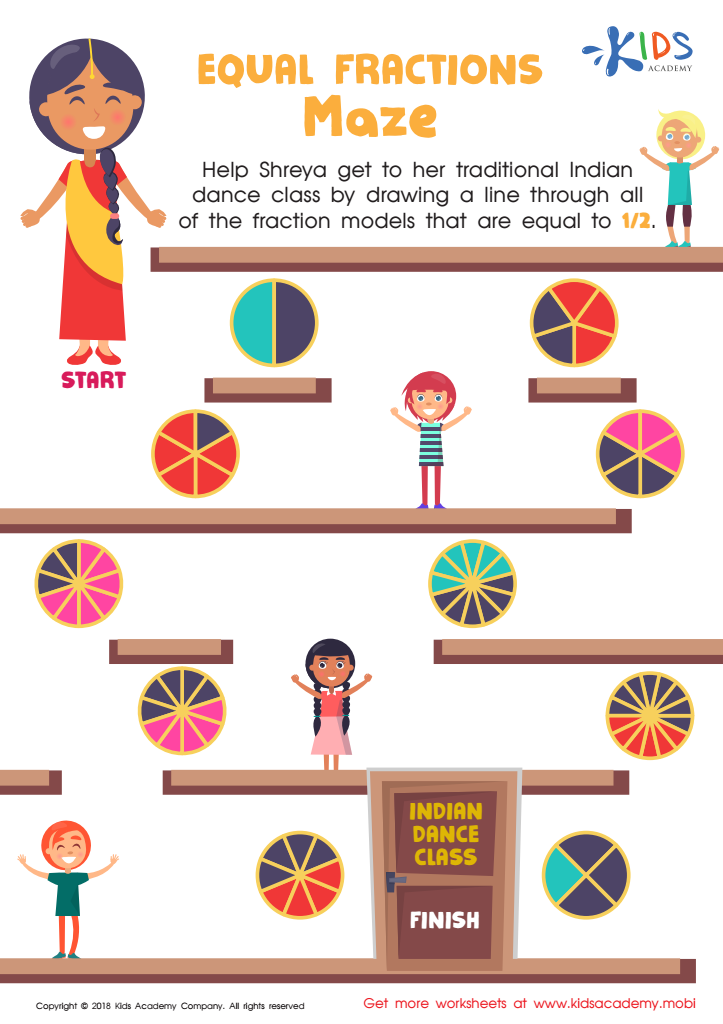
Equal Fractions Maze Worksheet
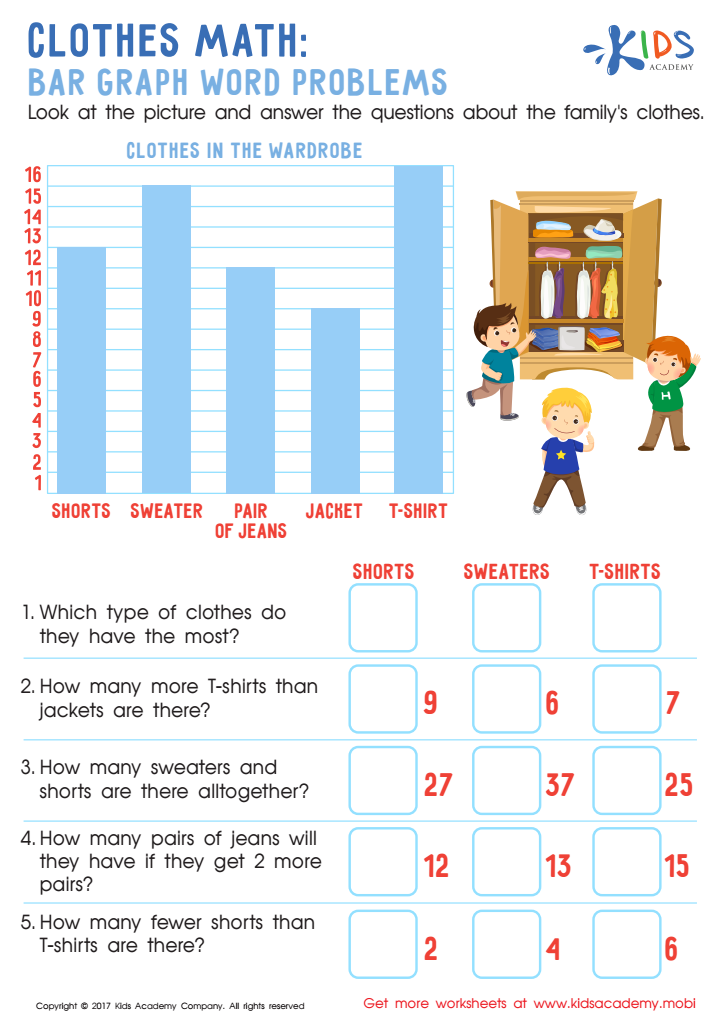
Clothes Math: Bar Graph Word Problems Worksheet








Visual learning enhancement in mathematics for children ages 6-9 is crucial for several reasons. At this developmental stage, children are highly responsive to visual stimuli, making it an ideal time to incorporate visual learning strategies. Visual aids such as charts, diagrams, and manipulatives help children grasp abstract mathematical concepts, transforming them into concrete images that enhance understanding.
Parents and teachers should care about this approach because it not only improves mathematical comprehension but also builds confidence. Young learners often struggle with traditional problem-solving methods, leading to frustration. By employing visual tools, educators can create engaging, dynamic learning environments that promote curiosity and a love for math.
Furthermore, visual learning supports diverse learning styles. Each child absorbs information differently; some may thrive on visual representations while others may prefer auditory or kinesthetic approaches. Offering varied modalities helps cater to individual needs, fostering an inclusive atmosphere where every child has the opportunity to succeed.
Incorporating visual learning in normal math curriculum allows for richer communication among peers, promotes teamwork, and enhances critical thinking skills. In short, investing in visual learning strategies not only enriches young learners’ mathematical experiences but also nurtures well-rounded, confident problem solvers.








