Division practice Normal Word Problems Worksheets for Ages 6-9
4 filtered results
-
From - To
Enhance your child's math skills with our engaging Division Practice Normal Word Problems Worksheets, specially designed for children aged 6-9. These worksheets provide a fun and effective way for young learners to grasp division concepts through relatable real-life scenarios. Your child will practice problem-solving, improve critical thinking, and build confidence in their math abilities as they interpret and solve various word problems. Featuring colorful illustrations and a variety of difficulty levels, our worksheets are perfect for homeschooling, classroom activities, or extra practice at home. Help your child master division in an enjoyable way while reinforcing their mathematical foundation!
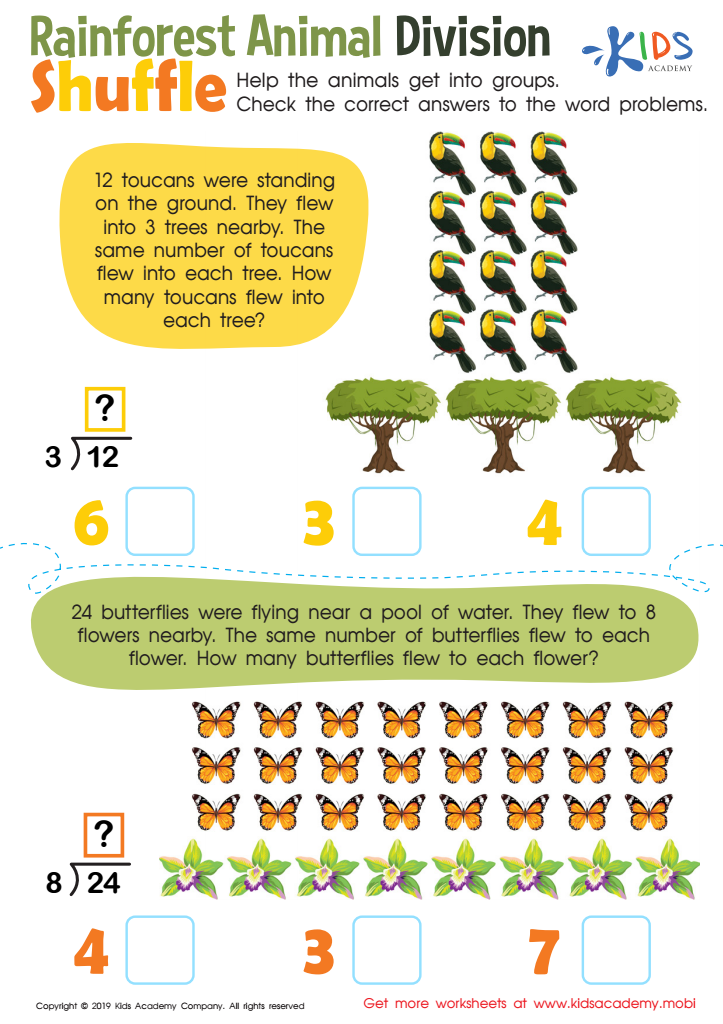
Rainforest Animal Division Worksheet
 Assign to My Students
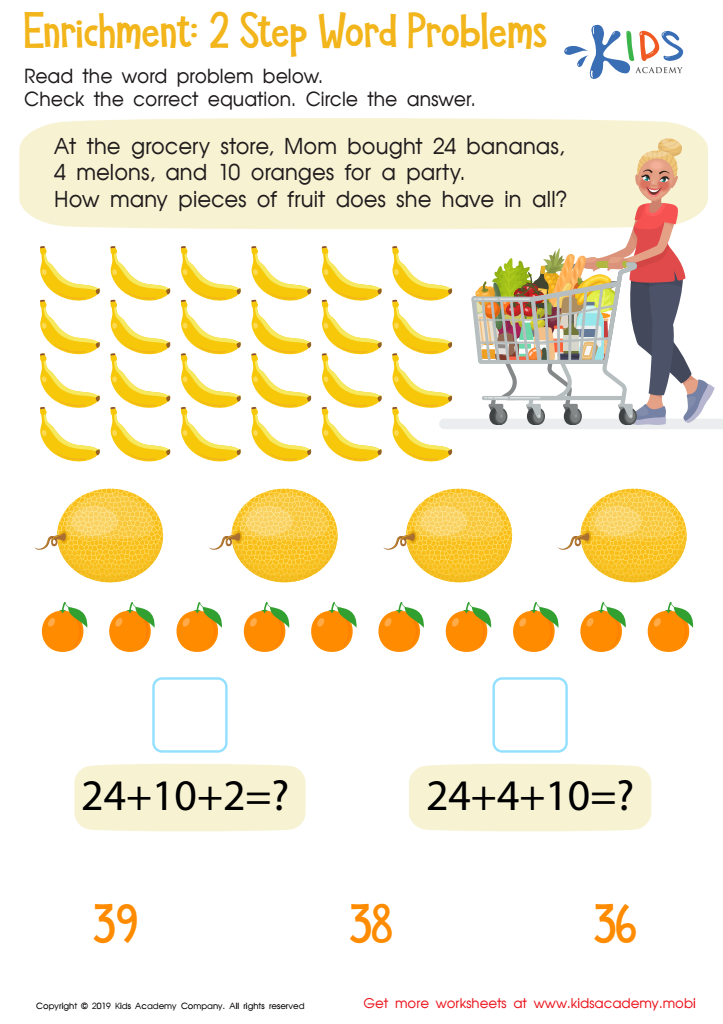
Enrichment -2 Step Word Problems Worksheet
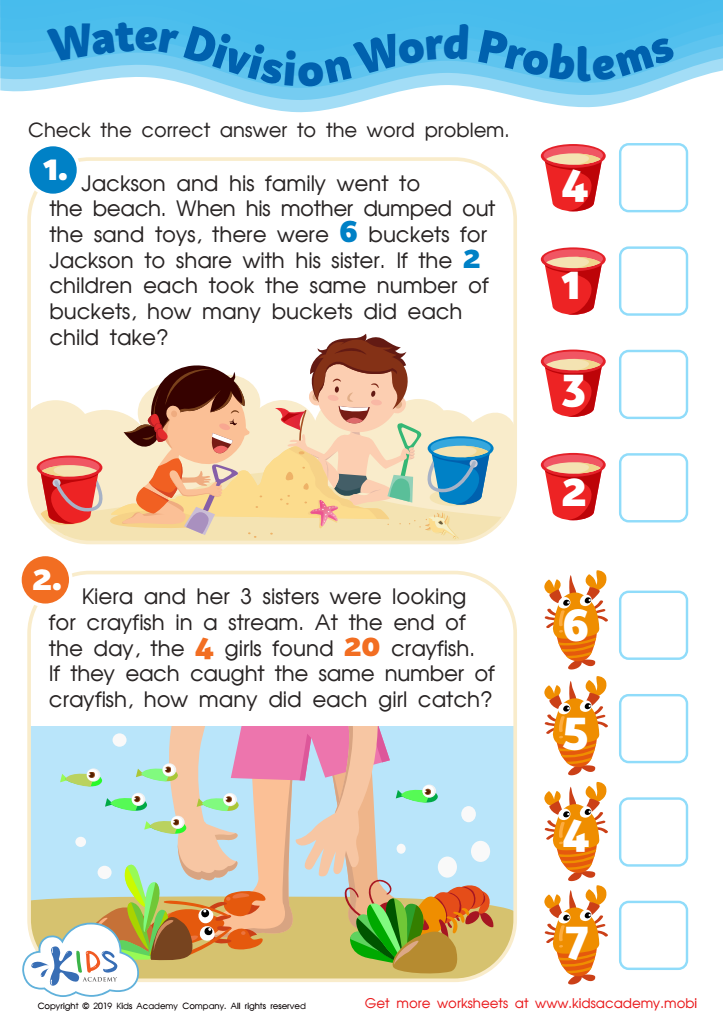
Water Division Word Problems Worksheet
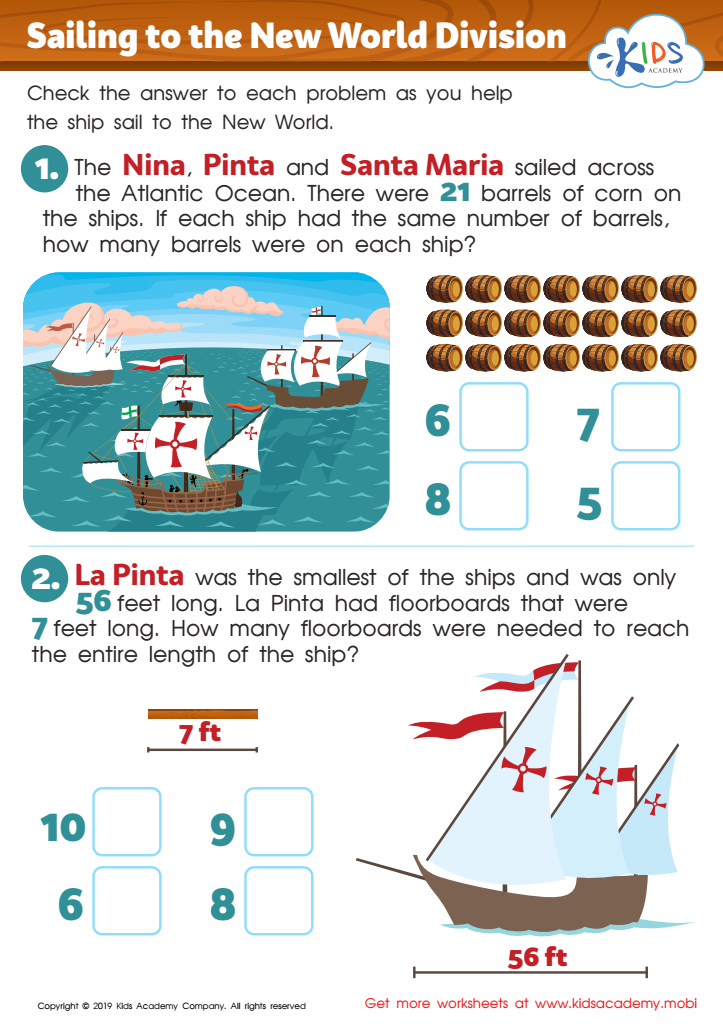
Sailing to the New World Division Worksheet








Division practice is crucial for children ages 6-9 because it lays the foundation for their mathematical understanding and problem-solving abilities. During this developmental stage, children are starting to grasp the concept of numbers and basic operations. Normal word problems related to division help make abstract concepts more tangible, allowing children to visualize and relate math to real-life situations.
Effective division skills foster critical thinking and logical reasoning. When students encounter word problems, they're not only practicing division but also learning to interpret language, extract relevant information, and formulate a plan to solve the problem. This practice cultivates persistence and resilience, as they learn the value of trial and error in problem-solving.
Furthermore, division knowledge supports other mathematical concepts, such as fractions and ratios – skills that become increasingly important as children progress in their education. Engaging in division-related word problems also promotes communication skills, as students often need to explain their thought processes.
By prioritizing division practice, parents and teachers can support children in building confidence in their mathematical abilities, contribute to their overall academic success, and instill a lifelong love of learning. This early investment in mathematical reasoning prepares students for more complex concepts in the future.








