Contextual understanding Normal Reading Worksheets for Ages 6-9
5 filtered results
-
From - To
Unlock your child's reading potential with our Contextual Understanding Normal Reading Worksheets designed for ages 6-9. These engaging worksheets enhance comprehension by helping young learners grasp information within various contexts. Explore fun activities that encourage critical thinking and improve vocabulary skills, ensuring your child can read and interpret texts with confidence. Aligned with educational standards, our materials incorporate stimulating themes and relatable scenarios that make learning enjoyable. Join thousands of parents and educators who trust Kids Academy to equip children with the essential reading skills needed for lifelong success. Start your journey towards improved comprehension today with our thoughtfully crafted resources!
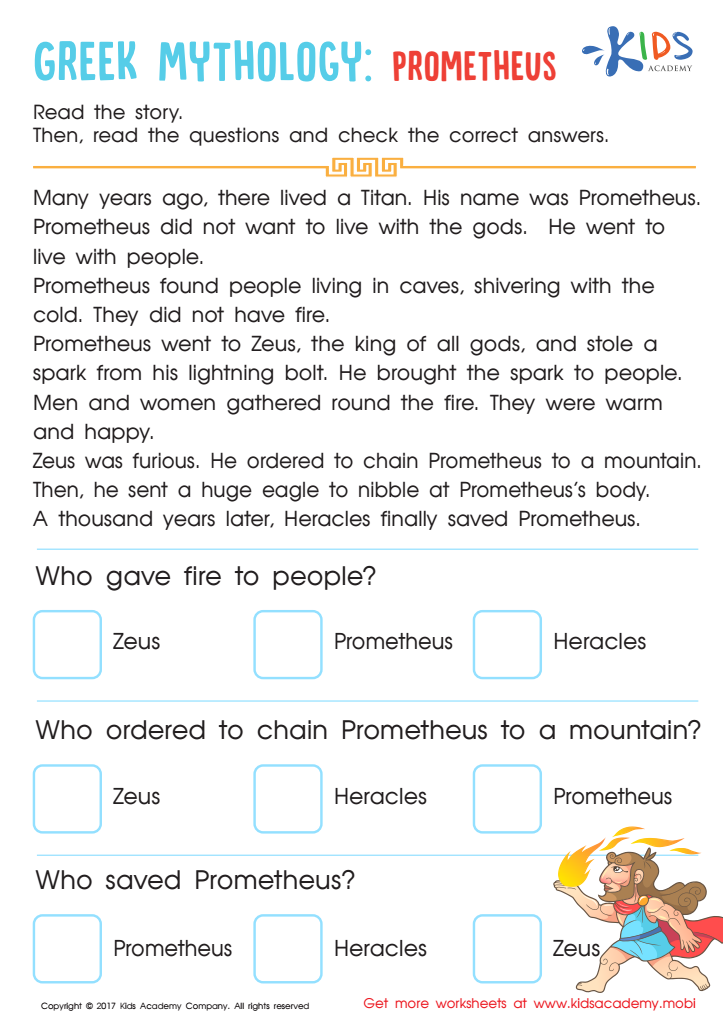
Prometheus Story Worksheet
 Assign to My Students
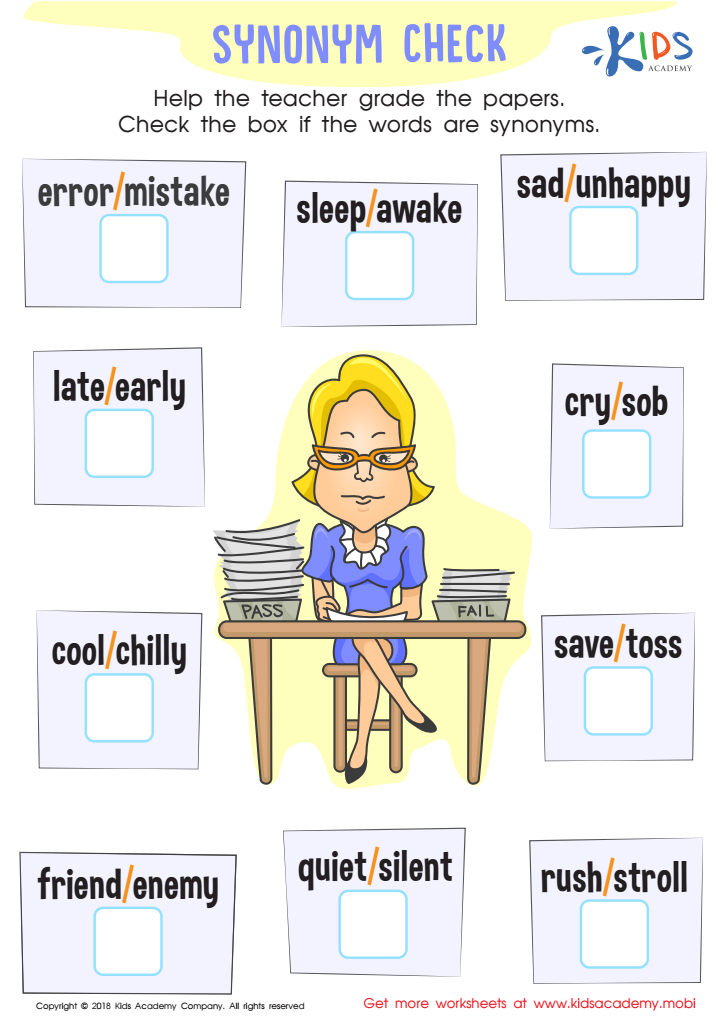
Synonym Check Worksheet
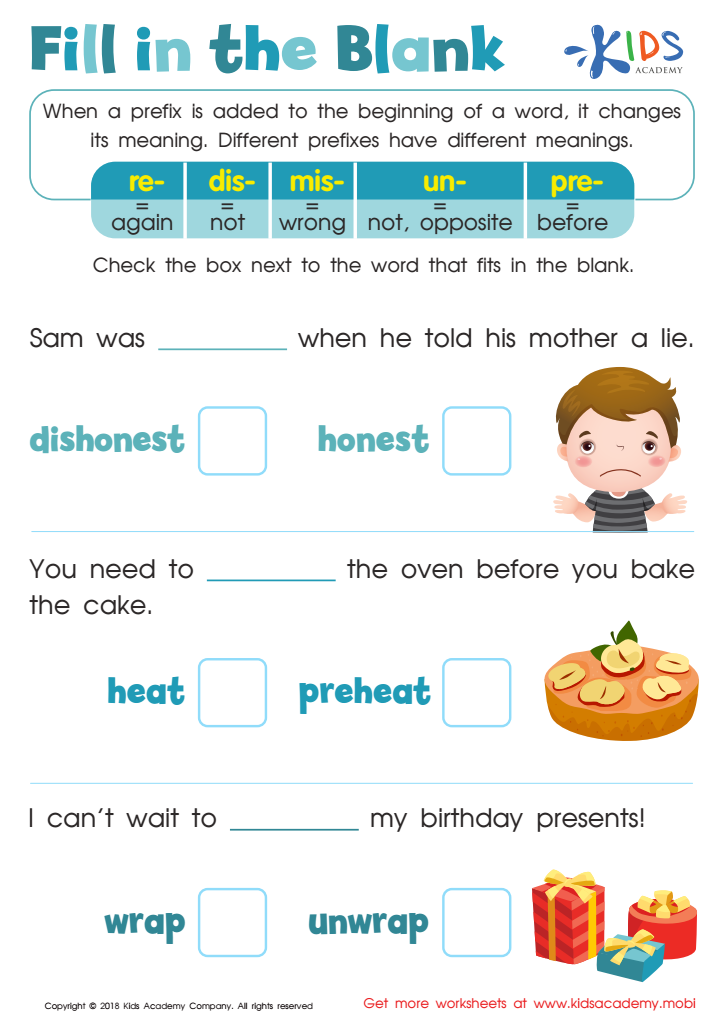
Reading: Fill in the Blank Worksheet
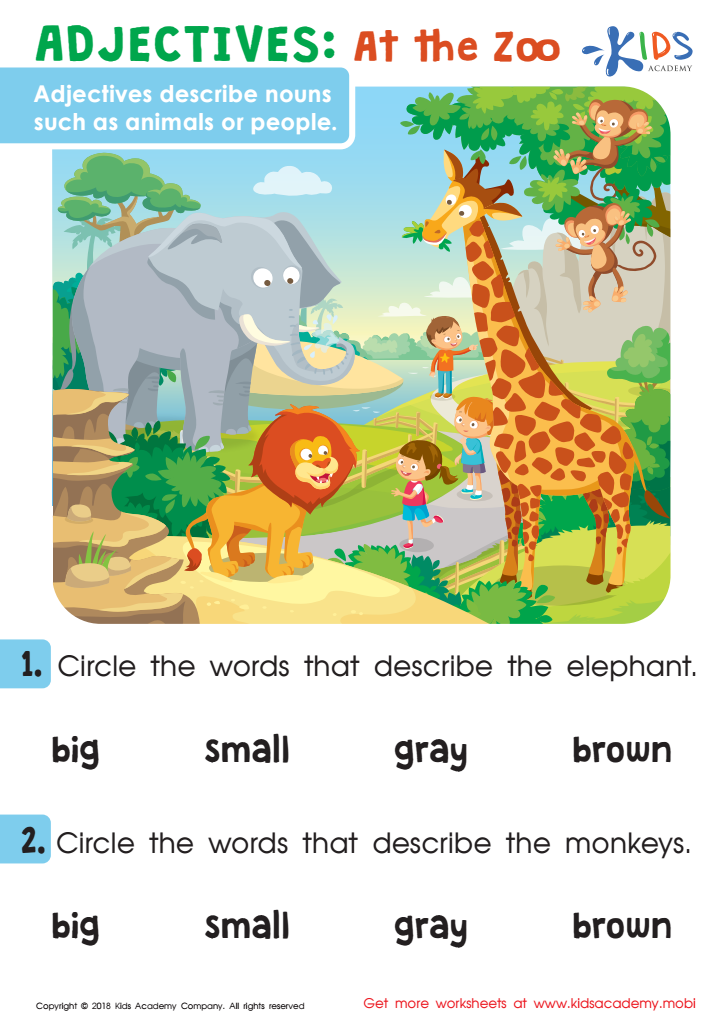
Adjectives: At The Zoo Worksheet
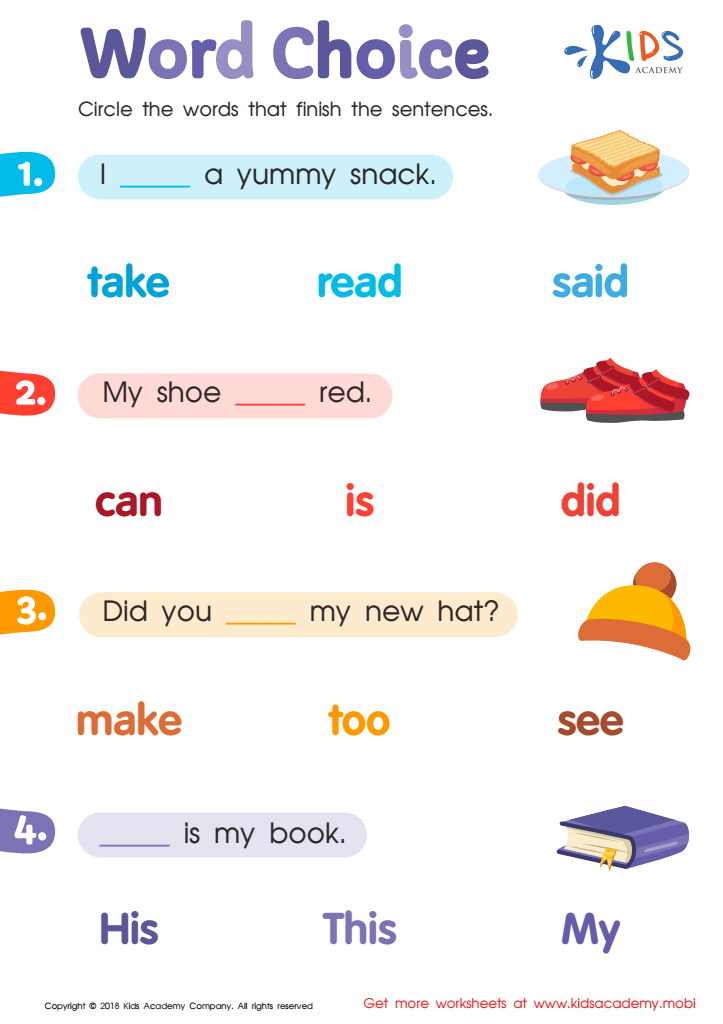
Word Choice Worksheet





Contextual understanding in reading is crucial for children aged 6-9 as it significantly enhances their comprehension and critical thinking skills. At this developmental stage, students are transitioning from learning to read to reading to learn. By grasping the context around words and phrases, young readers can better interpret texts, make connections, and engage with the material on a deeper level.
When parents and teachers prioritize contextual understanding, they help children develop important cognitive skills, such as inference-making and predicting outcomes. These skills empower students to navigate both fiction and non-fiction texts more effectively, fostering a love for reading. Additionally, understanding context aids in vocabulary expansion; children learn not just word meanings, but how those meanings shift based on surrounding text.
Furthermore, enhancing context clues in reading assists in interpersonal skills, as discussions about stories facilitate sharing diverse perspectives and sharing personal experiences. This approach not only helps in academic achievement but also boosts self-confidence in their abilities as readers. By focusing on contextual reading, parents and teachers cultivate an environment where children become proficient readers, critical thinkers, and lifelong learners. Ultimately, investing in contextual understanding equips young learners with essential tools for successful communication and learning throughout their educational journey.








