
Logical thinking Normal Reading Comprehension Worksheets for Ages 6-9
3 filtered results
Difficulty Level
Grade
Age
-
From - To
Subject
Activity
Standards
Introducing our "Logical Thinking Normal Reading Comprehension Worksheets" designed specifically for children aged 6-9! These engaging worksheets help young learners enhance their reading comprehension and logical reasoning skills. Each activity seamlessly blends fun stories with thought-provoking questions, challenging students to analyze information, make inferences, and draw conclusions. Perfect for reinforcing classroom learning or as additional home practice, these worksheets encourage critical thinking and foster a love for reading. Help your child become a confident reader while developing essential logic skills that will benefit them across all subjects. Explore our collection and watch your child thrive in their learning journey!
Favorites
With answer key
Interactive
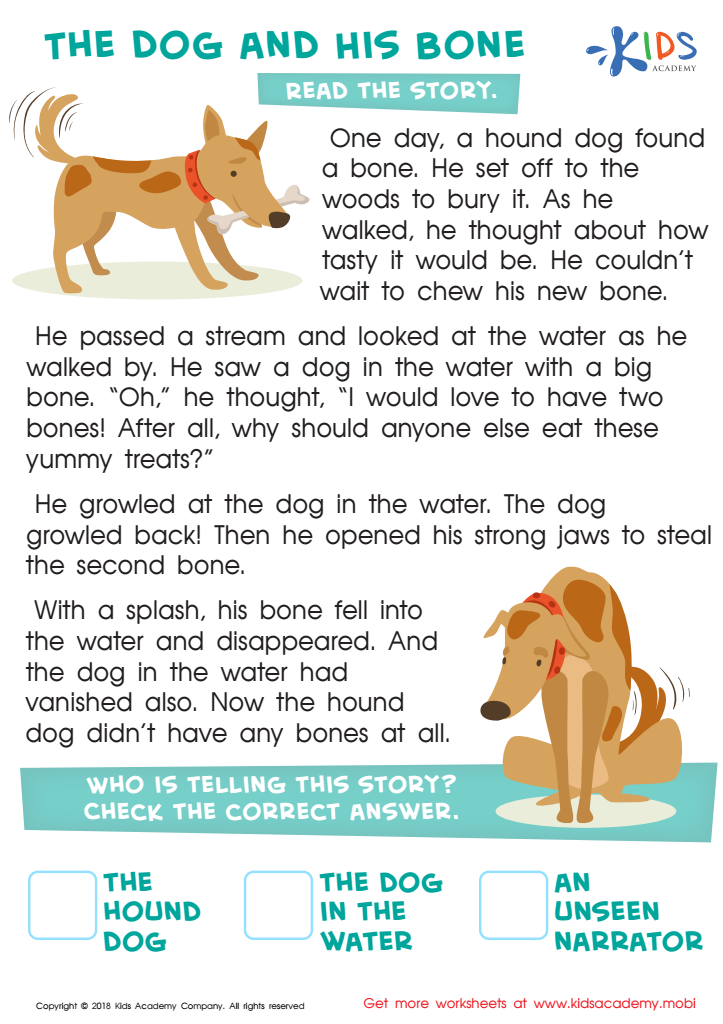
The Dog and His Bone Worksheet
Read the story of The Dog and His Bone to your kids, making sure they take in the details. Ask them the questions in this worksheet and help them check the answers. Encourage them to think carefully.
 Assign to My Students
The Dog and His Bone Worksheet
Worksheet
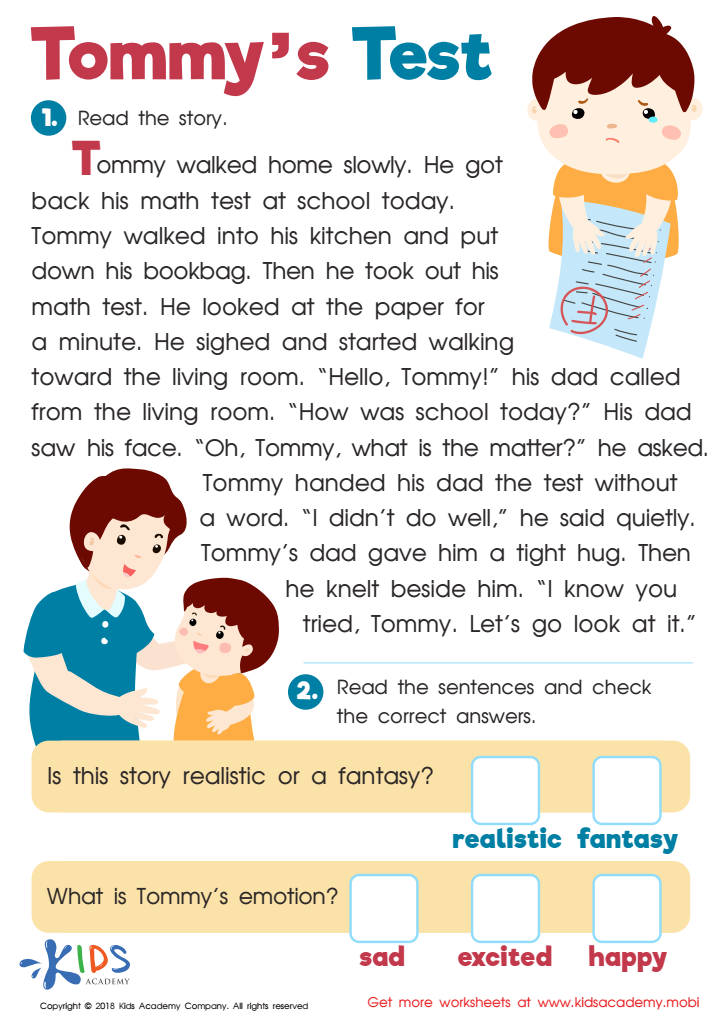
Tommys Test Worksheet
Reading short stories to your students builds a bond, teaches new words and lessons. Read the story aloud and then have them listen for details. Ask them the questions at the bottom and help them check the answers.
Tommys Test Worksheet
Worksheet
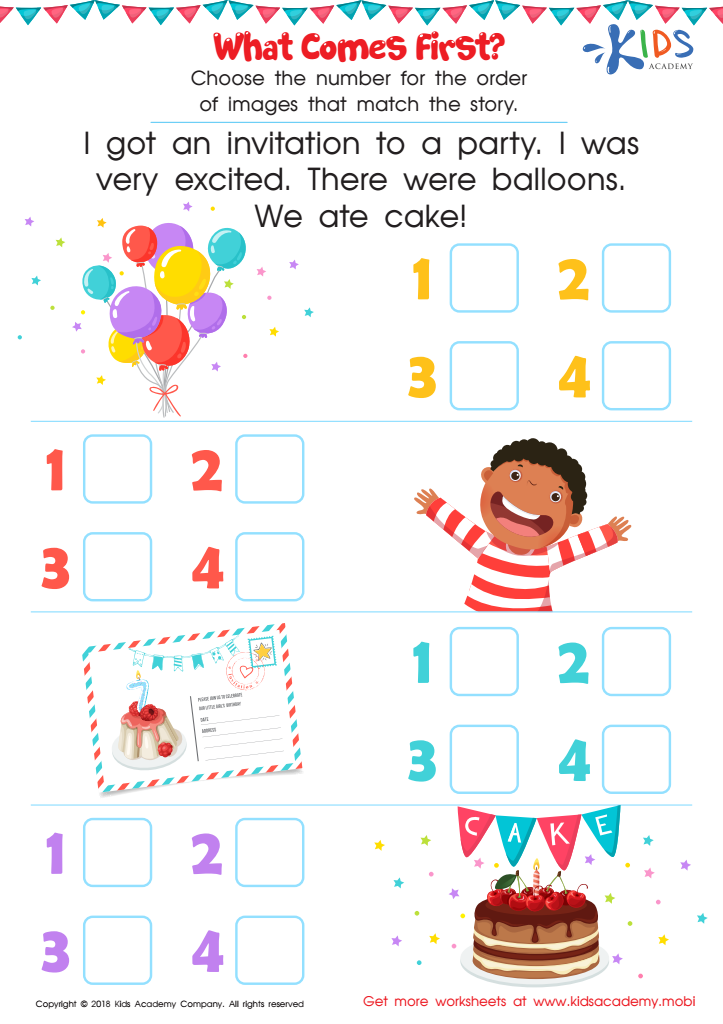
What Comes First Worksheet
Before you start, ask your child what they see in the picture. Read the story aloud together, then show them the images in order, numbered 1-5. Ask them to choose the numbers that match the story. Have fun and enjoy this party worksheet with your little one! (80 words)
What Comes First Worksheet
Worksheet
Join Kids Academy for Free
Who is primarily going to use this learning content?








Parents and teachers should prioritize logical thinking and reading comprehension for children aged 6-9 because these skills form the foundation for academic success and personal development. At this age, children are increasingly exposed to complex concepts. Logical thinking helps them develop the ability to analyze, reason, and solve problems effectively, which is essential not only in subjects like math and science but also in daily life decisions.
Reading comprehension is equally vital. It goes beyond decoding words; it involves understanding the context, making connections, and inferring meanings. Strengthening this skill allows children to engage with diverse texts, which supports their cognitive growth. Effective reading skills contribute to increased vocabulary, improved writing abilities, and a deeper appreciation for literature, fostering a lifelong love of reading.
Moreover, logical thinking and comprehension skills empower young learners to navigate challenges independently and develop critical thinking. As they begin to formulate their own conclusions and form arguments, they build confidence in expressing their thoughts.
Ultimately, by nurturing these abilities, parents and teachers equip children to succeed not just academically, but also socially and emotionally, since strong comprehension and logical reasoning contribute to better decision-making and interpersonal relationships. Supporting logical thinking and reading comprehension sets a pathway to a brighter educational future.








