Spelling practice Normal Reading Comprehension Worksheets for Ages 6-9
9 filtered results
-
From - To
Enhance your child's literacy skills with our Spelling Practice Normal Reading Comprehension Worksheets, tailored for ages 6-9. This collection merges spelling and reading comprehension, providing a fun and interactive way to strengthen your child's understanding of language! Each worksheet is designed to engage young learners, presenting relatable themes and exercises that promote critical thinking while improving spelling accuracy. Perfect for classroom use or at-home learning, these resources foster a love for reading and writing. Help your child flourish in their reading journey with worksheets that make learning both effective and enjoyable! Explore our diverse range of materials today!
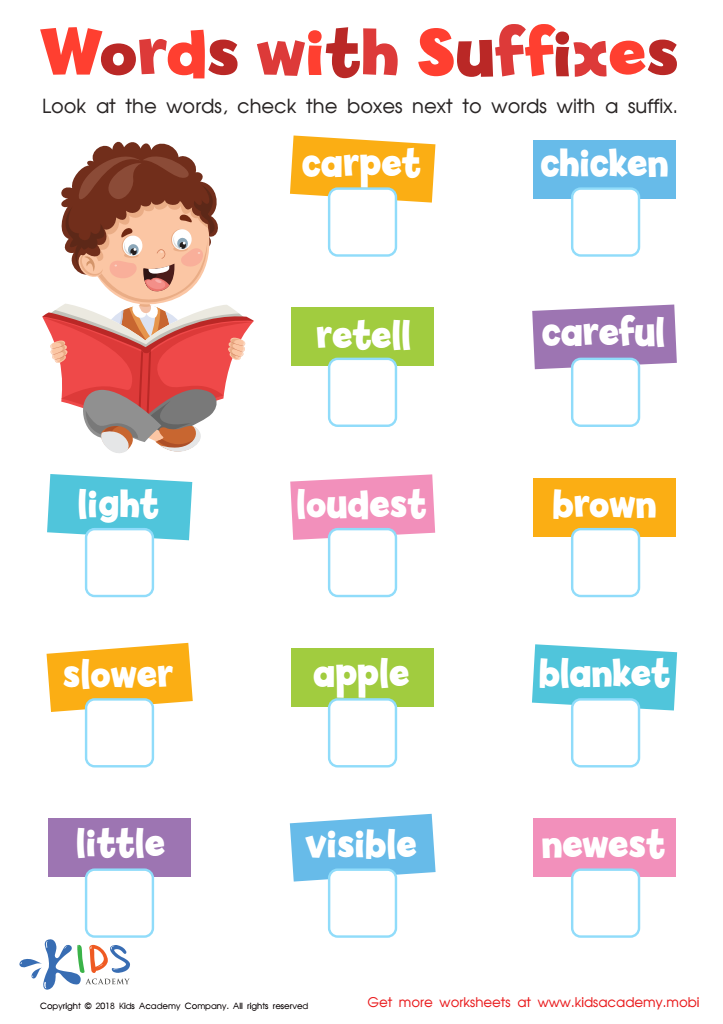
Reading: Words With Suffixes Worksheet
 Assign to My Students
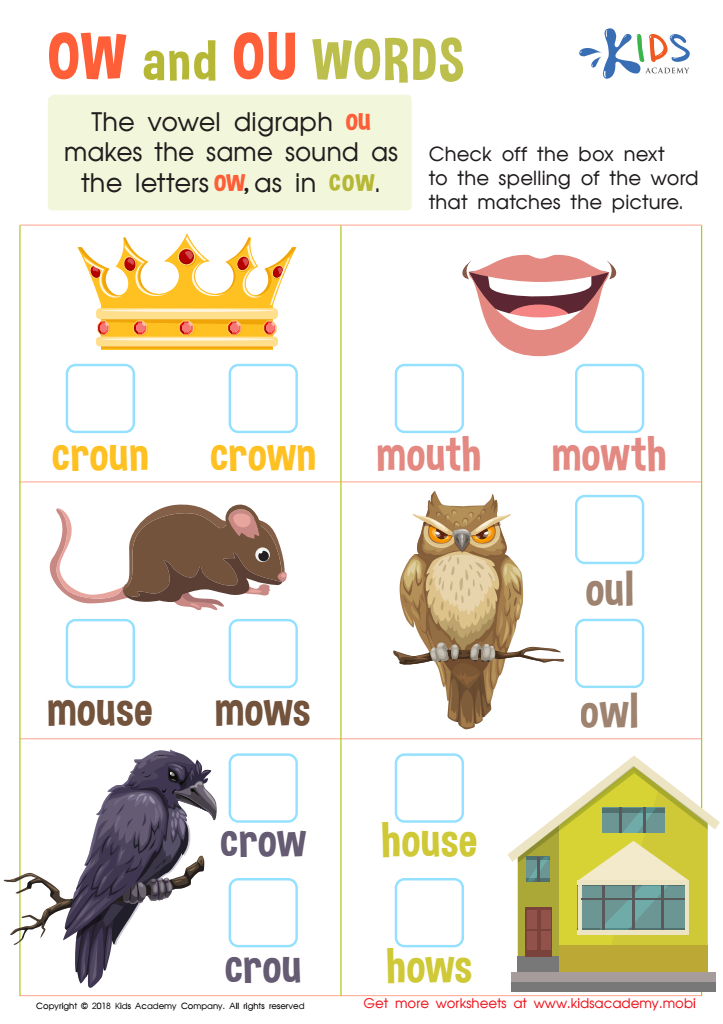
Reading: OW and OU Words Worksheet
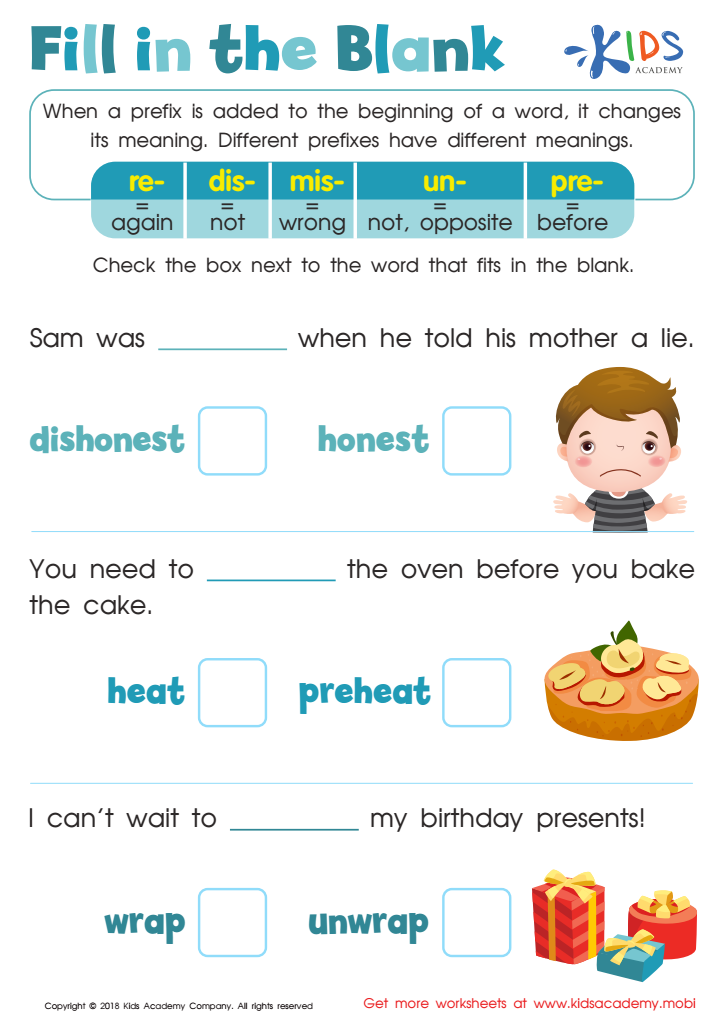
Reading: Fill in the Blank Worksheet
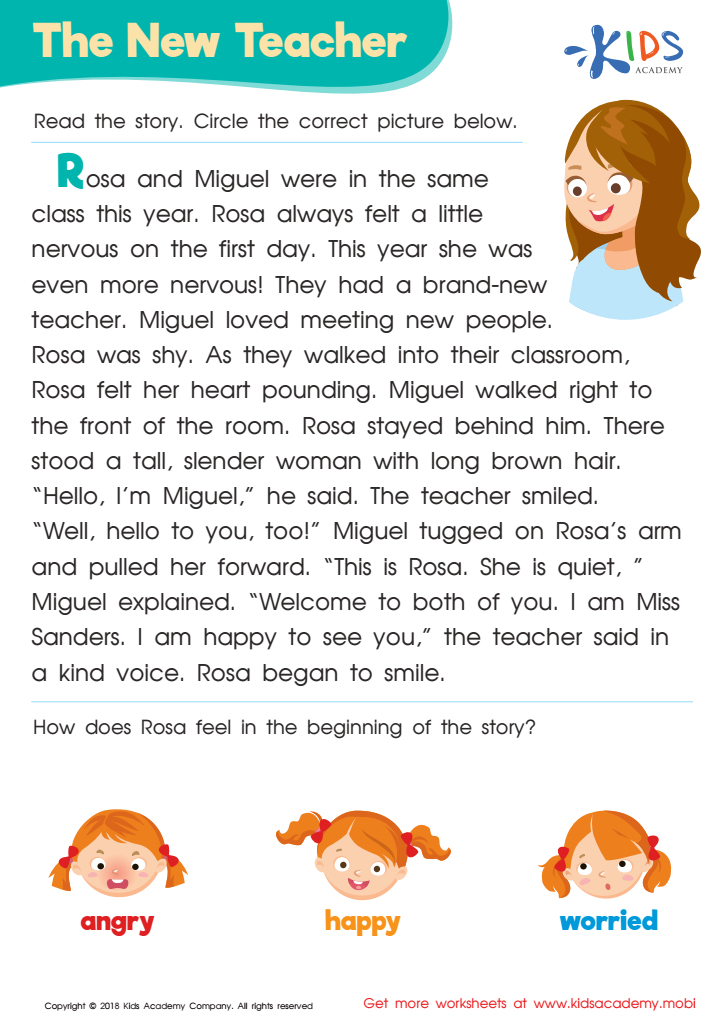
The New Teacher Worksheet
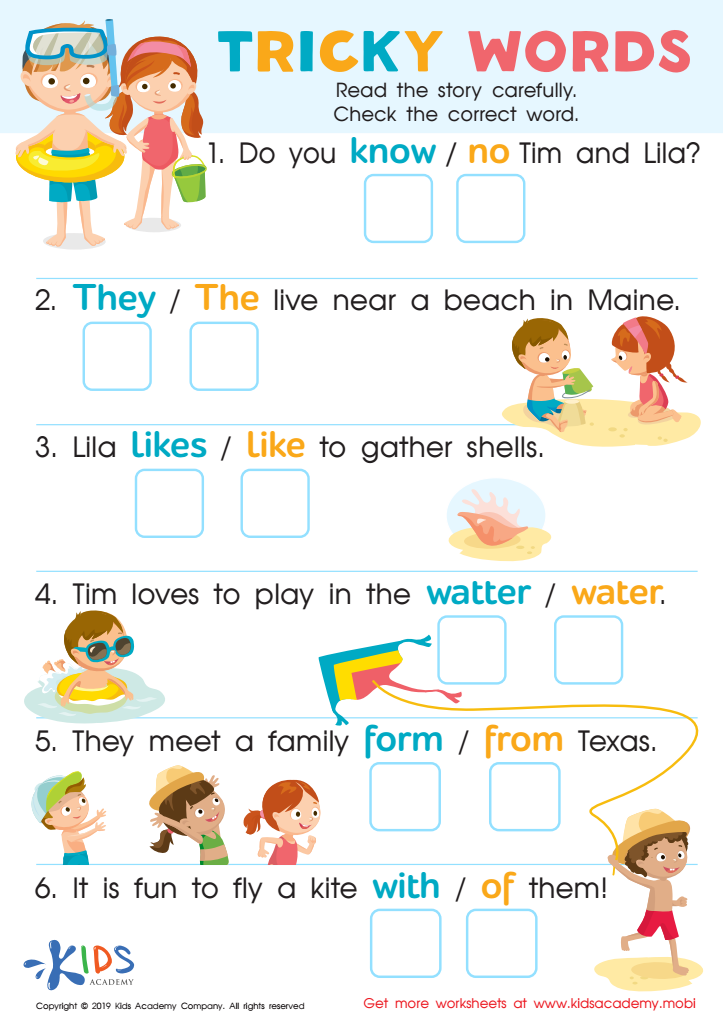
Tricky Words Worksheet
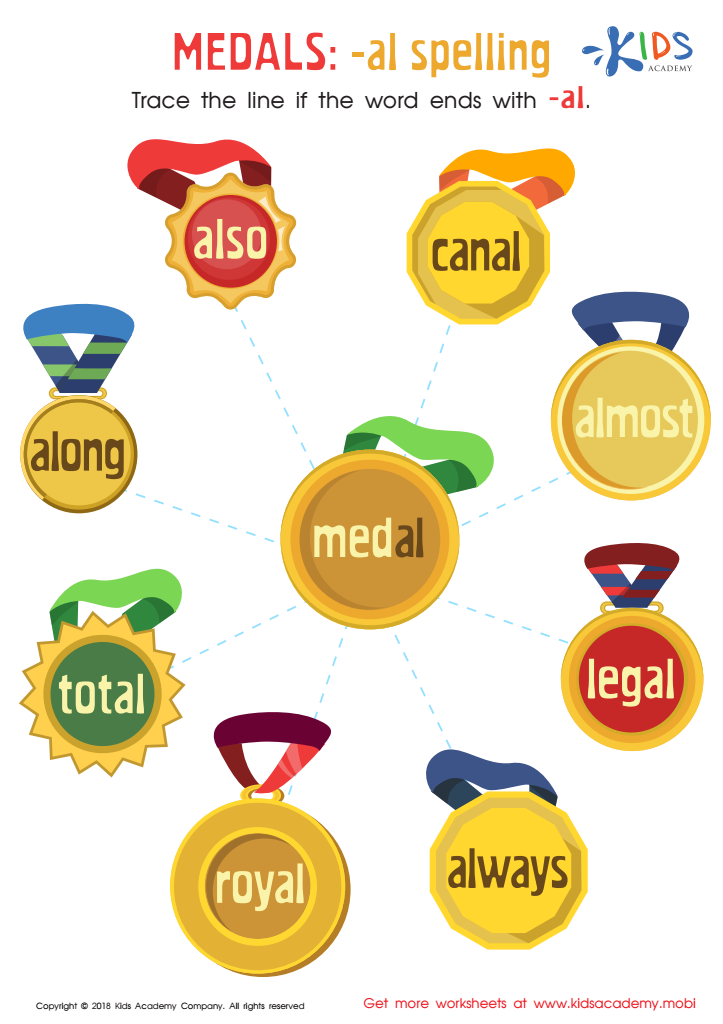
Medals: Al Spelling Worksheet
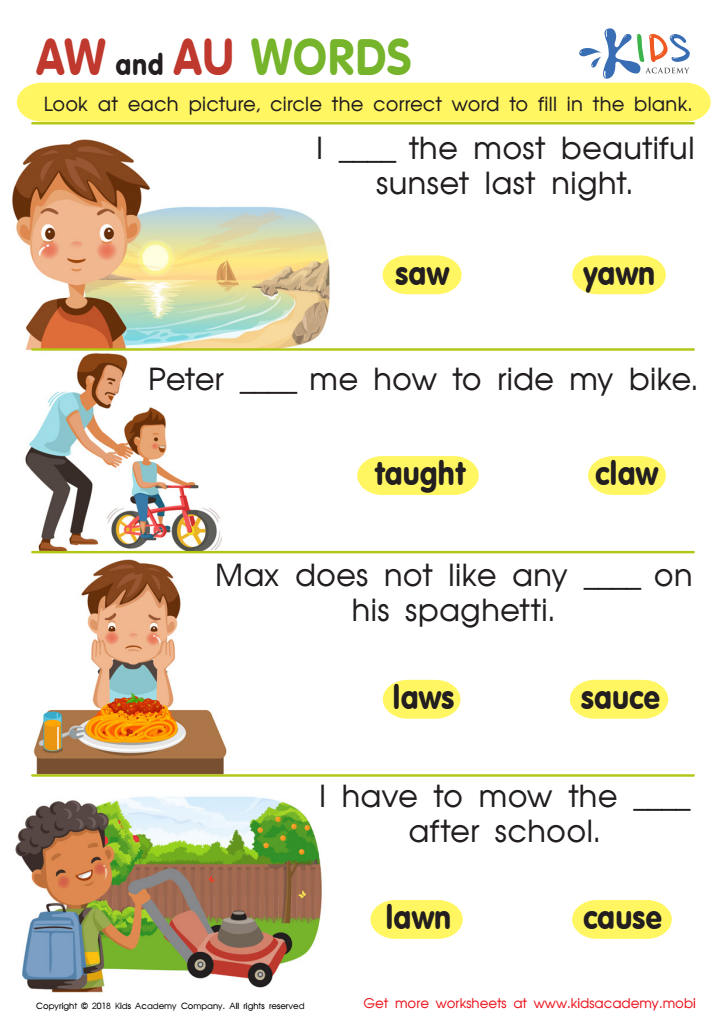
Reading: AW and AU Words Worksheet
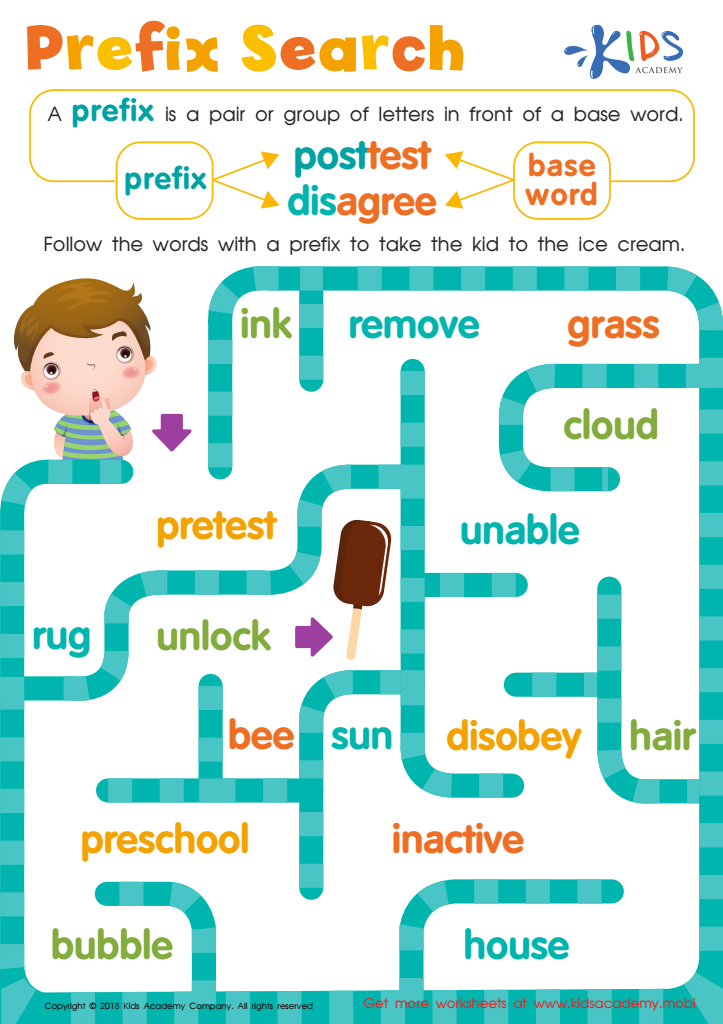
Reading: Prefix Search Worksheet
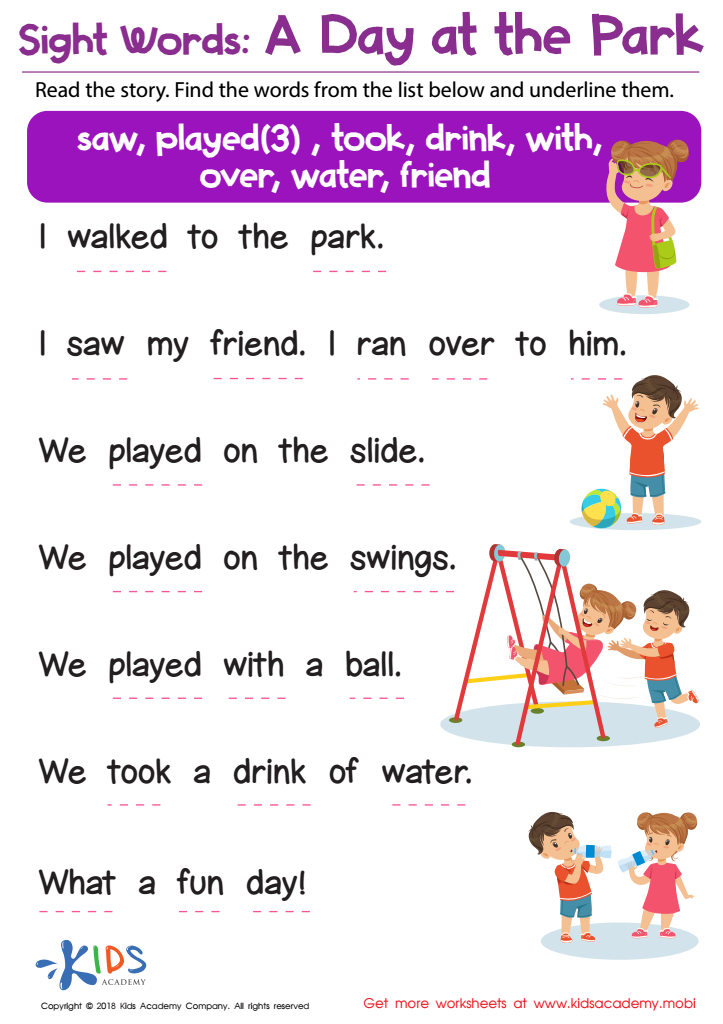
Sight Words: A Day at the Park Worksheet








Spelling practice and normal reading comprehension are crucial for children aged 6-9, as they lay the foundation for strong literacy skills. During these formative years, children are not only learning to read but are also developing the ability to understand and communicate effectively. When parents and teachers prioritize spelling, they help children make connections between sounds and letters, which supports phonetic awareness. This understanding makes it easier for children to decode words, aiding in both reading and writing.
Furthermore, mastering spelling allows children to express themselves more clearly and confidently. A strong spelling foundation enhances their reading comprehension, as recognizing words swiftly enables them to focus on understanding the content rather than struggling with decoding. As comprehension improves, children develop critical thinking skills, fostering a love for reading that will benefit them throughout their education and beyond.
It's also important for children to see spelling and reading as enjoyable activities. Engaging parents and teachers in interactive spelling games or reading together can increase a child's motivation and interest. Ultimately, supporting spelling practice and reading comprehension fosters academic success and instills lifelong learning habits essential in our increasingly literate world. Parents and teachers play key roles in facilitating this development, impacting children's future opportunities for growth and learning.








